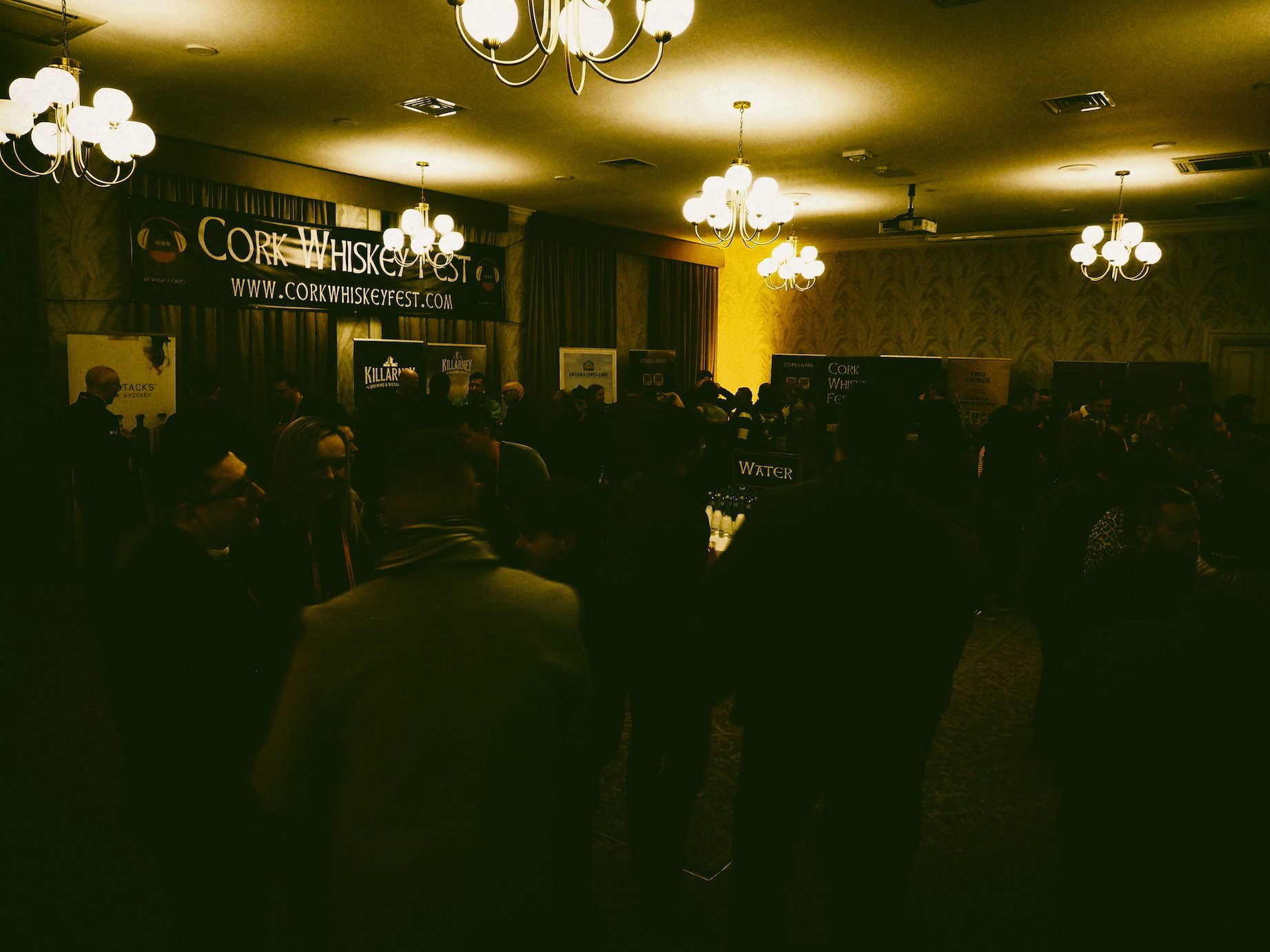
Cork Whiskey Festival 2025 was a roaring success – three days, two brand expos, dozens of masterclasses, 1,500 tickets and every event sold out. If there was a downturn in the Irish whiskey category, the festival showed no signs of it – it was a celebration of a diverse and vibrant industry. In fact, the only sign that all might not be well in the category was the people condemning anyone talking down the industry. Several people I spoke to said that really, everyone should stop focussing on the industry’s current struggles and instead focus on the great success of the Irish whiskey category in the last 15 years. Channelling Bertie Ahern in his pomp, the message being delivered to my ears was that those talking down the industry need to simply stop talking, and we should continue to only speak in glowing terms about Irish whiskey, and that the same unblinking, relentlessly positive press it has been given – which led many investors to charge headlong into the industry – should be allowed to continue. Of course, once people were finished dishing out a good old fashioned scolding about negativity (or any coverage of very real struggles of many distilleries), they did admit that yes, things were incredibly hard right now and yes many distilleries were cutting production, or staff, or simply shutting, but still – good news only please.
The strangest part of this was the complete lack of empathy with those who work in the industry who have been let go – it veered from an everything-is-awesome, head in the sand attitude, to a kind of laissez faire capitalism approach to how the challenges were spoken about; that it was natural that some distilleries would not make it, this was simply how things were always going to play out. ‘Look at Scotland’ they say, look at how the Scotch industry expands and contracts over the decades. But given we had our first expansion of the industry for a century in the last 12 years, our first contraction is going to hurt quite a lot. Plenty people were simply not expecting this. But to many others who will not survive, there was not a lot of sympathy. The message was clear – some must make this sacrifice so the industry can thrive; blood for the blood god, job cuts for the greater good.
We had a decade of fluff, talking up distilleries that didn’t exist (yet) winning awards for products they didn’t make; tales of multi-million euro deals where brands and barely operational distilleries were sold, an endless sea of glowing praise and headlines about how great everything is. If you want that to continue, this era is not for you. Nobody is talking down the industry – the facts are the facts, and the media is simply reporting them. Taking it personally when a publication highlights that multiple distilleries are either now silent or facing complete closure, as though reporting the hard truths of whiskey is an act of treason, is rather silly. Either you think the category is big enough and strong enough to survive its current woes (spoiler alert, it is), or you think we all need to keep backslapping and everything will be fine because the category is a timid little child that needs to be shielded from the truth.
The industry continues to do its thing. Last week, Irish Distillers Limited released the last of their Silent Distillery releases, a bottling of 50 year old stock from the old Midleton distillery, which shut in 1975 and has been the tourism wing of the operation for decades. If anyone at the launch was aware of the irony of the fact that all of Midleton’s distilling operations are silent at the moment, then they didn’t say, but looking at social posts of the guests in their black tie it had the air of a well-heeled wake. One week later, parent company Pernod Ricard announced a 3% decline in third-quarter sales, missing forecasts. The Business Post contacted IDL to ask about the potential impact of Trump’s tariffs, and did not get a response.
The following day, the Irish Examiner reported that Killarney Brewing and Distilling Company had entered examinership in an effort to save the business. The company said it faced severe challenges since the COVID-19 pandemic, including rising raw material costs, supply chain disruptions, delays in opening their distillery, excess whiskey inventory, and geopolitical uncertainty, all of which hurt revenue and profitability. Earlier this year, the company had a preliminary merger agreement with a U.S. partner, but that deal has since fallen through. I spoke to a couple of reps from Killarney at the recent Cork Whiskey Festival, asked them how everything was going, and they were full of positivity. Because everything is always great, until it isn’t.
But it is not all bad news – of the four largest distilleries who have announced production slowdowns, there have apparently been no job cuts. Smaller and midsized distilleries have let production staff go, but these are in limited numbers. It’s still a terrible time for them – not so long ago people were being encouraged to train in whiskey production as there was a shortage of skilled workers here, and now many of those making cuts are in rural areas. Losing your distillery job in Dublin isn’t too bad – losing it in Ballynowhere is a bit harder to bounce back from. But pretending this isn’t happening will not help anyone – not the category, not the workers being laid off, not the investors.
 Triple Distilled Communications