The September 2023 issue of The Spirits Business magazine carried a feature about the previous ten years of growth in the Irish whiskey category and asked the question – what now? Where do we go from here? What works and what doesn’t? And can all this growth continue?
You can read the full piece here. However, the people who were good enough to answer my questions put a lot of thought into their responsese, so they are included in full below.
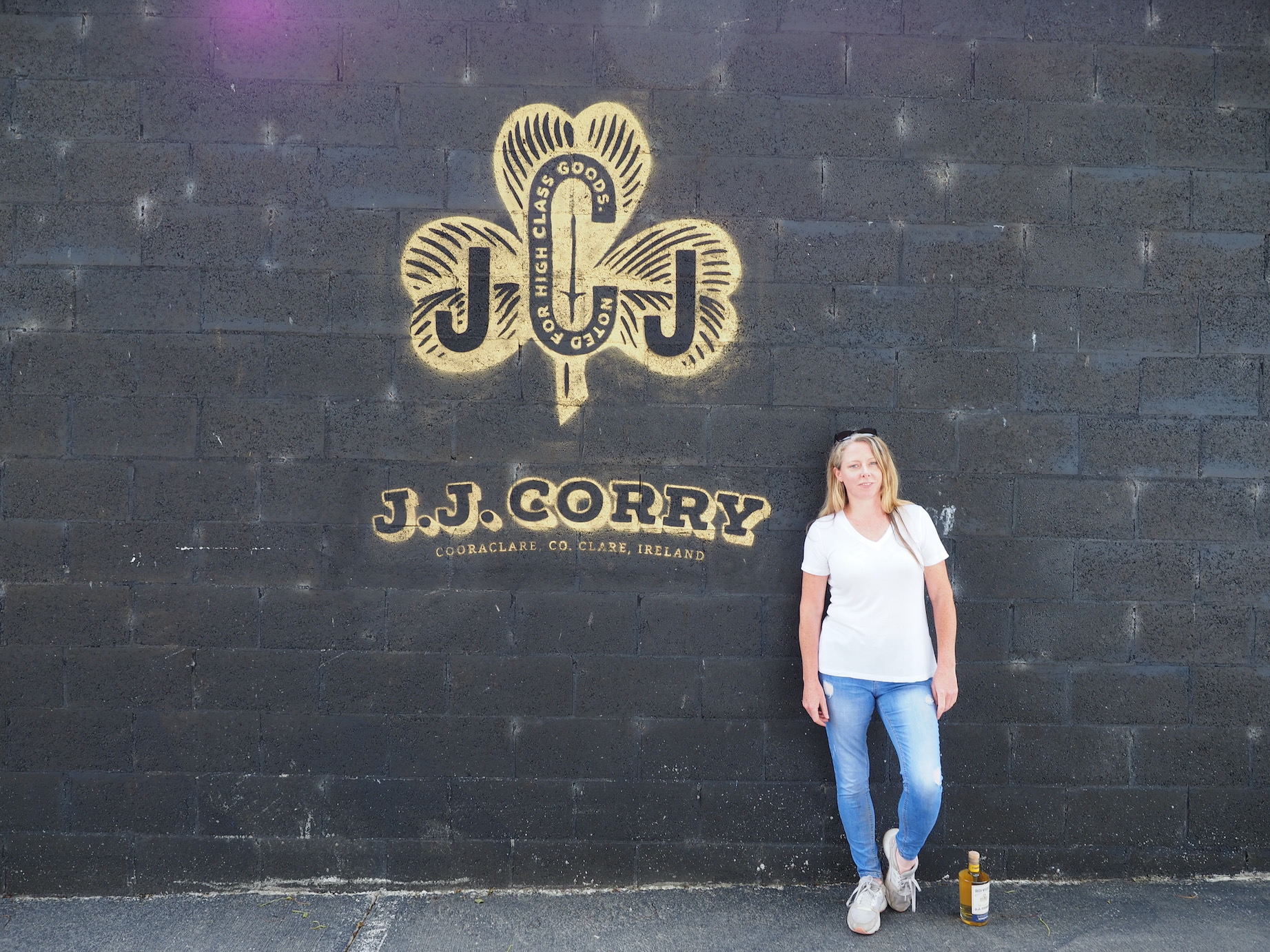
Louise McGuane, Chapel Gate and JJ Corry
What’s driving this continuous growth in the category, in your opinion, and what could potentially be holding it back?
“The aggressive growth we are seeing I think is really a market correction. The category was wholly ignored for several decades, the bigger players coming in and focusing on key brands as targeted consumer offerings in the past 15 years are doing their job of category education well. This has allowed for smaller independent players to capitalise on that and to bring variety to the category as a whole, which in turn attracts more of those ‘flavour seekers’. The burgeoning younger skewing ‘Flavour Seeker’ consumer’s interest in brown spirits as a whole is helping to grow it.
“The absolute dominance of one multinational’s market share could prove fractious in the years to come. Unless we see some aggressive moves by other multinationals in the Super Premium space in particular the category could stymie again. The category must have producer diversity and variety to push it forward. We cannot fall into the Irish version of the tartan trap that Scotch is fighting to get out of now. “
Can it continue to grow over the next decade and do you see that slowing down to a plateau, and when might that happen? Are there any threats to the category’s growth, either internally or externally?
“There are leaps and bounds to be made in the next decade. We are really only at the beginning of growth. There are entire continents which have had little to no exposure to the Irish category but are huge whiskey markets in general.
“The Ultra Premium and Luxury sub categories are wholly underserved at the moment and as consumers learn the quality and rarity of Irish matches that of Scotch, Japanese etc. we will see demand sky rocket there from a base of almost zero today.
“The threat could be that the bigger players continue to focus on the lower end of the shelf and establish Irish as a whiskey for ‘release’ rather than ‘discernment’. This makes it very difficult for independent craft led brands to get their message across. IF consumers in new markets like China become accustomed to Irish being low end it will be difficult to break that mindset, which is what we are seeing to some degree in the USA today.
“For newer brands the conversation just cannot be about price or single occasion driven sales (St. Patrick’s Day) it has to be around sessionability and quality.”
I know you have had a big focus on America, but what other markets do you see opportunity for your brand or for Irish whiskey as a whole?
“Anywhere the multinationals decide to go and do category introduction and education is where the opportunity lies. India, China, SEA all have great potential but the category needs to be established there first and that’s a job for the multinationals. For JJ Corry the luxury and private client side of the market is where we are squarely focused. We have scalable multi award winning retail brands which is vital for us right now but our future is in the curation of fine & rare stocks and catering the the luxury end of the market. This is wholly under exploited in Irish and its coming.”
I’d also love to hear about any insights you might have into the breakdown of demand – single malts vs pot still vs blends.
“The Irish category has inherited the well worn tropes which were established in the last few decades by Scotch. For many consumers single Malt is regarded as the best, blends are looked upon as lesser. Having said that the best selling Irish whiskey in the world is a blend….. For the average consumer Pot Still is simply not understood at all. Pot Still has its challenges as it has caught on in the U.S.A. with many U.S.A. distilleries releasing whiskies under that sub category, this makes it even more difficult then to communicate a credible distinction. With the re-introduction of peated Irish, the rise of single and double grain it will be interesting to see where demand shakes out, for me it’s too early to say. “

Conor Hyde, Hyde Whiskey bonders and bottlers
What’s driving this continuous growth in the category, in your opinion, and what could potentially be holding it back?
“Growth is being driven by the marketing activities of the Big 5 Irish whiskey brands internationally. They are doing all the heavy lifting to communicate and build the Irish whiskey product reputation internationally. I don’t see anything holding Irish whiskey growth back, except for possible supply line issues.”
Can it continue to grow over the next decade and do you see that slowing down to a plateau, and when might that happen?
“I see growth continuing in double digits for the next decade as Irish whiskey is still relatively a very small whiskey category player in the worldwide market share. We have lots of export markets to enter as yet and also lots of market share to take from Scotch as a result of the Brexit export barriers they are experiencing. There are 195 countries in the world and Irish whiskey is only in about 50% of these export markets in any meaningful way and most of these sales are being generated by the top five Irish whiskey brands like Jameson and Tullamore…etc. According to IWSR, overall sales of Irish whiskey in 2022 grew by 10.3% from 2021 to 15,245 million cases.
“There has been significant growth in global travel retail in the US, Ireland and UK which are included in the overall figure of 15,245 million cases. The United States remains the largest market for Irish whiskey, up this year by +5.4% (excluding travel retail) accounting for over 38% of global sales. India is now a top ten market recording substantial growth in 2022 with sales up +81% from last year. Poland, South Africa, and Bulgaria also recorded solid growth.”
Are there any threats to the category’s growth, either internally or externally?
“Supply of good quality mature Irish whiskey of five years and older is an ongoing issue. Mature older stocks of 10 years+ are almost non-existent. The category needs Irish whiskey stocks of 10 years and older in maturity to be put aside by distilleries in order to grow the Irish whiskey category into the more lucrative premium and super premium whiskey sectors worldwide. Especially in Asia where age statements and premium packaging presentation are very important to consumers.”
Is America at saturation point, or is there still plenty of room there for more Irish whiskey brands?
“America is a very difficult market for any new Irish whiskey brand to enter yet is where they all head first off because it accounts for 38% of global Irish whiskey sales. What is not widely spoken about is the fact that 95%+ of all Irish whiskey sales in the US market are made up by just the top five Irish whiskey brands. That leaves over 200 other smaller Irish whiskey brands slogging it out for the remaining 5% market share. Far too many new Irish whiskey brands are entering the US market at a relatively high $50+ retail price point on shelf – this is not working as it is far too expensive. I see these brand bottles just gathering dust on shelf in every state I travel to (except for a sales bump for Christmas special occasion sales). The reality is you have to be below the $35 price point on shelf in the US market to move any significant volumes on a consistent basis. Anything above $40 bucks is special occasion territory only.”
What other markets look ripe for expansion into now, and what will it take for those to really open up to Irish whiskey?
“The up and coming markets are South America, Africa, and Asia. These markets will open up further with the continued expansion of the big Irish whiskey brands into these markets with their marketing machines. The smaller brands will benefit subsequently once the big brands pave the way.”
I think Hyde has reached far into Asia so I’d be interested to hear any insights you might have about those markets.
“Asia is all about whiskey quality, taste consistency, and business relationship development. Hyde is exporting to over 75 markets worldwide and Asia is our fastest growing region right now.”
With your own whiskeys, where do you see the demand – single malt, pot still, grain, blends – which is doing the best?
“Demand is growing fastest for the cheaper blended Irish whiskey expressions followed by single malts. Pot still is not fully understood by many export markets and it takes a lot more work to explain the difference to new Irish whiskey consumers. Peated is also growing on the back of lack of supply of scotch due to their Brexit exporting difficulties and UK price point inflation.”
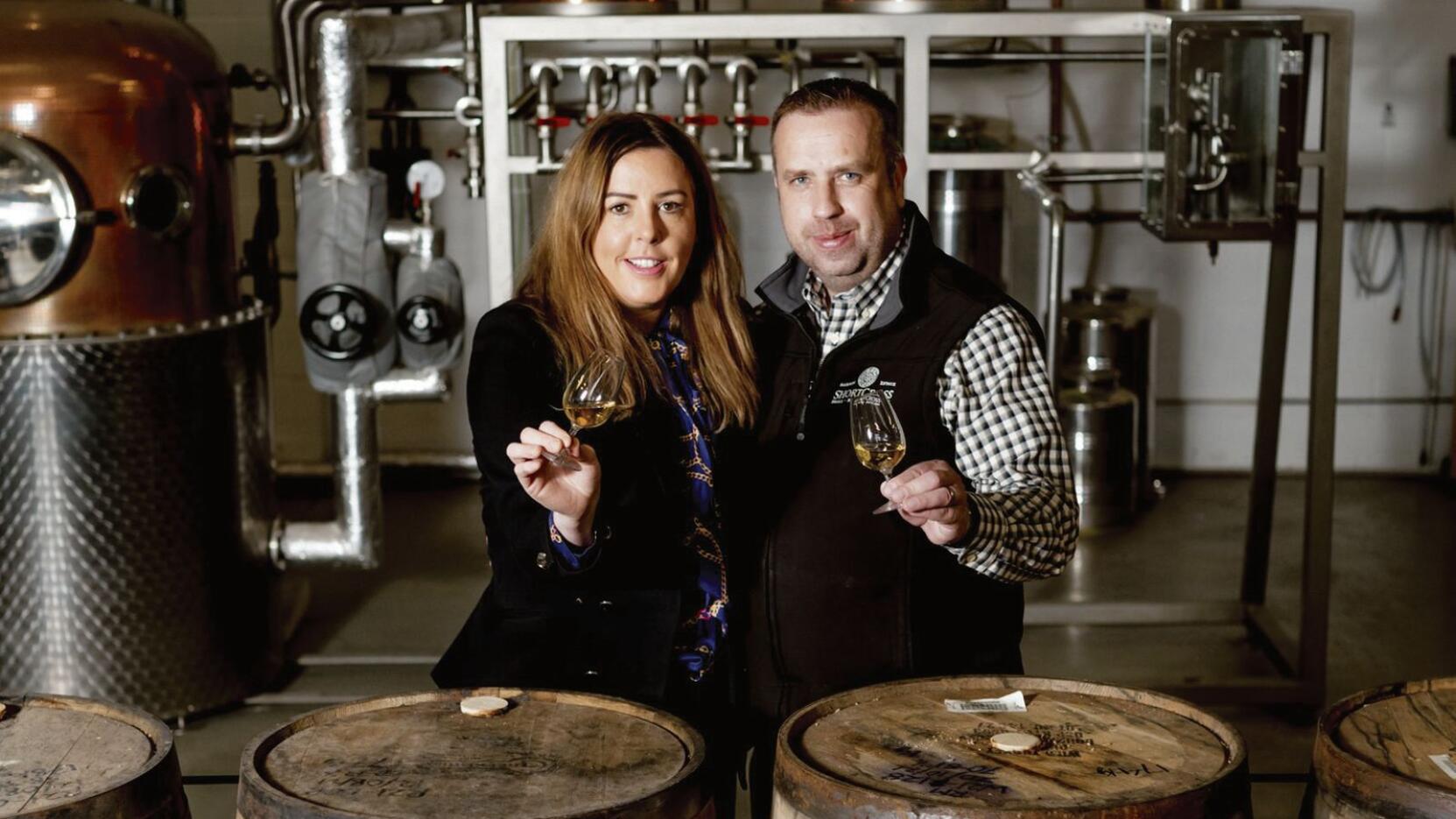
David Boyd-Armstrong, Rademon Estate Distillery,
Shortcross gin and whiskey, and Irish Whiskey Bonding Company
What’s driving this continuous growth in the category, in your opinion, and what could potentially be holding it back?
“Growth is being driven by the revival in interest in Irish whiskey and the abundance of different styles. The other key thing for me is that given the relatively small number of distilleries and the fact that there is not a wholesale market to sell into for blends, the spirit that the distilleries produce needs to be good to drink from the word go which means the quality has to be there.”
Can it continue to grow over the next decade and do you see that slowing down to a plateau, and when might that happen? Are there any threats to the category’s growth, either internally or externally?
“Yes it will definitely continue to grow but maybe at a differing rate, that really depends on how markets that Irish Whiskey plays only a small part in open up and the category gets real traction. The biggest threat is the point at which buyers believe they can buy Irish Whiskey at, as the newer distilleries began to release their own stock the cost of liquid will rise and they can’t supply at the pricing of the more macro scaled distilleries.”
Is America at saturation point, or is there still plenty of room there for more Irish whiskey brands? What other markets look ripe for expansion into now, and what will it take for those to really open up to Irish whiskey? And is there life beyond Jameson? Who will be the next contender?
“I think there is definitely room for more brands and premiumisation in America. I think the markets that are ready for expansion will be those that brands make the decision to invest in and that will be for a variety of their own reasons.”
Looking ahead to your own whiskeys, where do you expect to see the demand – is single malt still the most recognisable style, is there a buzz about pot still beyond the diehards, are blends still king?
“I think single malt will remain the number one premium category as that’s what 99% of the consumer understand to be premium. That said mixed mash bill Irish whiskies such as our Shortcross Rye & Malt and the broader Pot Still category means the variety of Irish whiskies available is almost infinite and I think that will bring more people to the category. With that the types and styles of Irish whiskey blends will continue evolve as the largest segment, and that’s exactly why we have created our Irish Whiskey Bonding Company brand to create new and exciting blends.”

Gareth McAllister, Ahascragh Distillery
How does the Asian market differ from say the American one when it comes to Irish whiskey? Surely it is more of an uphill battle than having that vast body of Irish America to pitch a product to? Is single malt the go-to when selling into various Asian markets, does single pot still have a future or is there just too much explaining with that style? Is SPS still too niche when trying to tempt drinkers away from scotch or bourbon?
“The Scottish have done an excellent job with Asia compared to the Irish. And they have done this without a large Scottish Asian community to pitch to. The SWA has worked on the ground in Asia to raise awareness of the scotch whisky category. They are years ahead of us. The Irish category needs to come together, collaborate more and go as a united front, perhaps through the IWA, Bord Bia and Enterprise Ireland, to raise awareness of the category and our unique style which is Single Pot Still. I don’t think it can happen if we continue to go alone. Yes Asia is all about Single Malt and preferably if it has an age statement. But you cannot ignore Asia. There are 83 cities in the world with populations greater than Ireland. 7 out of the top 10 cities by population are in Asia. 4 out of the top 5 are Asian. Tokyo alone has a population of 37 million people. By 2030, 66% of the world’s middle class will be in Asia. It is really a no-brainer and a huge opportunity for the Irish Whiskey category.”
With the continued growth of the category, is there a possibility it’s due to plateau or even recede in the next five to ten years – surely it cannot go on forever. What does Gareth see in his crystal ball for Irish whiskey over the next decade?
“Asia, South America, Africa are huge opportunities. As above the rising middle class in these regions will have the purchasing power for luxury products such as Irish Whiskey. If we, as a category, continue to work hard to maintain a premium and high quality product with unique Irish innovation, keeping consumer interests and needs at the centre of everything, and protect that in such regions, I don’t see any significant threats. With more distilleries coming on line in Ireland now, bringing their own innovation and differentiation, there will be far more choice for the consumer than in the past, and more to offer than scotch. But we need to go after this as a unified category, with government support and not dampen our chances by over regulation, non-sensical health warnings and brand protectionism for example.”

John Quinn, Tullamore DEW/Wm Grant & Sons
How has Tullamore DEW been performing across the last ten years? Is America still the key market, what other markets are being explored?
“Tullamore DEW has performed exceptionally well over the last 10 years, consolidating its position as a strong number 2 in the IW category. The past 12 months have been challenging as we weren’t able to source our bottles for 3 months due to a fire at our bottle-making facility – but we recovered from that and are back on a good growth trajectory. America is our biggest market in terms of sales and obviously offers the biggest opportunity for growth given it’s the largest market for the category. But we have a strong position in many other markets and over the last 10 years we have been the biggest selling Irish whiskey in markets like, Germany, Czech, Sweden, Poland, Denmark, Slovakia – so while the USA is a key market for us and all Irish whiskeys, we are very strong in Northern and Central Europe also.”
What’s driving this continuous growth in the category, in your opinion, and what could potentially be holding it back?
“What’s driving the category is the consumer appeal of the approachable taste of Irish whiskey – that’s kind of obvious. But the bigger brands, including ourselves, have been investing millions of Euros and Dollars in advertising and promotion with key target consumers such that many have chosen to include Irish whiskey in their repertoire and many others, particularly those choosing spirits for the first time, are adopting Irish whiskey as their spirit of choice. Irish is seen as cool and non-traditional and this makes it attractive particularly to younger consumers.
“I don’t think there’s anything holding Irish back in general. In some markets like India for example the category is getting a strong foothold but is still small relative to Scotch and local whiskies. Local and import taxes are punitive relative to locally produced spirits so for many consumers it’s still a little too expensive but hopefully developing trade agreements will help reduce the significant difference in taxes in the near future.
“We still need to remember that being Irish is not enough, we need to spend a lot of money talking to and attracting consumers. Smaller brands will continue to benefit from the growing size of the category but they will all know that it’s a tough business getting a share of shelf-space and even tougher to get a share of the consumer’s mind.”
Can it continue to grow over the next decade and do you see that slowing down to a plateau, and when might that happen? Are there any threats to the category’s growth, either internally or externally?
“Of course Irish whiskey can continue to grow, if we compare ourselves just to Scotch we sell 15m cases against Scotch at over 90 million cases – so there’s loads of headroom. And we have many new distilleries now offering consumers a wider choice than ever. Also there are many unconquered markets in Africa, South America and Asia – where Scotch and American whiskies thrive – so lots of potential. But we need to keep talking to consumers, through investment in our brands. We need to ensure bartenders continue to recommend our brands and we need to ensure retailers give us sufficient shelf space for consumers to see us among all the other whiskies – and other spirits even. We won’t grow just by appointing distributors, any brand or category can do that. We need to continuously invest behind our brands. Because that’s what all our competitors will do. Where any Irish brands have been successful you’ll find a history of significant investment over a long period of time. Consumers don’t change their whiskey preference without good reason. This is a slow-moving consumer goods business. But if you get a consumer to love your whiskey there’s a good chance they’ll love it for life.”
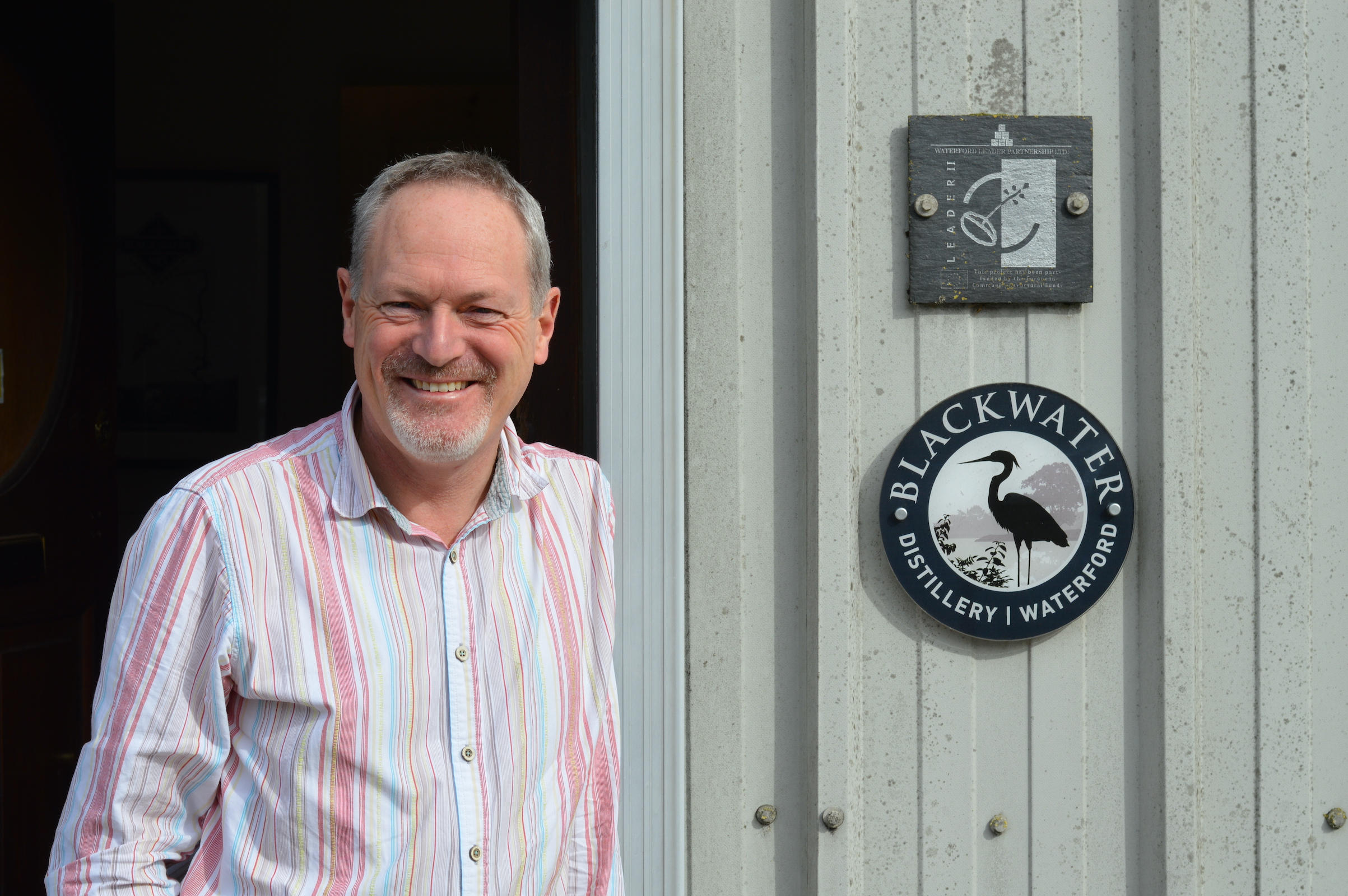
Peter Mulryan, Blackwater Distillery
What’s driving this continuous growth in the category, in your opinion, and what could potentially be holding it back?
“There are several growth drivers. Firstly the machine that is Jameson, and the fact that it has made the Irish whiskey category hot. Secondly there is the ripple effect, so the entire category benefits from the Jameson halo. Finally, you need to appreciate how low the category had fallen, so in many ways we are still playing catch up. On the global stage, compared to Scotch, the Irish category is still relatively small.”
Can it continue to grow over the next decade and do you see that slowing down to a plateau, and when might that happen? Are there any threats to the category’s growth, either internally or externally?
“There is plenty of scope for growth, but the category will need to premiumize. In the US, growth has largely been driven by shots, long term that is a dodgy strategy – it will also be hard to premiumize if this and Irish coffee is the category proposition. With only a couple of distilleries pumping out the majority of brands, right now that is out Achilles heel, we need more distilleries bringing their own stock to market and that will just take time (and money).”
Is America at saturation point, or is there still plenty of room there for more Irish whiskey brands? What other markets look ripe for expansion into now, and what will it take for those to really open up to Irish whiskey? And is there life beyond Jameson? Who will be the next contender?
“There is plenty of room in the US for more Irish brands, but that will take a lot of cash and even more luck. You need to remember that Diageo failed with Bushmills, so money isn’t everything. They key to unlocking growth in the USA is to move the upmarket, so less focus on blends and more single malt and pot still whiskies.”
Looking ahead to your own whiskeys down the road, where do you expect to see the demand – is single malt still the most recognisable style, is there a buzz about pot still beyond the diehards, are blends still king?
“Single malt is still the most recognisable style of whiskey, indeed the Scots have created a lot of the whisky language we use and expect to see – from age statements, to cask treatments to regionalisation. The nerd buzz about pot still will therefore take time to spread but will be helped by the huge growth in world whiskies. Also many of the Scotch whisky tropes are now hindering the Scottish industry, as their drinkers get older and the youth market searches for fresh new tastes. In fact new world whisky is now much more of a threat to smaller Irish distilleries than anything coming out of Scotland.”

Mark Reynier, Waterford Distillery
Can Irish whisky continue to grow over the next decade?
“Yes. One needs to differentiate between Pernod Ricard and Everyone Else; while they have done an amazing job – there can’t be a bar in the world that doesn’t have Jamesons – they have rather defined what Irish whisky is. That’s what happens when one has a monopoly for nigh on 20 years. The company has single-handedly shaped the entire category, technical file and all. That leaves opportunities for alternative, more independent takes, “premiumisation”.”
Are there any threats to the category’s growth, either internally or externally?
“Whisky distilling is no longer a Gaelic preserve, with many new entrants, both craft and larger distilleries from India to Illinois. Inevitably there are differing attitudes, qualities, budgets and visions. One mustn’t forget there is a high proportion of IB to OB bottlings: clarity, authenticity, integrity – in my view – will become ever more pertinent attributes.”
Is America at saturation point?
“I don’t think so. The Irish sector is going to widen, there are now several layers to the Irish whiskey onion, as the product offerings upscale and diversify. So there is still plenty of room for more Irish whisky brands – as long as they move away from the ‘me too’ lookalikes and can differentiate themselves, have a vision, honesty, a USP or ten.”
What other markets look ripe for expansion into now?
“I guess it depends who one thinks Irish whiskey’s target drinker is: Scotch or bourbon?”
What will it take for those to really open up to Irish whiskey?
“Back in the nineteenth century Scotch did it with a singular proposition of the blend, a quality reputation backed with marketing muscle. Single malts followed. Jamesons, one can argue, has fullfilled that trail blaze… it’s up to the new Irish distilleries to add the diversity, and individuality to really ‘fill out’ the Irish proposition.”
What are the next big things in Irish whisky – is single pot still the next single malt?
“Possibly, but it does risk adding to the confusion a little. Cunningly appropriating, from under the Scots’ nose, an inanimate copper object for the title of an entire whisky category already creates a certain level of confusion: every single malt whether Scottish or Irish (and almost everywhere else) is, by law, distilled in a pot still. The increasing genuine diversity of Irish whiskey, away from the handful of ubiquitous suppliers to date, as new smaller distilleries come on stream, can only add to the Irish whisky revolution; this is exciting.”

Donagh McHenry – Global Brand Director, Bushmills
What’s driving this continuous growth in the category, in your opinion, and what could potentially be holding it back?
“Growth and dynamism of Irish whiskey on the whole has to begin, quite simply, with its intrinsic differences of smoothness and approachability and good job done by the category leaders in promoting them. Beyond that, specific to Bushmills, while our overall brand growth is strong, we are seeing healthy momentum for our Irish single malt portfolio and are confident we will grow our single malt share in the years to come.”
Are there any threats to the category’s growth? Beyond America, in which markets is Bushmills seeing potential for growth?
“Irish whiskey has shown continuous growth in all its key markets in recent years and we expect it to continue. For Bushmills, beyond core US and European markets, we are seeing healthy momentum in Eastern European markets, exciting early acceleration in India, China, key markets in Asia and Africa and consistent expansion and growth in GTR.”
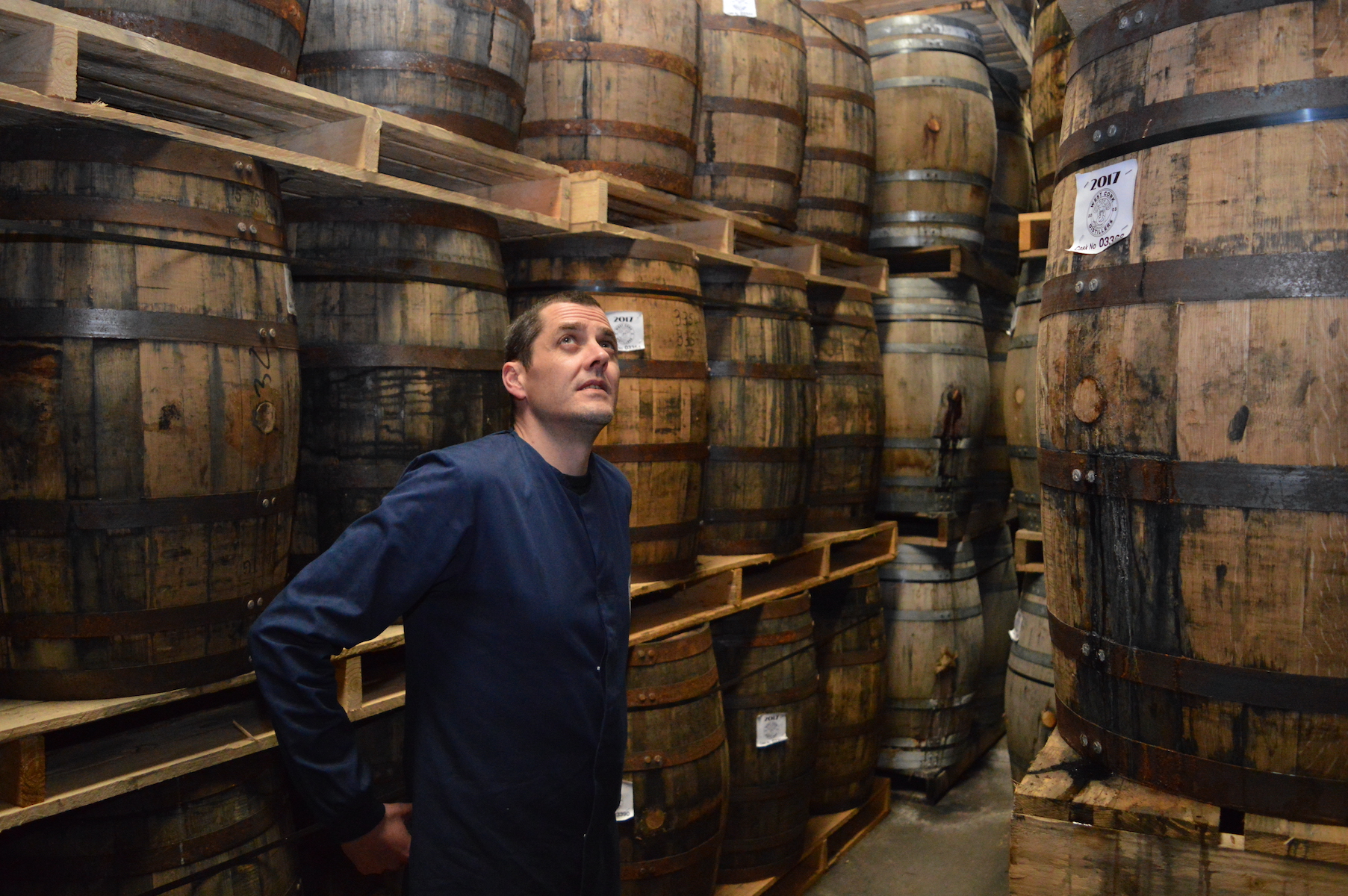
John O’Connell, West Cork Distillers
What’s driving this continuous growth in the category, in your opinion, and what could potentially be holding it back?
“It would be my opinion that the continuous growth of Irish whiskey is being driven by the international markets outside of the US. The perception of Irish whiskey being a one brand category and that Irish whiskey is overpriced could threaten growth in my opinion. There is a certain element of truth of both these issues.”
Can it continue to grow over the next decade and do you see that slowing down to a plateau, and when might that happen? Are there any threats to the category’s growth, either internally or externally?
“I think that the Irish whiskey market will continue to grow for at least the next 15 years. The US and origin markets for Irish whiskey and Scotch account for circa 50% and 10% of total volume sales respectively. This would indicate to me that Irish whiskey is only at the very start of the internationalisation process. The real lack of a age declared subcategory of Irish whiskey will threaten growth, particularly in Asia, in Asia in my opinion. Trade barriers such as trademark registrations may well hinder growth in my opinion.”
Is America at saturation point, or is there still plenty of room there for more Irish whiskey brands? What other markets look ripe for expansion into now, and what will it take for those to really open up to Irish whiskey?
“I do not think that the Irish whiskey market in the USA is saturated. Irish whiskey only accounts for circa 7% of total whiskey case sales in the US and there are many states in the US where Irish whiskey is not even on the radar. We would think that Africa and Asia present huge opportunities for Irish whiskey. Central and Eastern Europe will remain to be very important also.”
With your own whiskeys, where do you see the demand – single malt, pot still, grain, blends – which is doing the best?
“There is strong demand for single malt Irish whiskey but blended Irish whiskey remains to be the dominant subcategory. The growth of pot still Irish whiskey has been slower than I would have anticipated.”

James Doherty, Sliabh Liag Distillers
What’s driving this continuous growth in the category, in your opinion, and what could potentially be holding it back? Can it continue to grow over the next decade and do you see that slowing down to a plateau, and when might that happen? Are there any threats to the category’s growth, either internally or externally?
“The category growth is I think a factor of the international appeal of Irishness which I think is generically a positive in most contexts. The category is being driven by Jameson in the main and their style of youthfull sweet smooth and flexible drinking plays to some generational changes that has to be positive. There is a counterpoint to this which is the growth in premium plus and into luxury collectibles that has also seen extraordinary growth over the last 5-8 years.
“The growth opportunity is still there and the fact that Irish whiskey is growing from a relatively small world whiskey base leads me to think that the potential is still there. It requires a real and consistent focus on quality and protection so that the bigger prize that is 10 years hence isn’t compromised by short-termism and poor quality. It strikes me that we have work to do on the language around the category in that Pot Still as a concept and category is poorly understood and championed even in Ireland and we need to find a way to communicate the flavour benefits of multigrain distilling and its evolution in Ireland which I don’t think is done very well yet.
“The commoditization of bulk Irish whiskey as an investment asset is a concern and could get in the way of the development of brands seen in market squeezing margins unhelpfully and the longer term access to capital and banking facilities in a highly regulated capital intensive industry needs to be watched and this isn’t helped by the current geopolitical environment.
“I think the new wave of distillers and brands need to find their voice individually and collectively – we are at once the oldest distilling nation and relatively speaking the youngest too and that messaging is tough to navigate.”
With your own whiskeys, where do you see the demand – single malt, pot still, grain, blends – which is doing the best?
“Our biggest opportunity in the near to medium term is in our Silkie Irish Whiskeys. I believe the 5-10 year horizon play is in blends and then we see the Ardara Whiskeys being seeded and developed over the next 5 years with the ultimate goal being in that 10+ year window for them. We are idiosyncratic in process and distinctive in our smoky taste which wont be for everyone and are laying down 70% single malt and 30% pot still. I would love to lay down more Pot Still but for many consumers Single Malt is seen as the pinnacle of whiskey making and I think we need to improve the language around the category and enhance consumer understanding for the opportunity to grow and to give me the confidence to shift the balance of production.”
 Triple Distilled Communications