• All things are connected

    DSC_0037

    It was the last night of the 2015 Spirit Of Speyside festival, and the great and good of distilling in the region were gathered at the Laichmoray Hotel in Elgin for one last hurrah. Across the table from me was Alan Winchester, who I suspected I ought to have known, but really didn’t. We chatted about the feat of modern engineering that is Midleton distillery, and he enthused about some of the great hill walks along the Wild Atlantic Way. Then he said “So you’re following in the footsteps of your fellow countryman Maurice Walsh?” As I obviously had no idea who that was, Winchester explained about Walsh – author of The Quiet Man amongst many others – being an exciseman in the region, and how his descendant Barry Walsh, who sadly passed away since, was master blender in Midleton. I was delighted to get all this info, as it formed the backbone of the piece I wrote for the Examiner on my trip. Up to that point the only line I had on my trip was ‘Local man goes on free holiday, gets trolleyed, cries going home’.

    wewewe.jpg
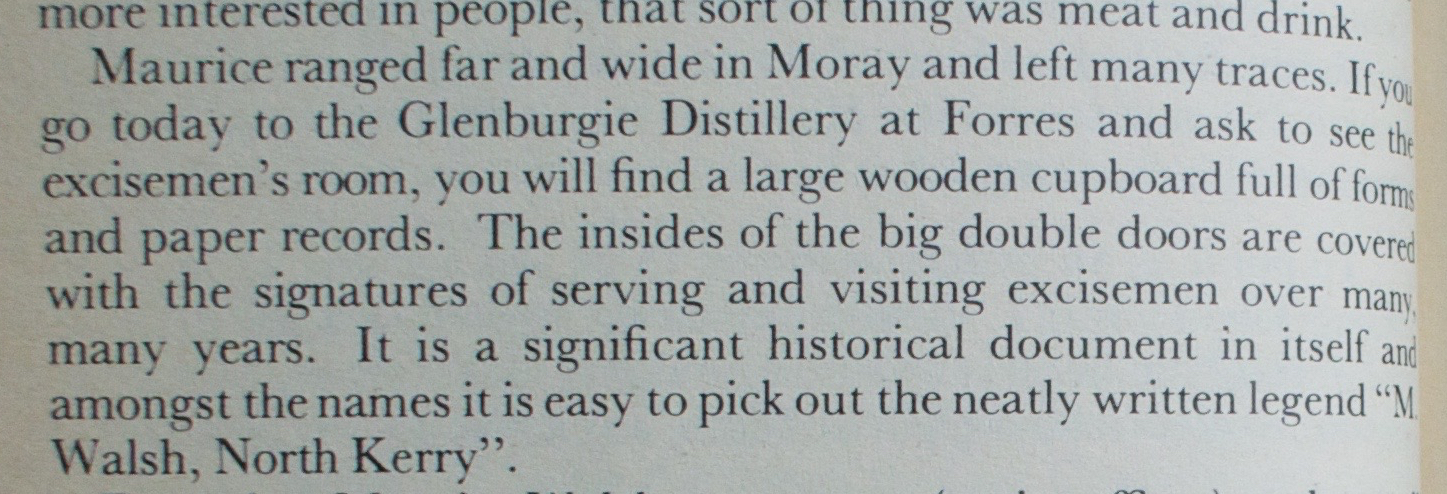
    A page from Maurice Walsh – Storyteller by Steve Matheson.

    As part of my rummaging into the life of Maurice Walsh I came across a snippet of info about his time at Glenburgie; he and other excisemen had written their names on a cupboard door in the duty office. I was fascinated by this, and contacted Chris Brousseau, chief archivist at Chivas Brothers, to see if he might be able to send me a photo of the door. Sadly, Chris informed me that the cupboard was lost to a series of renovations over the years and was no longer on site. Feeling a little crestfallen, it slowly faded from my mind, and I didn’t think about it after that – until I got an email last week.

    La_Canada_Building.jpg
    Los Gatos, via Wikipedia.

    Los Gatos is a small town in Santa Clara County, California. Located in Silicon Valley, it is a prosperous place, famous for being the HQ of streaming giant Netflix, and also home at various points to violinist Yehudi Menuhin, Two Face himself Aaron Eckhart, Apple co-founder Steve Wozniak, and John Steinbeck. Another resident of Los Gatos is a man named Tom Ovens, who was the bar manager from 1981 to  2010 at C.B. Hannegan’s Restaurant in the town.

    Screen Shot 2017-06-17 at 07.32.56.png
    CB Hannegan’s in Los Gatos.

    Los Gatos is twinned with Listowel in Kerry – close to where Maurice Walsh is from – and Mr Ovens visited The Kingdom in September 1994 as part of a twinning delegation from California, a trip he has fond memories of: “Listowel was charming. We were there for the Harvest Festival: Horse racing, Wren Boys, bags of periwinkles eaten with a toothpick, chatting with John B. Keane in his pub and him autographing a book for me.

    “On our final day in Listowel, we all met at a large pub outside of town. The narrow road had cars parked on both sides making it a tight squeeze. As I attempted to leave, I kept looking out my car window, to the back, then to the front trying to fit into traffic. A Garda walked up to me. I thought that he might put his hand up to stop traffic and let me out into the flow. He just leaned in to me and said, “You have no courage” and walked on.”

    But the Listowel-Los Gatos connection isn’t the reason Mr Ovens got in touch. In June of 1994, he had been in Scotland, an annual trip he undertook for 15 years, as he also created and maintained the malt whisky program for C.B. Hannegan’s.

    “I consider myself fortunate that I was able to travel before single malts and the whisky industry itself became a going tourist concern. No Spirit of Speyside festivals, to be sure.  Few distilleries even had visitor’s centers and the managers were quite happy to break up their daily routine to show a visitor around.”

    9382D48B73784BA9A297033A267577E6
    Glenburgie, before it was demolished.

    One one such trip he was in Speyside, and that’s where my story and his intersect: “So it was that in 1994 I paid a visit to Glenburgie. The distillery manager, Brian Thomas, met me and after the usual pleasantries, said, “You’ll be wanting to see Maurice Walsh’s signature, I suppose.”

    “He brought out the cupboard door where many of the excise men of the day had written their names – not carved as I have read elsewhere.”

    Thankfully, Tom took photos of this tiny piece of whisky lore – you can see the signature on the right in the upper quadrant: 

    E5F1E2ED02A44A31A423EC961E7183DC

    And a close-up:

    17DAFD54DC1E4225AACB76B0AF2202A9

    And finally, with the signature redrawn:

    98A1A42F8DAB4DBDA76B595480B3CBA7

    So there you have it – it exists, or at least it did, given that its current location is unknown. It’s a shame the cupboard wasn’t kept, as the distillery seemed quite proud of the Walsh links when Mr Ovens was there: “And later in his office, over a wee dram, he excused himself, left the room and came back with a stack of four old editions of Walsh’s books. They had belonged to his father-in-law who had been a real Walsh fan and Mr. Thomas was keen to show them to me. As was always the case with my distillery visits, he made me feel welcome and quite at home.”

    There is little trace of the original Glenburgie, as it was demolished and rebuilt as a modern facility. Most of its malt goes to Ballantine’s, apart from the odd indie bottling like the G&M one I bought in the airport on the way home from Speyside. I will enjoy it a little more now, thanks to a fellow whisky aficionado on the other side of the world, and a small measure of serendipity.

  • Cheffing, Adam West, Irish college, and the further commodification of my own grief

    Column for the Indo last Wednesday, in which I slowly peel away the mask of terrible comedy to reveal the raging emo sea within.


    They used to say too many cooks spoil the broth. Sadly it seems that broth of any description may soon be off the menu, as the Restaurant Association Of Ireland informs us that we are now short about 5,000 chefs. It seems hard to understand why more young people wouldn’t want to join an industry that elevates icons like Gordon Ramsay, who have shown that the best way to make great food is to scream swear words into a person’s face for 15 minutes, then use their tears to baste a turkey.

    Cheffing is a brutal grind; for those who simply love food, it is a vocation – many great chefs have that innate, creative skill to blend flavours, much like the rat in Ratatouille. However, for people like me, it was the only job we could get. After dropping out of an Arts degree to pursue my true passion – drinking cans – I ended up meandering into a job in a kitchen. I spent two and a half years burning pots, smoking fags and drinking heavily, and while the kitchen I worked in was fantastic, with a wonderful head chef, it was still an awful job. There is little point in the RAI trying to encourage young people into an industry that offers low wages, appalling hours and the chance you might be stuck under a head chef that makes Ramsay look like Bugs Bunny. Until the conditions of working in a kitchen are improved, it will remain a catchphrase for endurance, and many will decide, as I did, that they simply cannot take the heat.

    Speaking of wasted youth, the passing of Adam West brought back many memories of the kapows and kablammos of Saturday morning TV in the 1980s. For many he was their childhood hero, unless of course they had the misfortune of reading Burt Ward’s memoirs, Boy Wonder: My Life In Tights. There are few things sadder than badly written filth, but Ward’s book is some of the lousiest erotica you will ever encounter. Playing on the style of the show (‘HOLY PRIAPISM!!’ Being one good example), it has the worst use of alliteration this side of a Leaving Cert English essay. The book details Ward and West’s exploits as they engage in the sort of shenanigans that would make Motley Crue blush – but Ward also finds plenty of space for complaining about West upstaging him, claiming that his co-star’s laconic delivery was designed to simply ensure that he was on screen more. West’s suitably cool rebuttal of claims that he was stealing the limelight and placing himself centre stage was to dryly ask “What was the name of the show again? Oh that’s right, it was Batman”.

    Irish college season is here again, and with it comes memories of my own forays into Dead Language Zones of Ireland. One of my best memories is of our college standing to attention, singing the national anthem in front of the Tricolour in the main square. As we did, an elderly gentleman cycled past, and as we earnestly mumbled patriotic noises, he shouted ‘sieg heil’, cackled at us, and cycled off down the road. It was about the only thing I remembered from my three summers spent there, as after that I promptly failed Irish in the Inter Cert. In fact, the only lesson I took from my brief encounters with our native tongue was that it was even harder to get the shift via Irish. Úfásach ar fad, as Bosco would say, although I still have no idea what that means.

    My grandfather used to tell my dad a story. One day, he and his buddies were down town, when across the street they saw a contemporary of theirs, pushing a buggy. They guffawed at what they believed to be the craziest thing they had ever seen – the very notion of it, a man pushing a buggy. My grandfather’s generation had a more Victorian mindset when it came to family life – children were women’s work. My dad, however, was different. He swam against the tide of his own sad history, and as I face into my first Father’s Day without him, I marvel at who he was. As I crashed headlong through life, he was always there for me – when I failed the Inter Cert, scraped through the Leaving, dropped out of college, slumped into dead-end jobs, or even told him I was expecting a baby with my girlfriend of six months (now my wife of 11 years) he never stopped believing in me. All my tiny triumphs were celebrated as though I had conquered the world, and a few column inches like these would be whisked off to the print shop to be photocopied and dispatched to relatives all over Ireland. He was unfailingly proud, even I went on TV to talk about getting a vasectomy.

    In the nine months since he passed away I have struggled to rationalise the loss. The warming smugness of my atheism provides little comfort, as I try to convince myself that this is simply the circle of life – not even a thoughtful narration by David Attenborough could make my journey through grief more bearable. I am still trying to figure out a way to say all this on a headstone, how to sum up the endless love and support I received into a few pithy words. He overcame the culture of his times; he grew up with a father, but I grew up with a dad.

    Now that I have inherited two decades worth of the Father’s Day gifts I gave him, I realise that aftershaves, socks, scarves, and books on the GAA are of little consequence, and that time together is the only gift any parent really wants…until the grandkids start screaming, then it’s time to leave.

  • Vader’s Day

    Wrote an intensely pious piece on International Day For Men Who Got The Ride (Father’s Day) for the Indo, so here it is:


    Gather ye round my brothers, and let me tell ye of a fabled time, a golden age where a father’s job was to simply have a job, and little else. Returning from a hard day’s work, he would retire to the drawing room with his pipe and slippers, and nobody was to disturb until he had his tea, whereafter he would depart to the pub. A father was a remote and distant thing, as nature intended. Sadly, times have changed, and now fathers are expected to partake in a child’s life well beyond the fun production bit at the start. So we adjusted and learned, just like we did at those antenatal classes where we were advised on the best technique for gently massaging a thrashing woman who is threatening to murder you.

    Some dads have even gone one step beyond in their pursuit of the best kind of parenting, crossing the threshold from quietly enjoying the miracle of being a parent, to very loudly advertising their skills across social media. These Instadads – like Simon Hooper or Matt Farquharson – have amassed thousands of followers, and are therefore better than most other dads who just get on with it. The Instadads’ accounts bring the revelation that parenthood is not all glamour, glitz and Gap catalogue style perfection, as they capture suburban chaos at its most lightly filtered. But with followers comes power, so here’s a handy guide to jumping on this lifestyle brandwagon.

    1. Capture everything! Sort of… – The key to leveraging your image from ‘just a dad’ to influential #brandad is to portray yourself as a put-upon martyr, drowning in a sea of sturm und drang. Context, of course, is key – if your kids empty out bins and throw stuff about, take the opportunity to snap it for Instagram. Kids are great aren’t they! Do not, however, take photos of the actual filth of your home, complete with fresh turd in the hall courtesy of the toilet training toddler. Nobody needs to be reminded that you can either have an impeccably clean, camera ready home, or you can spend time with your kids. The Instadad understands that, much like with childhood itself, reality must be used sparingly – and nobody needs a stop-motion guide to the norovirus.
    2. Boundaries: Kids are always getting up to mischief, and a photo of them scurrying about like gremlins wrecking your stuff always bring a lot of traction online. However, it’s important to know where the boundaries lie.
      DO: Be like Stephen Crowley, the Dublin dad who photoshopped his daughter into mildly dangerous situations and posted them on Instagram to scare his mam. The photos were a worldwide hit, and Crowley now boasts an impressive 25k followers.  
      DON’T: Be like YouTuber DaddyoFive, whose increasingly bizarre and cruel pranks led to him losing custody of his kids. Shouting at your kids due to mental exhaustion, stress or malnutrition are one thing – doing it for clicks is just bizarre.
    3. Always remember your ABCs – Always Bring Camera. There is no occasion that is not fodder for your online profile – birthdays, Christenings, parole hearings – you are going to need to capture every moment, rather than simply existing in them. Always have that phone ready to capture your child’s first steps, first day at school, or the gradual process of them becoming estranged from you as you obsessively photograph everything.
    4. Sports: Gone are the days of the old chuckabout in the back yard, where father and child would throw the old pigskin back and forth while a Wonder Years narration plays inside dad’s head, assuring him that he has now achieved Cat Stevens’ levels of perfect dadhood. The modern dad has no time for leaving the house, what with feeding the beast of his online profile, so instead challenges his kids to team deathmatches on Call Of Duty, without ever hearing the call of his own actual duties.  YouTuber Finnball regularly posts videos of his son playing him at COD, and despite millions of views and subscribers, still hasn’t become alert to the fact that there might be something slightly Oedipal about a son repeatedly murdering his father with an AK47.
    5. Showmanship: Instadads know that online supports like Rollercoaster.ie or Mummypages are not for them. Nobody needs to hear their anguish about paying bills, being a good father, or what sort of world their children are growing up in. Instagram is a place of surface only, and the myriad challenges of being a parent are far too complex to be captured in a photo of a handsome dad with four kids and two changing bags hanging off him like the late stages of a game of Buckaroo. Ninety percent of being a dad is either undercutting mum’s authority by allowing them treats before bed or helping them escape from the naughty step, or blowing a gasket when someone empties a packet of cheese and onion into the PS4. But instead of all that, just post photos of yourself styled like Hugh Grant’s character in About A Boy, all ‘kids eh?’ and tightly choreographed mess.
    6. Shopping: A trip to the shops with the kids is a fun event, when you get a real taste of the logistics of Hannibal’s trek across the Alps. Take lots of photos of your kids in the food hall at Marks and Spencer, before bundling them all back into the car and going to Lidl to do your actual shop. The modern dad feels that if he manages to get them all to the shops and back without misplacing a single child, he deserves the Victoria Cross, or even a new set of golf clubs, despite the fact that mum makes this trek up to three times a day. Also, the annual festive tradition of getting up at 4am to queue for the Next sale is never an option for dad, no matter how modern he is, because he would then have to admit he isn’t quite sure what age his kids are.
    7. Airports: All the bags and all the kids, all bundled on a trolley! What a great shot! What isn’t great is the fact that they screamed for the entire four and a half hour flight to Lanzarote, and screamed even louder during the layover in Shannon, leaving the poor American soldiers sharing the lounge area with an even more severe case of PTSD. The great thing about photos is there is no sound, and the Instagrammed child is always seen and not heard.
    8. Precious memories, AKA #content: Remember that iconic scene in Kramer Vs Kramer where the father helps his child cycle a bike? Now picture dad letting go too early to whip out his phone and capture the moment, only for the child to crash to the ground, breaking an arm. This leads to another great moment – the trip to the hospital, where you get to share your anguish about your child’s well being with strangers on the internet. Might be best to put away the phone when the social worker asks to have a word about how the accident actually happened. Please note that ‘crafting a brand’ isn’t an excuse for neglect.
    9. Playdates: Few things in a father’s life are sweeter than brand synergy, so why not get some fellow influencers over with their brood so you can cross-pollinate your accounts? So many great opportunities as you force your kids to hang out with a bunch of equally showbiz-primed prima donnas, all jostling for lens time and seeing whose photo gets the most likes. You know; a normal, healthy childhood.
    10. Everything is fleeting: Photos used to be a way to capture moments in time, and were so precious that when people were asked what material items they would save from a burning house, photo albums usually made the top three. Social media changed that, for better and worse, and while it is a comfort to see images of other parents struggling with the chaos of a busy home, it never quite relates the pleasures and sorrows of having kids. Nobody Instagrams a panic attack at 4am over whether you are a good parent, or Snapchats the secret fear that your child might turn out just like you, riddled with flaws and struggling to cope with the world. The Instadad claims to ditch the sugar coating of family life, but it was never sugar coated to begin with – nobody takes it lightly, as it is, in the end, the only thing of true merit you will ever do. Tens of thousands of followers are a comfort to the ego, but it’s the little followers trailing you around the garden who really matter, and their contentment is considerably more valuable than your #content.
  • Scents and scent ability

    tumblr_mb9f6au8cX1qzzos4o1_500

    So I wrote a bit for the Examiner on the Aroma Academy’s Whisky Nosing Kit, something I had tried to buy on Master Of Malt at Christmas but it sold out. The main piece was on George Dodd, who is a Trinners educated Dub, and head of the Aroma Academy, but this was my lesser contribution:


    So you’ve decided to become a whiskey geek. You’ve tried a few brands, learned the lingo (arcane terms like dram, NAS, cask-strength), the science (you know the difference between a washback and a Lyne arm) and the history (the two Aeneases, Coffey and MacDonald), and have even bought a tweed blazer in Penneys so that you look the part. But there is one part of whiskey fandom that is hard to perfect; an innate sense that cannot be trained via literature alone – your sense of smell.  

    Of all our senses, smell is probably the one we value the least. If forced to pick one to jettison, it is hard to imagine someone binning their ability to see or hear in favour of smell, but it is in its subtlety that its power lies – apart from enabling us to avoid danger, evolutionary biologists suggest that it also helps us recognise family by scent, and thus avoid inbreeding. It should come as little surprise that the part of the brain that controls memory and emotion also processes our sense of smell. How we perceive aromas is often guided by our life experiences. But there are some elements of scent that we can be completely objective about – and whiskey carries many of them. As the most complex spirit in the world, whiskey can be a tough sensory code to crack. How do you train your senses to pick out the key notes? It turns out, much like you can train individual muscles, you can teach your brain to isolate and identify a few of the elements most identified with what should be our national drink.

    The Aroma Academy’s Whisky Aroma Kit is a beautifully packaged set ideal for the budding whiskey enthusiast seeking to bone up on their nosing skills, or for the hardcore geek wishing to evangelise friends and family with tutored tastings. Contained within the set are the 24 vials of scent, a helpful book on how to use them, a thorough introduction to Scotch whisky, and some slivers of card that can be used to diffuse the scents, in much the same way perfumeries proffer samples of their wares.

    The scents help you understand how the aroma of whisky works – what phenol is, what the experts mean when they suggest there is a whiff of decay, and yet keep on sipping, what a buttery note smells like, how to identify wet peat, solventine, rosewater, or sherry.

    The vials themselves are numbered and the list of their actual aromas is contained in the notebook – tutored tastings often see the vials being passed around, with guests being asked to have a guess as to what scent each vial held. It’s a fun way to show how we all perceive reality in completely different ways – could you say for certain that what you think of when someone suggests ‘the smell of cut grass’ would be the exact same as what I think of? And what of the variables – what if you have a slight cold that impedes your sense of smell? The whisky expert Jim Murray – whose annual Whisky Bible reviews thousands of whiskies from all over the world – won’t do any whisky reviews for two weeks after a cold in case it affects his ability to discern elements.

    Using the Aroma Academy kit is a great way to tune your senses into the most important elements of whisky, but more than that it gives you the confidence to start proffering opinions on what a whisky smells and tastes like. The 24 scents are some of the key aromatic components, but are also key to ‘talking the whisky talk’. Knowing them is akin to learning scales on the piano before you start rattling out Rachmaninoff. Once you know your phenol from your decay, you can start expanding your vocabulary to include just about anything. A good example of creative tasting notes are those on the bottlings released by the Scotch Malt Whisky Society. They never directly state what distillery the liquid is from, but instead use a  tasting panel to describe it. The results are intriguing – and sometimes baffling. Consider this, a whisky released under the title of ‘Irreverent Painter In Church’: “The nose, with the oiled wood of new church pews, exuded peacefulness and earned reverence – it also had dried papaya and mango, marzipan, lemon curd, sherbet and candied angelica. The palate was chewy and satisfying, with spritzy and zesty elements (orange and lemon jellies, tropical fruits), spiced pear and the sweetness of white chocolate and French Fancies. The reduced nose continued the citric theme – lemon sponge-cake, chocolate limes and a painter with a cigarette in one hand and a margarita in the other. The palate was juicy and rewarding, combining tangy fruits and bitter lemon with cola cubes, pear and chocolate.”

    With the guidance of the Whisky Aroma Kit, and a little bit of self confidence, soon you too could be drawing furrowed brows and concerned looks from friends as you prance about in a tweed catsuit talking about whiskies as though they were the Sistine Chapel – or a cocktail of paint thinner and altar wine.

    The Aroma Academy Whisky Kit costs a very reasonable stg£99.95 (many other brands cost upwards of 200euro) from http://www.whisky-academy.com.

  • Kith and Kinsale

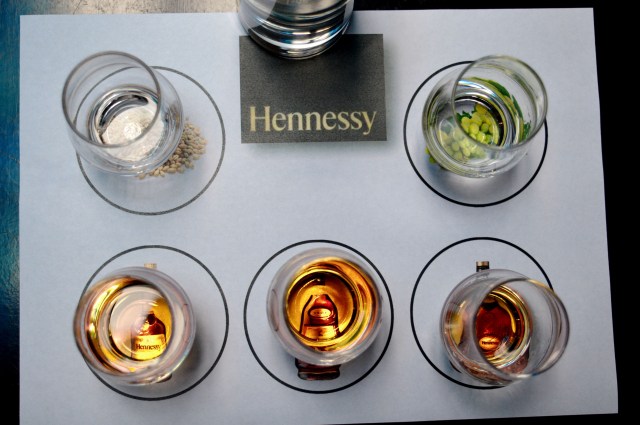
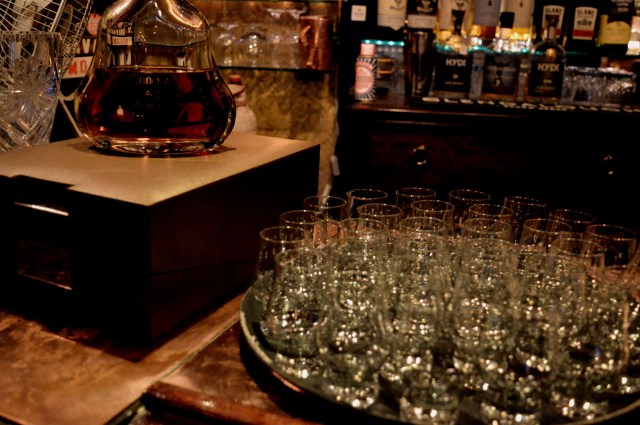
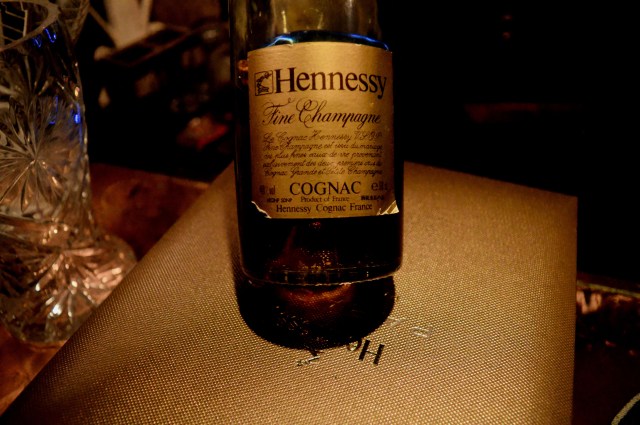
    You can be happily married, or you can live in Kinsale. That’s what I was told by a fellow traveller on Cork Whiskey Society’s expedition to the Folkhouse in the Cork seaside town. Kinsale is like Cork’s riviera, a playground for the rich and shameless, and, if my guide was right, a hotbed of wife swapping and French-style casual affairs. How exciting, I thought. Sadly, my trip to the south county was not in pursuit of whatever name they might have for dogging in a 60ft ocean-going yacht, but the equally aristocratic pursuit of quaffing Cognac. The Malt Lane whiskey bar in the Folkhouse was our venue, and Hennessy was our brand. I met two of the descendants of Richard Hennessy two years ago, but somehow on the night I managed to come away with no free bottles of booze (or ‘bribes’ as they are also known), despite two stylish chaps from the Maison stage managing the entire interview. Contrast LVMH’s stinginess with the generosity of Irish drinks giant Pern O’Ricard, who send me booze with such regularity that I think they might be trying to kill me. Well, as they say in the media, what doesn’t kill you makes you drunker. 

    Brandy can be made anywhere in the world. Just ask Chip Tate, the maverick distiller behind the legendary Balcones Distillery, who after departing the Texan distillery and signing a non-competition agreement, is now going to make Texan brandy. Cognac, however, can only be made in the region of France that bears its name, and only using three grape varieties. They make a poor wine, but once distilled the liquid comes to life. I was surprised at how similar to whiskey the three expressions we tried were – there were differences, obviously, but nothing like my reaction when I first tried an Ardbeg and spluttered ‘what the fuck is this?’

    We were guided through the expressions which went from the entry level VS, to the XO, and on to the Paradis, which costs about a grand a bottle, and which I presume is what they use to water their plants with in Kinsale. It’s very hard to be objective about anything when you are being bombarded with information about how exclusive and special it is – tastings with brand ambassadors tend to be about creating an aura around their product. The Paradis was a good drink, but to my mind, the XO was superior, and not just because I could actually afford a bottle without selling a kidney.

    There was also a rare Hennessy Irish whiskey on offer on the night. Released for the Asian market, it was a Cooley NAS and probably didn’t do much to raise the profile of Irish whiskey overseas (not that Jameson Grace did any better). The packaging also incorrectly referred to Ireland as being ‘west of England’, instead of saying England is to the east of Ireland.

    The evening also featured ‘posh pork scratchings’ AKA a cheese board, great pints, great bants and a minibus journey expedited by two bottle of Jameson Black Barrel. Another great event by the Cork Whiskey Society, not that you get that from my incredibly blurry photos: 

  • Logan’s Run, collagin, sunbeds, tatts

    https://twitter.com/steen_hansen/status/491778120366563328

    Death, despair, dystopian hell and how I hate tattoos – it’s the weekly Bill. 


    When the science fiction writer Philip K Dick died in 1982, his ashes were buried under a headstone that had carried his name for 52 years. When his twin sister passed away five decades earlier, both their names were inscribed on the stone at the same time, presumably by family members who were more worried about cost-effective measures than their son’s mental state.

    Dick lived his life in a state of constant paranoia, hardly surprising for a man who had a grave awaiting with his name on it. It sounds like a plot point from one of his brilliant, paradoxical works, which posed big questions about our concept of reality; questions like, if you knew when you were going to die, would you live differently? It’s a question that we may need to start asking ourselves, as researchers have created an artificial intelligence programme that can estimate our life expectancy. The team of researchers – from the third level thunderdome that is the University of Adelaide – simply feed scans of your organs into the application and it comes back with a 69% accuracy of when you are going to expire. The crushing inevitability of our own demise is something we tend not to think about a whole lot, but probably should. Hopefully this technology will trickle down to the point where you will be able to scan yourself at the supermarket self service checkout and get your own expiration date. Perhaps then we might think less about collecting clubcard points and more about buying time on earth through positive choices. Unless it’s double points on family packs of crisps, that just makes financial sense.

    Speaking of endless waits for ascension into the heavens – Dublin Airport. The Loop, the airport’s duty free, was the scene last week for the launch of a new gin, which in itself is not remarkable, given a new gin seems to land on our shelves with the frequency of Ryanair arrivals. This gin, however, is different. While most gins promise ‘locally sourced botanicals’ such as magpie’s nest or eye of newt, creators Camilla Brown and Liz Beswick have infused their new product from that least appealing yet most local of botanicals – us. Or rather, powdered synthetic collagen, the main structural protein found in skin and other connective tissues. It is most associated with cosmetic surgery or anti-ageing therapies, the most tragic skirmishes in our battle with mortality, and this new product – CollAGin – is a nifty rebrand from the drink formerly known as mother’s ruin to an elixir of youth. That or a sort of Soylent Green for jetlagged housewives.

    Our skin deep obsession with beauty was thrown into sharp relief as recent statistic showed a rise in the use of sunbeds by Irish teenagers. Speaking as someone who used them in his early twenties, I look back now and wonder what I was thinking, as they turned me a shade of orange best described as a Full Scale Dale Winton, but which a friend helpfully called a ‘third wipe’ shade of brown. To this day I still have blotches of pigmentation that show up when the sun is out, like a mid-transition Michael Jackson, or a slowly combusting vampire.

    Sunbeds are awful. Apart from the cancer risks, they make you look like an Hermes ostrich-skin birkin that’s been through the washing machine. And now that another recent survey showed that young Irish people are drinking less too, our poor beige-tinted young folk can’t even claw back their youth by quaffing collagen-infused gin, proving that George Bernard Shaw was right when he wrote that youth is a wonderful thing, but what a crime it is to waste it on children.

    Mortality and skin were the topics in the journal BMJ Case Reports, which detailed the death of a man who got a skin infection while swimming in the Gulf Of Mexico. Suffering from chronic liver disease, he had recently got an inspirational tattoo, which allowed the infection into his skin, and ultimately killed him two months later. Although the ironic elements of his death will bring little comfort to his family, perhaps his journey to heaven will be accelerated by the subject of the tattoo that led to his death: A crucifix with praying hands and the inscription ‘Jesus is my life’.

  • The run of the country

    DSC_0216.jpg
    The view.

    There is a lot to be said for urban living. You can walk to the shops, stumble home from pubs, access public transport, be around other humans or just take a walk after dark without reenacting The Evil Dead, thanks to the miracle of streetlighting. Since I left home two decades ago, I have always lived in urban spaces, first in Cork city, then the scorched hellscapes of Dublin, then back in the heart of the bustling market town of Midleton. But things changed, and now my family and I live in the house I grew up in, three miles outside of Midleton, on the back Dungourney road (not to be confused with the main Dungourney autobahn). The house is a money pit. We should really have known this, as the house is two days older than dirt – or, to put it another way, 41, the same age as myself. And, also like myself, it needed a lot of cosmetic and structural work. So we set to it, knocking a wall or two and blocking up doorways, which has led to the amusing scene of me almost walking into walls, expecting a door to be there.

    The biggest job, however, is the windows. Just like the accursed OS that bears their name, installing windows is an expensive, tedious and generally awful experience that nobody willfully goes through. But we live in a house with floor to ceiling bay windows – a single-paned, teak-framed latticework that allows heat out with the same enthusiasm that it lets the rain in. Large houses are always cold, or expensive to heat, but we are up on a hill, with rubbish windows, and now some nights I go to bed in two hoodies, gloves and a scarf. And none of those are euphemisms. We got a quote from the ever illusive Munster Joinery for a complete refit – 22k. Also, the roofs of the aforementioned bay windows need to be redone at the same time, so that will bring the total cost into the region of 30k. So as a classic #dadhack (ie, cheap, impractical solution), I bought us all parkas, which we now wear around the house, like scientists at an Arctic research base, conducting important research into the effects of sub-zero temperatures on chaise longues and cornicing. I just hope no-one calls only to witness the sight of six parka-clad townies struggling to survive one of the mildest winters on record.

    Living in the country makes you aware of how much the state actually does for you. For all urban dwellers they provide clean water and sewerage systems, as well as offering public transport, roads, paths, streetlights – the list goes on. You move to the sticks and all that ends. Suddenly we are worrying about wells, pumps, septic tanks, sluggish broadband and darkness. And money; we are also worrying about money.

    Most people assumed we would sell this place, and there have been times in the last few months when we wished we had. But those weren’t dad’s wishes. He loved this house – the views, the fresh air, the silence. However, a large part of the reason he would never leave is that my sister died here. She had a heart attack in the shower at the age of 22. She had grand mal epilepsy and was sick for more than half her life. Her bedroom was never changed after her death, and it was only when we started to renovate that her belongings were removed. Behind a radiator we found a Noddy book, with her name on the inside cover, the L in Lucy written backwards in her child’s writing. Dad used to say he could never leave my mum and Lucy as he saw them still in the house. I woke a few times in the night and thought about it, the idea of my sister or my mother drifting from room to room, watching us sleep. It brings little comfort. I prefer my version of reality to my dad’s – the dead are dead and that is that. But I sometimes feel like I am living in a poorly insulated mausoleum. Not helping the Daphne du Maurier vibe is the fact that my youngest son keeps pointing at random corners and shouting ‘ghost’. Either he is watching too much Scooby Doo or the caul he was born with is finally starting to work.

    Not far from where I live there is a massive, gothic, grand old pile, once part of a massive, grand estate, and it is known locally as bringing ill fortune on all who live there. I was only in it once, when my mum brought me to visit a woman who was dying of cancer. She was in a huge upstairs bedroom, with her young daughter playing a piano in the corner. I don’t remember much about it other than that, apart from the dormant fountain outside being full of frogspawn. The (very Catholic) story I was told about the house was that a previous owner had hung himself off one of the trees along the driveway and that the property was doomed after that. It’s not hard to see how people cling to this belief – the various families who have lived there have suffered an uncanny amount of tragedy; decrepitude, immolation, drowning, and a series of young deaths. Also, the house looks like something out of a Hammer Horror film –  you can see for yourself, as it is on AirBnB. But the reality is that the house isn’t all that different, it’s just the comforts of superstition, a sort of diluted, organic version of religion that tells you the same thing – there is Something Else. Every home has suffered tragedies and losses; at least, that’s what I try to tell myself this as I struggle to cope with being the last member of my family, wandering around a house looking for doorways and faces that aren’t here anymore.

    I started writing this post six months ago after we moved in. Now it’s June and the days are longer, the nights are warmer and things generally are improving, both for us as a family and inside my head. The grief of it all is starting to subside a little, and I am coming to terms with dad’s passing. I still have bad days, but not like over the first few months, when at times I thought I was losing my mind. I randomly broke down so many times I lost count – I met one of the palliative care nurses who looked after dad, and I broke down; my wife told me how proud dad would have been of me, and I broke down. Even things seemingly unconnected to dad made me crumble – one day a Down Syndrome child in the hospital walked over and hugged me, and I broke down. It’s basically been a few months of me either A) cracking wise like a dickhead, as is my wont, or B) sobbing openly. But the pain is easing, though I am still haunted by the sense of my own looming demise. I never really thought about death all that much, not like this, with a very real sense of the absolute finality. It still pops into my head from time to time; I just stop for a moment and realise that one day I will be completely and utterly dead, and the shock of it makes me sick. But then you busy yourself with other things and forget for another while, until the next moment of existential despair.

    Working in a hospital has, oddly enough, been a great help. All day I deal with people who have real problems – not ‘my giant house has old windows, boo fucking hoo’ – but actual life-challenging problems. Sometimes when I book follow-up appointments for patients for next year, I know they won’t be coming as they will be gone. Sometimes they know it too, and joke about it. ‘That’s a long while off isn’t it, well sher I might still be here’. Most of the time the patients are elderly, sometimes they are just kids. Perspective is a wonderful gift.

    The good news is that, according to local superstitions, we are due yet another death in the family. I was excitedly telling a neighbour about a robin that keeps coming into the house, and he duly informed me that according to local lore, a robin coming into the house is a sign that someone who lives there will pass away. He was telling me this as we had just cut down a tree in my garden that, unbeknownst to us, contained a magpie’s nest – with two young magpies in it. So the signs are clear – we are fucked, either by the robin, the magpies, or hypothermia if the winter gets bad enough.

    But even superstitions have their limits. I told my neighbour – who is now my shaman in these matters – about when we brought dad home after his diagnosis last summer, and were greeted with the sight of a crow in the living room, perched atop dad’s favourite chair. I asked if he thought that might have been a warning from the fates, some sort of sign; what did it mean. He said it probably meant there was a nest in the chimney.

  • Paul Ryan, dead dolphins, ortolans, country fairs

    ryan.gif

    Week five of my wafflings; eventually I will just turn into Lenny Bruce and use it as a platform for bitterly attacking anyone who I feel wronged me. But for now it’s still mostly shit jokes about deceased mammals.


    Politics is a lonely business. Spare a moment for poor Paul Ryan, current US Speaker Of The House. An all-rounder in high school, he excelled academically and at sports, before being crowned prom king; Ryan isn’t used to being unpopular with young people. So imagine his chagrin this week when a group of eighth graders refused to have their photo taken with him, with one child going on the record as not wanting to be associated with Ryan ‘or his policies’. His attempts to win over the youth vote brought to mind one of our own politicians and their encounters with Da Kidz. In 2003, the then Justice Minister Michael McDowell was speaking to a group of schoolchildren in Laois when he uttered the immortal line: “If you listen to the MTV ethic or the Ibiza Uncovered kind of world – if you think that’s the future, it isn’t.” He was right of course, it wasn’t the future at all, as Ibiza Uncovered had come to an end six years earlier in 1997.

    Thinking back to MTV’s chaotic reality show does make you yearn for a simpler time when bacchanalian mayhem was enough fun for the kids, before they needed to involve deceased aquatic lifeforms in their shenanigans. The sight of a deceased dolphin at a student party in Cork caused outrage after it was posted on that toilet of the soul, social media. Allegedly brought to the party by two non-students, the animal’s carcass was danced around the living room before being unceremoniously dumped out a window, in scenes akin to a Weekend At Bernie’s/Flipper crossover. However, the more astute observers of marine life would say it was only a matter of time until dolphins – the smartarses of the sea – began infiltrating our third level institutions. Ask anyone: They’ve been trying to get into the best tuna schools for years. Pressure to keep up with dolphins is  the last thing Ireland needs, as most school-leavers today already lack a sense of porpoise.

    Donald Trump’s National Lampoon’s European Vacation finally came to a close, leaving us with many fun-filled holiday memories, from his tiny hands trying unsuccessfully to hold Melania’s, to his tiny hands dangling uselessly next to the most cheerful Pope in history, who on the day looked like Bishop Brennan after just being kicked up the arse. On his tour, Trump stomped across the world like a T-Rex, all savage maw, primitive bellowing,  and tiny little hands that almost make you feel most sorry for him. His dinosaur-like tendencies might also explain his affinity for fossil fuels.

    Trump styles himself as the apex predator, but it was the leader of the nation of intellectuals who showed the power of sheer force of will.  Of all the national leaders to step up to the plate and take him on at his own game, few would have expected French president Emmanuel Macron. Perhaps it is Trump’s aggressive style that irked Macron, but given that he is French it is more likely to be the fact that Trump eats his steak well done with ketchup, a crime which I believe is still punishable by death in France.

    Macron grabbed Trump’s tiny hand in his and did not let go, gazing deep into his eyes as he dragged him into an existentialist staredown that seemed to go on forever. Sadly, all good things come to an end, and much like the Americans got bored of calling French fries ‘freedom fries’ after a few months, Macron let go, and the Arc De Trumphe separated, leaving the world to bask in the afterglow of a world leader who realised that sometimes the best way to deal with a bully is to crush his tiny hand as though it were a delicious ortolan.

    If you want to see what real, hard working hands look like, get yourself to an agricultural show, a sort of Electric Picnic where the headline acts are a massive tractor, oversized bull, and a weird sheep that looks like it could be cast as the devil in a Ken Russell film. Outings like the agricultural show are important parts of the rural calendar, as the broadband is so poor that there is little reason to stay in the house: Since moving to the country I have dragged my kids to two holy wells, eight woods, and the site of a War Of Independence massacre, which, oddly enough, was located in someone’s front garden and was guarded by a cheerful corgi, an ironic choice given that it was Queen Elizabeth II’s favourite breed.

    Agricultural shows make you more aware where our food actually comes from, and the gruelling work that goes into producing it. It reminds you that, unlike the libertarian mindset of people like Paul Ryan and Trump, none of us exist in isolation, and we are all reliant on each other – even if it’s just to help push a people carrier out of a muddy field.

  • LinkedIn, Minecraft, fidget spinners, doomsday

    I hate LinkedIn. Perhaps it’s because I have no career to speak of and thus nothing to post on there, but I also think it is a clunky fucking mess. So that was the jumping off point for my column in last week’s Indo. Enjoy!


    In terms of the various selves that we project online – stylista on Insta, thoughtful commentator on Twitter, twitchy comedian on Snapchat – it is on LinkedIn that we are farthest from our own reality. In its clunky interface we paint a portrait of our many academic and professional achievements like a digital Ozymandias, demanding all look on our mighty works and despair at how diligent, agile, and Lean we are.

    But we cannot shift the bang of want, as LinkedIn transforms us into Jack Lemmon’s doomed salesman from Glengarry Glen Ross, begging everyone we know for the good leads. And then there are the helpful LinkedIn updates, which, like a disappointed mother, email you to tell you how well everyone else is doing and asking if you would like to congratulate them on being superior to you in every way.

    The good news is that LinkedIn is about to get even more depressing. From June 6,  LinkedIn will feature a ‘members in your area’ feature that tells you when your contacts are nearby, so you can run far, far away from them in case they challenge you over your wild claims about management experience or ask you to explain what Six Sigma actually is. Of course it will be a great tool for those attending a conference who want to play a version of Pokemon Go, only instead of chasing a rare MewTwo, you will be hunting down that recruitment guy who told you your CV was amazing and then tried to traffick you into a zero hour contract in a call centre.

    To another online world filled with grandiose, non-existent monuments  – Minecraft. The sandbox game came under fire recently as it included a mechanic in the game whereby you could breed parrots if you fed them chocolate chip cookies. Like almost everything else that happens in the world today, this caused much gnashing of teeth by concerned keyboard warriors, who pointed out that feeding real-life chocolate to real-life parrots causes them not to breed, but to die. Obviously, if your child is smart enough to figure out the mechanics of virtual parrot breeding in Minecraft, they are probably smart enough to understand that it is not representative of real life, and that parrots, in their natural habitat, do not eat chocolate chip cookies.

    Explaining the cookie conundrum, one of the game developers said that they were terribly sorry, and that the cookie idea came from the song Polly by Nirvana – a song which A) has zero mention of cookies, instead using the obvious line of ‘Polly wants a cracker’, and B) was actually written about the abduction and rape of a 14 year old in 1987. So whoever gave that explanation can remove ‘public relations’ from his LinkedIn skill cloud.

    Whatever dangers Minecraft may pose to our kids, it is nothing in comparison to the biggest threat to civilisation as we know it – fidget spinners. These small spinning toys are banned from most school playgrounds, with notes being sent home to parents warning them of confiscation if they are seen on school property. Thanks god our schools are keeping our kids safe from harm, and are directing them towards more delicate pastimes, such as hurling, once astutely described as ‘a cross between hockey and murder’.

    I can’t help but wonder if prohibition is the way to deal with the fidget spinner craze, since kids are clearly already hooked. Driving the trade underground will only empower the dealers who control the supply. Before you know it, schools all over Ireland will be like an episode of Narcos enacted by six year olds, with all out war in playgrounds – purple nurples, Chinese burns, dead legs; you name it, these cartels will sink as low as they can to ensure they stay in control.

    Soon the child you love will become as a stranger to you, arriving home at 4am in a chaffeur driven limo, dizzy from all the fidget spinning, stumbling into their cot through boxes of fidget spinners stacked high like Jenga. Before you know it you have lost them to the spinning scene, and shortly thereafter society will fall completely asunder. Or we will just move on to the next moral panic.

    Something actually worth panicking about is the news that the vault containing the key to human survival in post apocalyptic hellscape might be leaking. The Svalbard vault, buried deep in a hillside in Norway’s frozen north, apparently had a sudden gush of water through its doors, as the permafrost around it melted. The vault contains samples of close to a million plants, so that we can replant the earth once we are finished waterboarding it.

    Of course, there is a sweet irony to the fact that the so called Doomsday Vault has been damaged by the very thing that that will probably doom us all – global warming. Perhaps we can chuckle about that in a few decades as we sit atop a mountain surrounded by water, while we burn copies of JG Ballard’s Drowned World to keep warm, and hunt iguanas using fidget spinners, like we used to hunt business connections on LinkedIn.


  • Twilight of the gods

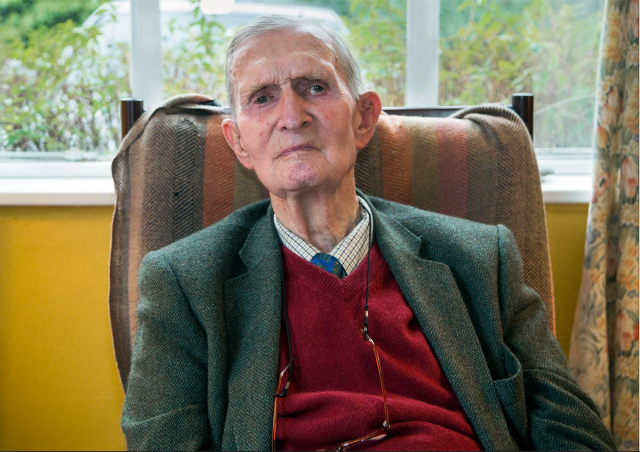
    First, a death. Aleck Crichton, above, passed away recently at the age of 98, an impressive age for anyone, but especially for someone who led a tank battalion through Normandy in the aftermath of the D-Day landings. Somewhat ominously named after an uncle who died in the Great War, Crichton was badly injured in 1944. Returning home to Ireland, he took up a role in the family business – Jameson. He was part of the team who engineered the merger between the last big distilleries in Ireland, an act which most likely saved our industry from extinction. Part of that difficult transition meant that, in 1984, the decision was made to concentrate on Jameson – a decision that has paid off some three decades later. Richard Burrows, speaking to Ivor Kenny in 2001, noted how this singular focus was difficult because the family members of the original distillers were still on the board: “They paid lip service to marketing – they may sound harsh, but I believe it’s true. Their interest was whether their Jameson, or their Powers, or their Paddy was getting the promotional money.”

    Crichton was also chair of the Yeats Society, fitting given that his parents were friends of Yeats’s, a regular visitor to their home on Fitzwilliam Square. Crichton’s memories of Ireland’s Most Emo Nerd were thus: “I would play tag with his children on the square and we were always getting into trouble,” he recalled.

    “I don’t remember him ever actually talking to us but he didn’t ignore us either.”

    “He always dressed impeccably, always wore a bow tie and silver buckles on his shoes. My father and mother were huge friends and he was often in our home for tea.”

    Good old poets – loads of money for shoe buckles, none for buying their own tea.

    The foundations laid by Crichton and the rest of the board of IDL are being reaped in the Irish whiskey boom of today – just look at Mark Reynier’s Waterford Distillery, who recently got a rather large chunk of investment cash. Sez the press release:

    Phase 1 of our project was the purchase of the Guinness Brewery from Diageo in December 2014 for €7.5m. We then spent €2m during 2015 converting it to a modern distillery; developed a unique barley supply chain; distilled 1m litres of new spirit traceable to 46 farm terroirs by January 2017; and established a bespoke warehouse complex at Ballygarran.

    Phase 1 is now complete, on budget and on schedule. The quality of the spirit is first rate supported by both taste and analysis.

    We now move to phase II, as outlined in our plan, the total focus of building up stock volumes to 5m litres.

    Distilling is an expensive business. And with no revenue stream (deliberately) at this early stage, all the more so.

    It is a testament to the strength of the company – the Facilitator, people, shareholders and spirit – that it has secured €20m new funding for Phase II with the investment of €5.8m from BGF (Business Growth Fund) and a €14.4m debt facility with Ulster Bank.

    At the same time as the Ulster facility, BGF was invited to make their first investment in an Irish business. We’re delighted to have them aboard.

    This €20m funding of whisky stock leads, inevitably, to Phase III, the exciting bit, bringing the whisky to market. Roll out those barrels.

    Another snippet of news also came from Waterford Distillery around the same time – the departure of one of the key members of the team. Lisa Ryan had worked on site when it was Diageo’s Guinness brewery,  and was head brewer after Reynier took over (her father also supplied some of the barley for their whiskey). So this came as something of a surprise:

    Ten years ago you either worked for Cooley, Bushmills or IDL or you didn’t work in distilling. Now we have a growing industry, and a desperate search for staff with experience. Staff being able to move from distillery will be good for the industry and for the category. People will do good things with a brand and get headhunted, and a knowledge economy will be created. So the future is bright – even Diageo are back in the game. They jettisoned Bushmills not long ago and now are building a distillery in their Dublin campus. You can peruse their plans for the St James’s Gate Power House on the DCC site, but here are a few snippets:

    There is a really insightful analysis of the move by Louise McGuane here, which explains the smart business of getting rid of one distillery only to build another. Diageo have resurrected the George Roe brand for a sourced blend, presumably from Bushmills, although who knows – with Irish whiskey it’s never exactly crystal clear. The issue of transparency is one that rapidly becoming an unhealthy obsession for me. It’s like Tesco’s fake farms that they use in branding their meat – they say consumers don’t care, and perhaps they are right. But I think that if you stood at the checkout and explained to people that they have no idea where their food came from, and that the shop selling it to them had to invent a place to make that fact seem less unsettling, then they might be less inclined to buy that giant chicken for three euro.

    The same goes for whiskey brands – here’s an example of food marketing: This is the pre-release image of The Whistler, a sourced whiskey from Boann Distillery –

    And this is what the label actually says:

    We can argue semantics all day, but changing from bottled to crafted suggests the hand of marketing. It’s disappointing, not least because I had a few of the Boann whiskeys at Whiskey Live Dublin and thought they had a very strong product. Boann are legitimate distillers who are building a brand while stocks mature – so why bother with the use of the term crafted? It is a weasel word, and the category would be better off without it.

    However, it isn’t entirely fair to single Boann out – after all there are other independent bottlers who are using far more misleading tactics – but the entire category is going to have a credibility issue until this sort of behaviour is abandoned. Yes, we only had three distilleries for the last few decades, and yes we have hundreds of brands from those same three sources, all trying to create their own identity – but our image abroad will not improve unless we call a halt to the theatrical flourishes of food marketing firms.  There are few sights more depressing than Americans tweeting at independent bottlers to ask them about opening times of their non-existent distilleries – and it is happening. Consumers will end up disillusioned when they discover that the brand they love has endeavored to convince them that their whiskey comes from a distillery that does not exist, and our grand plans for whiskey tourism will be for naught.

    And it isn’t just small bottlers sending out confusing signals, the biggest of them all is guilty too, as every bottle of Jameson carries the address of ‘Bow Street, Dublin’ proudly on the label, as though the liquid contained within is actually made there. The liquid is made in Cork, the IDL HQ is in Ballsbridge, and while Bow Street is the tourism HQ, when it comes to the whiskey itself, that address is a phantom limb.

    As the interest in Irish whiskey grows worldwide, I am seeing more and more chatter online about the issue of transparency – I don’t want us to be seen as some sort of snake oil tricksters, slinging whiskey distilled in Fidder’s Green by the magical folk, when it all comes from one branch of the holy trinity of Cooley/Midleton/Bushmills. Supply deals may include a privacy clause, but brands can still be more honest – do it in small print on the back label, the geeks will appreciate it and everyone else won’t care enough to read it. The IWA aren’t going to enforce this – one member told me as much when I asked them about false provenance. They told me copyright was basically all they were concerned with right now. It is understandable: The IWA is just an industry body – the consumers’ best interests are not their top priority.

    However, I was pleased to see the Irish Whiskey Society are holding a night on this topic soon. Here are the details:

    On May 25th, the Irish Whiskey Society will be inviting 8 of the industry’s most vocal movers and shakers for a panel discussion on the liquid identity of our national drink: its making, its labelling, its sales, and its spirit. From startup indies to growing global brands, the panel will include brand builders, critics, distillers, and publicans – for a look at the liquid as its trickling off today.

    If there is change, it will be the geeks and the indies who lead it – they understand that if you make transparency and honesty the core of your sales pitch, you can’t go wrong.

    There was more good news recently for the orphan of Irish whiskey – Bushmills. I find it frustrating to see this brand languishing as it has, and while I was optimistic that the new owners would bring some fresh thinking, I haven’t seen much evidence yet, from the poorly-received Steamship series to the woefully titled Red Bush. They must have some incredible stock there just waiting for the right treatment – gives us some single barrel, some quality age statements – after all, the place is actually doing quite well:

    Northern Ireland’s best-known whiskey maker enjoyed a bumper year in 2015, according to its most-recently filed accounts.

    Part of the 18 months in the accounting period covers a period under the ownership of Mexican drinks giant Jose Cuervos, after the sale of Bushmills by Diageo.

    The brand’s new owners filed a planning application for a major expansion of the Bushmills facility in a bid to double production capacity. It plans to build a £30m expansion to its current distillery and has now been given permission for the facility which, it says, will “effectively double production capacity”.

    It’s also planning to build almost 30 huge warehouses to mature its world-famous Irish whiskey. A strategic report filed with the accounts says its new owners are planning to develop the company through expanding into new markets and increasing sales.

    Increase the sales by all means but please increase the quality of the releases while you’re at it. That place deserves to shine.

    As titans like Bushmills meander, there are of course numerous challengers approaching. There’s Cape Clear Distillery and the man behind it, Adrian Fitzgibbbon, a financier who was one of the leading lights in the Irish wing of Sachsen LLB.  Mr Fitzgibbon initially aimed to set up a distillery and visitors centre on his own property, Horse Island, a small chunk of land about 800 metres off the coast of Skibbereen. Designer Terry Greene, who is behind the neo-celt aesthetic of Barr An Uisce, did some sterling work on the brand:
    Screen Shot 2017-05-20 at 21.26.02.png

    When that was refused, Mr Fitzgibbon moved his attention to the nearby island of Cape Clear, where the plan has been accepted and is now the funding stage. Here are the plans:

    Builsdsside-1.jpg

    Transects-1.jpg

    Again, Terry Greene is working on the design:

    Cape Clear is beautiful, and one would hope that with Fitzgibbon’s background in finance, they will have no trouble whipping up the cash to make it the dream a reality.

    Another Cork resident with a background in finance is Michael Scully, a farmer turned property developer, the latter part of which you can read more about here. He is behind the Clonakilty Atlantic Distillery, which is dues to be built within a unit set up for Ulster Bank before the economy tanked. It later became a gaelscoil. Here are some visuals:


    There’s also Gortinore, who have plans for the old mill in Kilmacthomas, Tipperary Boutique, who are forging ahead with plans for a grain-to-glass operation near Cahir, Sliabh Liag up in Donegal – there are many planned distilleries and it is going to be interesting to see who makes it to market in five to ten years and who falls by the wayside. It is going to be an interesting decade for Irish whiskey, but my own two cents are thus – all the mentoring in the world isn’t going to ensure integrity. The financial collapse in 2008 showed that there is no ‘invisible hand of the market’ which guides best practise, and that humans will generally do whatever suits them best – even if it means lying to the public. The whiskey business has had a tolerance of subterfuge that needs to be ditched so that we – consumers and producers – hold our heads high and make Irish whiskey great again.