• The Workhorse

    Daithí O’Connell is in the rare position of being an Irish person who aspires to ending up in a workhouse. As one of the few bona fide independent bottlers here, his business is not only thriving, but is expanding – and now he wants to give his brand a physical home, in a historic building once used to accommodate the destitute during Ireland’s hardest years. 

    Two years on since we last spoke, much has happened – his Bill Phil peated whiskey sourced from Great Northern is in its fifth iteration, and he has pivoted from being an aspiring Irish whiskey bottler to announcing his intention to bottle five Scotch whiskies – one from each of the so-called whisky regions, starting with a 10-year-old Bruichladdich Lochindaal. 

    “The Caledonian series has four more regions to see a bottle and complete the initial set,  before we can start being able to bottle Scotch ad hoc,” he told me via email.

    “I have my eyes on all major whisky regions plus some other spirits and wines I would like to add which compliment our business model and tie the story together.” 

    And just as Gordon and Macphail and Cadenhead have a physical presence you can visit, O’Connell wants a home for his brand. 

    “Our new headquarters will be at The Workhouse in Kilmacthomas, Co. Waterford, and I’m delighted to say we have a 25-year lease agreed. We will be the single largest tenant on the site with over 25,000 square feet of space plus ancillary parking and access. We will develop the site over three phases and will start phase one in September with equipment landing in October and November.”

    Specifying that tourism is not his priority – despite its ideal location along the Waterford Greenway – maturation, blending and bottling will all be brought in house. But tourism will surely be a component, as aside from the benefit of having all that history and heritage on-site, O’Connell will also be neighbours with Aidan Mehigan’s Gortinore Distillery when it gets up and running, making this one of the few places outside of Dublin where two significant whiskey attractions will be within walking distance of each other. 

    But whiskey is a challenging business, and despite his extensive background in the corporate world, I asked him what three things he has learned since getting into the category. 

    1. “While whiskey maturation might be a slow process the business itself is a lot more fast paced and demanding than I imagined in these early days. 
    1. “My position controlling as much of the process as you can is essential, I guessed it would be but I now know it is for fact.
    1. “Route to market is paramount.”

    But on that last note, he appears to be doing well: “We just launched in Germany, Belgium, Netherlands and Luxembourg and will be launching in South Africa and the US in October. It’s going to be a busy time for us with those and the new brand home so I decided we should do some contract distilling also after we just harvested our first crop of barley.” 

    He is also one of a group of smaller producers who came together as a kind of indie Irish Whiskey Association, under the name The Irish Whiskey Guild. I asked him what they hoped to achieve: “We will represent our members on items our members request to be represented on. We are currently preparing a submission for the DAFM on the Irish whiskey technical file. We will also be working with Bord Bia on items. There is opportunity for commercial cooperation also so all this will happen over time. We are all volunteers who run our own businesses so things move a little slower. 

    “I can’t speak for other members of the guild as to why they do or don’t join the IWA. We do have some members who are in both and we see no issue as to why the two can’t work side by side.  I do know that IBEC membership fees are off putting for some. 

    “Our common goal is the betterment of the Irish whiskey industry. The benefits are that we are essentially a self help group for small producers. We have very different issues than the bigger players and can help each other out by transfer of knowledge and cooperation. We can also lobby for change and have our voice heard as a unified group. 

    “We pay a flat €100 per annum membership sub that is to be used for administrative costs. There are two membership levels. Full and associate. Associates-are allowed sit in on meetings, part take in events etc and express opinions however they have no voting rights. Each full member has a single vote. 

    “Full membership is based on your status as a whiskey producer. Have a distillery that definitely distills whiskey or have whiskey in market plus your own bond or a bonded tenancy in place. Each membership application is taken on a case by case basis.”

    O’Connell is refreshingly honest about the business he is in and how capital thirsty it is: When I asked what the biggest obstacle to getting into the industry was, he was blunt: 

    “Money is essential. Double what you think you need and then double it again.” 

    So just like when pouring a dram, it’s always best to make it a double. 

  • Yet Another Post About Whiskey Labels

    How would you define whiskey production? Is it growing the grain, is it the distilling, is it choosing the casks and controlling the maturation? Is it the brand building, the marketing, the bottling, the distribution, the selling? Is it a combination of all these things or is there an a la carte option where you can say you produced the whiskey if you finished it and sold it under your own brand? It’s a question I’ve been asking myself for years – are creation and production two different things? And if you didn’t create a whiskey in any technical sense, can you claim to have produced it? 

    Imagine you got some old whiskey stock, maybe you tweaked it a bit, recasked it, finished it in something weird and wonderful, changed it a little (or not at all), and now you want to sell it while increasing awareness of your brand. So you stick your distillery’s name on the label and away we go. Your distillery, however, might not even be built, or might have just started distilling. If your sourced whiskey wins an award, you puff your chest, high on stolen valour, and say, look on my works ye mighty, but don’t look too closely because it’s not technically my work.

    Of all the things I have written about in Irish whiskey, few have consumed so much of my energy (or wordcount) as this topic, which goes by a few names – transparency, provenance, honesty, call it what you want, but I have swung from complete frustration about the practise to understanding that it is the growing pains of an emergent industry. Irish whiskey’s light was almost snuffed out, and it took a lot of wild pivots to keep it alive. You can go back and read some of my conjecture on the subject, but on the subject of labels I would say this – the holy trinity of Irish whiskey all had label or branding issues – Jameson was no longer made in Bow Street despite that address being on the label until recently, Tullamore DEW was no longer made in Tullamore (but soon will be from there once more), and ‘Old’ Bushmills was not founded in 1608 – so if you take that as a jumping off point, it is little wonder we ended up with smaller non-distilling producers (NDPs) becoming confused about what was acceptable.

    I don’t think any NDP sets out to deceive, but there are so many little white lies in Irish whiskey that it’s hard not to draw the overall conclusion that change is needed. 

    I also understand the financial dilemma facing most new distilleries here – in Scotland you can approach a financial institution and say we want a massive amount of capital, and you won’t see a cent of return on that investment for five to ten years. We don’t have that long-standing culture of distilling here – so I would imagine accessing funds could be something of a challenge. Easier then to generate revenue through selling sourced whiskey, and at the same time build your brand. 

    There are many distilleries here that have been built by selling sourced stock under their own name. But what is the difference between using the name of a planned or new distillery and using the name of a distillery that does not exist? Schrödinger’s Distillery – a distillery that both exists and does not exist at the same time. If St Patrick’s got hammered over their use of ‘distillery’ on their branding and labels, they could have avoided it by bunging in some plans for one early on. 

    Does the end justify the means? I think not. In fact, I think it massively devalues a brand when they have been selling sourced stock under their own name and then suddenly shift to their own youthful spirit. I know I give far less of a hoot about indigenous spirit from Distillery X when they have been flogging Bushmills, Cooley, and Great Northern for six years.  

    In an ideal world, no distillery would be allowed to put their name to a sourced liquid. In an ideal world we wouldn’t have fake farms either, but whiskey is different – I don’t care about what the branding is on my fake farm veg because I’m not paying premium prices for it, but if I am expected to pay Irish whiskey prices, I do expect some level of transparency. I expect that you don’t pretend, or endeavour to create the illusion, that you made the liquid in your bottle when you did no such thing. 

    Provenance has become a hot topic here – guidelines were released which made it clear what could and could not be printed on a label.  

    As detailed in a previous post about the guidelines, I made a complaint about one brand and it was changed within a week. So the system is there if anyone wants to complain. And obviously, somebody does, and somebody felt their complaints were not being acted upon domestically, so somebody took that complaint to the EU. 

    In June of this year, Deputy Catherine Connolly wrote to the Minister for Agriculture, Food and the Marine Charlie McConalogue asking ‘if his attention has been drawn to the fact an association (details supplied) has taken a complaint to the EU against his Department alleging non-enforcement of regulation (EU) 2019/787 with regard to a lack of enforcement of spirits provenance regulations resulting in multiple incidences of false provenance information being provided on products that fall under a protected geographical indication designation; his views on the matter; and if he will make a statement on the matter.’

    And a statement is what he made – you can read the full version here, but this is the pertinent part:

    ‘Since January of this year, the Department has assumed responsibility from the Health Service Executive (HSE) for the assessment and approval of labels for Irish Whiskey and Irish Poitín. When assessing Irish whiskey labels, the Department assesses ‘provenance’ under Article 7(1) of Regulation (EU) No 1169/2011, which states “1. Food information shall not be misleading, particularly: (a) as to the characteristics of the food and, in particular, as to its nature, identity, properties, composition, quantity, durability, country of origin or place of provenance, method of manufacture or production”.

    ‘Where uncertainty arises regarding who or where the product is produced, the Department seeks clarifications from the FBO. Furthermore, where FBOs are not directly involved in any of the stages of production, the Department does not approve the label unless it states that the product has been ‘produced for them’, as opposed to ‘produced by them’. Additionally, the Department does not permit references to Distilleries that do not exist.’

    If the Minister’s response in June was a warning shot, apparently it went unheard. As reported in the Sunday Independent, an email circulated recently to Irish Whiskey Association members stated that the IWA had ‘recently become aware’ that since the Department of Agriculture, Food and the Marine (DAFM) assumed the role for label approval as part of the verification process for Irish Whiskey in January of this year, ‘the dept have been imposing new requirements for brand owners or those who have not produced their own whiskey’.

    “These requirements consist of stating “produced for” on the back of the label even in cases where there is no claim as to provenance,” the email stated, adding that ‘the imposition of these requirements were not discussed or communicated to industry’. 

    “Furthermore, we believe that this requirement should not be mandatory,” it stated.  

    It should, though, because this requirement is about the most basic level of transparency one could hope for – that sourced whiskey is declared as such, in small print, somewhere on the label. Because you know what you get when that isn’t the case? This: 

    It’s worth a read through that whole thread as the brand explain the situation, but the overall message from the person who posted it is clear – if it isn’t explained clearly on the label that this is sourced whiskey, then no amount of ‘we’ve always been very clear about sourcing’ will explain away what looks like a deception. Whiskey isn’t white label software, you don’t get to rebadge it and sell it as your own – it is intrinsically tied to its source.  Then there is this:

    Chaos indeed.

    Obviously, sourcing whiskey isn’t as simple as these cases – take Bushmills white label, AKA their blend. Bushmills doesn’t have a grain distillery (they are in the process of building one) – so they source that component from Midleton. Should they put ‘produced for Bushmills’ on the label because one key ingredient is from another distillery? What about the Method & Madness single malt from Midleton – which was distilled in Bushmills – would that be a ‘produced for’ also? What about Paddy? ‘Produced for’ Sazerac? 

    Whatever about difficult decisions, I think that if we want to be taken seriously, this needs to happen. If it affects sales then so be it (I honestly don’t think it will). We can’t build this glorious resurrection on the omission of the truth. But this change could affect a lot of other spirits – how many Irish artisanal gins are made by the same industrial producer? How many are mostly neutral spirits cut in a gin still with the proverbial local botanicals? Where is production in those cases? 

    With this case going to the EU, it’s important that producers here get their house in order. Consumers want more clarity and provenance in what they eat and drink, and anyone paying the prices Irish whiskey producers charge deserves the truth. 

  • Death Is Not The End

    Not far from where I live there is a big, old house. Built in the late 1800s, it is a crumbling gothic pile that was once the seat of local nobles. I have no idea when the last of their line left it, or how, but from the time my family moved to the area in the 1970s, the house was known to be cursed. Locals in what was then a hyper-Catholic rural area said that a previous owner hanged himself from one of the trees that lined the avenue into the property, and that was what damned it. 

    I was scared of it when I was a child – it sits on a steep hill and I used to sprint up the road to get away from the entrance as fast as I could. In the bad winter of 2010, my father’s car went into a tailspin on the hill outside the house and his car smashed into a bridge. A few feet more it would have ended up in the Dungourney river and he would most likely have died. He said once, half joking, that the house was to blame. 

    I was only in the property once, when my mother went to visit the woman of the house, who at the time was dying of cancer. I remember an old, dusty bedroom with thick air, a gaunt woman sat up in bed, and a little girl playing a piano in the corner of the room. The girl and I were sent off to play. She brought me down to show me the decrepit fountain outside – dozens of froglets had spawned, but the water level was too low for them to get out, and they just moved about in a swarm in the shallow, stale water, trying to escape. 

    The mother died shortly after. The family then moved to a renovated barn next door. Not long after that, the father died. The kids, two boys and a girl, moved away to be raised by relatives. The girl burned to death in a freak accident in her 20s. I heard one of the sons drowned but never had it confirmed. The other brother, I don’t know where he is. 

    The house sat idle for years, silent and empty, waiting. Eventually it sold, and with great fanfare it was renovated by the people who bought it and is now a B&B. Sometimes I get tourists calling to my home looking for it and I often feel like the hillbilly gas station attendant in a horror film, and wonder if I should warn them about what they are heading into. It’s cursed, I would whisper, and they would ignore me and some horror would befall them. 

    Of course, the real reason I want to tell them is because I like telling the story of the cursed house. I told my kids, with all the grand flourishes above, and they also now think the place is haunted. Everyone likes a scary story. They bring the promise that there is something else; that death is not the end, that we persist, rather than burn out, and be forgotten. And besides, I am always here for something a little darker. I’d go full goth in my attire if it wasn’t such a stupid look for a guy pushing 50. Nobody wants to dress like Danzig when they’re doing the big shop in Lidl. 

    To cater for the needs of emo seniors like me, Bushmills released The Sexton. It is a very slick, very stylish bottle; hexagonal to represent the columns of the Giant’s Causeway, all bedecked with images of skulls and ye olde fonts in gold and black. As affordable NAS single malts go, this is a remarkably beautiful bottle. I’m not sure about the website’s tagline of ‘You have a single life, drink a single malt’, but it’s not my place to tell them their copywriter needs to spend a little less time in the sun. 

    The Sexton has two brand narratives; for the casual fan, there is the overall steampunk, Victoriana, eldritch aesthetic. Brand ambassadors can waffle on about how sextons were the people who tended to the graveyards in the days of yore, spin some yarn like I did above. 

    If they are speaking to drinks nerds, they can change lanes and give them the unromantic, unadorned facts of The Sexton – a youngish four-year-old single malt from Bushmills aged exclusively in Oloroso sherry casks from the Antonio Paez Lobato family in Jerez, it retails for a reasonable 35-40 euro. It fills a gap – it’s not Black Bush, nor is it the ten (which you can pick up for a similar price) but it is a stepping stone for those who perhaps are drawn to its visual appeal.

    Bushmills obviously put a lot of weight behind this brand as they appointed Alex Thomas as master blender to the brand (Helen Mulholland is the master blender of Bushmills). Thomas previously worked in a lumber merchants for ten years before taking a role as distilling coordinator at Bushmills, followed by five years as maturation manager before her current role. I don’t understand the strategy of giving one brand within a distillery’s family its own blender but perhaps there are plans to expand the range. It’s an enjoyable whiskey that comes with a lot of recommendations about cocktails; it is accessible and very affordable, and rapidly became the top selling Irish single malt in America after its launch in 2017. After sponsoring a nighttime photography competition and releasing a podcast of grim retellings of bedtime stories, The Sexton also recently doubled down on its commitment to all things dark by becoming the official drink of The Walking Dead

    There is a buzz about Bushmills in the last couple of years that is hard to ignore – massive expansions, a huge grain plant, super premium and super mature releases as well as The Sexton or the expansion of their broad array of blends. Their parent firm also bought out the rest of their contract with a Famous Irish Sportsperson, thus placing themselves a little bit further out from his blast radius. All this shows that in Becle, Bushmills appears to have found an owner that is willing to invest in it as others failed to do, and that the giant of Antrim is finally stirring. All it took was the right owner – after all, there is no such thing as curses. 

  • Bad Timing

    I did not like La La Land when it came out. It felt like everyone else did, which in itself might have given me unrealistic expectations about how life-changing it might be. Perhaps my nonplussed reaction to it came from the fact that I don’t watch a huge amount of musicals (does anyone any more?). Whatever the reason, I thought it was poor. Nice songs, good cast, let down by meandering plotline and a sense of smug self-satisfaction. 

    Fast forward to 2020, during one of those rambling scrolls through Netflix I stumbled across it again and thought, well let’s give this a go. It’s relatively PG, so I can stick it on when the kids are about. Why not watch it again on the off chance I missed what everyone else saw, just like I did with Magic Eye paintings, moving statues, and that blue/gold dress? Long story short, La La Land is amazing. Since that second viewing I have watched it again, and again, and again, and loved it more each time. The film didn’t change, but I and the world around me did; I came to it the second time round with no expectations, with a more open mind, and besides, I was now in lockdown and the primary colours and big musical numbers of La La Land was just the escapism I needed. I’m sure there is an irony in the fact that a film about good things happening with bad timing became my top film of the last 12 months, but there you go.  

    Ardbeg Ten was the first peated whisky I tried. Someone I knew had a bottle and it was clear they were not into it, so they offered it to me. I gave it a try and was struck immediately at how different it was to all the other whiskies I had tried (I almost refused to accept it was whisky, checking the label to make sure, like a drunk in a movie who sees a UFO or talking dog and then throws a bottle over his shoulder). An acrid, smokey tang, it was a thunder bolt for my senses. I genuinely wasn’t ready for peat, especially not at that level of intensity. I was only starting my journey into whisky and frankly this came a little soon. It’s like suddenly being told oh, you like Guns ‘n’ Roses, well how about you try some Pig Destroyer? Like boiling a frog, you gotta do it gradual. 

    But I still took the bottle away with me (the owner was delighted to see the back of it). I nibbled away at the bottle over the intervening years and while you couldn’t say it changed, I did. Like Alan Patridge’s sudden revelation that, actually, he likes wine, despite all those things he said earlier – I actually really like peat, despite my initial recoil. It’s not the centre of my universe but peat is one of the facets of whisky that is accessible for a casual fan like me. I can taste something and say, yeah, this is peated. I couldn’t tell you cask type, age, mashbill, or anything else, but smoke is one of those things that triggers the primitive parts of our brain – Smoke! Danger! Fire! Warmth! We can all identify smoke. I could be nosing forever to try and guess a single other detail about a whisky, but peat will always make itself known. It is a broad and beautiful brushstroke in any whisky, and, in my experience, I have yet to taste a whisky where I thought wow, they should really dial down the peat here

    I still have that bottle of the ten sat in a press somewhere. I never got around to finishing it, but I have milled through three bottles of Uigideal, which is an absolute gem that I recommend to anyone. Aside from that I don’t know much about Ardbeg, aside from the usual Hunger Games of their committee releases, when Whisky Twitter goes into meltdown in its attempts to secure a bottle. I’m here for the everyman, on-the-shelf-in-the-offie drams, I don’t need to hassle or the drama of trying to get the rare exclusives. I don’t want to have to find the mythical isle of Tortuga, Torbay will do just fine. 

    So while I like to sound the fanfare for the common dram, I am also comfortable with the odd freebie, which is why I was happy to celebrate Ardbeg Day this year by taking delivery of a free bottle of the ten from my new best friends at The Hive. I assume they are a PR firm and not an invading alien species who think with one mind and whose sole aim is to destroy humanity, but even if they are flesh eating creatures from another galaxy, free booze, amiright? 

    So on to some stats lifted straight from the Ardbeg website – 

    • Ardbeg uses malt peated to a level of 50ppm at the maltings in the village of Port Ellen. It is then milled in Ardbeg’s rare Boby malt mill, installed in 1921.
    • Water comes from Loch Uigeadail, via Loch Airigh Nam Beist, via Charlie’s Dam at the distillery, and into the mash house.
    • The washbacks at Ardbeg are made of Oregon pine. Fermentation time is longer than other distilleries because of the high phenolic content of the original malt.
    • Ardbeg distils twice.
    • On the Lyne arm of the spirit still at Ardbeg there is a piece of apparatus called a purifier. As the boiling continues in the spirit still, the heavier impure alcohols reach the top of the still (the initial light alcohols are sweet and fruity). Some of the heavier compounds are captured in the purifier and fed back down into the main pot of the still. As the boiling process continues, the heavier phenolics come through, this occurs from about halfway through the spirit run. The purifier gives a little extra reflux, so we have two distillations and a little bit more. The purifier is unique on Islay and balance is the key.
    • The vast amount of whisky matures in ex-Bourbon oak. In maturation only 1st and 2nd fill casks are used. Their new 1st fill Bourbon casks come from suppliers in the US. Other casks come from Speyside Cooperage, and Craigellachie. 
    • Primarily barrels have been used in the past, but now there is a substantial mix between barrels (for Ardbeg Ten Years Old,) Sherry Butts (some of which are used for Ardbeg Uigeadail), and new French Oak Barrels for Ardbeg Corryvreckan. And these are their three core expressions.
    • Because Ardbeg sits very close to the sea, the whisky receives a certain salty, iodine character while it matures. 

    I included that last factoid despite my best judgement as, if I’m honest, I am extremely cynical about maturation location as a factor in flavour. If it’s stuck in a pine forest will it faintly taste of pine? Midleton’s Dungourney warehouse complex is surrounded by pine woods, and I will chortle if they ever claim it gives a pine-fresh Toilet Duck-esque flavour to the whiskey. 

    So Ardbeg Ten – a dank bass note of a dram, in a bottle with a label that looks like a biker insignia, and tastes like arson. So from that first smokey taste years ago, what do I reckon now? 

    Nose: Cordite, treacle, liquorice. 

    Palate: Smoke! Fire! Etc! Fenugreek, caramel, dark chocolate, aniseed. 

    Finish: Demerara sugar, mint, toffee. 

    Is Ardbeg Ten the best intro to peat you can have? I would say not – I’d steer any newcomer to one of the more subtle peated drams (always love a Benromach) before this hefty unit. Ardbeg is unashamedly peated, and while I respect that, and while I found my way back to peat over time, not everyone will give it that second chance. But everyone and everything changes – the idea that we spend our lives in some kind of epicurean stasis is a sad one indeed, so here’s to second chances. 

  • The Bog Of Bones

    Not far from my family plot in Midleton cemetery lie the graves of the Clonmult Martyrs. On February 20, 1921, 20 IRA volunteers were surrounded in a remote farmhouse by British forces. Some were killed in a gun battle, some died after – the Irish side say those who surrendered were summarily executed, the British side say they were shot while trying to flee. The Clonmult Ambush, as it became known, was one of the heaviest single casualties of the War Of Independence. A total of 22 people died in the ambush and subsequent executions – 14 IRA members, two Black and Tans and six suspected informers. There is a memorial in Clonmult where the battle happened, and there are commemorations at the graves in Midleton each year.  

    A stone’s throw from their graves lies that of Martin Corry TD. He was a colourful character in his later years as a political representative for east Cork in the Irish parliament, but during his time with the IRA in the War Of Independence he ran a notorious prison nicknamed Sing Sing inside a vault in a cemetery in Kilquane. Corry claimed to have tortured and killed dozens of men and dumped their bodies in a nearby bog known as The Rea. He chuckled about it in later years, as he discussed the executions. 

    History isn’t binary. I know I’m not the first person to say that, but it’s worth repeating. All our glorious dead were not saintly angels, all the hated invaders were not monsters, and to commemorate is not to celebrate. My great grandfather was in the Royal Irish Constabulary (as was Martin Corry’s father) and I never gave much thought to it until 2019 when a Government minister suggested commemorating those who served. It was derided as a celebration of oppression, of brutes – these vicious hateful men who joined the British police force in Ireland were, in the eyes of some, no better than the gestapo. My great-grandfather was an ordinary man – I looked him up on the National Newspapers Archives and most of his appearances in the pages of the Southern Star (he was stationed in Bantry) were testifying in drunk and disorderly cases, or in one case, a trial where someone was accused of failing to remain in control of their cow. But in Ireland now, a century on, to have anything other than loathing for any member of the RIC is to be a card-carrying fellow traveller with the invaders. The RIC’s role in Irish society has been conflated with the vicious, murderous actions of the Black and Tans and the Auxiliaries. History crushed, compacted, and compartmentalised.  There was to be no space for a commemoration of RIC members. How wide do we want to cast this net – after the RIC, who next? Anyone who worked for the state under British rule? Civil servants? Anyone who wasn’t actively planning sedition for the entire duration of their lives under the crown? How many traitors can we find?

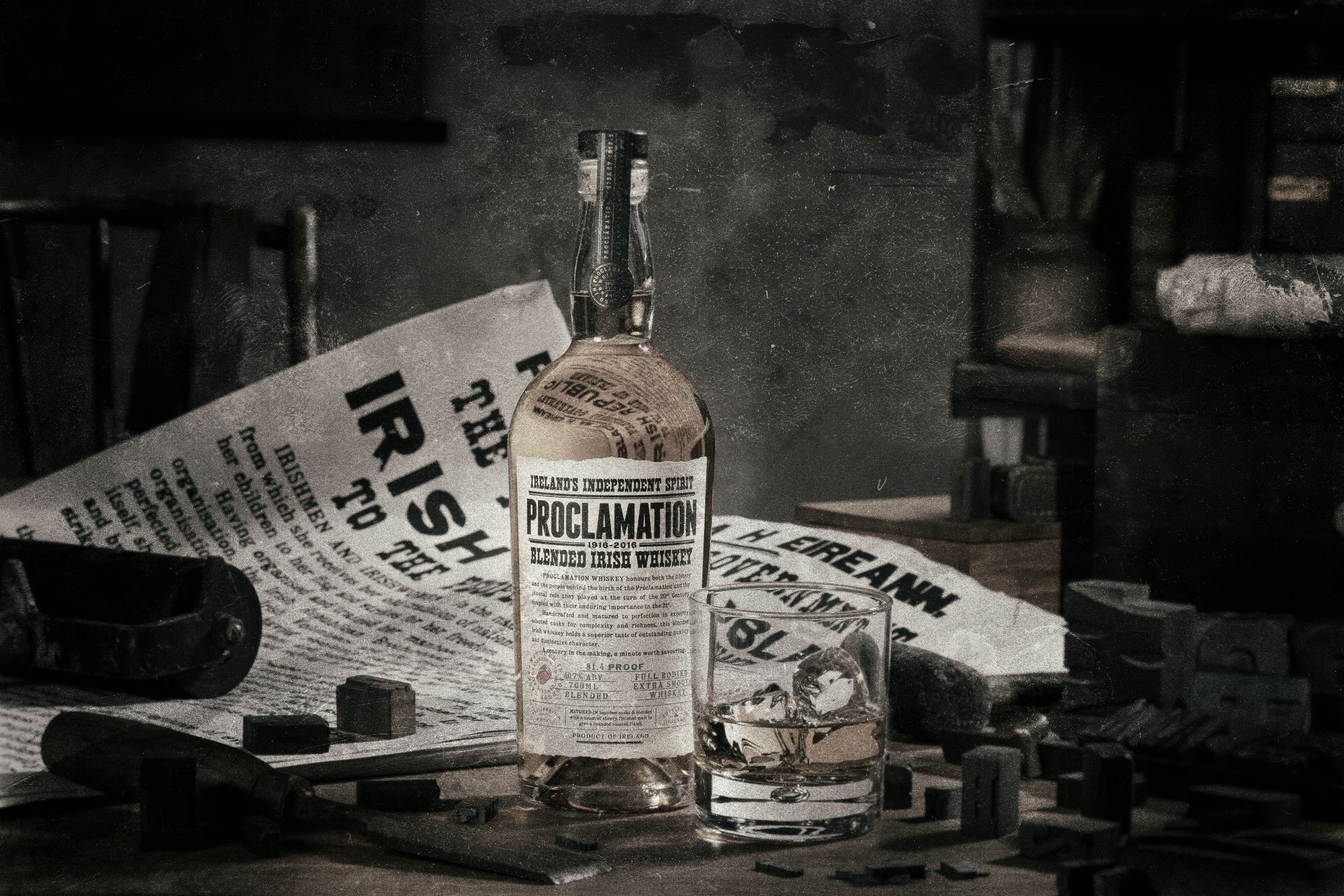
    Bringing out a whiskey in honour of, or celebration of, or to commemorate the Proclamation of Independence makes economic sense (technically this whiskey is in honour of the printing of the document, a handy sidestep from anything with too strong a whiff of cordite off it). If we get a little uneasy or begin to sneer about things like this, which effectively sell Irishness to people who are into that kind of thing, we should remember that we have a remarkably powerful brand; we are the loveable rogues whose national holiday is celebrated across the globe. We don’t get involved in military quagmires, and are often seen as a relatively benevolent nation of poets and pissheads. Big Green is a powerful USP – slap a shamrock on your product, ship it to America and let it fly. I have no doubt that this whiskey will sell, just as the Michael Collins whiskey sells. I’ll let the press release tell some of the story: 

    105 years ago this month, the famous words of the Irish Proclamation were immortalised into their distinctive print by three lesser-known Dubliners, William O’Brien, Michael Molloy and Christopher Joseph Brady, the printers of the Irish Proclamation document. Printed secretly during this time, the original document was created in two parts as the men had insufficient type to print the document all at once. Distinctive font along with a spurious ‘e’ are additional hallmarks of the original Proclamation, which together add another layer to a story in time, part of the backdrop to a significant period in Irish history. Proclamation Irish Whiskey, launched in 2020, was created in honour of O’Brien, Molloy and Brady, to acknowledge the important role these unsung heroes played over a century ago in Dublin. 

    This bottling is from the same team who created Grace O’Malley whiskey, a slightly more playful and less contentious historic resurrection. O’Malley’s time is centuries past – the War of Independence is only a century ago, the Civil War closer again. It’s Ireland’s Decade Of Centenaries now, when we are expected to mark the many brutal and difficult occasions that led to the foundation of the Irish state. History has become pliable – you don’t have to look far to find countries that have chosen not to remember the atrocities they committed and only recall their heroism and greatness. Nationalism is a hell of a drug. 

    The good people at Burrell PR were generous enough to send me a bottle of Proclamation whiskey, and here are the official tasting notes: 

    NOSE: First to be revealed is ripe Williams pear, followed by an abundance of apricot and crème brulée notes. Slowly developing through to rich custard, freshly brewed cappuccino and ending with woody notes.

    PALATE: Front loaded notes of toasted brioche, freshly baked pastry and overtones of macerated yellow fruits. Fusions of tannins on the mid-palate with a robust yet rounded finish.

    FINISH: Overwhelmingly smooth and creamy with a mellow finish, with hints of toasted cereal.

    I enjoyed it. I’m not the target demographic for this, with my angsty hand-wringing about the past. Maybe if I did less thinking and more drinking I would be more fun to be around. If you want to pick up a bottle, it’s available in SuperValu, Carry Out off licences and independent retailers nationwide, for €35. For further information, visit www.proclamationwhiskey.com.

    If you are interested in knowing more about Martin Corry, there is an extensive biography here. It is worth reading, just to see what he said in his later years about the North of Ireland, about Hitler, and about the importation of barley into Ireland from Iraq.

    If you want to see the inside of Sing Sing, the local Rubicon Heritage team took photos in recent years. A plaque was erected outside it in 2001, referring to its use as a prison. It makes no mention of torture and killing. There are no plaques in The Rea. 

  • A Big Idea

    Pubs in Ireland are in crisis – over the last 30 years a gradual (and long overdue) tightening of drink driving laws started a societal shift – much like the declining power of the Catholic church here, the pub is no longer the centre of society.  Across Ireland pubs that had passed through generations were shut, never to reopen. Then came the virus, and an already steady decline accelerated. For those that remain, it is a case of adapt or die.  

    Ivor O’Loughlin’s family have been in the bar business since 1986 when his father Declan bought O’Loughlins Bar on Dublin Street in Carlow. Ivor and the rest of his siblings grew up over the bar, and Ivor, after training as a teacher, followed his father into the family business,   which at that stage included O’Loughlins Hotel and Club 23 in Portlaoise and The Irishman pub in Carlow. The hotel was sold in late 2019, and then, in early 2020, disaster struck. 

    “Not long after the sale of the hotel, Covid happened. It meant that The Irishman has more or less been closed for over a year now.”

    Fortunately, Ivor had been thinking about branching out before the virus: “In terms of Tiny Tipple, I had the idea in January 2020, before Covid. Having been following the whiskey business and the constant new releases, I felt there was an opportunity to develop a kind of formalised bottle share element. I’m not claiming to have re-invented the wheel, as this has been done in the UK on a larger scale already with Drinks By The Dram, Flaviar etc. But I feel that there is a market there in Ireland for a similar service.”

    A market there is, for a couple of reasons – whiskey is not an inexpensive hobby, and the ability to try a measure before investing in a bottle is a boon. On top of that there is the possibility of trying limited releases that you would otherwise have to hunt at auction or rely on a generous pal to share with you. And besides, with the pub closed, Ivor needed something to do with himself. 

    “All pubs need to diversify in order to survive and I think that as much as I hate saying it, there will be a lot of pubs closing in the coming few years. I think Covid will have sped up the ways in which Irish people consume alcohol in pubs. Sure, pubs will re-open and there will be great celebrations but I am sceptical that things will return to the way they were before for a long time. 

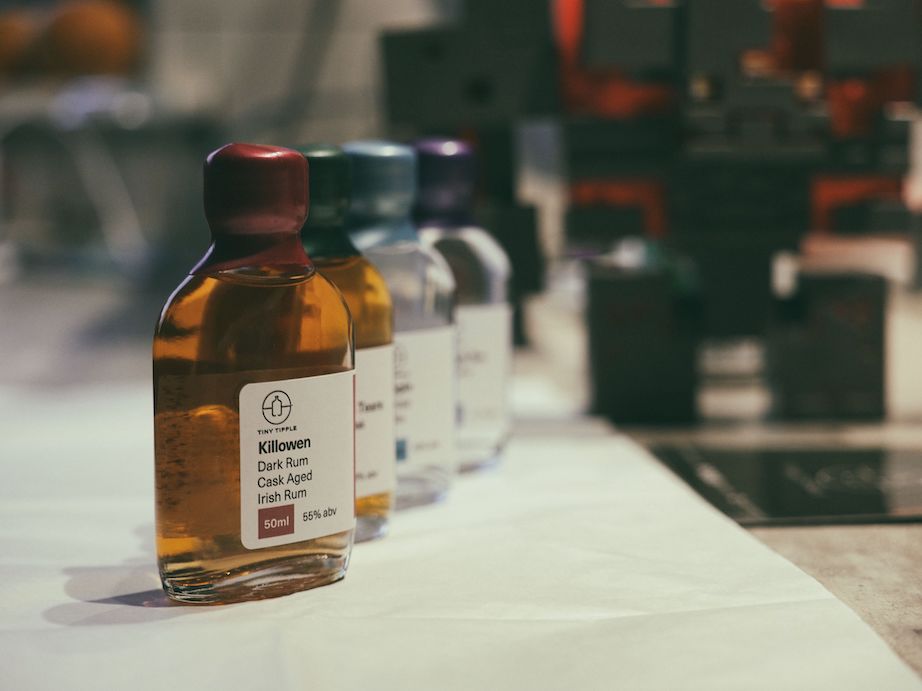
    “I started prototyping with bottles and waxes and labels etc back in February 2020. I applied for a Business Innovation voucher through Enterprise Ireland and Carlow Institute of Technology. I worked with the Design+ team in the IT to come up with the label and some packaging ideas (which didn’t come to fruition due to cost). I was insistent on the different colours wax for different styles of whiskey because I felt they stand out and add a premium feel to them. 

    “Initially the idea was to focus entirely on expensive premium bottles (€100 plus) as I felt that this was where demand would be but as with the nature of purchasing whiskey – you want to buy and stock every single release. I applied for a Trading Online Voucher which helped cover some of the costs of getting the website up and running. One of the main questions that the people in the IT threw out at me was, ‘How can you guarantee what you are selling is actually what’s in the bottle?’. That question is answered every time you buy a drink at a bar or indeed many other forms of retail. Every brand and customer in the country trusts retailers every single day to do what they say they will do. In particular in the bar industry, brands trust publicans not to sell ‘Cheap Knock off Vodka’ in place of an industry recognised brand. That is a simple question of integrity and the knowledge that any compromise in that integrity results in irreparable reputational damage, jeopardising your business. People also buy with their eyes. I am confident that my packaging looks very well. It stands out. It has a level of detail in terms of transparency with batch numbers, cask numbers, bottle numbers etc. that automatically builds a degree of trust in customers.”

    A gap in the market spotted, it has been going well despite only launching in recent times. 

    “The big surprise for me was how enthusiastic all the distillers, bottlers and blenders have been. Within a few days many brands reached out offering support and encouragement. There is a will amongst the brands for a service like this. As Louise McGuane said of Tiny Tipple, ”Liquid on Lips’ is so important for smaller brands who are trying to build their footprint’. 

    “The best sellers on the site so far have been the tasting flights. There is a real appetite for people to try different whiskies alongside each other without the cost. I have a lot of friends who are only starting their whiskey journey now and it can be a bit daunting to know where to start. Then you spend €60 on a bottle when you are starting out, you don’t like that particular style or release, you may be lost to Irish whiskey forever!”

    But aside from offering a great starting point, Tiny Tipples also democratise limited releases and have the coveted Redbreast 10 as part of their offering. 

    “The Redbreast 10 Year Old has been very popular. It is the likes of that drink that makes Tiny Tipple appealing. 7,000 bottles of Redbreast 10 were released and it sold out in a few hours, many of them to be hoarded away to be auctioned at a later date. 

    “Along with the RB10, the WD O’Connell range has sold very well (the 17YO PX Series is just about gone), JJ Corry releases like the Old Tom (a cracking release) will be sold out soon at the rate its going (again another bottle that was mostly left on shelves as a collectors item) and the Sliabh Liag (the entire Silkie Range) stuff has gone very well. 

    “Hopefully, the Tiny Tipples that have been dispersed into the wild will result in many multiples of sales in 700ml bottles for the producers!” 

    See tinytipple.com for more. 

  • Full Metal Busker

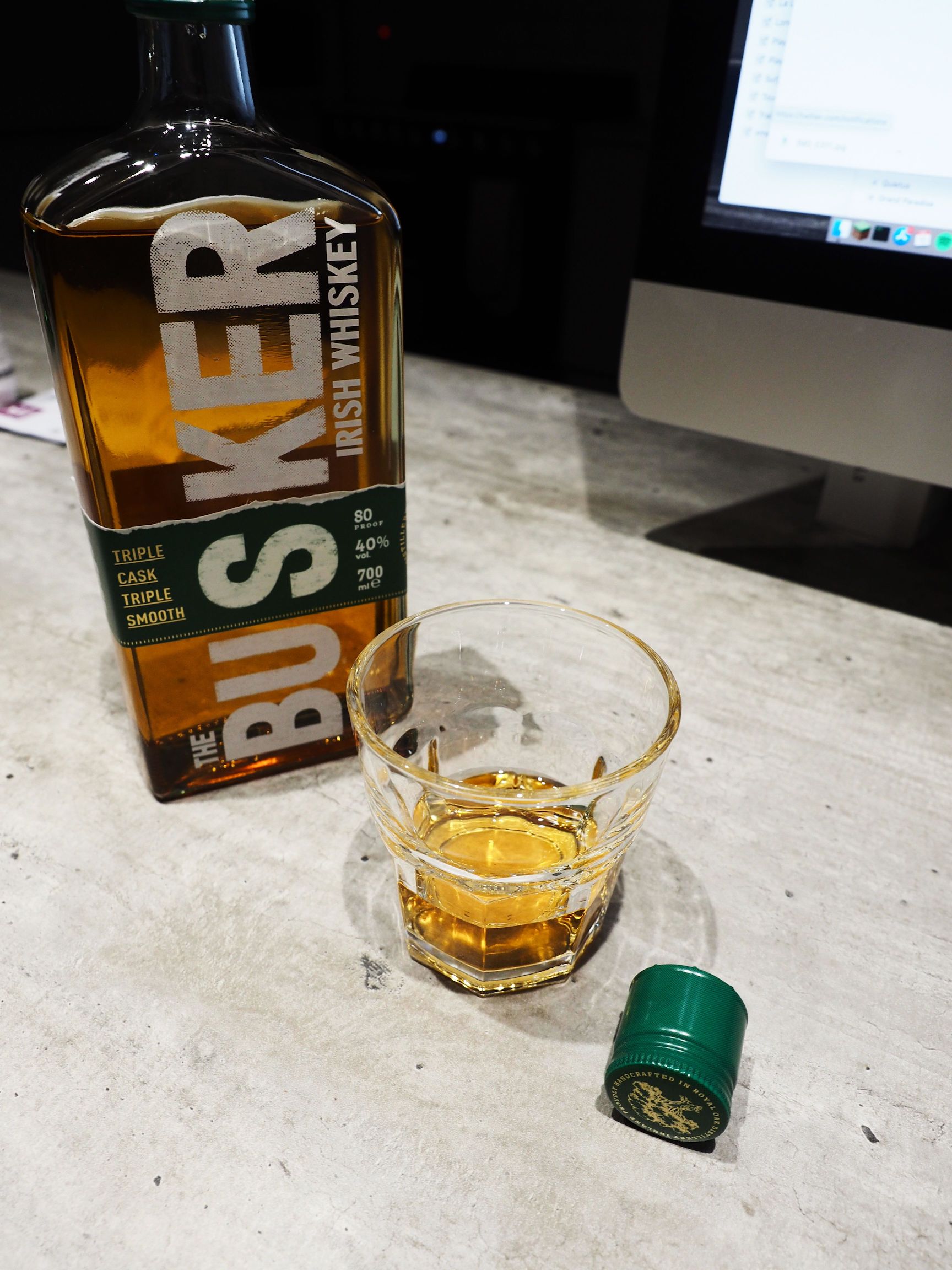
    I belive the bank statement in the background perfectly sets the tone. Also, the glassware was what they sent me and was not stolen from a medical facility.

    It was a match made in heaven – a beautiful brand of Irish whiskey found a home in a beautiful distillery built by an Italian drinks giant. Then, last year, the short-lived romance between Walsh Whiskey and Royal Oak Distillery/Illva Saronno came undone. Walsh kept their beautiful brands, Illva kept the distillery. 

    In retrospect, it was actually a mismatch – Writers Tears is a beautiful, premium whiskey brand, whereas Ilva specializes in the smashable dram. 

    Since the split there has also been a massive overhaul of Royal Oak. Heralded at the time of its opening as the largest manual distillery in Ireland, there was much talk of hand operated distilling, and how rare it was to find a distillery so reliant on humans. Apparently that rarity is not without cause, as distilleries need to be automated – thus, as Royal Oak underwent a massive reengineering over the last 18 months to fully automate it. 

    The last time I wrote about Royal Oak I said that it will be a distillery that lacks identity – well, they seem unbothered by this, and have released a whiskey that is almost like a brutalist fuck-you to the elegance and poise of Writers’ Tears. But what the world needs now is not another fancy-pants Irish whiskey, but an everyday, let’s-have-a-dram-without-having-to-put-on-morning-dress, kind of release. 

    The Busker was heralded with a press release that sounded like it had one too many Red Bulls: 

    The Busker is proud to announce the launch of their “new to world” innovative Irish Whiskey in the U.S. market. The Busker is born out of a modern Ireland, where the contemporary and bold meet at the crossroads of tradition. Disrupting the Irish Whiskey landscape, The Busker is a revamped and adventurous look into the category.

    The Busker includes all four types of Irish whiskeys (Single Grain, Single Pot Still, Single Malt and Blend). The Busker Blend – Triple Cask Triple Smooth – combines the Single Grain with a high percentage of the Single Malt and Single Pot whiskeys. Matured and finished in three different casks (Bourbon, Sherry, Marsala), this whiskey brings a new meaning of smoothness in the Irish Whiskey. The Busker Single Collection, represented by the three traditional Irish Whiskeys (Single Grain, Single Pot Still and Single Malt), is produced under one roof at the world-class Royal Oak Distillery. The Distillery is proudly located on an 18th century estate in the Ancient East region at County Carlow. Each whiskey boasts an unmistakable taste profile, with nuances ranging from vanilla and oak, to rich spicy notes.

    User-friendly and easy to hold, the bottles packaging showcases a simple, sleek screen print design. The aesthetically ripped label elicits a boldness and ruggedness intriguing to all whiskey drinkers.

    “We aim to disrupt the Irish Whiskey category by attracting new and authenticity-seeking consumers to the brand”, says Ray Stoughton, Executive Vice President of Disaronno International LLC, The Busker’s parent company. “While we honor the rich Irish heritage and whiskey-making traditions to produce superb liquid, we go beyond the limitations and lines of history to create our own story. The American consumers are thirsty for something that’s exciting and innovative, and The Busker delivers just that.”

    I am thirsty for the price point these guys are working at: The Busker blend suggested retail price is $24.99 and for Single Grain, Single Malt and Single Pot Still is $29.99 to enjoy the full Irish Whiskey experience. 

    TBH if they wanted to offer the full Irish whiskey experience they would have charged triple that figure. A new Irish whiskey, from a new irish distillery, that you don’t have to sell a kidney to buy. Maybe 2020 isn’t such a dose after all. I was sent a bottle of the blend, here’s a short review: 

    Nose: It’s thirty euro.

    Palate: It’s thirty euro.

    Finish: It’s thirty euro. 

    Jokes aside, this is fine. Lots of sweetness and fruit, and given that it looks like something Charles Bukowski would be carrying in a brown paper bag to his brownstone, it is not bad at all. Everything has its place in the world, and we sorely need to ground ourselves. I hope the pricing here brings some sense to what looks very much like a bubble. There’s a distinctly 2008, Celtic Tiger fin de siècle feeling to Irish whiskey right now, with relatively young spirit going for a minimum of 60 euro, 12 year olds going for 100+ and the sky is the limit for 16s, 18s, and don’t even think about 21s unless you own an oil field in Siberia. I assume the next 18 months will tell a lot. The world economy will start to wobble over the next six months, but much like 2008, it could be four years before the real shit settles. Maybe then, as we huddle around a burning wheelie bin, struggling to keep warm, we will really appreciate a whiskey that considers being ‘easy to hold’ a unique selling point. 

  • Tyroneasaurus Rex

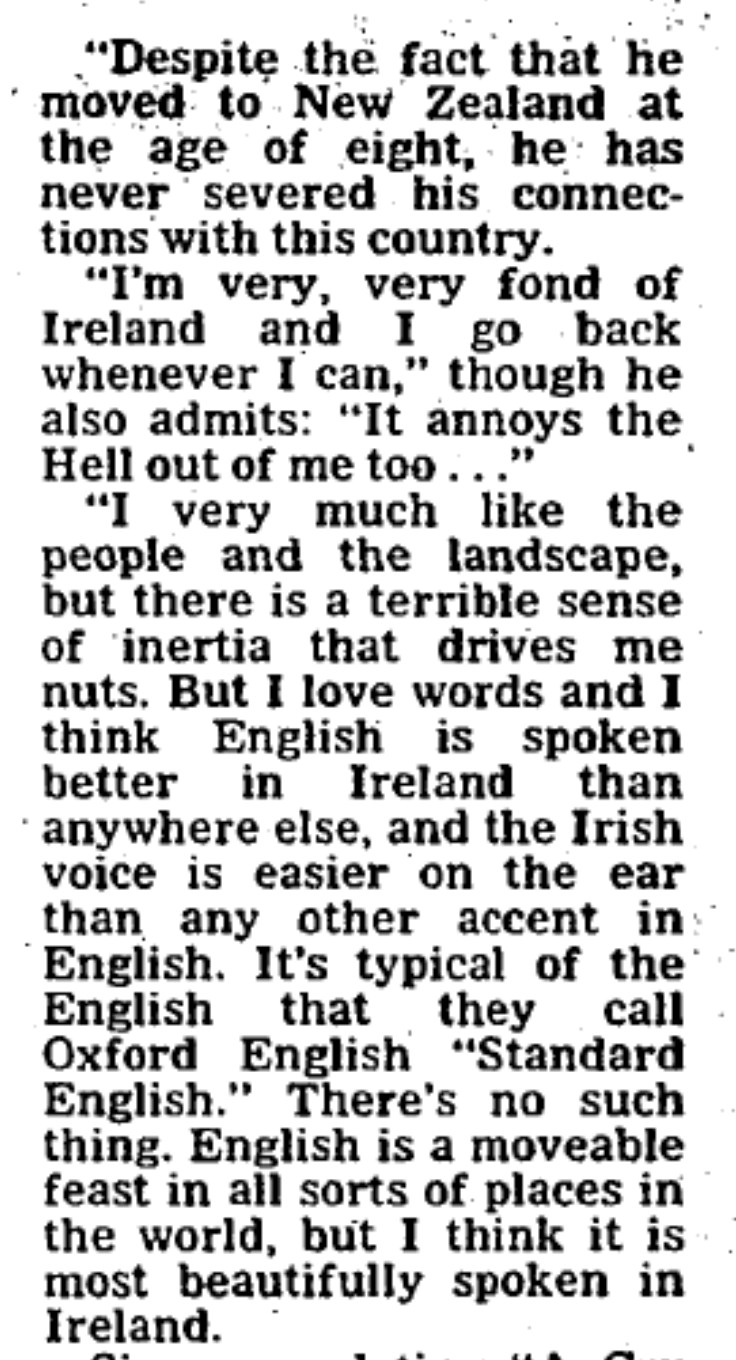
    Nigel John Dermot Neill was born in Omagh in Northern Ireland in 1947. His father, a New Zealander whose family originated in Belfast, was stationed there with the Royal Irish Fusiliers, but the family moved to New Zealand in 1954. There, the young boy opted to change his name, deciding that Nigel was a tad ‘effete’ for the Kiwi playground. So he changed it to Sam. 

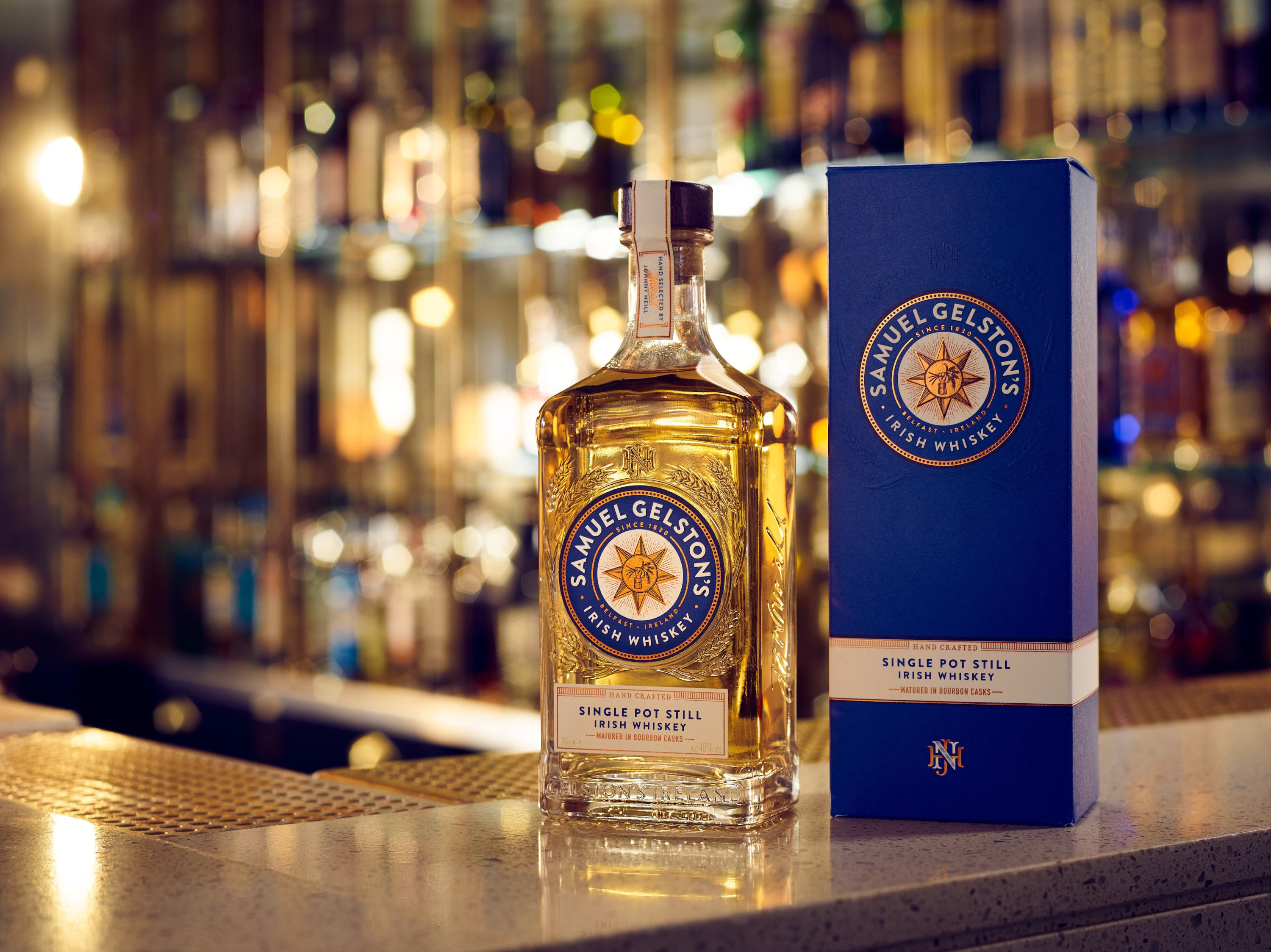
    I had always assumed Sam Neill was an Aussie. Then, after The Hunt For The Wilderpeople, I learned he was a Kiwi. Then, after samples of the new single pot still whiskey from Gelston’s arrived into my letterbox, I learned that Sam is a Nordie (he actually identifies as British, Irish and Kiwi). So many plot twists.

    I’ll let the press release take it from here: 

    The new release is the result of collaboration between Gelston’s owner, Johnny Neill and Sam, who is based in New Zealand. It sees the cousins bringing together the two sides of the family, whilst also merging the brilliant flavours and aromas of the two hemispheres.

    The liquid has been triple distilled and matured for 19 months in ex-bourbon casks, before spending a further 21 months maturing in Sam’s French oak casks, which had previously held his prestigious Central Otago Pinot Noir.

    It is malty on the nose with hints of strawberry, nutmeg and tropical fruit. On the palate it is big, rich and sweet, with a hint of dryness, a note of blackcurrant and dash of spice – all with sweet, jammy notes on the finish.

    Johnny Neill, owner of Samuel Gelston’s Irish Whisky, said; “The Neill family have been making quality spirits for generations. My Great, Great Grandfather Harry Neill set up the successful McCallum Neill & Co in Australia in 1851, and Percival, one of his younger brothers set up Messrs Neill & Co in Dunedin in 1882 – Percival was Sam Neill’s Great Grandfather. 

    “Sam and I have continued this legacy in our respective sides of the world – I’ve been focused on the creation of artisanal spirits using local ingredients, whereas he has dedicated nigh on 30 years winegrowing super premium pinot noir. For the first time in 150 years, we’re bringing together the expertise from both sides of the family – the result being an incredibly exciting sweet, honeyed and very inviting Single Pot Still Whiskey”.

    Samuel Gelston’s Single Pot Still Irish Whiskey finished in Pinot Casks (40% ABV, 70cl) has an RRP of €44.99, is currently available in L. Mulligans, Celtic Whiskey Shop and all good whiskey shops. 

    So what’s it like? Bit hot on the nose, as you’d expect from a three-and-a-half whiskey, although not as caustic as some young spirits. I’m assuming it’s from Great Northern, who have shown you can make excellent young whiskey and lots of it. Not much going on on the nose, but the palate brings a blast of aniseed, cloves, roasted tomatoes, cough mixture, like a kind of ouzo without the cloying elements. A short finish, but a smooth and approachable whiskey bottled at 40%, and with a price that isn’t a national embarrassment. And if that hasn’t sold you, how about this blast of wanton flattery from Mr Neill: 

    Ah gwan outta that Sam.

  • The year of living dangerously

    Whoever decided to launch one of the best-known luxury brands in the Irish whiskey category on budget day must have quite the sense of humour. We are still in the midst of a pandemic, the economy is in the process of being intubated by the State, and while this budget day may not have been the bloodbath that those in 2009-2015 were, it is the beginning of an all-too familiar process of rebalancing. Perhaps there was a spring in the steps of the marketing team at Irish Distillers because they sensed in advance that taxation on spirits would remain static – it was the least the State could do after almost every distiller in Ireland turned their stills over to the creation of hand sanitiser before the summer, when it was impossible to come by.

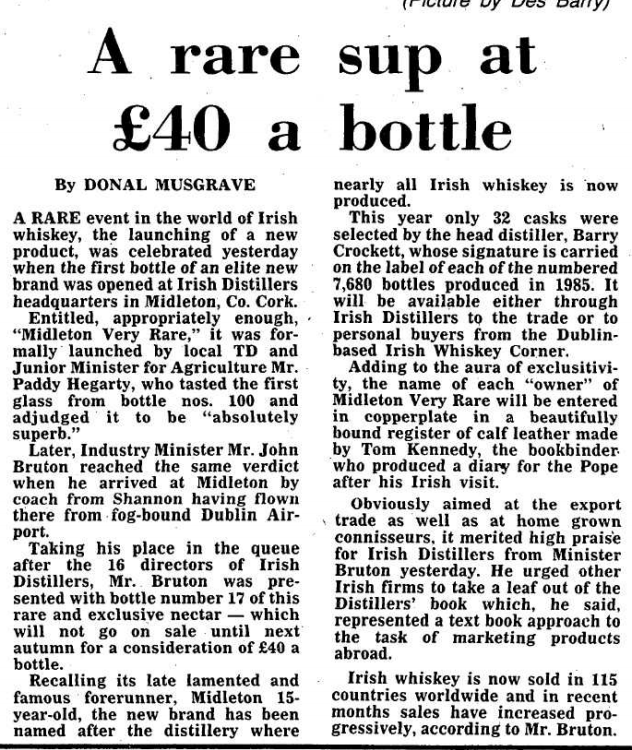
    But it still takes gumption to launch a 180 bottle of hooch when hundreds of thousands of people are out of work. Still, this was a luxury brand launched in the 1980s, when there were also hundreds of thousands out of work – although it cost a little less then:

    A page in the Cork Examiner after the launch of MVR in 1984.

    The background to Midleton Very Rare is: In the dark days of the 1980s, we needed a luxury brand. The Scots had many, so we launched MVR in 1984. It is not very rare. It is ubiquitous. Also, it’s a blend. But it really isn’t aimed at the diehard whiskey nerd – as an annual release, in my experience it is bought as a gift for someone to mark an anniversary, wedding, birth, becoming president of the golf club…you get the idea. This is not something the tragic pot still fetishist is going to queue overnight to get their clammy, webbed flippers on. But it is important – as I pointed out the last time I reviewed it, it has aura, and it has taken decades to build that up. 

    Just seven short years ago Brian Nation became master distiller of Midleton Distillery, taking over from his predecessor Barry Crockett, who launched MVR all those years before. Then, in June this year came the bombshell news that Nation was moving on, to take up the role of master distiller with O’Shaughnessy Distilling Company. Apparently his role was much more than that – he would be central to the build of their new distillery, and was a chance to make his stamp on a new brand, new products, and a new world. I’d never presume to know what it was that tempted him, but the freedom of it must have been part of the appeal – in Midleton he must have spent much of his time ensuring consistency and while his experiments in the microdistillery gave him some creative wriggle room, running a massive operation like Midleton must be hard. Add to that the PR work of a master distiller – international travel becomes a lot less glamorous when you do it all the time, especially if you have young kids. So I can see why he would make the move. I suspect that he will do great things in the US. 

    So MVR 2020 is his swansong. I’ll let the press release take it from here: 

    Chosen from the most outstanding quality single pot still and single grain Irish whiskeys laid down over the past four decades in Midleton, Co Cork, Midleton Very Rare 2020 showcases an expression of whiskeys aged from 13 to 35 years in lightly charred ex-bourbon American oak barrels. This year, Brian Nation selected a higher pot still inclusion when compared to previous vintages, while also increasing the use of refill barrels amongst his choice of casks.

    Bottled at 40% ABV, Midleton Very Rare 2020 is available online and in Ireland now, and will hit shelves in the UK, USA, Global Travel Retail, Australia, Germany and Canada in the coming months at the RRP of €180.

    In a break from tradition and in response to consumer demand for the annual vintage to be made available earlier in the year in question, newly appointed Master Distiller Kevin O’Gorman will reveal Midleton Very Rare 2021 in spring next year, honouring a rare changing of the guard at the iconic Midleton Distillery.

    Confirmation, if you needed it, that this is one whiskey where the year it was released rather than the year it was distilled is the important factor for consumers. 

    Some tasting notes; it’s a bit early in the week to start necking whiskey, so these are the official IDL notes and are thus possibly slightly more coherent than my own: 

    Aroma

    Initial top notes of cane sugar and vanilla intertwined with pepper and nutmeg spices, complimented by sweet orchard fruits and white chocolate fudge all layered over polished antique wood notes, showcasing an intriguing balance between spirit and wood thanks to the complex interaction from the many years spent in the finest oak casks.

    Taste

    Initial burst of tangy fruit sweetness of orange peel and sweet pear creating a succulent texture while the pot still spices build overtime adding a mild prickle of chilli oil. The presence of the charred oak remains constant in the background adding balance to the fruits and spices.

    Finish

    Satisfyingly long finish with the fruits slowly fading, allowing the oak and spices to linger until the very end.

    In short, it is nice. Of course the supreme irony of MVR 2020 is not the launch day coinciding with a budget, but rather why would anyone want to commemorate this disaster of a year?

  • All that glitters

    Do you remember Dingle Gold? It was a sourced blend, and it wasn’t very good, even by the humdrum standards of the most unchallenging blends. Of course, you wouldn’t expect too much given how it crashed into existence. 

    The year was 2010 and the Porterhouse Group were going to be the only Irish firm at the Shanghai World Expo. Known as the ‘economic olympics’ the expo would be their springboard into the Asian market – so they invested €1.35 million and 18 months of hard into securing a space for their pop-up pub, which would showcase their craft beers to some 70 million visitors during the expo’s six-month duration. But it wasn’t just going to be about craft beer. Oliver Hughes – the visionary founder of the Porterhouse who died suddenly in 2016 – was already planning a distillery here in Ireland. To show just how confusing whiskey is to the average person, here’s this from an Irish Times piece on the Expo in 2010

    Porterhouse recently started distilling its own whisky at a still in Dingle [they actually hadn’t started distilling until 2012], the first new one in 220 years. That whiskey won’t be ready in time for Expo, but the group has commissioned a range of 8-year-old and 12-year-old whiskeys from Cooley especially for the Expo.

    I sincerely doubt the blend components in Dingle Gold were that old, as it was a fiery number. 

    Oliver Hughes’s son Elliott, now MD of the Porterhouse Group, told me how it came into being when I interviewed him and then Dingle Master Distiller Peter Mosley in 2017: “We were doing a bar out in Shanghai at the time for the World Expo. So we built a proper full scale bar over there and this was supposed to be the best thing ever and the turnover was meant to be 400 million and all this kind of nonsense, and we had this whiskey built for over there and it did not go very well. It’s one of those non-mentioned things. It [the expo] wasn’t nearly as busy as they said it would be and the Chinese don’t drink as much beer as we anticipated. It was managed poorly.”

    Mosley continued: “I don’t think the Chinese had as much disposable income as we thought.  So the Dingle Gold was never intended to sell in Ireland. I just got a phonecall from Oliver saying ‘there’s a load of whiskey on the quays, can you organise it to go somewhere?’ and it sat in storage for months before we did anything about shipping it. We weren’t ready for it, we didn’t have any sale structure or staff, I think Mary [Ferriter, Dingle Distillery manager] here sold most of it.” 

    Elliot: “And we sold lots of it through our own bars in Irish coffees. But in hindsight if we were to do it again i think we certainly wouldn’t. I think we were new to the market, we made a decision and it probably wasn’t the right decision, but at that time nobody was doing anything in Irish whiskey. Oliver was all about the ideas, Liam Lahart [Oliver’s cousin and co-founder] would then have to find out how we would pay for it.”

    Mosley: “And I would have to figure out how we were going to do it.”

    Elliot: “So a different way of operating completely.”

    Mosley: “So Elliott is the ideas guy now.”

    He certainly is: Since that interview three years ago, Dingle’s head distiller Michael Walsh moved to Boann Distillery as master distiller, and Dingle managed something of a coup by luring Graham Coull away from Glen Moray in beautiful Speyside to the beautiful arse end of Ireland. Obviously whiskey is a long game, so it will be some time until we get to sample Coull’s creations, but there are positive noises:

    Now comes their fifth batch of single malt, and an expanded reach – one of the primary complaints about Dingle is how hard it can be to come by their bottles; little wonder given that they only fill four casks a day. I’ll let the press release take it from here: 

    The Batch 5 will make history as the biggest release to date, a total of 36,500 bottles. Five hundred of those will  be bottled at cask strength (59.3% abv) as a tribute to the 500 Founding Fathers (and mothers), the  

    people who backed the distillery at its foundation by each investing in a cask of the first spirit to  come from Dingle’s stills. 

    The Batch 5 launch represents a considerable increase in volume, meaning that on this occasion  9,000 bottles can go to the United States, the remaining 27,500 being destined for Ireland, the rest  of Europe, Asia and Australasia. 

    For Master Distiller Graham Coull, who joined Dingle in October 2019, this is his second batch  release. He believes that the use of Madeira casks in this whiskey adds a subtle complexity. 

    “The Madeira influence adds a great depth of flavour and a kind of backbone to this remarkable  whiskey while not masking the subtle spice from the Bourbon casks or sweet tone from the Pedro  Ximenez ones”, he says.

    In Ireland, the Batch 5 Single Malt will retail at €70; the Batch 5 Cask Strength at €150, will be  available exclusively online from irishmalts.ie, and rationed to one bottle per customer. 

    Full disclosure – while I love what Dingle represents as the first green shoot in a national resurgence of whiskey distilling, I haven’t been wild about the few samples I had. I always thought there was just too much fire and heat in them. I can’t blame it all on youth either – the three to four year old Great Northern whiskeys that I have tried are excellent and show that youth can be smooth and rich. But this Dingle is a decent dram at what is not an outlandish price. A lot of toffee sweetness on the nose, custard on the palate and a decent length of finish, with pleasant astringency. A solid, smashable dram – would be interesting to try the CS and see where it takes you. 

    Looking back over the Dingle story, you can see how things change – in their prospectus they outlined a range of drinks, many of which never materialised. I think that was part of the charm – the sense of chaos that comes with something smashing barriers and making history. They did what they could to survive.

    I still have my bottle of Dingle Gold, signed by Oliver, and I treasure it. It’s not worth anything, but its power is symbolic. Dingle Gold wasn’t amazing, but it was the start of something that was and is.