-
Of course, we are proud of the donkeys that walk along the road in Connemara, I see them there and I think it is great. But long gone is the day where we depend on donkeys and carts to bring our milk around. I’m sure they have learned by their mistakes, they’ll come over the next time and I am sure they will have a different outlook going back.
Lord Mayor of Dublin Cllr Christy Burke reacting to news that a six-part EastEnders offshoot will be shot in Ireland. Soap bosses have been warned to ‘keep it real’ this time, as their last efforts at basing the show here 18 years ago resulted in a diplomatic row which saw the Irish Ambassador to Britain describe the show’s portrayal of Ireland as “worrying” and “prejudiced”.
-
So how is the Irish Rail seat reservation system working these days?
https://twitter.com/FreckledPast/status/585065445125922817
https://twitter.com/FreckledPast/status/585065968721727489
https://twitter.com/FreckledPast/status/585077520728469504
https://twitter.com/FreckledPast/status/585083105272299521
https://twitter.com/FreckledPast/status/585084312330104832
https://twitter.com/FreckledPast/status/585084370601570305
I see. Award-winning blogger Evin enjoys a relaxing Easter Monday trip courtesy of the tech-savvy people-persons of Irish ‘Fucking’ Rail.
And now a delightfully passive aggressive email I sent over Easter 2012:
Dear Mr xxxxx,
On Good Friday last year I arrived at my local train station in Midleton to discover that the train I normally get to work, the 7.15am service, was not running. When I contacted Irish Rail later in the day after arriving late to work, I was told that the decision had been taken to run a Saturday service on the Midleton line. The woman I spoke to on the phone told me the only way that I would have been able to find this out beforehand would be if I tried to book a ticket on the Irish Rail website from Midleton to Cork. I told her that as I had a monthly pre-paid ticket, this was of no use to me. When I asked why the trains were on a reduced schedule, she simply kept repeating ‘because it’s Good Friday‘ – a day that although important to the Catholic calendar, is not a public or bank holiday. Bus Eireann, for example, runs a full schedule on this day.
To avoid being late for work this year, yesterday morning as I passed through Kent Station I asked one of your revenue inspectors if the Midleton service would be running as normal. He said he believed it would, but checked with the ticket office to make sure, and was told by the girl there that it was a normal service today. Later in the day, just to be absolutely certain, I went to the Irish Rail website and made as though to book a ticket from Midleton to Cork. The timetable of trains was as normal.
This morning when I got to Midleton train station at about 7.10am, the PA in the station announced as usual that the next train at the station was the 7.15am service to Cork. That train did not arrive.
I contacted Kent station and was told that the decision had been taken to run a Saturday service as ‘it’s Good Friday‘. I pointed out that I had checked numerous times yesterday to make sure that this exact thing did not happen, and was told that the train would definitely be running as normal. The person once again informed me that ‘it’s Good Friday‘ and apologised. He admitted that he had only just found out about the reduced schedule himself. I was then forced to wait half an hour in the freezing cold for the next train and was late for work as a result.
I have no problem with the decision to run a reduced schedule – on a day when there are less commuters, it may make economic sense, but the complete lack of communication about this is what irks me. If the decision is taken to run a Saturday timetable, then staff, commuters and the website operators should all be made aware well in advance.
‘It’s Good Friday‘ is not a reason for this breakdown in communication, nor is it to be thrown in the face of commuters as though they should have known that the trains would not run as scheduled on the internet or as the staff have previously told them. Good Friday is neither a public holiday nor a bank holiday, and if the buses run as normal, I see little reason for the trains to do otherwise.
Yours,
(Me).You can almost hear my teeth being ground into dust. The train was still better than the bus, which I stopped using after a driver pulled over, stormed down the aisle and shoved his finger in my face and told me to turn my headphones down. Given that I was halfways down the bus and the headphones were 60 euro Sennheiser noise-limiting ones, I knew the sound inside his head was not coming from me. Even the person next to me was horrified, and said she couldn’t hear a thing. So lesson learned kids: Fatima Mansions were right.
-
The French Connection

I met with Maurice and Frederic Hennessy, two brothers who are the eighth-generation descendants of Richard Hennessy, the north Cork man who created the iconic Cognac brand. The feature ran in the Irish Examiner a few months back, but this is the full version. All the beautiful photos were taken by the fantastic Ger McCarthy, one of the best press and PR photographers in Ireland.

As birthplaces of empires go, Killavullen is more humble than most. Nestled between the lush green slopes of the Blackwater Valley, the village is home to an immediate population of about 200. It is a pretty place, with a few pubs, a church, and a community centre.
But it is at the highest point in the village that you will find the origins of one of the best-known luxury brands in the world. Almost hidden among the trees is Ballymacmoy House, the ancestral home of Richard Hennessy, who went on to create one of the world’s best-known and most-respected Cognac brands. So it was fitting that as the Hennessy dynasty celebrates its 250th anniversary this year, two eighth-generation descendants of Richard Hennessy – brothers Maurice and Frederic Hennessy – welcomed 55 wine producers and distillers from the Cognac region to their family home.

Frederic lives in Ballymacmoy House, having spent the last number of years restoring it to its former glory, while Maurice travels the world as Ambassadeur de la Maison Hennessy. Both grew up in France, but have many happy memories of coming to Cork for their holidays.
“I think I was 10 when I first came to Cork,” Frederic tells me; “we were told that if we did well in our school exams, we would be brought to Ballymacmoy for our holidays. So we did well, and we came here.”
Maurice tells me one of his first memories of north Cork – being taken on a hunt. As he was only 12 or so, and an inexperienced rider, he fell from his horse when it shied at a wire gate which suddenly loomed up in front of them. “Stupid gate!” he says laughing. But he was smitten by the country – both brothers felt a deep connection to Ireland, and the Irish. And so they should, for it was here in 1724 that the youngest son of Lord Ballymacmoy was born. At 20 years of age, he took flight to France to fight with King Louis XV.

Injured at the Battle of Fontenoy, he later settled on the banks of the Charente River, which glides past the town of Cognac. It was here that he started making this particular style of brandy, and where the empire began to take shape. However, it was Richard’s son James that really accelerated the expansion, forging links with the Martell Cognac dynasty through marriage and also being one of the first drinks producers to begin trade with the Revolutionary government, whilst also linking up with traders in London and New York in the 1800s.
While Cognac may be perceived by some as a patriarchal, elitist drink, Hennessy is a true egalitarian spirit. It has links to the founding of the Tuskegee Institute, a groundbreaking centre of education for African Americans, as well as the civil rights group the National Urban League. Hennessy was also the drink of choice for African American soldiers during the Second World War, just as jazz was embraced by the French when it arrived in the clubs of Paris in the aftermath of the war.
This affinity with African American culture saw Ebony magazine describe Hennessy as ‘the unofficial official drink of Black America’. Rappers don’t embrace Hennessy because it symbolizes their wealth, they embrace it because they feel ownership of it. But this sense of ownership is shared around the world: Maurice tells me a story from the time in 1996 when Jacque Chirac sanctioned nuclear tests by the French military in the Pacific Ocean. The world was aghast, and there was an Irish boycott of French goods. One little old lady was picking up her usual order at the grocers in Dublin, and when asked if she would take her usual bottle of Cognac also, she said she ‘wouldn’t touch the French stuff after what Chirac did, but would take a bottle of the Irish stuff, Hennessy, instead’.
“Some see it as a French drink, made in Ireland,” Maurice smiles.
However Irish it is in spirit, the geography of where it is produced is enshrined in law – Cognac can only come from the Cognac region. Like Champagne (a name which, like the name ‘Cognac’, is derived from a word meaning ‘chalky soil’), once the drink is produced elsewhere, it loses the legal right to that name.
So the wine producers and distillers entertained at Ballymacmoy House were of vital importance to Hennessy. Maurice explains how they nurture the growers just as the growers nurture the vineyards – Hennessy works with the farmers to ensure they get the best result possible from their crops and distilling processes. There is no ruthless business ethic here – if the product is not exactly as they had hoped, Hennessy work with the producer to explore ways to make it better – they strive for perfection, but they do it together, as a community. And so it was that to mark the 250th anniversary of the founding of the Hennessy company, they flew producers and distillers to Richard’s home.
But the community in Killavullen have been to Cognac also: Maurice says that when the parish used to go on pilgrimage to Lourdes, they would always visit the Hennessy estate. When asked if they called on the way to Lourdes or the way back, Maurice says “On the way there of course, that way they could seek absolution afterwards for having such a good time!”The brothers both have a strong sense of their Irish links: Maurice tells me about going to Chicago and Boston for St Patrick’s Day and marveling at how on that day, ‘everyone was Irish’ no matter their race or religion, while both spoke of the sadness they felt at seeing lives lost during the Troubles. Two and a half centuries may have passed since their forefather left Killavullen for France, but the Irish connection is still strong. There is a term in wine growing: Terroir. It means the climate, geography, soil conditions, people and production techniques that come together to create a specific wine. In short, it means a sense of place, of origin, of home. Hennessy Cognac may be a global brand, and it’s residence may now be along the banks of the Charente, but its incredible legacy owes no small amount to the terroir of a sleepy village in north Cork and the remarkable man it produced.
The House:
Ballymacmoy House itself dates back to 1818, but the original, which was farther upriver, was the home that Richard. The popular version of the demise of the original house says the roof was made from slate taken from the surrounding Nagle Mountains, and was too heavy – to the point that one evening during dinner, the whole top of the house collapsed, killing a goose and a pig and injuring a beggar who happened to be at the door at the time. However, the whole family escaped unharmed. Maurice is quick to point out that this somewhat odd story differs from the more believable one he grew up with – that there was a fire started by a vagrant and the house burnt down. Across the river from the current house is the birthplace of another iconic dynasty – the home of Nano Nagle, after whose family the mountains are named. And Maurice tells me that the hunt he went on as a 12 year old was organised by Dr Nagle, a family friend, and that the Hennessys and the Nagles had been connected for generations.

Hennessy Cognac:
Cognac can only come from the region it takes its name from, and is a variety of brandy. The law dictates the type of grapes used to make the wine, which is then distilled twice in copper alembic stills and aged in French oak barrels for a mimium of two years. After distillation and during the ageing process the wine is known as eaux de vie. The contents of the barrels are then blended, mixing ages and sources to achieve the best balance. The product is then graded according to several Cognac standards, the best known of which are V.S. (very special or superior), V.S.O.P. (very special or superior old pale), and XO (extra old). A good entry level Cognac to start off with is the Hennessy Fine de Cognac, a delicate blend of some sixty floral, fruity eaux-de-vie pitched somewhere between VS and VSOP. For those looking to spend a bit more there is the very special Richard Hennessy. It is a unique blend of rare eaux-de-vie aged from 40 years to nearly 200 years old. Each carafe is numbered and made of pure hand-blown crystal. According to Talleyrand, celebrated 18th-century French politician and illustrious customer of Hennessy, to enjoy a cognac such as Richard Hennessy one must “cradle the glass in the palm of one’s hand, swirl the spirit to release its full aroma, lift it to one’s nostrils, inhale deeply and then… set it down and discuss its virtues”. One of those virtues being its three thousand euro price tag.
However, Maurice expressed his sadness at anyone buying it as an investment piece: “It is such a beautiful drink, it should not be left to simply sit on a shelf, it is made to be enjoyed”.
Maybe just drink it slowly so.
How to enjoy Cognac:
Asked how best to enjoy a Cognac, Maurice expresses his preference for long drinks: “Hennessy is wonderful in cocktails, and in fact Cognac and rum were the first two drinks ever used in cocktails. There are many great cocktails such as The Horse’s Neck, a racing cocktail we have during the Hennessy Gold Cup.”
The key to a Horse’s Neck is the lemon peel which hangs off the rim of the glass and resembles the neck of a horse hanging into the drink. Fill the glass with ice. Add 50ml of Hennessy Fine De Cognac, and 70ml of ginger ale. Stir well.
As for Frederic, his choice of how to drink Cognac is probably related to the fact that he resides in north Cork, not the south of France, so ice is not paramount: “I like to drink it straight – it is wonderful with elderflower, but you would not always have that in your fridge!”

Hennessy 250:
Founded in 1765, Hennessy has launched a year of celebrations to mark its 250th anniversary under the signature “Crafting the future since 1765”. The rich lineup of events centers on the theme of transmission.
For 250 years, the history of Hennessy has been intimately linked to that of two families. First, the Hennessy family, which has proudly carried on the vision of the House’s founder, Richard Hennessy. An astute businessman, he recognized the potential of Cognac eaux-de-vie, as well as the advantages of the city’s strategic location on the banks of the Charente river, affording easy access to the ocean and international trade routes. Today, Hennessy is present on five continents and develops its business in more than 130 countries.
Since 1800, the Fillioux family has jealously guarded the secrets of selecting and assembling the eaux-de-vie that express Hennessy’s excellence. In the grand tradition of Hennessy milestone cognacs, Yann Fillioux, a seventh-generation member of the family and the current Hennessy Master Blender, has crafted Hennessy 250, an exquisitely refined cognac made from exceptional eaux-de-vie he personally selected during his 50-year career.
Hennessy has kicked off this year’s celebrations by unveiling the signature “Crafting the future since 1765”, a bold message of transmission that emphasizes the avant-garde vision Hennessy has pursued since its founding, inspired by talent and savoir-faire. The cornerstone of the festivities is the Hennessy Tour, which will stop in five countries with close ties to Hennessy: China, Russia, the United States, South Africa and France. From the Guangzhou Opera House and Lincoln Center in New York, to the Circa Gallery in Johannesburg, the over 600-square-meter traveling event presents Hennessy’s heritage through the eyes of contemporary artists whom the House supports. Each stop will feature local artists as well during live performances conceived specially for the event.
Hennessy is also launching a series of ambitious forward-looking projects in 2015. There will be a groundbreaking ceremony for the new Pont-Neuf bottling site, which will ensure increased production and shipping capacity. In addition, Hennessy has acquired a 40-hectare (98 acres) site near Cognac where it will build more than 20 state-of-the-art cellars, doubling storage capacity. Other initiatives focus on the heritage of the House, with completion of the first stage in the Hennessy archives project scheduled for mid-year. A new tour of the centre of Cognac will be unveiled too, offering an unprecedented experience.
Footnote that obviously isn’t part of the article I sent to the paper:
After the interview I decided to try a local pub, see if I could get a Hennessy there. Of the five pubs in the village, three were closed permanently, and only one was open on the night. It was busy, all blokes, and someone whistled at me as I walked in, Wild West style.
Noticing that the bottles lined up on the plywood bar did not include any Cognac, I thought it better to just go native and have a Murphys. As I sat down to write up my notes from the interview, an elderly gent came over and asked me ‘if I was the taxman’. I told him who I was and why I was there. He asked where I was from, and then asked me if I knew any of the folks from my area.
‘Do you know the O’Briens?’ No, I did not. ‘Good, they’re fucking cunts. What about the O’Donovans?’ And so it went, with him asking me if I knew a succession of people who were all ‘cunts’. He noticed my terrible writing, and told me he had the shakes too. I said I was sorry to hear that. He said it was ok, he was still able to drive, and ‘to fuck’ and the ‘women think it’s a vibrator’. The conversation went downhill from there. He was very funny, but completely filthy. I asked if he drank Hennessy, he said no, he drank Powers – ‘I drink the litre bottles and I can still fuck after it’. Fair play, since he must have been about 75. Anyway, it was as good as sample of Killavullen nightlife as you would get, and it made the fact that the Hennessy empire started there all the more remarkable.
-
Distilling in the name of….
So I got to take part in the Irish Whiskey Academy here in my hometown, along with a bunch of whisk(e)y writers, bloggers and promoters. It was a lot of fun, and I’d highly recommend it to anyone with an interest in whiskey….and a grand to spare. This article originally appeared in the Irish Examiner shortly before Christmas. The photos were all taken by me, which might explain why they are rubbish.

Every Christmas I watch Willy Wonka And The Chocolate Factory with the same sense of wonder I had when I was a kid. As someone cursed with a relentlessly sweet tooth, I still like to imagine that the inside of any factory that produces my favorite things would be as magical. Obviously tastes change and people grow, and after careful consultation with my cholesterol levels, I switched my allegiances to a more mature indulgence – whiskey. So to get access to a distillery is a treat indeed. The distillery is a mysterious thing. Access to any modern production facilities is a rare event; for members of the public it is almost impossible to get a glimpse of the inner workings of any plant; health and safety laws, Lean production and a wariness about transparency meant that unless you have Bosco’s Magic Door, you aren’t getting inside. But one of the greatest distilleries in the world is changing all that.
Midleton Distillery’s Irish Whiskey Academy opened in 2013, and since then it has educated and entertained hundreds of drinks professionals, writers, bartenders, and sales people. The scope of the academy is now being widened to include ‘amateur enthusiasts’ – or ‘lushes’, as we are better known – like myself. The academy building fittingly sits between the historic distillery building – now home to the heritage centre – and the newer plant which is one of the largest, most efficient in the world, having just tweaked their processes to see a reduction in energy requirements per litre of pure alcohol by a whopping 20%.
The academy itself is a converted grain manager’s office, and our tutor was Dave McCabe, whose youth belies his incredible breadth of knowledge. I was on the course with whiskey bloggers, writers and industry insiders, and no matter how obscure or scientific the question, he knew the answer. With beautifully illustrated chalkboards in the classroom section of the facility, he brought us through the history of whiskey – nationally, locally and globally – as well as a refreshingly straightforward breakdown of the production of whiskey in east Cork.
We started with a walkthrough of the old distillery, learning about how whiskey was produced on that site for 200 years. We passed the distiller’s cottage, where Master Distiller Emeritus Barry Crockett was born and raised, through the courtyard where former distillery manager Sandy Ross landed after an exploding pot still blew him out a window, leaving him flat on his back on the cobbles. He was given the rest of the day off, but showed up for work the next day. It takes hard men to make the hard stuff.
Back in the classroom we covered the raw materials, as well as the brewing and fermentation process, then it was on with the high-vis vests, phones into the lockers and off to the new plant, where we visited the grains depot, brewhouse, fermentation facility, and even had a stillhouse meeting with current Master Distiller Brian Nation. Brian is a busy man, who switches between the scientific demands of running one of the biggest distilleries in the world and the promotional aspect of the job, sharing his knowledge and passion for whiskey around the globe. And he isn’t the only whiskey guru we had access to; we also met Kevin O’Gorman, a man who has so much energy and enthusiasm for his work that it’s hard to imagine him having the patience to watch a kettle boil. But patience he has. As Irish Distillers’s head of maturation, Kevin is charged with keeping watch over the thousands of barrels of alcohol as they slowly mature for the legally required minimum of three years – and often much longer. Kevin watches over the casks as they sleep through the years, monitoring room temperature as the wood of the staves slowly inhales and exhales the liquid, giving it colour, character and life. His domain is the warehouses packed with massive bourbon, port and sherry casks from around the world, loaded on pallets in lots of four, and then stacked seven high.
He watches on helpless as up to a percentage of each cask is lost to evaporation, an amount known as the angel’s share. As long as whiskey has been made, this has been part of the process. There is not way to stop it.
Another frustration comes in the repair of casks. Some of them simply can’t take the pressure of their sleeping brethren above, and begin to split. If the damage is small, and accessible to the master cooper, then it may be repaired. But if the split is bad, and the cask is behind or beneath many others, they simply have to let the pressure take its toll, and watch on as thousands of euro worth of whiskey seeps out. It’s can’t be an easy job.
We had a tasting with Kevin in one of the warehouses, number 42 to be precise, cracking open a port pipe, a sherry butt, and a bourbon cask. It’s hard to describe how special it was. There, in that vast modern cathedral, we filled glasses straight from the barrel, and stood there silently sipping, the only noise a sporadic beep from the security system off in the distance. The flavors of the whiskey was almost enough to make your ears pop.
Centuries ago, Irish monks copied the design of Moorish alembic stills to distill their ale into uisce beatha. Later, it was casked for storage, and whiskey as we know it was born. Not much has changed; the ingredient used by the epicurean alchemists in Midleton are the same – water, grain, wood and time. In a world obsessed with speeding up production, there is much to celebrate here. The race to the bottom in our demand for faster food and cheaper products has led to standards falling in both. Not so here – this may be a massive operation, but there is the same respect for the craft, the product and the consumer as there ever was. The academy is part of this celebration of tradition and technique – it has a level of openness, transparency and honesty that you will almost never encounter in large companies.
We rounded out the day with pot still tastings, then it was back to our hotel to prepare for dinner. Our lodgings were the aristocratic surrounds of the Castlemartyr Resort, a building whose history, like that of whiskey, is another rare blend of science and religion, having previously been home to Robert Boyle, of Boyle’s Law fame, and in later years becoming a Carmelite Monastery. Another part of the academy package is dinner in a premium restaurant – for us it was Ballymaloe, which so much has been written about I don’t need to add anything, other than it has to be experienced to be believed.

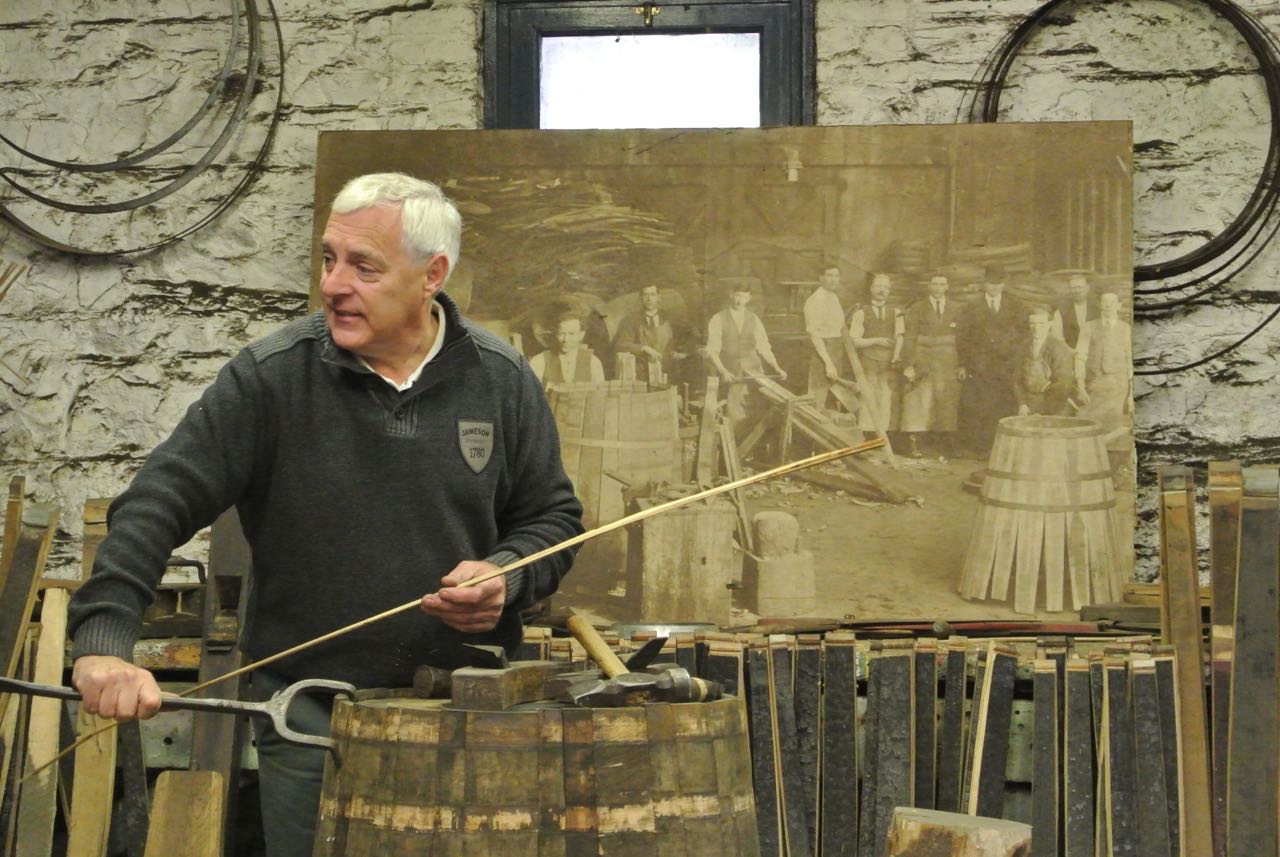
The following day we started with a coopering demonstration by master cooper Ger Buckley. Ger is a fifth generation cooper, and can take a barrel apart and put it back together in moments. He talked us through the craft and history of coopering, reinforcing the sense that little has changed in either the tools or the barrels themselves in centuries.
Afterwards we met with archivist Carol Quinn, who introduced us to some of the incredible characters, stories and history of Irish Distillers. She spoke about Paddy O’Flaherty, a consummate showman who understood the power of marketing and PR long before anyone else in the industry, to the point where the whiskey he sold took on his name – we even got to see the contract that allowed the company to use his name as a trademark. Carol is also recording the stories of the more recent characters, as she is recording an oral history of the formers workers in the Midleton plant, capturing all their stories and lore before it is all lost in the sands of time.
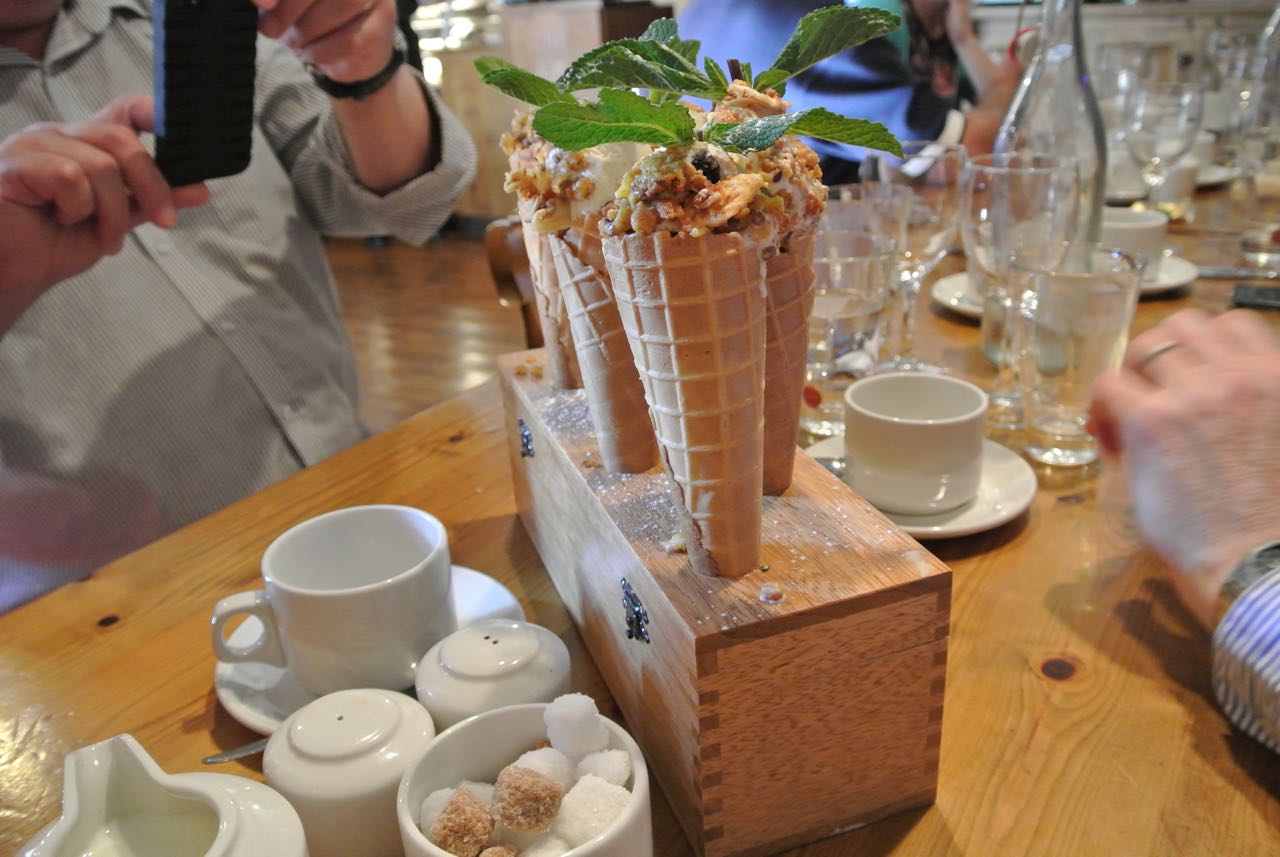
Then it was on to more tastings, site visits – including the spiritstore and casking facility – and lunch in the heritage centre, complete with ice cream cones served in Midleton Rare boxes.

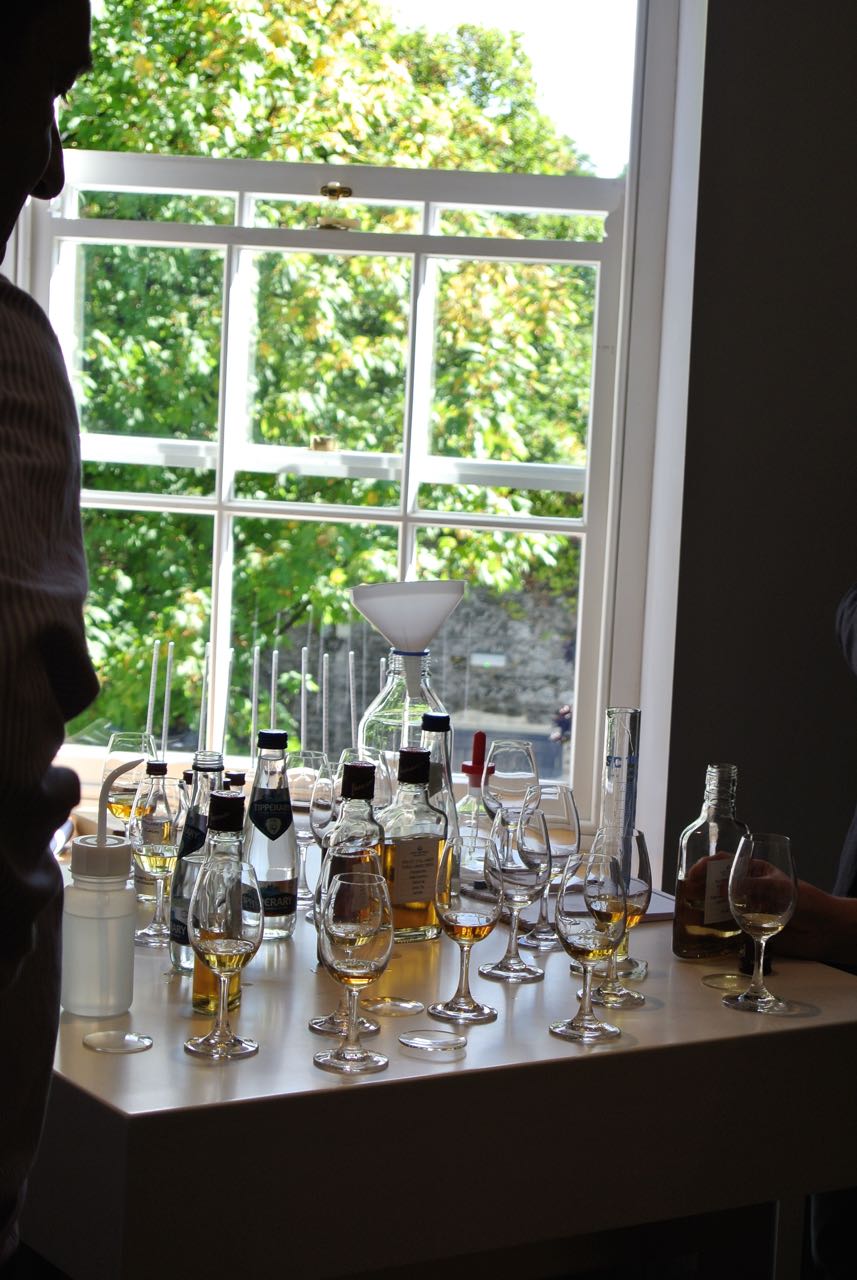
Our last module was blending, where we were broken into teams of four and given four different types of spirits to make a single blend with. After much nose work, and even more tasting, my team finally came up with a blend of half sherry cask-aged pot still and half bourbon pot still. We even gave it a name – The Kurgan – which you will know from Scottish history as the Russian bad guy in Highlander. It even came with a tagline – ‘there can be only one’. Well, it was either that or ‘it will take your head off’.
We got samples of our blends to take home, and while I have yet to find the right occasion to enjoy mine, I have no doubt that the memories of an extraordinary few days in Midleton will last a lot longer. The lessons taken from the academy aren’t simply the science and the history of whiskey – it’s an appreciation of the drink itself, and what it means to the Irish people. Whiskey is liquid history. It records our highs and lows, our struggles and success, our innovation, creativity and strength of spirit. Its story is one of collisions and unions – between science and religion, alcohol and wood, empire and freedom, grain and water. The academy, nestled as it is between the past and future of Irish Distillers, teaches you how these elements blend together to make this most Irish of libations, its significance to our identity, and what is yet to come.
THE FACTS: A range of courses are available depending on the individual’s level of knowledge, with the first ‘Enthusiasts’ course taking place earlier this month. Participants have the opportunity to meet some of the distillery team, learn about brewing, fermentation, distillation and blending, watch a cooperage demonstration and enjoy a tutored whiskey tasting with one of the production Masters. As part of the package, participants will stay in five star accommodation, visit one of the area’s finest restaurants and at the end of the course, they will receive a personalised bottle of Irish whiskey.
One-day ‘Discoverer’ courses, for those who have minimal knowledge about Irish whiskeys but want to learn more, are available from February 2015 while four-hour afternoon courses are also available. See http://www.irishwhiskeyacademy.com/ for full details.
-
ErrorThis video doesn’t exist


-
Subscribe
Subscribed
Already have a WordPress.com account? Log in now.
 Triple Distilled Communications