An image from the amragnac museum in Condom, Gers.
In the Gers region of southwestern France there is a small town named Condom. Home to about six thousand people, there is not a huge amount that is notable about it – there are some castles, a nice church, and it is on the Way Of St James. In 1995, the town’s mayor decided to cash in on the name of the town by opening a museum about contraception. It closed in 2005. The fact it had a decade in existence is remarkable, given that the French word for condom is préservatif, so this quirky, novel museum in a rural French town was really only aimed at English speaking tourists.
Condom is also known as Condom-en-Armagnac, for it nestles in the heartland of armagnac production (for the sake of clarity I try to use a lower case A on the drink as opposed to the region). There is a great piece by drinks writer Jason Wilson about the danger posed by armagnac trying to become something it is not – that in pursuit of greater sales, this very old, quiet drink will contort itself and lose part of its soul as a result. Wilson, who has been drinking armagnac for some time (compared to the wet week I have had my toe dipped in the category), says that it doesn’t want nor does it need to become the next whiskey. Whiskey fans are often on the lookout for new categories to feast on, like a cloud of locusts, but to me, it feels like armagnac has never really been the next big thing. Rum – perennial next big thing since I started getting into spirits a decade ago – is still waiting for its moment, so armagnac is unlikely to get dragged onto the stage before it. But I can still see Wilson’s point – that I am, subconsciously, trying to make armagnac into a whiskey counterpoint, as opposed to a unique, individual drink.
Wilson makes the point that there are changes in the category – armagnacs are being released under age statements rather than the traditional age classifications (VS, XO et al), and steering away from blends towards more single grape varietal releases. Domaine du Tariquet – the producer of most of the armagnacs I have had thus far in my relatively short time drinking it – is a good example. They have eight, 12, 15, 18, 20, and 25 year old releases and look to be primed to appeal to whiskey drinkers, with many bottles released with natural colour and at cask strength.
Wilson’s piece made me pause and ask – am I the baddie? Am I part of the problem? I am bringing a huge amount of baggage to armagnac and virtually all the bottles I have bought thus far are more in the mould of whiskey – age statements, high strengths, not blends. But when you have attached value to those things, and then you see how you can get this non-whiskey dark spirit with a great age statement, at 49%abv, natural colour, and exceptional quality for a low price, then it is hard to instead seek out the traditional blends further down the retailer’s webpage that might adhere to the more natural shape of the category. In my defence, part of it is because I know so little about the category, and while I was able to read reams about Irish whiskey when I started getting into it, there are far fewer sources of information about armagnac, at least in the language I speak. Although I’m not sure my own simple ignorance is such a great defence.
Beyond the structural hierarchies I had dragged over from my love for whiskey I had also managed to bring a lot of plain old snobbery – I wrinkled my nose when I read on Diffords Guide about how both sugar and the colourant boise, ‘a dark goo made by boiling wood and reducing the resulting liquid’, are used in armagnac. I did this without actually knowing whether or not the excellent armagnacs I had consumed used either, and never considered that these things might actually be tradition – at the bottom of the page on Diffords about the practise it makes the point that many of the producers who use boise create it using a secret recipe and carefully age their sugar blended with distillate for at least a year prior to adding to the spirit. So, horror of horrors, this might be part of the craft of making armagnac.
Armagnac also taught me that a column still can create incredible flavour. I had a whiskey snob’s notion that it can only churn out neutral grain spirit but it can do anything, when tasked with it. Although I would add that seeing those battered armagnac alembics trundling around the countryside behind a tractor or in a basement somewhere with their furnaces being stuffed with logs made me realise that it is also how you design and then run them that matters.
For now, I am trying to consume without prejudice – to buy more blends, from more producers, and to get a broader sense of what armagnac is, to understand it rather than try and manipulate it into some sort of Whiskey V2.0. It was precisely because of my mild boredom with scotch whisky (and complete disillusionment with Irish whiskey, over any number of things) that brought me to this not-especially-well-known product of southwest France, so why try then to recreate it in whiskey’s image? I wanted difference, and then, upon finding it, decided it was just too different. Armagnac shouldn’t have to change for me, and Condom should never have opened a condom museum that had literally nothing to do with the town. However, should you ever find yourself down that way they apparently have a cracking armagnac museum.
Spoiler: If you bought it in the last few years from one of the three auction sites mentioned below, then probably not. But if you are oldschool and bought from eBay or a non-whiskey specialist auction house, then maybe.This piece ran in the Indo recently:
Irish whiskey is booming. In the last 20 years we went from three distilleries on the island of Ireland – Cooley, Bushmills, and Midleton – to forty-plus, with more being announced all the time. This year Irish whiskey is forecast to hit 12.6m nine-bottle cases sold, and as with any object of desire, this now means the Irish whiskey category is a target for counterfeiters.
Jameson, the fastest growing Irish whiskey in the world and one of the top five international whiskey brands in the world, sold 10.4 million cases in 2021/22. This means it is also the most common target for counterfeiting – batches of fake Jameson have been uncovered in Zimbabwe, Russia, and Belarus.
But this is not a new phenomenon, as Carol Quinn, archivist with Irish Distillers Ltd – producers of Jameson – explains: “During prohibition in the US there was a spate of counterfeiting from bootleggers trading on Irish whiskey’s reputation for taste and quality. Unfortunately, punters discovered the poor taste and cheap quality of these counterfeits and the activity had an impact on the reputation of Irish whiskey, playing a significant role in its decline by the mid-20th century.
“Thankfully today, Irish whiskey producers are supported by organisations such as the Irish Whiskey Association which tackle issues related to mislabelling and protection of the category globally.”
The Irish Whiskey Association (IWA) is the body tasked with protecting the entire Irish whiskey category worldwide, which it does partly through securing Geographical Indication protections, which guarantees Irish whiskey is exactly that – whiskey from Ireland. Thanks to the IWA’s work, 85% of global whiskey sales are now subject to some form of legal protection, meaning they are sold in markets where only authentic Irish whiskey can be sold. It also means much tougher enforcement action can be taken against fake Irish whiskey products.
But beyond the issue of counterfeiting there is a different kind of fraud that can take place on what is called the secondary market – where rare bottles, old and new, are bought and sold at auction. In well-established drinks categories like scotch or bourbon, auction fraud can be common – but as the category here grows and grows, and bottles start to sell for larger and larger sums, fraudsters will look to cash in – in a recent auction here a bottle of Midleton Very Rare from 1989 sold for €15,700, an item that would have cost less than £50 púnt when it was bought at retail.
For those dealing in old and rare bottles in Ireland, vigilance is key. Scotsman Ally Alpine, owner of the Celtic Whiskey Shop on Dawson Street in Dublin, has been at the centre of the Irish whiskey scene for two decades now and has seen questionable bottles from time to time – but he says that if there was anything untoward about a bottle or a seller they simply wouldn’t carry it on Celtic Whiskey Auctions, their auction site.
“We’ve never had the occasion to involve gardaí and imagine we only would if we had 100% proof of fraud or attempted fraud. We do keep a record of sellers contact details and bottles could be traced back if there ever was a problem. However, we understand it’s something we have to be vigilant about and do have a counterfeit policy.”
Alpine believes that while as the category is currently booming, it still hasn’t hit the giddy heights of scotch whisky’s auction prices, so it is less likely to draw fraudsters in large numbers: “There hasn’t been the same temptation for forgers, as Irish whiskey was selling in the main for hundreds to thousands rather than tens of thousands to hundreds of thousands.”
The scotch whisky auction scene sees bottles going for eye-watering sums; Scotland-based auction platform Whisky Auctioneer sold more than stg£50m worth of whisky last year, with high points including a 12-year-old Port Ellen whisky fetching stg£100,000.
Anthony Sheehy of Irish Whiskey Auctions says that forgers are only starting to appear in the Irish whiskey market, but only in small-scale operations – one or two bottles being refilled with younger cheaper liquids rather than the industrial operations uncovered in the UK or USA.
“It is mainly the pre-1980-1990 stuff where the greatest risk is, but that is not to say that the risk is not there for the later stuff. When bottles of 2009 Midleton Very Rare are selling for approximately €5,000 there is always going to be someone that is willing to try passing them off. We have been fortunate enough to catch items that we have had doubts about before we put them to auction.”
Sheehy says that while Irish whiskey auction prices are rising, they are still well off those reached by Japanese whiskeys, or revered super-lux scotch brands like The Macallan. However, his site has had some significant sales: “We have been lucky enough to sell some really high value bottles with a 1988 Midleton Very Rare selling for over €30,000, that bottle would originally have been sold at retail in 1988 for £45 púnt approximately. We have also sold some of the Midleton Silent Distillery releases which have traded privately at over €100,000 but we are still small fry compared to some scotch, Japanese and bourbon bottles with the current world record being €1.9 million for a bottle of Macallan 1926.”
As Sheehy’s business grows, so too does his need for vigilance, and to have a team of experts on hand to check every bottle: “The work is now spread over a few people instead of like in the early days where I literally had hands on with every single bottle that was on our auctions. I am lucky enough to have a great team who are whiskey fans too that know what to look out for and we have a process where they escalate any items that they have questions about and we as a team then assess it further and maybe involve some third party experts. Ultimately we have final refusal in the auction so if we have any doubts or suspicions then we do not list it.”
HOW TO SPOT A FAKE WHISKEY
Sheehy has some tips on how they spot fakes: “I can’t give away all our little tests and checks for spotting them as there is a risk that the wrong person will then develop ways around them, but rest assured that we have procedures that we go through for checking most bottles. We also have been lucky enough to build an external network of guys who are more expert than us at various brands and know more about the history and various releases that can provide an additional layer of security for us.
“In truth some of the fakes that I have seen have been fairly crude with obvious discrepancies in the labelling, alignment, and seals. The issue is that empties, display boxes, labels and capsules are so readily available on online marketplaces that then the only barrier is trying to get replica seals or closures.
“With pre-1950s bottles or older sometimes it is down to testing the spirit itself and there have been times where we have found the bottles to be correct but the contents are off somehow.”
But even for whiskey experts, fakes can be hard to spot. Will Murphy from Wexford has been collecting whiskey for almost 20 years – at its peak, he had some 400 bottles of whiskey in his collection. A qualified brewer and distiller, he is a keen auction watcher, buying both old bottles and whiskey memorabilia. Before there were specialised Irish whiskey auction sites like Celtic Whiskey Auctions, Irish Whiskey Auctions, or Whiskey Bidders, most older bottles showed up on the websites of fine art and antique auction houses, and in 2014, Murphy spotted a bottle he was suspicious of going to auction.
He had split a previous lot with another bidder, and Murphy, being suspicious when he noticed the dealer had been buying up old labels and bottles, marked one of the labels. He later saw the same label with his marking on it on a bottle which had sold at auction for a thousand euro, so he contacted the auction house and they dealt with it internally. But that wasn’t the only time he spotted a fake; after a friend asked for his advice on a Jameson 7 Year Old Irish Whiskey Three Star from the 1960s, which sells for €1,500, Murphy noticed suspicious pieces floating in the bottle and contacted the platform it was being sold on, and it was withdrawn. But not long after, the same bottle reappeared again without the pieces in it, and was subsequently removed once more. Murphy says that he was approached some time later by someone looking for a valuation on the same bottle as it was clearly still in circulation. But for all his expertise and wisdom, even Murphy wasn’t immune to being caught out by dodgy bottles. After losing an eBay auction for a very collectible miniature bottle of Breen Irish whiskey, the seller contacted Murphy directly to tell him he had another if he was interested.
“I bought it and used PayPal to pay him, but when it arrived I knew it was fake. It was freezing out and the liquid was clear without any particulates – older bottles always have some bits and weren’t chill filtered, so you’d expect haze. I was able to contact him because it was a private deal and his details were on PayPal.”
Murphy got his refund, and the seller claimed innocence, telling him they got the bottle from a friend who was a label collector. He says he still sees bottles at auction that he would have queries about but in all cases auction houses act quickly when contacted with concerns.
The IWA says that while they are aware of fakes at auction, as far as they are aware these instances are currently rare, but that the industry must remain vigilant: “As the long-term value of the category and secondary market grows, so too does future risk of counterfeit goods. Irish whiskey auction houses, whom the IWA has liaised with, are well placed to determine the authenticity of bottles but must continue to be alert. Furthermore, it is anticipated that anti-counterfeit technologies such as BlockChain, RFID chips etc. will be used increasingly to support the long-term value and authenticity of high value collectibles.”
For Anthony Sheehy, it’s not the auction houses people should be wary of, but private sales arranged over social media: “The real risk is the new fans of Irish whiskey that are perhaps not as knowledgeable but are seeing all the hype surrounding Irish whiskey and are blindly buying in private sales because someone told them it was all a good investment. As the prices are increasing or the world-wide interest then it is inevitable that more fakes will begin to appear.
“I would always recommend people to use speciality platforms when it comes to collectables and trust them before they part with their funds. Ask questions. No legitimate business will refuse questions. If it’s too good to be true, it probably is.”
We asked Ian Hayes of Irish whiskey auction platform WhiskeyBidders what his top three Irish whiskey bottles for investment were:
1. Midleton Very Rare:
This brand has been a great success for Irish Distillers Ltd. They started producing this in 1984 and have released a limited number of bottles each year with the year printed on the label, so it is very collectable. This can be a very good investment if bought at retail and then held for a number of years. A full set of Midleton Very Rare (or ‘MVR’ as it is known) from 1984 to 2023 (40 bottles) is worth around €80-90K in the current market. The 2023 edition retails at around €220 but it can be very hard to buy because it sells out so quickly. As an example, an MVR 2018 is worth around €350-400 in the current market and when released it was €180 retail, not a bad return after only five years.
2. Midleton Single Casks:
These are limited releases of a certain number of bottles from one particular cask, usually an aged cask of around 25-30 years. Each bottle is numbered as bottle No. 1 of 172, bottle No. 2 of 172 etc. The lower the total number of bottles then the rarer it is. These are once-off releases and as such are unique in their own way. They have been released in partnership with prestige hospitality outlets such as Adare Manor or Ashford Castle and also as Travel Retail (duty free) exclusive releases with Aer Rianta (you can only buy these in the airports). Due to the limited amount of numbered bottles, the age and quality of the whiskey, and the uniqueness of that particular cask release, these can be good long-term investments.
3. Redbreast Dreamcasks:
There have been six of these released so far, one per year for the last six years. They are aged from 20 years old to 32 years old and are amazing whiskeys to drink. They are sold by an online ballot on the Redbreast Birdhouse website and these are usually way oversubscribed. If you are lucky enough to win one then you are sure of making a good profit on it even if sold immediately at auction. They generally cost around €500-600 from the ballot and will sell for over €1000 at auction shortly after and should also appreciate over time.
I got the Irish whiskey industry to get pot still going, because that was dead. It’s the old campaigning journalist in me – if you believe in something, you go out and fight your campaign.
On September 20, 2020, the drinks writer Becky Paskin started a lengthy thread drawing attention to some of the language used by fellow drinks writer Jim Murray in his annual Whisky Bible. Reaction was swift – condemnation of Murray’s words, multiple attacks on Paskin’s credibility, and a rolling conversation about sexism in what is largely male dominated industry and community. Up until Paskin’s thread, few whisky writers had the level of power Murray did – the unveiling of his annual top three whiskies in the Whisky Bible was a significant event in the annual drinks calendar. Firms would send out press releases about their placing in the top three as soon as the list was announced, as though they had been anointed from on high. But in the aftermath, a nod from Murray was seen as a mild embarrassment, at best. Paskin closed out her thread by stating: “Any brand celebrating their placement in Jim Murray’s Whisky Bible should be ashamed.”
Two days later edits started being made to the Wikipedia pages of Irish Distillers Limited’s Green Spot and Redbreast whiskeys. The user was scrubbing all mention of Jim Murray’s various accolades for both whiskeys, removing all trace of what had been previously celebrated as a badge of honour. A Wikipedia moderator named Jacob Gott reversed the edits – at 10.42am on September 23 he told the user their edits to the Green Spot page were undone ‘because they did not appear constructive’. At 10.43am Gott told the same user their edits to the Redbreast page were reversed and that they appeared to constitute vandalism. Gott gave a lengthy explanation that the user making the edits appeared to have an undisclosed financial interest in the brand page, although the user had reached out to Gotts and revealed that they worked for both brands, saying “We are trying to clean up and update both pages in reference to the most recent information in the spirits world.”
The great Jim Murray at the launch of Classic Irish Whiskey in 1997 in the Jameson Heritage Centre in Dublin. pic.twitter.com/4qsyWLqq23
The edits were eventually made, and all trace of Murray’s praise heaped upon Green Spot and Redbreast – which he had championed on multiple occasions – disappeared from the pages.
None of this comes cheap – high-end creative agencies, social media teams, VO talent, celebrity appearances, all cost a lot of money. It would appear it was money well spent. Shanken ran a piece in July of this year which highlighted the fact that Redbreast sales rose 13% to 63,000 cases in the US last year. Speaking about the surge, Simon Fay, business acceleration director at Irish Distillers Ltd, said the volume growth of 26% in the first six months of the financial year for Midleton’s prestige whiskeys was driven by the Redbreast family, which was up 20%. The little bird had come a long way from ‘find out what all the hush is about’.
Along with the marketing drive came several new releases – aside from the core 12-year-old, its cask-strength sibling, the 15, and the 21, there was the new 27 year old addition, as well as the Lustau, the first of what was loftily titled the Iberian series, and the Kentucky Oak edition. There were the annual Dream Cask releases, snapped up via ballot. There is a full list of releases on the (Murray-free) Redbreast Wikipedia page, although they sadly seem to have forgotten the Redbreast blend Irish Distillers created in the 1990s, which was bottled by Edward Dillon. Peter Mulryan, writing in the early edition of his Whiskeys of Ireland book, had this to say about that particular ugly cousin:
“Just how this mess is meant to be ‘an introduction to the more full-flavoured single pot still expression’ is beyond me. This whiskey has as much in common with its namesake as whiskey writer Michael Jackson has with his. Whoever had the bright idea of extending the Redbreast family should be locked in a padded cell before they can do any more damage. I mean, can you imagine Ferrari putting their name to a Tribant? Even blind this whiskey is pretty awful, but as it bears the Redbreast name, it is an utter disgrace.”
The Redbreast family continues to expand, and the prices being asked continue to rise. Back when they released the NAS Redbreast Mano A Lámh bottling, its RRP was €65. That seems like a distant memory as more recent releases of a similar stature are around the €100 mark. A limited edition, cask strength 10 year old released in 2021 went for €100, while the new ‘distillery edition’ of same at a lower strength costs €120, or €125 if you want your name inscribed on it. This particular bottle is being sold in both Midleton – where all the IDL whiskey is made – and their historic home in Bow Street, where no whiskey is made. Curious about why the decision was made to release the same bottle in both places (given one has not been a distillery for decades), I asked, and this is what a spokesperson for IDL said:
“The Jameson Distillery on Bow Street in Dublin was a distillery for almost 200 years. While it is no longer operational, like the newly refurbished Midleton Distillery Experience, visitors from around the world visit the old distillery to understand the craft of producing Irish whiskey. Through these two world-class experiences, located on the grounds of Irish whiskey distilling history, we proudly share our history and craft with hundreds of thousands of people visiting Cork and Dublin each year.
“The new Redbreast 10 Year Old Distillery Edition was launched to celebrate the reopening of the Midleton Distillery Experience at the end of September, and is an exciting extension of our visitor offering at both visitor attractions and retail spaces, in what were once operational but are now decommissioned distilleries.”
As an aside: Midleton Distillery deserves more than this. It’s where the stuff is made, and has been made for decades now. It is the beating heart of Irish whiskey and without it, without Jameson, there would be no renaissance. The least they could do to honour that is release a distillery edition at cask strength in Cork and a heritage edition at lower ABV in Dublin, but I’m sure the folks at IDL HQ in the leafy suburbs of Dublin know better than I, a simple Corkman.
The considerable might of IDL’s marketing has been thrown behind the new Tawny Port Redbreast as well, with a select audience of writers, influencers, and thought leaders being flown out to Portugal for the main launch, and then a selection of platelickers being invited to the afters of the wedding back home in dear old Dublin. I know some of us bristle when we see who gets invited to these things, thinking to ourselves, they aren’t real whiskey lovers. Of course they aren’t, that’s why they have massive followings, because they are slick content creators who don’t spend all day arguing about historic mashbills. Influencers have reach – they are human billboards.
One of the influencers flown out to Portugal has a whopping 1.2 million followers on TikTok and, uncannily, the exact same number of followers on Instagram. What is even more remarkable is that he says his Insta following went from 40k to more than a million in less than 90 days. I would never have heard of him were it not for the fact he was at the Redbreast launch, nor would I have taken an interest in his stats, but this is the price of profile – it brings scrutiny.
It may have taken a couple of decades, but scrutiny was Jim Murray’s undoing (along with writing whisky reviews that sounded like the monologues of Swiss Toni from The Fast Show). The saddest part of the unravelling of his Whisky Bible, aside from how lonely all the innuendo and smut made the author sound, was that nobody had apparently sat down and read the thing in some time. He credited himself with getting single pot still restarted as a category, and championed it many times in his reviews. But like a digital Ozymandias, all that remains of that legacy is the sterilised landscapes of the Redbreast and Green Spot Wikipedia pages, stretching like the lone and level sands far away.
The Irish have a long history of emigration. It pre-dates the Famine years of the 1840s, but that confluence of a failure of the potato – the staple crop for much of the impoverished population – and the subsequent failure of the ruling British government to properly react to the crisis pushed millions into flight. By 1890, 40% of Irish-born people were living abroad. The War of Independence, a brutal Civil War, and an economic slump which ran until the 1980s kept a steady flow of outbound traffic – in flight from poverty, and in pursuit of opportunity. The descendants of those who left number in the region of 70 million worldwide, a remarkable figure not simply for its size but as a testament to the power of memory and identity. Where the Irish went, Ireland travelled with them – or at least a version of Ireland, captured at the point of departure, then molded and reformed as it was passed down the generations. Sometimes returning emigrants, or their descendants, find a different Ireland to that which they carried in their hearts when they come back to these shores.
Sliabh Liag Distillers founders James Keith, Moira Doherty, and James Doherty.
James Doherty grew up in Woking, England; his father was born and raised in the UK to Donegal parents, while his mother was born in the county before moving to the UK. Like a lot of emigrant homes in Britain, theirs was an outpost for family and friends leaving Ireland who would live with them as they found their feet in England. Doherty says that as a result the house was very Irish in his youth, with cousins and uncles passing through. As he got older, and the family became more middle class (“We went from being clothed from jumble sales, with dad repairing old bangers and living in a terrace to a detached house and a Volvo”) they settled more into Englishness.
He says he never stopped feeling Irish, even though there were times in the 1970s and 1980s – as the Troubles raged – when there was open prejudice, and that for his parents, the aftermath of an IRA atrocity would mean that to be visibly or audibly Irish in the UK was to be perceived as suspicious, or worse, a co-conspirator with terrorists. Pride in their heritage sometimes had to be a private affair.
The family assimilated and acclimatised, and while they enjoyed the comforts of life in the UK, going back to Donegal often meant they were seen as having what the Irish call ‘notions’ – ideas above your station, economic aspirations, or delusions about which class you belonged to and which class you belonged in: “It’s ironic that dad and mum being successful was also distancing when they came home, where mum would be resented or be referred to as an English Queen. When you saw how hard they worked (dad had two jobs and mum at times two or three) to give us opportunities it does feel very unfair.”
But Doherty says that his experience of having an identity rooted in two nations, and thus two cultures, gave him an outsider’s perspective on both: “We have a distinct take on life that comes from being Irish, British, both and neither. I think it gives you an empathy for others that sometimes allows you to look into a situation from the outside without feeling like an outsider.”
He studied agricultural engineering in college after which he went to work in Zimbabwe as a tea planter in 1987 for a year, meeting his wife Moira, a midwife and native of Bulawayo. In 1991 they settled in Malawi for just over six years, before later moving to London where James worked in sales with William Grant and Sons, a role which brought him all over the world, and which eventually led him to becoming managing director of the international sales operation. He left to join Fosters in Australia, and after the company was acquired by SAB Miller, he found himself in Hong Kong. Far from having a yearning for home – be that the UK where he was born and raised, or the ‘old country’ of Ireland – he found home in many places.
“I have often said that home is where you are not. When we were in the UK we would talk of going home to gran and grandads [in Donegal], when we were there you would talk of going home to Woking, the same would be true when I went to live in Zimbabwe and even in Hong Kong but being in Donegal does feel like home. Moira and I have lived together here longer than anywhere else. I connect here and feel rooted in a way I don’t anywhere else except in Zimbabwe.”
The Sliabh Liag cliffs after which the brand is named.
Donegal suffered from partition – the act whereby six northern counties remained in the UK as part of the treaty which ended the Irish War of Independence – more than most counties in what was to become the Republic of Ireland. Once the border was set, Donegal found itself cut off from its main trading partners, which now lay in Northern Ireland – a jurisdiction of the UK – and isolated from the rest of the Republic. Donegal has a small land border with only one other county in the Republic – Leitrim – while 93% of its land border is shared with three counties in Northern Ireland. It was a county which had been devastated by the Famine, suffered several bombings and assassinations during the Troubles, and had become known, even by its own politicians, as the forgotten county. It also suffered from higher unemployment than other less remote parts of the country. When Doherty first started to formulate a business plan, in the back of his mind was the hope that he could build something which would celebrate Donegal but would also create jobs. With his experience in the drinks industry, and the skyward trajectory of Irish whiskey sales, a distillery made sense.
“If you look at the commodity side of it, then a distillery at scale is something like a mine – providing you are well capitalised it’s a good business. If you build strong brands on the distillery’s production capability then they become great businesses and create opportunities for hundreds of years. And I guess you need to be naïve enough to believe you can pull it off.”
James and Moira were joined by fellow founders James Keith, and supported by former CFO of SABMiller Domenic De Lorenzo and John Davidson, General Counsel and Corporate Affairs Director for SABMiller plc until the completion of the takeover by Anheuser-Busch InBev in 2016, who joined as investors and non-executive directors in 2017. Oliver Hughes of Porterhouse and Dingle Distillery fame was an original founder (Doherty was chairman of the Porterhouse Group from 2015 to 2019). Backers were reassured by James’s career spanning three decades in the drinks industry, and with funding secured, they moved to make the dream a reality. The Dohertys agreed a price for a piece of land outside the village of Carrick and contracted to buy it subject to planning permission; which they then applied for. It did not go smoothly.
Their architects noted in a letter sent in May 2016 to Donegal County Council’s planning department that the planning notice on the site – which is required by law to be there – kept being removed. They would replace it and on one occasion it was removed again within 48 hours. In another letter sent in June 2016, the architects noted that three local objections to the development enjoyed significant commonality, which would suggest there had been some collaboration between those parties in the compilation of their submissions. It was also claimed in that letter that the architects had been made aware that not all the named individuals on the submissions agreed with the objection or agreed to have their names included on the submission.
Taking to his company blog, Doherty claimed that the local objections were part of a concert party which seemed to be designed to stop the distillery rather than to seek amendments to the planning to accommodate concerns. He also claimed there was ‘some decidedly sharp practice going on which belied the “hail fellow well met” bonhomie of the face-to-face meetings’. On the blog he described this as ‘an abuse of position within some of the local bodies’.
The contract Doherty had with the land owner had the condition that the land come with clean title and vacant possession, but the then occupier declined to leave and launched a court action. Doherty’s blog once again bore the brunt of his frustration: “It felt more like John B Keane’s The Field every day, and we often joked that I should avoid waterfalls.”
With obstacle after obstacle slowing their plans for Carrick, they realised they needed to pivot.
“At this point we needed a Plan B. Moira found another site with our architect and a ton of clandestine meetings later we bought the land in Ardara outright so we couldn’t end up in the same situation. We proceeded to planning with a new design, the plans went through and we got planning with zero objections. We went to crowd fund the build and proceeded.”
The new site was 20 kilometres from the original site in Carrick, and with that secured, the objections and difficulties on the previous site dissipated. The court challenge over the land vacation order was thrown out by the judge: “By this time we had started building the Ardara Distillery so didn’t need the site but bought the land as it has full planning permission for its option value.”
Ardara Distillery in County Donegal.
It was a tale of two distilleries – the best of planning processes, the worst of planning processes. Doherty still feels frustrated and disappointed by the experience of the latter, but when I ask if his Englishness perhaps had something to do with the issues he faced, he says it was not his outsider status that sparked it: “We have come across some resistance though I put it down to the scale of ambition we have rather than my accent. Trying to do what we are doing causes change and that’s not always welcomed by everyone. I do think that if we were not connected to the area but rather a German company (for example) some of the “who does young Doherty think he is, coming back with his big ideas” would not happen.”
But big ideas are what he has – he has a vision to restore a style of Irish whiskey that has slipped from memory, largely because of the dominance of the monolithic Jameson, whose entire identity hinges on it being smooth, accessible, and unpeated. To hear Doherty speak about the style of whiskey he makes is jarring – it feels like he is aiming for an almost confrontational whiskey, bold, robust, strong, heavily peated; a punchy, smoky style that he claims was very much traditional and regional.
“My view is that the lighter, sweeter easier style of today’s Irish is something of a modern evolution driven by the cronyism that moved distilling to the towns and that has evolved post Second World War as a counterpoint to the surge in Scotch and is a poor reflection of Ireland as a whole and not reflective of styles that existed before.”
Although he accepts that the smooth and accessible (both used as euphemisms for unpeated) narrative kept Irish whiskey alive over the last 60 years, he feels the time is right for the category to shift beyond what has often been a suffocating pigeon hole. He says that such was the lack of regard for peat in Irish whiskey that were it not for John Teeling’s Cooley bringing out their peated Connemara range of Irish whiskeys, peat may well have been written out of the Irish Whiskey Technical File altogether.
Doherty says he plans to reclaim distilling heritage for Donegal and to resurrect ‘soft drinking hard spirits’ as a counterpoint to the constraints of ‘smoothness’.
“Our style of soft, rich, smoky – challenging if you will – is our response to that. I think it’s right for Donegal to be contrarian about this and so it is all we make. Ulster would historically have been peated in the main so we are dedicated to just that. Our belief is that the dry slightly sweet turf/tobacco smoke taste is one that is highly evocative and is very accessible, but that the TCP/iodine/seaweed and cresol notes of some Islays are what really turns consumers off. And while I love some Islay whiskeys, we have elected to use cuts that keep those notes out. Our whiskey is smoky rather than peaty and it provides some challenge, but the softness we distill for allows us that smoke to accentuate the other flavours in the spirit which we think will play well in the long term.”
Donegal was once famous for its distilling, although much of that was illicit – famed excise man Aeneas Coffey, father of the column still, was almost killed trying to clamp down on the illegal distilling that went on in the region during his time posted there. The landscape and identity of the county lends itself to the idea of a rugged, wild whiskey.
Doherty sees region as being key to breaking down the Irish whiskey category: “I do believe that regionality will help consumers navigate the category as it develops and consequently we are setting off with that destination in mind. The category is currently amorphously Irish, which doesn’t tell the tale of the Ireland I know, but as a consumer and shopper I think it makes it very difficult for a taste-centred drinker to navigate the category.”
He says that breaking the stereotype of unpeated Irish has been a fun ride so far, and that they actually quite enjoy it when people wrinkle their noses at whiskey festivals and struggle to find a polite way to say they don’t like it.
“With the Silkies, particularly Dark, we have created a modern gateway alongside Bill Phil, Shortcross, Killowen, Blackwater, Two Stacks, and Teeling Black Pitts that will hopefully lead you to Ardara and Sliabh Liag. We love ice too and for some that’s even more challenging than smoke.”
The whiskeys they have on the market right now are all sourced and released under the Silkie brand – a standalone which is separate from their distillery output, the first of which is due out shortly. On Irish whiskey’s often dubious use of sourced whiskey – whereby distilleries use their own branding on liquid they did not make – Doherty is blunt: “For distillery releases that carry a distillery name then I think the position is pretty clear – the spirit should be from the distillery. If the spirit is some sort of bonded series or curated series then it should say that unequivocally. Being opaque about what you are doing seems to me to be intrinsically an undermining position for your proposition, in the medium to long term.”
Doherty maintains that blends are different – so his Silkie blend releases reflect more of the ideologies of the great Scottish blends such as those from Johnnie Walker where the source distilleries are not part of the identity. Blends are, to his mind, standalone entities which can be used as a playful space for experiments in branding and flavour.
“I think blends are fundamentally different and Irish whiskey has found itself pigeon holed into an unhelpful place where blends can only exist synonymously with a distillery location. Which probably is an accurate reflection of where the industry was, but it’s certainly not true now. No one asks where Famous Grouse comes from.”
“Scepticism is good but it’s incumbent on us producers and commentators not to descend to cynicism – for our part that is ensuring we are not cynically releasing whiskeys that are less than transparent or worse deliberately misleading. We deliberately retained the names Ardara and Sliabh Liag for things we have distilled ourselves.”
The first of those whiskeys, due out in July, is their Sliabh Liag Single Malt, a three-year-old, double-distilled, ‘ferociously peated’ single malt from a first-fill bourbon cask from Woodford Reserve. The turf came from their own bog in Donegal and the malt was peated by Irish Craft Malts. It was distilled in their temporary home in Carrick – an industrial unit where they set up the stills they use to make their An Dúlamán Irish Maritime Gin, which uses five seaweeds – Sweet Kombu, Dulse, Pepper Dulse, Dulaman and Carrageen Moss – as botanicals.
As they had no brewkit they were given one by the producers of the iconic Donegal soft drink McDaids Football Special and in a week at the end of July 2020 – the depths of the frist pandemic lockdown – they made whiskey. This inaugural release will have a run of 150 500ml bottles with an ABV yet to be confirmed; the price is also yet to be set but likely to be in the region of €250 and will come with a 2ml sample. Doherty says it will be a collectible – two bottles have already been auctioned for the victims of the Creeslough gas explosion and Rosabel’s Rooms, a child-loss charity.
As for their Ardara distillery, the stills were made in Scotland by Forsyths to designs by Doherty himself, based on ‘things he likes’.
The stills in Ardara Distillery. The wash still, in foreground, has an offset neck.
“Wash still – named James, after my dad, big strong, generous and does the heavy lifting. 10,000 litres external heat exchanger. Has an offset neck as a lot of old Irish stills did (Tully have one, though not as pretty). The offset neck is a nod to history when direct-fired stills had the necks moved off centre to allow a rummager to be driven by a shaft down through the centre (in Scotland they brought the drive in horizontally and used a rack and pinion to drive it).
“Intermediate still – Alec, after Moira’s dad, ramrod straight (lines up with the centre line of the building) a talented creative with a rascally sense of humour. 5,000-litre conventional steam heated.
“Spirit Still – Sam, for James Keith’s son. 3,500 litres, it puts all the finesse on the spirit.”
Their split in their total production is 70% single malt and 30% pot still – all their own production is peated, but they also contract distil for other whiskey producers with the obvious caveat that peat can linger: “The customer needs to understand that the distillery is peated so there could be some carry over. Our process is “grains in” so the grain makes it to the wash still. We believe we get a richer character and it certainly boosts yields.”
The inaugural release is just one of the styles they have been working on – Doherty is clear that they are working off a single vision and would hope to create a family of whiskeys which all have that commonality of flavour so they are immediately identifiable as Sliabh Liag Distillers products.
“There is heavy peated single malt at 55ppm, triple-distilled, comes off the still at 78% ABV and casked at 63.5%. There is a medium-peated 25ppm triple-distilled as the others but we have the ability to go lower in the cut if we want to. The pot still is a 50/30/20 mash bill – I think it’s one of the original Powers mashbills but we have peated it obviously – so it is 50% heavily peated malt, 30% raw barley (Donegal-grown) and 10% heavily peated malted oats and 10% naked oats. Our cask mix is 65% first-fill bourbon casks. 30% Oloroso sherry and 5% red wine (Rioja, Ribera, Pomerol), the last just gives us a bit of blending flexibility for later.
“The whiskeys are filled into one of two solera before casking (one for pot still and one for single malt, we take in six still runs and then mix them before pumping to a tank for dilution and casking but the soleras are never emptied so we have consistency from batch to batch and maybe a drop will stay in the wood for 100 years or more.”
On the ratio of single malt to pot still, Doherty feels the latter needs to evolve as a category before it becomes as bankable as the former: “We may shift the split between malt and pot still later but at the moment I think the more immediate scalable opportunity is in single malt. Pot still has a communication challenge – the language of the category is far from straightforward and we need to find a way to communicate the benefits of multigrain pot distilling that excites and opens up the category.”
Right now one of the biggest topics for all whiskey producers in Ireland is the rising costs. Doherty says they have seen the cost of peated malt rise from €690 a tonne to €1,230 a tonne; bottles from 70c a bottle to 120c a bottle; the price of corks has risen 26%, while sending a container to the USA has risen from €1,250/20’ to circa €9,850/20’. But even with all that, Doherty says the bigger issue than the cost last year was just getting space on vessels and then port congestion.
“I think the current levels of cost inflation are concerning, the capital markets are tight and that allied to cost inflation exposes businesses that are tight for cash.”
Despite being the owner of a distillery and having full planning for a second, Doherty isn’t afraid to be cautious, and questions the long-term value proposition of Irish whiskey: “A premium Irish blend costs what a 12-year-old single malt scotch costs at retail. Is that sustainable? Has the speculation by investors on the likely maturation gain pushed the cost of spirit to a point where the long-time prize – which is branded, in my view – gets lost in commodity speculation?”
Dr John Teeling stated last year that Irish whiskey had 700 Irish whiskey brands and 42 distillers, and Doherty expresses concern that the category could become bloated – too many offerings with too much similarity and not enough distinctive propositions.
“I thought we had hit peak brand gold rush but It seems not and there is a risk that the category fragments unhelpfully. That could result in trade and consumer fatigue before the category establishes its new framework – be that regionality, age, cask, or whatever base.”
In December of last year Doherty was appointed chair of the Irish Whiskey Association (IWA) which comprises 47 member companies who between them account for 98% of global sales of Irish whiskey. However, not every whiskey firm on the island of Ireland is a member.
In 2018, the IWA filed an application for a certification mark for Irish whiskey – which, if granted, could be used to certify that goods carrying the mark met the standards set forth in the Irish Whiskey Act of 1980, the Irish Whiskey Technical File 2014, and Regulation (EC) No. 110/2008 of the European Parliament and of the Council. It would also give the IWA control over who used the term on labels. Some producers felt it was an overreach by what is, in essence, a private members club. In 2021, West Cork Distillers – the largest non-members of the IWA – mounted a challenge to the IWA’s application. WCD’s managing director John O’Connell, speaking at the time to the Sunday Independent, said that he and other producers believed that the State should be the only one to wield such a powerful tool. Peter Mulryan of Blackwater Distillery – who are members of the IWA – labelled the application a disgrace.
After talks between the objectors and the IWA, the application was withdrawn. But the issue persists – the IWA say they still encounter spirits products claiming to be Irish whiskey which are, in fact, not. The IWA also took issue with a product from famed American craft distillers Kings County. In June last year they served the Brooklyn-based company with a cease-and-desist letter over their one-year-old ‘Irish style American Whiskey’. Kings County responded on Twitter, calling it ridiculous to imply they were trying to ape Irish whiskey when it was clearly labelled as American whiskey.
Dear @IrishWhiskeyAsc, we'll answer for a lot, but accusing us of misleading consumers is fighting words around here. You want to pick a fight, we return the effort. See attached for our correspondence with your overzealous attorneys which we thought should be public (1/7):
— Kings County Distillery (@KingsCoWhiskey) June 14, 2022
Central to many of the issues around protecting Irish whiskey in America – its biggest market – is the fact that it has considerably less protection than its Scottish cousin. The Alcohol and Tobacco Tax and Trade Bureau (TTB) rules, which outline the definitions and protections for various drinks categories in the US, have an extra line for Scotch – that the words ‘‘Scotch’’, ‘‘Scots’’ ‘‘Highland’’, or ‘‘Highlands’’ and similar words connoting, indicating, or commonly associated with Scotland, shall not be used to designate any product not wholly produced in Scotland. In other words, anything that looks vaguely Scottish is not allowed. This line is part of what allows the Scotch Whisky Association to take action as often as it does, and withconsistentresults. The SWA also achieved their certification mark for America in June last year.
In his role as chair of the IWA, Doherty sees protection of the category as a priority.
“The Irish whiskey category is currently less well protected than Scotch. Scotch has had more protection since the 1970s and given the current pace of growth and opportunity the category is going to be increasingly exposed by some out for a quick buck and others inadvertently undermining the category. It is incumbent on all of us in the industry to protect the industry to act in its best interests and ensure we leave it in a better place for those that follow to inherit. It’s why I was willing to be John Quinn’s vice chair for two years and now to chair the IWA – it’s not like I was unbusy.”
For now, the TTB is the best place to defend the identity of Irish whiskey.
Doherty, along with IWA’s core team of William Lavelle, Carleen Madigan, and Miriam Mooney, spent St Patrick’s Day week – a period in which the soft power of Irishness opens a portal to the American corridors of power – in Washington, lobbying and seeking support for changes to the TTB that would insert one sentence that would afford the Irish whiskey category similar protection to Scotch at the TTB stage. But in the meantime, the certification mark is still very much in the frame: “If we want protection and I think we need it then it has to be within a body that is resourced to enforce the Technical File definitions.
“The trademark would protect the whole category so moving to it is a wholly good thing. It sets up protection exactly as per the GI [geographical indication, a sign used to identify a product whose quality, reputation or other such characteristics relate to its geographical origin] which is recognised differently in the USA, and thereby includes allusions and styles, things that the TTB labelling requirements don’t enforce currently – for example, you cannot bottle a Scotch-style whisky or allude to Scotland if it’s not Scotch and the same could be true for Irish whisk(e)y with the trademark. The trademark only enforces the GI and Technical File so its reach is governed by the Technical File so its enforcement is limited and even-handed in that context.”
Irish whiskey is an all-island industry. The North is a different jurisdiction from the Republic, so while suggesting that the Republic Of Ireland’s Department of Agriculture should be the entity tasked with controlling the certification mark, there are many producers north of the border who fall under the UK’s ministry of agriculture.
“The GI and Technical File is held across two jurisdictions so it is complicated as no one state actor would hold the trademark. I do think it could be held jointly with a delegated body to champion and enforce it. For this you need a body that has protection as one of its primary focuses, has the financial resources to implement, and the human resources to action. There is only one body that can do that and for me that is the IWA.”
In the immediate term however, Doherty is focussed on Sliabh Liag Distillers’ upcoming release, and spreading the word about Ardara Distillery. He says the story of a returning emigrant is one that resonates with people all over the world. But Doherty himself isn’t a returning emigrant. He is the son and grandson of emigrants. Neither could you say he is an immigrant, per se; he would still qualify to answer Ireland’s call and play for the Irish rugby team should they come calling. He is English, with a healthy dollop of Irish. Or Irish, with a veneer of Englishness. Or maybe just English; or maybe just Irish. He exists somewhere between two countries, two cultures, two identities. His family have lived all over the world – his kids were learning Mandarin in school in Hong Kong up until a couple of years ago, now they are learning Irish in the Donegal gaeltacht. The Dohertys are internationalists – they appear to shift between countries and cultures with relative ease. Perhaps this is the lifeskill that children of emigrants everywhere learn – how to settle anywhere, that nationality is not a fixed identity, and that where you come from is far less interesting than where you are going.
There are two things worth knowing about Aidan Forde. First, he is a geologist. He understands the uniqueness of place at a deeper level than most – how the ground beneath our feet has formed over aeons, and how, as a result, here is not there. Second, he is a Judo instructor. When I suggest that his training in the sport might be part of the reason he stands his ground where others would concede, he says that Judo means the peaceful or gentle way – the Japanese martial art is based upon the concept of using an opponent’s strength against them; you give way, you do not meet force head on. But you react, and protect, accordingly.
My first interaction with him was in 2017 when we got chatting via email about provenance in Irish whiskey – he believed so strongly that legislation needed to be brought in here that he downloaded and rewrote the Scottish whisky labelling laws in an Irish context, then sent on the PDF to me to illustrate how things should be. I thought nothing more of it and continued to grumble about the topic. However, he actually did something about it.
Since our email exchanges he set up an organisation designed specifically to bring about change in the legislation around use of placenames in whiskey branding. The Irish Distillers Association (not to be confused with either Irish Distillers Limited or the Irish Whiskey Association) lobbies politicians, and uses social media to highlight what he sees as a major credibility issue for the category. It hasn’t won him many friends in the industry. He is viewed as a crank, an outsider. But to ignore him is to overlook one of the most ambitious whisky projects on the island of Ireland.
Forde’s fight for absolute provenance in Irish whiskey is only one small part of his bigger plan – he is in the process of developing multiple distilleries across the Iveragh Peninsula in Kerry, all using different styles of stills and making different styles of spirit using different grains, with all components – grain, yeast, peat, equipment – coming from the region surrounding each unique distillery. Maturation in a disused slate quarry, stills made out of milk churns, 100% green energy distilling, in-house floor malting, restoration of historic buildings; the scale of his vision is striking – he seeks to build a unique whisky region, one based not simply on vague geographical boundaries but on locality, community, and place.
A native of Fossa, a village just outside the tourism hotspot of Killarney, Forde did his bachelor’s degree in geology in Trinity College Dublin before moving to Australia to achieve his phd in structural geology with the James Cook University, focussing on structural controls on gold mineralisation in the historic Victorian goldfields. The 59-year-old says that some of his work, alongside another researcher named Tim Bell, was seen as being somewhat out-there.
After a stint lecturing in geology in Trinity, he started working in green energy, specifically wind farms. His company Saorgus operates in a field known as de-risking – they assemble a project, securing lands and planning permission, and then larger firms take it on and Saorgus exits. Saorgus commissioned its first wind farm at Tursillagh, Tralee, 23 years ago. Since then they have commissioned two further wind farms – Tursillagh II in 2005 and Muingnaminnane in 2008. At present Saorgus and associated companies produce enough green electricity per annum to supply 30,000 energy-efficient homes, with the aim being to develop enough wind energy capacity to supply 800,000 homes with electricity on a completely sustainable basis. They are currently in the advanced stages of development of several more wind farms, with a total potential capacity of more than 900 MW; the biggest being the Dublin Array, a planned windfarm off the coast of Leinster on which they partnered with RWE, one of the world’s largest developers of renewable energy. Many of the projects he has worked on in the sector have been two decades in development. Patience is a virtue he has in abundance.
He also purchased the disused Valentia Slate Quarry and its associated sawmill and stone mill. Commercially quarried since the early 1800s, Valentia slate formed in such a way that it allowed for the removal of very large, very strong slabs of stone which made it good for both domestic and construction purposes, as well as for roof slates. It is both utilitarian and aesthetically pleasing, and was used in the UK’s Houses of Parliament, Westminster Abbey, St Paul’s Cathedral and many of the UK’s underground railway stations, as well as Paris Opera House. It can also be found in buildings as far away as the West Indies and most recently it was installed on the roof of The Rubrics building in Trinity College Dublin.
Aidan Forde at Aghadoe Coachhouse, which he plans to turn into a distillery.
The finer grained @ValSlate is more suitable for roofing but is still quite labour intensive to produce. But very strong and without pyrite or pyrrhotite. And of course, low carbon because the material is already manufactured by plate tectonics – we just cut it out and split it! pic.twitter.com/BWw9g497Fq
The slate will play a large role in the new distillery that he has planned just outside Fossa. Located just off the Dingle road, he has a long-term lease on a dilapidated coachhouse to the rear of Aghadoe House, a historic building which has been used as a hostel by An Óige for several decades, and a place he knows well having hung around there in his youth. The coachhouse lacks a roof, but the walls are intact.
“It’s a utilitarian building, and that’s what I like about putting a distillery here,” he says. “The stages of this are that we have completed conservation work here; so this building was falling down in places, so we’ve conserved the stone work and left it at that level. So the next level now is the full project. Because we have Grafton Architects, they are very high end – so there is a high architectural concept to this one, as well as a high distilling concept.”
The distillery planned for the coachhouse of Aghadoe House.
The coachhouse itself will house the admin and tourism aspect of the distillery, while to the rear land has been cleared for a distillery that will sit within the woods – heavy stone, wood, and glass will work together to give a woodland stillness, dappled light and dark. Fermenters will be outside the building under an alcove. Trees felled to make way for the distillery and the maturation warehouse will be repurposed into both furniture and interior elements of the development, but also to create a new type of cask made from local oak. All of this work will be carried out at Forde’s sawmill, while his quarry in Valentia will be providing low carbon waste slate and low carbon cement for the self supporting masonry for the building.
As for the distilling concept, he’s contemplating a heavy peat focus (aside from the sawmill, distillery, and quarry, he also owns a number of bogs). On the day after we meet, he is heading out to inspect a bank of peat for harvesting to use in his current distillery in Scart – he would like to see a heavy spirit, complemented by a heavy peated element to bring on a richness; that bacon fries note that can be found in some Islay whiskies. After all, he first fell in love with whisky when a friend of his brought him a duty-free bottle of Islay whisky; since then he has visited the island and became fully radicalised to peat; one of his aims is to outpeat Octomore. Part of his focus is also about exploring terroir in peat – he is currently harvesting in-land bogs but is looking at a coastal bog in Sneem as a source, with the plan being that two whiskies would be produced, one from each bog; a briney-peat whisky (his whisky will be without the E, naturally) and an in-land peat whisky contrasted alongside each other.
On the danger that he is afflicted with too many ideas, that there is the potential for too many releases over the next decade, he says: “We will never be high volume. We will always be small. In Scart we are only doing a few [casks] a week, that’s all. This is not a huge commercial enterprise; this is just something that we are into.
“I’ve no interest in doing the same thing that somebody else did. I think the peated aspect and the local barley aspect, getting away from distillers grain, getting away from distillers yeast, and driving on flavour…the whole industry has been driven on yield, and nothing else, that’s the origins of distillers yeast and distillers grain as far as I can tell. We’re trying to go the other direction and just look at flavour.”
He also claims that a lot of the new entrants into the Irish whiskey landscape are ‘wannabes’: “They don’t really have a clear vision of what difference they’re bringing to the industry. How is your whiskey different, how are you adding to the diversity? Are you just doing the same thing exactly with a different name on it? Is it a branding exercise, in reality? That’s the problem I have with it. Add on to that my bugbear of using a placename as a vehicle for me-tooism. There isn’t a whole lot of diversity in the distilling techniques or brewing techniques in the Irish whiskey industry.”
When I make the point that there is a lot of work on historic mashbills, and experiments with new yeast strains not traditional to distilling, as well as the reopening of the Irish whiskey technical file – the rulebook by which all Irish whiskey must be made – he says: “That proves my point. There’s a big rí-rá about having a little bit more oats. You’d swear this was going to be groundbreaking stuff, and it isn’t. Who cares about the technical file, just call it Irish whiskey. Who really thinks that pot still, as a descriptive term, is some kind of magic formula for sales? It isn’t. You can put whatever grain you like into the whiskey and just call it Irish whiskey.”
I point out that it’s prestige – that unique and wild mashbills from a century or two ago would be largely meaningless if sold under the general hold-all of ‘Irish whiskey’. Being able to categorise it as single pot still would add cachet and, ergo, value. In other words, you could charge more for it.
“My view is that the people who are going to pay a premium for high-end whiskey don’t need to see pot still on the label, they want to see what the mashbill is, they want to look on the back label and see what it is. They understand what mashbill means – just adding that moniker ‘pot still’ doesn’t add much. I think that issue about the technical file and the restrictions of it is just totally overblown. They are missing the point, to my mind.
“For example, we are looking at a mill in Killorglin, and are contracted to buy it – three storeys on the side of the river. Great spot. What we are looking at doing in there is putting in a three-chamber still like that of Todd Leopold of Denver, which is the only one in the US and there are none here. So it’s a very tall still, effectively three pot stills stacked on top of each other; the pressure in the bottom one is quite high. They are like three thumpers; a thumper-pot still hybrid really. A three-chamber still is a well-known thing – how come no-one here has done that?”
There is, most likely, a simple answer – the reason more distilleries don’t craft wild and wacky stills is not that they lack imagination, but that they don’t want to create something unusual only for the Irish Revenue Service to not sign off on it for use making whiskey and thus lose all the money that was invested. Clearly, Forde has no such fears – after all, his distillery in Scart has some of the most unusual stills on the island of Ireland: Two milk churns, topped with copper, and straight copper necks, fabricated at a relatively low cost of around €5,000 each.
The milk-churn stills at Killarney Distillery.
Forde never saw his stills as being risky, stating that a pot still is just a chamber, as is a milk churn, and that once they had copper above fill level, they were legit. If anything, he wanted his distillery to buck the norm, to use stills that were unlike anything else.
“We are seen as either totally irrelevant or cranks. We are cranks, but we are almost revelling in that. What drives us is that there is so much potential for innovation in Irish whiskey and nobody is doing it. That’s what gets me.”
Forde says that there is an orthodoxy in Irish whiskey about ‘how things are done’ – new distilleries are set up using the same few consultants to guide them – consultants who, he says, have been doing things the same way all their lives. So when it came to Killarney Distillery they deliberately didn’t use any of what he calls ‘industry incumbents’.
“Our take on whiskey is that it’s an international drink – there is no difference between Irish whiskey and scotch, no difference in principle in the definitions of the different categories. None. Not distillation, not peating, nothing – there is no difference. And there’s very little difference between bourbon and Irish whiskey – if you take bourbon as being more than 50% maize, and matured in American oak – well, that’s Jameson.”
It’s one of the many apparent contradictions in Forde’s take on the category – that whiskey has no national distinctions and is an international spirit – yet he is focussed on hyper local production methods, terroir, and ultra-provenance.
“That means something,” he counters, “whereas ‘Irish’ means nothing. If Jameson is 80% or 70% French maize and it’s Irish whiskey, whereas Irish cream has to use Irish dairy products in the manufacture of it, well what’s the difference? If you really wanted to make pot still meaningful, you’d insist that pot still whiskey has to use Irish ingredients only. That would be different.
“The whiskey industry reminds me of the wind industry 30 years ago – there’s a big incumbent, there’s a lot of people running around trying to do something in the category. Some of the biggest operators in the spirit world don’t have an Irish presence yet, so there’s an opening now to build a distillery and de-risk it and say ‘there you go lads’. There’s nothing wrong with that so long as you aren’t being dishonest.”
Forde’s obsession with honesty in whiskey – ie, absolute clarity on the label about the source of the liquid in the bottle – is a large part of what has alienated him from much of the industry and community. He believes that whiskey should never carry the name of a place where it was not made, and that distilleries should not be allowed to use their name on the label when the liquid within was not made by them.
It is, however, a common practice in Ireland – many distilleries have been selling sourced whiskey under their own brand and label, as though they had distilled it themselves, long before their own distillery was even built. This passing-off is seen as a means to an end – capital intensive enterprises like distilleries need money in those early years so they buy in whiskey from elsewhere and sell it as their own to make money and raise brand awareness. However, lack of funds is not always the driver; Diageo, one of the biggest spirits producers in the world, has a Roe & Co. whiskey on the market that was not distilled at their Roe & Co. distillery in Dublin city. Slane Distillery, owned by drinks giant Brown Forman, also has a sourced Slane whiskey on the market.
Few see any potential for harm in this practise, despite the fallout from Japan’s reckoning with its issues around provenance (some Japanese whiskies were actually distilled in Scotland or Canada). Forde fears that what happened with Japanese whiskey could potentially happen to Ireland – more interest in and buzz about a category brings extra scrutiny, and if consumers feel they are being misled, the loss of credibility could be permanent. However, unlike Japan, all Irish whiskey is distilled and matured on the island of Ireland, so the question is whether anyone would care if they discovered whiskey claiming to be from one Irish distillery actually came from another. A recent study in the US suggests they might.
Stanford Business School researchers found that sourced whiskey being passed off is the key concern of whiskey drinkers who seek authenticity: In a study, Glenn Carroll, a professor of organisational behaviour at Stanford Graduate School of Business, looked at whiskey distilleries to gain a broader sense of how consumers perceive authenticity and found that brands which outsource their distillation appear inauthentic. Another key takeaway was that companies who wish to cultivate an authentic reputation should not outsource production, even if that means forgoing economic efficiencies. As the report’s co-author J. Cameron Verhaal put it: “The communities around these products develop, they gain enthusiasts, review sites appear, and consumers come to know more about your identity as a company. Eventually, you can no longer hide. Consumers will discover that you don’t have a distillery and, more likely than not, that will become a huge problem.”
Forde founded the Irish Distillers Association (IDA) to lobby for change in the legislation here – for Ireland to be more like Scotland, and to push for full transparency in Irish whiskey. The organisation’s website makes no bones of their purpose, stating that its sole remit is as a representative and activist organisation. It also features ten tenets that it expects members to adhere to, among them – no column stills, no sourcing, Irish grain only, and thou shalt not ‘market or sell any product that uses a place of provenance in labelling and marketing information unless that product is entirely manufactured within 20km (straight line) of the place of provenance used’. It finishes on this: Members commit to engaging in relevant debate internally and with non-members in a way that is factual, objective and respectful.
Part of the organisation’s activity is publishing a list on social media where it highlights what it sees as misleading claims on labels – these range from distilleries selling sourced liquid under their own label, to supermarket brands. Nobody is spared – from indie darlings Killowen to giants like Bushmills (the grain in their blend is from Midleton), anyone who has sourced whiskey or is using a location as part of their branding is included. The Grace O’Malley whiskeys, which feature the west coast of Ireland as part of their brand narrative, also make it to the list, as do Aldi’s Ardfallen whiskey (Ardfallen is ‘a fictitious place’), and Conor McGregor’s Proper No. 12 which makes the list as its name is an oblique reference to the area of Dublin where the MMA star hails from.
The minister was also questioned about whiskey labels in the Dáil by Deputy Catherine Martin, who noted that “an association (details supplied) has taken a complaint to the EU against his Department alleging non-enforcement of regulation (EU) 2019/787 with regard to a lack of enforcement of spirits provenance regulations resulting in multiple incidences of false provenance information being provided on products”. The minister gave a lengthy response about whiskey labels, closing with the line “The department does not permit references to distilleries that do not exist.”
Dissatisfied with the reaction to their concerns in the Irish parliament, the IDA took their case to Europe.
— Irish Distillers Association (@DistillersAssoc) January 6, 2022
Aidan Forde is also involved in a legal dispute with another Kerry distiller. His Killarney Distillery, which started operations in 2020, is based in an industrial estate in a place called Scart.
A group of Irish and American businessmen developed the Killarney Brewing & Distilling Co’s €24 million distillery, which is located just outside Fossa on the Ring Of Kerry road. Killarney Brewing & Distilling Co are the registered owners of a number of trademarks related to the use of the name Killarney. The company filed the case in the high court claiming that there is a likelihood of confusion on the part of the public with Forde’s Killarney Distillery and his planned inaugural Killarney Whisky, due for release later this year. In 2021 Killarney Brewing & Distilling Co released a sourced whiskey under the name Killarney Irish Whiskey.
Forde doesn’t believe that anyone should be able to trademark a placename. Given how many distilleries he is planning, it is a bold position to take. Aside from his operational Killarney Distillery in Scart, and the planned Aghadoe Distillery, he is hoping to develop a distillery in the quarry in Valentia, another in Flesk Mills on the other side of Killarney town, another distillery which will operate over three floors of the old Annandale Mill on the banks of the Laune River in Killorglin, and a town-centre micro-distillery project in Kenmare’s 19th Century butter market, which he is currently operating as a community space and art gallery. Aside from the different style stills and signature grains to be used in each one, it is envisioned that they would have different head distillers also. But for now, John Keane is the distiller at Killarney Distillery and head brewer of Torc Brewery, both of which are in the same unit in Scart. Forde says they emphasise the brewing over distilling: “The brewing – this is where the flavours are made – distilling is just separation. Whisky is as much about the fermentation as about the distillation, maybe moreso. Some distillers treat the brewing stage with something near contempt. That is not right in our view.”
John Keane, head brewer and distiller at Killarney Distillery and Torc Brewery.
What Forde is doing is not necessarily reinventing the wheel – there are many distilleries around Ireland using unusual mashbills, interesting local grains, hitherto uncommon yeasts, and strange stills (though none as strange as his). At the opposite side of Munster, Waterford Distillery have made terroir part of the whisky lexicon, and are sourcing from and celebrating Irish farmers, just as Forde is. So what is different about Killarney Distillery and his Iveragh whisky region project?
It’s the scale of the ambition, and Forde’s unwavering drive. Aside from all the above – the quarry, the distilleries, the brewery, and the windfarms – he is also a volunteer with Kerry Mountain Rescue, and, in case you thought all his endeavours were land based, he is also in the process of building a boat named Cú Lír, a technologically advanced, low carbon, research vessel. He is also a father of three. Forde appears to have no off switch, and despite his philosophy being built around the gentle way of Judo, he is boron-like in his fortitude. He isn’t phased by the fact he is an outsider, but no man is an island, or a peninsula, or a whisky region all by himself. Forde’s activism has not been well received (including by myself, on occasion), in a way reminiscent of the longstanding Irish tradition of casting out those who criticise the way things are, or put forward a vision of the way things should be. Other whiskey businesses, just as strident and outspoken as he, and guided by the same pursuit of a singular vision for Irish whiskey, have been clutched to the bosom of the community. Not Forde. But he seems not to care, as he is not playing to the crowds. There is no PR firm running things, sending out press releases, no outreach to bloggers and podcasters. None of what he is doing with his quest for provenance is performative; it’s not brand building, posturing, or attention seeking. He is doing what he believes is right.
When I asked him if geology was what gave him his obsession with place, he says that what geology gave him was an appreciation of the vastness of time. Studying continents and their slow movement across the planet made him realise that a human life is the briefest glimmer imaginable. Perhaps that is what drives him ever forward, or perhaps his philosophy is less about the gentle way and more about the Kerry way – a willingness to stand apart from the rest, even on a very small island.
“Quite possibly the most beautiful, efficient and perfect distillery,” wrote Alfred Barnard after visiting our Dublin distillery, John’s Lane, in the late 1800s. Looking back at pictures from that time period (like this one of our Brew House), you’d be hard pressed to disagree. pic.twitter.com/sONFpEG5ZB
John’s Lane Distillery is dead and gone. It’s a college of art and design now. There’s a temptation when writing about the Powers brand to discuss their former headquarters in some capacity, but it’s really irrelevant. Powers whiskey is made in Midleton, and has been for decades. Where in Midleton? Somewhere in the distillery. Is there a specific section cordoned off just for making Powers? Unlikely. Midleton makes a vast array of styles of whiskey which then feed the Powers, Jameson, Redbreast, Method and Madness, and Spot whiskeys, to name just a few. Think of Midleton Distillery as being multi-award winning songwriter Max Martin, and all the brands are the stars who line up to turn his work into chart success. One of the great benefits of being a multi-brand producer is that plans can be changed – if something doesn’t quite fit the profile or the brand narrative of one, it can slot into another. If Rihanna turns down the track, you can try Bieber.
Up until comparatively recently it felt like the general uplift across the Midleton range had passed Powers by. I spent some time wondering if they were preparing to sell it outright, as they did with Paddy, which also became something of a forgotten child in comparison to Redbreast, the Spots, and the vast all-consuming cuckoo that is Jameson. A rebrand of Powers in 2015 stayed close to the aesthetics of the John’s Lane bottling, but obviously it wasn’t enough of a departure for a brand that was not especially well known outside of Ireland, and the plethora of overpriced Powers single casks celebrating everything from Dublin Airport to the Licensed Vintners Association wasn’t going to change that. IDL then had the temerity to release an RTD old fashioned cocktail under the Powers label in 2019 with a bold new look. But that was only a taster of what was to come.
Powers new bottle is inspired by the pot still silhouette from the brand’s home at John’s Lane Distillery in Dublin. Sláinte! pic.twitter.com/5m4dkzDwCX
A drastic brand overhaul in 2020 had the nerds and traditionalists reaching for the smelling salts. Gone was the classic old-school gold label, replaced with modern, bold branding and a squat bottle. It divided fans to this day, but I think most people would accept that it was still a lot better than the rebrand of Crested Ten.
This activity around the brand at least suggested there was life in it yet, and that Powers wasn’t immediately going to follow Paddy out the door to parts unknown. Or maybe it was renovated with intent to sell; as with all Midleton brands, would it matter where Powers was made? John’s Lane was its home, once it left there it became a nomad.
A major American distribution deal in 2021 reassured neotraditionalists that Powers was going nowhere and the brand was going somewhere; adding further reassurance is the recent release of a new Powers, this time a rye. Yes, a rye. It was a brand that always embraced innovation, historically experimenting with blends, lighter styles of whiskey, the iconic Baby Powers bottles, the Powers-owned Fox & Geese bottling plant.
Historically rye was a feature of both Jameson and Powers – it was, to quote Powers spokesperson Eric Ryan, just a sprinkle of rye that went into the mashbills, but it was still there. IDL started considering experiments with different grain types – ie, not maize, malt or unmalted barley – a decade ago, but found rye in particular hard to source in the quantities they needed it. It’s a style one might associate with American whiskey but as noted in this great piece by Lew Bryson, its roots lie in Germany.
A sample of the new Powers 100% Irish Rye, generously provided by IDL.
IDL imported rye from Sweden in 2015 to begin trials and worked with the grain for two years. If you want to try some of that experimentation, the Method & Madness Rye and Malt release used the Swedish grain in a 60/40 rye/malt mashbill (60/40 also being the golden ratio for IDL’s SPS unmalted/malted mash) and was distilled in Midleton’s microdistillery. Oddly, the American release of the M&M Rye and Malt was triple distilled, while the European release was double distilled.
Around the time IDL started working with imported rye, grain provenance was creating as much buzz as grain experiments, so IDL realised that working with 100% Irish-grown rye would add cachet to the whiskey. They commissioned some to be grown in Wexford and started working with that grain in 2017, having ironed out the kinks and figured at least part of the maturation process using the Swedish grain.
Recently colorized, this photo from 1946 shows our workers farming the roof of our original Dublin distillery, John’s Lane. During WWII, the cost of food in the city skyrocketed while sales of whiskey plummeted and our workers created a "green roof" for their families' benefit. pic.twitter.com/FyHQTFE6YL
While the M&M Swedish rye was made in the microdistillery, the new Powers release was a product of one of the main plant’s column stills, albeit with a longer fermentation time. Rye is not the easiest to work with as it has a high level of beta glucans which are gummy starches – use too much in one run and you can end up with a solid stick mass. So in a superproducer like Midleton you cannot put as much through your brewhouse as normal, whilst post distillation there are more challenges in feeds recovery as the product is less viscous. So it’s harder to source in Ireland, harder to distil, and harder to recycle. Midleton does one distillation of rye per year as it means breaking the normal cycle and cleaning out the entire system before and after; but as Ryan notes, if this was about efficiencies rather than flavour, they just wouldn’t bother.
For maturation, the team in IDL felt that the American oak worked better than sherry butts with the flavour profile, so the Powers rye is a combination of virgin American oak, refill American oak (ex Irish whiskey), first fill ex bourbon, and refill bourbon. The ages range between 4.75 and 4.9 years, so just under the five-year mark. It is planned that this will be part of the core range of Powers but for now it came in a limited release, especially here in Ireland as the bulk of this entire endeavour is aimed squarely at the American market. I assume this is about building up Powers in the US, just as IDL has been growing Redbreast steadily over the last five to ten years. Rye is also having something of a moment in distilling as the Remy Cointreau-owned Bruichladdich released a rye in the last couple of weeks.
Bottled at 43.2% ABV, Powers Irish Rye retailed for €40, a pleasantly affordable Irish whiskey, given how many sub-five-year-olds hit the market for €80 and upwards. On the nose, hints of heather, orchid, honey. Big burst of flavour in the mouth though, huge floral notes for me, fading to spice and quieter, sweeter elements. Decent finish, for a bottle you can grab for €35 in the O’Briens whiskey sale (at time of writing). The liquid is good, the decision to release it as a Powers with the American market in mind is interesting and I assume the Irishness of the rye grain used will play into that. So in summary – Powers: Not for sale.
The front page of the Irish Indpendent on March 9th, 1966.
On March 8th, 1966, an explosion rocked O’Connell Street in Dublin’s city centre. A granite column with a statue of British naval hero Horatio Nelson atop was strapped with explosives and blown in half. Erected in 1809 in celebration of Nelson’s victory at the Battle of Trafalgar four years earlier, it had been a bone in the craw of the nation’s capital from the time it was built, but especially so in the four decades since the Irish Free State was founded in 1922. Nobody was charged with its destruction. Most people were happy to see it go, and in the aftermath of the blast, the Irish Army destroyed the remaining shard of the column with controlled explosions.
On the night it was blown up, Teresa O’Reilly was staying in the Royal Hibernian Hotel across the river from O’Connell Street. The explosion woke her, so she woke her husband, Frank, in terror. He told her he heard nothing and to go back to sleep. He was most likely exhausted, as he was in the city that night to sign a deal that had taken years to negotiate, one which knitted three distilling dynasties into a whiskey superpower and which secured the future of a drink that had declined almost to the point of extinction. His was a well earned rest.
Frank O’Reilly was born in Dublin in 1922, the year that the Free State came into being, but he still lived in that mixed identity between the old ways of the empire and the fledgling state. His father, Charles, was a physician who served with the British army as a lieutenant-colonel in the Royal Medical Corps in the First World War, and Frank followed in his footsteps, serving in the Second World War with the British Army’s Royal Engineers from 1943 to 1946. O’Reilly spoke to Dr Ivor Kenny about his life and career in 1987 for the book In Good Company: Conversations with Irish Leaders; it is from that book that all the below quotes from O’Reilly are taken.
A page from Ivor Kenny’s In Good Company.
Raised in Booterstown, O’Reilly suffered chronic asthma as a child and was sent to Ampleforth, an English private boarding school run by the Benedictines on the edge of the Yorkshire moors. With its high altitude, it was felt that O’Reilly’s asthma would improve, despite the fact that in the evenings at Ampleforth, senior boys would have a cigarette and a glass of sherry in the housemaster’s study. When he graduated he went to Trinity College Dublin to study engineering, but it was almost inevitable that he would end up in the family business – whiskey.
Frank O’Reilly’s grandmother was a Power from Wexford; the family were members of parliament, close friends of The Liberator Daniel O’Connell, and owners of the Powers whiskey distillery at John’s Lane in Dublin. The sixth and last Power baronet was Sir Thomas Power who died in 1932 without issue – he was Frank O’Reilly’s granduncle. James Power founded the John’s Lane Distillery in 1791 in Thomas Street, at that time the western gate of the city.
“Before I went to Trinity, my uncle Bertie O’Reilly, had asked me if I would like to go into distilling. At that stage, I didn’t want to tie myself down but I told him that I would like to work in Ireland, particularly in an industry that was associated with agriculture. However, I also felt I’d like to see more of the world before being tied down.”
So he joined the British army.
“My mother and father told me that I must do what I felt I should do. I do feel my mother may not have been too happy about my joining the British army at the height of the war but she didn’t say so. When I look back now on that decision I am sure it was the right one.
“I had the option of joining the Irish Army but I felt I wanted to be active rather than defensive, helping to put an end to the dictatorships we had endlessly talked about in college. It was dreadful the way everyone else was suffering while we on this neutral island were letting the main stream of life go by. I’m a bit of a James Dillon on that, I think neutrality is for the birds. It’s a political catch-cry; neutrality is impossible in this day and age.”
O’Reilly found the adventure he sought, and saw some of the world, and met many of its peoples, but eventually found his way back to John’s Lane.
“I went into Power’s on the engineering side. It was the only distilling company in Ireland that was publicly quoted on the stock exchange. At that time, the whole country was in the doldrums and none of the distilleries was doing well but powers was doing probably better than the others. We had modernised the place somewhat (there was no IDA in those days!). Powers always had a reputation for being innovative – it was for example the first place in Ireland to use electric light. There were three large distilleries at the time: Powers, Jameson in Bow Street on the other side of the River Liffey and, in the South, Cork Distilleries Company. There had been 26 distilleries in Ireland at the turn of the century, and only five in the late Forties.”
By 1987 – when O’Reilly was being interviewed by Ivor Kenny – there was only one distillery in the Republic of Ireland at Midleton and Bushmills in Northern Ireland.
“As [distillery] engineer, I was responsible for a modest programme of modernisation and then, for no apparent reason, was brought into the management side of things. This was the first time in all my working life that I had a desk job and it took some getting used to. I believe I worked very hard as an engineer and that’s a thing that never did anyone any harm. Distilling is a continuous process. You literally lived in the distillery and were called in the middle of the night or early in the morning ro start your shift. I might finish my work at half past five or six, then go down to the old Dolphin Hotel, have a couple of pints and a good steak and a chat with my friends, than back to the distillery to meet the shift coming off at eleven thirty, go to bed in the distillery at midnight and get up at six.
“We had 300 employed there and we all knew one another. Powers never had a strike in its history but while the men did not always agree with management, nor the management with the men, the matter at issue was always talked out. Another important thing was that the supervisory office, called the distillery office, was down in the yard, not stuck up in some crow’s nest. You could leave the door of your office open and nothing was ever touched. Even now, I would much rather be down among people where I can see them and talk to them. It’s some help if you even have to walk through people to get to your office.
“I started to get involved in outside things, like the Federation of Irish Manufacturers or visiting various departments such as the Department of Supplies to get export licences. For example, I recall that once we wanted to export ten thousand cases of whiskey to Canada Dry in New York and the existing restrictions did not permit it. This was typical of how the distillers at that time were hampered when the opportunity was ripe for exporting. It took the industry a long time to get over restrictions and to live down the appalling image created abroad during the war by ‘Irish whiskey’ which never saw Ireland! It was perhaps understandable from the Government’s point of view because the Revenue had to be protected but it really was short-sighted. This, of course, was before Mr Seán Lemass’s conversion to free trade; he was Saul to begin with, not Paul. But what a wonderful job he did for Ireland during his many ministries and as Taoiseach.
“In the distillery, I had always been involved with the Excise and through them with Revenue. We had a close rapport. The early 1950s (during which time I also got married – to Teresa Williams, the daughter of a Tullamore distiller!) saw my first involvement with other civil servants. My reaction was one of astonishment at the system. The red tape was appalling. It took a pathetically long time to get the smallest thing done, licences for this and licences for that. The amount of time wasted by industry walking down to Merrion Square was enormous; hours spent on the phone for things that should have been done instantly. The other side of that coin was the total honesty and dedication of our civil servants. Their integrity was outstanding/ You could just never believe that anything could have been done in an underhand way. We are very lucky to have such a good civil service.
“In the early 1950s I became joint managing director along with Mr John A Ryan, of John Power & Son. He at that time had become a director of the Bank Of Ireland and of the ESB. The chairman, Bertie O’Reilly, my uncle, died in 1955 and the board appointed me as chairman to succeed him. John and I worked closely and happily together for 11 years in managing Powers. The company progressed.
“In the early sixties we were looking around and deciding that the Irish distilleries on their own were too small to make the major export drive required for themselves and the country. Jameson’s was a family concern, as were Cork Distilleries, the latter with IR£1,000 shares. Powers was a quoted company. Both Powers and Cork Distilleries had branded products while Jameson’s was mainly in the bulk trade, its whiskey bottled by wholesalers. We started talking together, John Ryan was becoming more involved in the Bank Of Ireland and ultimately became its governor. He also continued as a director of the ESB eventually to become its longest serving director – 32 years. What a record.
“Aleck Crichton and Billy Kirkwood acted for Jameson’s and Norbert Murphy and Stephen Murphy for Cork Distilleries. Norbert Murphy could perhaps be described as a little autocratic. We all talked for almost two solid years. We met in Cork, Dublin, and Waterford, in one another’s homes and in various other places. The circle was held very tight. Mr Laurence Culshaw, a senior partner in Deloittes from London, acted as our midwife – a charming gentleman, very able. From first to last, there was never a leak. This was particularly important for Powers because their shares were quoted and were dealt in quite a lot. The merger astounded everybody when it was announced. I venture to say there’s no way you could do that today.
“The reason the merger took so long was, I think, a very natural one among companies that had been in direct competition with each other for a hundred and fifty years. The three companies had also developed different cultures. Their traditions were quite different. The Jameson family originally came from Scotland. The company was closer to the Distillers Company than any other Irish distillery company; indeed a Jameson had married a Haig. Powers were very much Dublin/Wexford oriented. Cork Distilleries were an amalgamation of several distillers in that county that came together at the end of the nineteenth century and were dominated by the Murphy family and in particular Mr Norbert Murphy. He was a very charming man but almost certainly regarded the others as ‘those foreigners from Dublin’ that he did not want to know. He was 78 when the discussions began, 80 when they ended and 83 when he died, having seen Irish Distillers well launched and becoming President of, as it was then known, UDO – United Distillers of Ireland. Two years was a long time and we almost reached the stage of saying ‘We’re going to go elsewhere’ because we in Powers knew that we would have to find somebody else – we were just not big enough.”
O’Reilly might not have felt they were big enough, but he had transformed the way Powers operated – the firm had traditionally avoided blends, but under his control it introduced column stills in 1958 and created blended whiskeys for export. They also reduced the strength of the alcohol in Powers in Northern Ireland as a test run and then in the Republic. Profits more than doubled from 1960 to 1965. They even purchased Tullamore DEW whiskey from O’Reilly’s in-laws (Teresa Williams was of the David E Williams family – the DEW in Tullamore DEW).
“We had the largest and most modern bottling plant in Fox and Geese, we had modernised the distillery, we were experimenting with lighter whiskeys. We had 60% of the vodka market at the time. Then in the euphoria of that era, we were poised for expansion, for export, but we were just too small. If the merger had not come off we would have had to go elsewhere, probably outside the country. Anyway, we signed, sealed and delivered in 1966.
“The night of the signing party, we stayed in the Hibernian. My wife, Teresa, woke me to tell me that she had just heard an awful bang. I said, ‘I hear nothing, go to sleep’. That was the night they blew up the pillar – 8th March. In celebration!
“After the wedding, we had to get into the marriage bed. The original idea was that the chairmanship would rotate but that was quickly knocked on the head. I was elected the first chairman, It took another two years for the merger to settle down. Our first priority was to get a managing director who was not ex-Power or ex-Jameson or ex-Cork.”
In 1968 O’Reilly recruited Kevin McCourt to be chief executive. Under his guidance Irish Distillers became more marketing-oriented, bypassed wholesalers, sold direct to retailers, introduced blended versions of the traditional Irish whiskeys, and closed its four existing distilleries to concentrate production in a new plant in Midleton, Co. Cork, which opened in August 1975.
“We decided on Midleton, which was barley ground and with clear pure water readily available. It was the right decision, though since then we have had some labour problems there, something which the group report on our move to Midleton did not anticipate.”
After the merger there was one distillery outside the group – Bushmills. After an investment by Seagrams in the Irish Distillers group, there was the possibility of a takeover of Northern Ireland’s only remaining distillery.
“We in Irish Distillers were very keen on having a single Irish whiskey industry. That, of course, meant Northern Ireland as well and that meant Bushmills. It’s very much an Irish distillery even though it could be said to have a semi-Scottish tradition. It had become somewhat run down, having been purchased by Bass Charrington who did not invest in it. We managed to acquire Old Bushmills and so after hundreds of years we had Irish distilling in one organisation. We proceeded to invest substantially in Bushmills as we had done with the others in Midleton.
IDL archivist Carol Quinn showing the Midleton archives to the family of Frank O’Reilly.
“In the Fifties, Frank McGinty who was then the senior representative in Ulster, and myself did a pilgrimage of pubs in the North, where the sales of southern whiskey were pathetic, only about three thousand cases of Powers a year – and it was then the major southern whiskey selling there. We went into pubs in the Falls, in the Shankill, in the docks area, in central Belfast and in towns and villages all over Northern Ireland. We met with nothing but a warm welcome and we did a lot of business. In two years instead of selling three thousand cases a year, we were selling twenty three thousand cases a year. Now, in the Eighties, sadly such a pilgrimage would not be possible. That’s how far we’ve gone down. Isn’t it a tragedy?”
In 1985 he was elected chancellor of Dublin University, a position he held for 13 years; he was also chairman of the Restoration Committee of the Irish College in Paris, from 1986 until its reopening as the Centre Culturel Irlandais in 2002, for which Pope John Paul II bestowed on him the honour of Knight Commander of the Equestrian Order of St Gregory the Great – quite the honour for a man who described himself as ‘the chairman of vice’ (he was also a director of tobacco company Player-Wills, as well as being a heavy smoker himself). O’Reilly was instrumental in selling IDL to Pernod Ricard in 1988, avoiding a hostile takeover by the UK’s Grand Metropolitan group.
He died aged 91 in 2013, and was survived by his wife Teresa and their ten children. In 2017, members of the O’Reilly family were welcomed to Midleton Distillery, where they got to see the archives and witness the distilling powerhouse their father helped create. In 2022, Frank O’Reilly was posthumously awarded the Chairman’s Award at the Irish Whiskey Association annual awards night for his service to the industry.
Everything is relative. When Jameson Black Barrel first launched as Jameson Select Reserve in the South African market, it featured the words ‘small batch’ on the label. Eyebrows shifted skyward amongst the whiskey commentariat, especially when they learned that it was grain spirit the term referred to, something Midleton produces oceans of. But relative to that exact scale, it was small batch. Their normal quantities are colossal, so anything other than a constant deluge of column spirit would technically be a small batch. We can argue semantics all day about what a consumer would perceive to be meant by the term, but that’s really not the fault of the Lemuel Gulliver of Irish whiskey production.
Just as small is a relative term, so too is rare. Curious to know exactly what it means in the context of Midleton Very Rare, I asked how much MVR was being released in this year’s batch. The figure you will find floating about the internet is that less than 2,500 nine-bottle cases of MVR are released each year – so a figure somewhere south of 22,500 bottles hits the market. You go back a few years (or even decades) and I would suggest that this really stretched the bounds of what anyone would classify as rare. Irish whiskey was still in a state of uneasy hibernation and while the MVR releases were always popular, seen as they were as the poshest and ergo – in the eyes of the perennially insecure Irish bourgeoisie – the best Irish whiskey, I doubt there was much of a dash to get them. Now, Irish whiskey is hot, and getting hotter. Collectors are collecting, flippers are flipping, and everyone wants to get their hands on MVR as soon as it appears. So how many bottles or cases are released? Here is your mercurial answer: Irish Distillers Pernod Ricard say that they ‘cannot share specific numbers’, but they told their PR person to let me know that ‘the volume available is in-keeping with previous releases’.
Now you can interpret that two ways – one, they don’t want to give an exact number because it might seem less than rare. Or, two, they don’t want to give a figure for the above reason, but also because it has been steadily climbing year on year and is now far higher than the alleged 2,500 nine-bottle cases. Think about it – if you had an annual release of 40%ABV NAS blended whiskey that had people falling over each other to get their hands on, of course you would like to shift as many units as possible (whilst still making sure not everyone got one – gotta keep the hunger out there).
That figure also seems low when you consider how wide this release is, covering as it does USA, Canada, Global Travel Retail, Europe, Australia, and Asia. I think they could rattle out five times that number worldwide and it still wouldn’t satisfy the ravenous demand for this iconic Irish whiskey. Although, this year’s makeover might have dampened some of that enthusiasm.
MVR is a collector’s whiskey. Released with the year proudly stamped on it, it was created with gifting and collecting in mind. So rebranding it – especially drastically – is something of a gamble. Yes it was overdue a refresh, given that since its launch in 1984 it had more or less looked the same, but the 2017 overhaul was less a refresh and more a complete redesign (or maybe those are the same thing). Irish whiskey was in its cups and maybe it was felt that the tired old MVR bottle and box needed something with a bit more pizazz. If I was a collector, I would have been less than amused – my 30+ bottles of MVR on the shelf would look completely different from their 2017 sibling. And now, six years later, the iconic wooden box that MVR came in since 1990 has been dumped in favour of something a little more in-keeping with the mood of the times. Per the press release: While honouring the traditions of the past, Midleton Very Rare 2023 also pays homage to the future as the brand prioritises sustainability and a commitment to the land from which it is created. For the first time, the new vintage will be presented in luxury recyclable secondary packaging*, replacing the wooden cabinet used since 1990.
Here is the new box:
Why yes, it does look like the 1950s wardrobe your mum brought back from the charity shop as she wanted to upcycle it so she covered it in flock wallpaper and now it looks really shoddy and nobody wants in their bedroom so it’s out in the shed and your dad keeps the paint tins in it.
Very disappointed with the New MVR 23 packaging. Feels far less premium because it is, the bottle doesn't fit as securely and the fact it costs the same for a MVR23 in a cardboard pack than the 22 did in a beautiful wooden box is just scandalous. I think my collection is over. pic.twitter.com/14AUXOs5b8
I’ve spoken to one or two other collectors who felt the same – that this new, greener packaging just isn’t as nice as the wood. But it’s not about nice, it’s about saving the planet, or at least trying to. In a lengthy piece on IrishWhiskeyMagazine.com Midleton master distiller Kevin O’Gorman explains the reasoning: “GPA Global who have produced this box have done a lifecycle analysis and a comparison between this and the old box. There has been a 50% reduction in weight which drives a lot of the other savings in fossil fuels, carbon and greenhouse gases emissions, and also water reductions.”
You’d also have to wonder if there was a reduction in cost as well, because if there was, it wasn’t reflected in the RRP (€210) this year.
The dilemma here is in what is expected of a super premium brand. Does anyone buying a premium whiskey actually care all that much about the planet? Something so decadent makes an uneasy bedfellow with any kind of ethical push. Wealth, opulence, luxury are all, by their very definitions, wasteful. Premium whiskey, like high fashion, private jets and mansions, isn’t about servicing needs but about wants, or to use a more lux term, desires. If I was paying €200+ for a whiskey then I would expect premium packaging and I wouldn’t care a whole lot about the planet, and the more premium the whiskey, the less of a hoot I would give. Frankly the relatively small numbers of premium whiskeys sold in comparison to blends means there are bigger fish to fry – so it should be noted that there has been a massive drive in whiskey generally, and Midleton in particular, to reduce and eliminate any waste from the production process across all brands.
But the greenification of packaging will have to continue and I wonder how many more vintages of MVR it will take before they get rid of the glass bottle and sell it to us in tetrapak or recyclable pouches. By then we may all have come to the conclusion that if we all truly cared about the health of this planet, or even our own personal health, we would probably stop drinking altogether.
Whiskey lover Laurie O’Dwyer, organiser of Cork Whiskey Festival 2023.
October 14th 2001 is the date Laurie O’Dwyer joined the defence forces. The Corkman was 20 years of age; there was no family military tradition, no great calling or vocation. He says he enlisted because he needed ‘a straightener’. Twenty one years later, he still marches along that thin green line and has five tours overseas under his belt; two to Lebanon, one to Syria, one to Chad, and one to Liberia. On the latter, the Irish defence forces were assisting in the post civil war disarmament, which saw them housed in a ruined holiday village previously owned by former dictator Charles Taylor. When I point out how dangerous his line of work was, he shrugs it off. However, there are less dangerous careers, even within the defence forces.
On his last tour of Lebanon he got a call asking if he would take over the running of the bar in the officers mess in Collins Barracks in Cork city. Realising he was getting older and that all the adventure he had craved in his earlier years in the Army was getting less appealing, he took the role. Around this time he joined the Cork Whiskey Society to expand his knowledge of whiskey, and started stocking more whiskeys in the mess. Soon, he was a fully fledged whiskey nerd – he took his WSET2 in spirits, got his general certificate in brewing and distilling, spent his annual leave working in various distilleries around Ireland, and started a podcast, Whiskey Chats. Whiskey had become an all consuming passion, something that he admits is a trait of his: “When I recognise something is worth obsessing about or it means a lot to me, I am all in.”
His podcast is testament to this drive and focus – at 117 episodes and counting, his recordings don’t follow the usual whiskey podcast template of pals chatting (although there are episodes of his ‘garden chats’ where like-minded friends gather to sample whiskeys), as O’Dwyer has travelled the length and breadth of the country interviewing distillers, blenders, bonders, bloggers, brewers, mead and cider-makers, maltsters, and everyone in between. His podcasts are an oral history of Irish whiskey in the last two years of our oft-vaunted resurrection; he seems unconcerned with the amount of hours he has spent editing the episodes, although he admits that he has hundreds if not thousands of hours of recordings that he has captured. As for the variety of his interview subjects, he says they are all in the whiskey periphery: “I know people say ‘oh I am into whiskey’ but it’s more that I am into flavour. We enjoy flavours, we appreciate flavours. So if you appreciate the flavour of a whiskey or a spirit you can also appreciate a wine, an ice wine, a cigar.”
After a trip to Belfast Whiskey Week last July with his wife Sonya, O’Dwyer got to thinking – wouldn’t it be great if there was a festival like this closer to home. On the drive home they talked about how it would look and by the time they were back in the rebel county, the plans were already being laid and Cork Whiskey Festival was born.
Taking place from March 24th to 26th, it runs across three days, with most of the events taking place in and around MacCurtain Street, rebranded in recent years as the VQ or Victorian Quarter. Once a street that you only went to to get a cab, hit a casino, or munch a chicken snackbox, it’s now a bustling, vibrant hotspot. Perhaps it is the fact that it lies at a higher point than the rest of Cork city centre – thus it sits above the annual floods – that has seen it become a focal point for gentrification, but it is now home to one of Ireland’s top whiskey bars – The Shelbourne – as well as bourbon bar The White Rabbit, two wine bars, the award-winning cocktail lounge Cask, classic pubs like Dan Lowry’s and the Cork Arms, multiple award-winning restaurants such as the Glass Curtain, and the iconic Metropole Hotel, itself a venue for the festival which offers a reduced accommodation rate for festival attendees.
Starting with a brand expo in the luxurious surrounds of the Metropole Hotel on the Friday night, there are more than thirty events featuring producers such as Sliabh Liag Distillers, The Liberator, Lough Ree Distillery, Irish Distillers, Killowen Distillery, Kinsale Mead Co., Pearse Lyons Distillery, Dingle Distillery, Dunville’s, Rebel City Distillery, West Cork Distillers, newcomers Element Whiskey, Blacks Distillery and Brewery, Thomond Gate, WD O’Connell Whiskey Merchants, Baoilleach, Bushmills, Boann, and from the Midleton stable, the Spots, Method & Madness, Redbreast, and Powers. There are history walks, talks, masterclasses, tastings and cask demos. The line-up is impressive for any festival, but especially so for one in its first year.
Once word got out that the festival was happening, brands asked up to take part, with the end result being that the billing has been full since October. O’Dwyer was keen to keep ticket prices reasonable as he wanted the festival to be as accessible as possible to the hardcore whiskey lover and the newcomers. But he is keen to stress that the festival is about savouring and enjoying whiskey in moderation; an epicurean approach to alcohol; good spirits, good craic, and good food in pleasant surrounds. Several events are booked out and with only a few weeks to go, O’Dwyer thinks the rest will be at capacity by the time the weekend arrives. You have been warned.
Jennifer Nickerson in Tipperary Boutique Distillery
Jennifer Nickerson wanted to be a vet. The Aberdeenshire native was studying in Edinburgh when she came to the conclusion that she didn’t particularly want to spend the rest of her working life outside in the wet and cold, so she switched to accountancy – a drier career, in every sense.
While she was in college, she took a job in an Irish pub, where she met an engineering student named Liam Ahearn. They were friends, but after graduation, went their separate ways. Then they bumped into each other in Dublin, where Jennifer had risen to being an associate director in the tax department of KPMG just seven years after joining as a trainee. One thing led to another – love, marriage, plans. Liam wanted to move home to Tipperary (‘you can’t put wheels on the lands’ being his refrain), and Jennifer said she would only go if she could find a job that presented her with the right challenge.
Jennifer Nickerson’s father is Stuart Nickerson. Graduating as a chemical engineer from Heriot-Watt University in 1979, he worked with Arthur Bell & Sons in Dufftown, Pittyvaich, Blair Atholl, Inchgower, and Bladnoch. He previously managed Highland Park, Glenrothes, Glenfiddich, Balvenie, Kininvie and Girvan Grain distilleries. In 2008, he purchased Glenglassaugh Distillery on behalf of overseas investors, refurbished it and brought it back into production after 22 years. He has spent more than 40 years working with Scotland’s most famous whiskies and now specialises in providing technical advice to start-up distilleries. Jennifer grew up living beside many of the Scottish distilleries which her father managed and has been surrounded by the whisky business all of her life.
Liam Ahearn’s family have been living and working on Ballindoney Farm in Tipperary for two centuries. A mixed farm for several generations, in more recent times the focus was purely on tillage, with 165 acres of barley, wheat, oats, and grass, and seven acres of GLAS wild bird cover. The Ahearns are also something of a political dynasty, with Liam’s mother Theresa having served as a Fine Gael TD for the Tipperary South constituency from 1989 to 2000. She died of cancer in late 2000, aged just 49. At the time of her death she was both a member of Fine Gael’s National Executive Committee, and the first-ever female trustee of the party. One of her four sons, Garrett, is now a Fine Gael senator. Liam also happens to be a senior engineer with Cork County Council, meaning that between them, he and Jennifer had expertise in growing barley, planning law, construction, distilling and – perhaps most importantly – taxation (Jennifer’s thesis in college was on the Economic Impact of the Scotch Whisky Industry). It seems almost inevitable that they would build a distillery.
The plans for a farm distillery were lodged in 2015, but there were plans in 2018 for a distillery as part of a local hotel development which did not come to fruition. In 2020 Tipperary Boutique Distillery came on stream on the family farm near Clonmel. It is not well sign-posted, and unless you have the postcode, chances are you will not find it. Coming from the south you climb through the mountain pass known as The Vee and are rewarded with the sight of a vast patchwork of greens that make up the Golden Vale. After drifting through the pretty village of Ardfinnan, the roads narrow, grass starts to sprout in the centre of the road and you find yourself one thin layer of asphalt away from being on a boreen. Down this winding path is where the farm and distillery are based. The distillery itself is housed in a large, modern steel shed, cut into the fields of barley that surround it on one side, with an old farm shed now repurposed as whiskey maturation warehouse on the other. The warehouse holds approximately 300 casks without any palletisation, but is well off capacity. The shed is also black, meaning high temperatures; maturation improves, but evaporation increases.
The water for the distillery comes from a well fifty yards into the adjacent field, the concrete cap marked out with a traffic cone to stop it from being toppled by combine harvesters (it still gets hit). It is very much a farm distillery, and has the feel of a proper agricultural endeavour. They don’t do tours – despite being close to beauty spots such as The Vee, the iconic Rock Of Cashel, and Cahir Castle – as with footfall comes any number of costs in terms of health and safety, and right now, the focus is on making whiskey. They have a 200kg mashtun and four stills, made by Hoga in Portugal, the largest of which is 1,000 litres. They can put out 16,000 litres of pure alcohol per annum, or two barrels a week – thus the ‘Boutique’ in their name. They also have a tiny bottling line in another part of the distillery.
Jennfier had a steep learning curve as, despite growing up around distilleries, she had no experience of running one. Her father, based in Perth in Scotland, oversees the processes – she has twice-weekly conference calls with him to discuss the finer points of making whiskey – ph, temperatures, fermentation – while her mother has a small licenced still in their house which she uses to research new gin recipes, which Jennifer then replicates in Tipperary using neutral spirits which they buy in from elsewhere. Their own Tipperary Farmhouse Gin – distilled in a still named Brigid – is selling well (Jennifer points out that gin is so incredibly easy to make in comparison to the lever-pulling nightmare of whiskey making) and they also made a bespoke gin for the five-star Cashel Palace Hotel.
1732 Gin is distilled exclusively for us at the neighbouring @TippDistillery using locally sourced ingredients and features a hint of mulberries to honour our listed mulberry trees. It embraces both our heritage and many memorable times ahead. Sláinte. pic.twitter.com/Ma8y2WjUgc
Stuart Nickerson’s connections in the industry also helped with the setting up of the distillery – Irish Distillers were able to give advice and help with troubleshooting. Jennifer says she is considering studying distilling but time is not something she has a huge amount of. She covers the distillery logistics, the accounts, she is a brand ambassador, distillery spokesperson, and she carries out 20% of the production rota in the distillery. She and Liam also became parents 18 months ago. So bagging that certificate in brewing and distilling might be a way off yet.
The whiskeys they released have had two strands thus far – under the Tipperary Boutique Selection brand they brought out a range of sourced single malts from Cooley and Bushmills et al. They released two widespread sourced expressions – Watershed is a non-aged statement single malt, and Knockmealdowns is a 10-year-old single malt. They released a few more single malt expressions in Europe: The Rising (an 11-year-old single malt) and some single casks exclusive to the UK, Germany, and Austria.
They also used their own Ballindoney barley to contract distill in places like West Cork Distillers and Great Northern Distillery. There have been a number of those releases, which come with a QR code that leads to information on the field, the barley, the weather and the maturation of the liquid within.
Their own Tipperary Boutique Distillery whiskey is not at legal age and is some time off being released just yet. They mostly make double distilled single malt but they also do triple distilled pot still whiskey, the latter throwing out Jennifer’s efficiencies which bothers the accountant in her.
The dilemma they face in terms of pushing out to new markets (they already sell to 12, with half of those taking up most of their sales) is that they make small amounts and feeding new markets could see them caught short. Sourced whiskeys are becoming harder and harder to come by and more expensive. They are boutique by design, and by necessity.
It feels like Tipperary Boutique Distillery is older than it is – I remember meeting Jennifer and Liam at Whiskey Live in 2016 or so and talking about their plans. Over the last five to ten years, numerous distilleries on the island of Ireland have been planned and built. Most with great fanfare and headlines and profiles of the people behind them. But whiskey is a long game. It still feels like this journey is only just beginning. However, to build something with value, with meaning, to create a legacy and a business which celebrates and sustains the land, takes time. In whiskey, just like any part of life, there are no shortcuts.
Review: Single cask – SMOB0018. Rioja wine finish bottling.
Distilled from their own Ballindoney-grown spring olympus barley, grown on their railway line field. Sown 15th April 2016 and, 135 days later, on the 28th August 2016, it was harvested; yield was 8.45 tonne/hectare, harvest moisture was 18.5%, drying moisture was 13%. Arrived in Inverness for malting 24 May 2017 and was malted on 5 June that year.
This liquid was distilled …. elsewhere. It doesn’t say anywhere on the website or the label but I am going to assume Great Northern Distillery. It arrived at the distillery 16th June 2017; fermentation of 3,250kg malted barley started 19th June with Distilamax yeast and lasted 76 hours to a 11%ABV and 1.12 original gravity.
Distillation started 22nd June; finished 23rd June. Cask was first-fill Rioja and it took 175 litres. The cask was sourced from Bodegas Faustino in Spain, which owns about 650 hectares of vineyards in some of the best areas in La Rioja. Over the last few years, the winery has incorporated new, environmentally-friendly grape growing practices to make the vineyards increasingly sustainable. Bodegas Faustino is one the leading exporters of Gran Reservas and has been making Rioja wines for centuries. This cask has given the whiskey a red tinge and (obviously enough) wine notes on the palate. The cask was filled on 28th June 2017 and disgorged 1,373 days later on 1st June 2022. Bottled at cask strength of 51.5% ABV, 262 bottles were produced, all bottled and labelled in Tipp.
The glass is made by Dekorglass in Poland, and the cardboard presentation box is made in the UK by Beamglow. Both of these items are recyclable. The labels and box were designed by Craig Mackinley of Breeze Creative in Scotland. And finally, the most important detail – I got this for free.
Official tasting notes are as follows:
Nose is full of dried fruits – raisins, sultanas and a hint of candied oranges.
Mouth: sweet and surprisingly fresh with citrus, cherries and almond notes
Finish: medium long, chocolate cherries linger.
The big question here is how much closer to a 100% Tipperary Boutique Distillery-made product this is. How much control would you get at GND, how much input would Stuart Nickerson have over the process? The label says approved by Stuart Nickerson, but no distiller is named. Maybe it’s an irrelevance, as GND is a massive powerhouse distillery and what Tipperary are making will be a completely different animal – all small stills, hand-pulled levers, tiny batches. Some of their sourced output is excellent, but that is really only a credit to wherever it was made. This whiskey is nice – no denying its youth, but rich and smooth.
There is still the actual Tipperary Boutique Distillery whiskey to look forward to in a few years, but it will still be a decade or so before it is at that ten years plus sweet spot. It’s hard to get a sense of what journey’s end looks like for Tipperary; its location and its ethos suggests that selling up isn’t part of the plan. In a category with many distilleries built exclusively to flip as soon as possible to satisfy investors, this one is very much a family affair.
Jennifer with her father Stuart and Liam with his father Liam Snr.
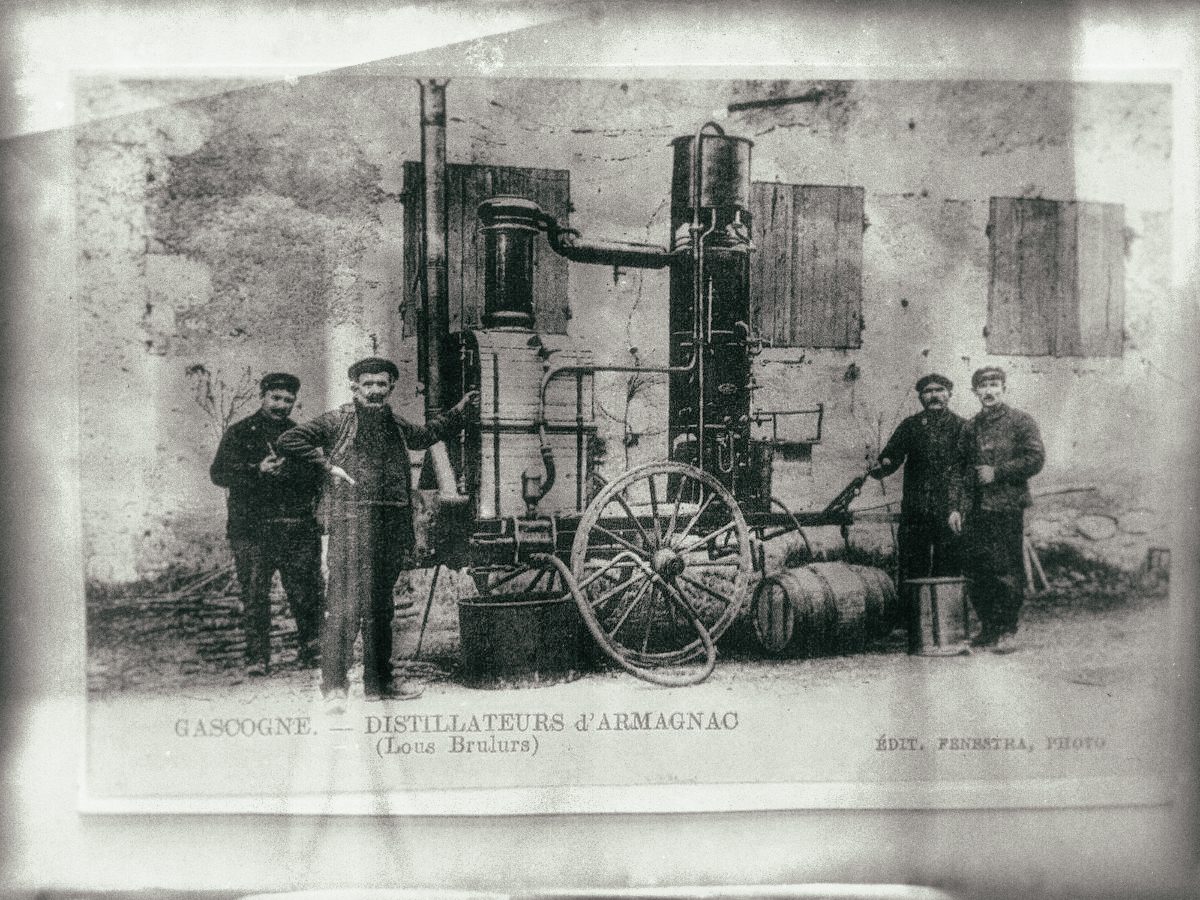


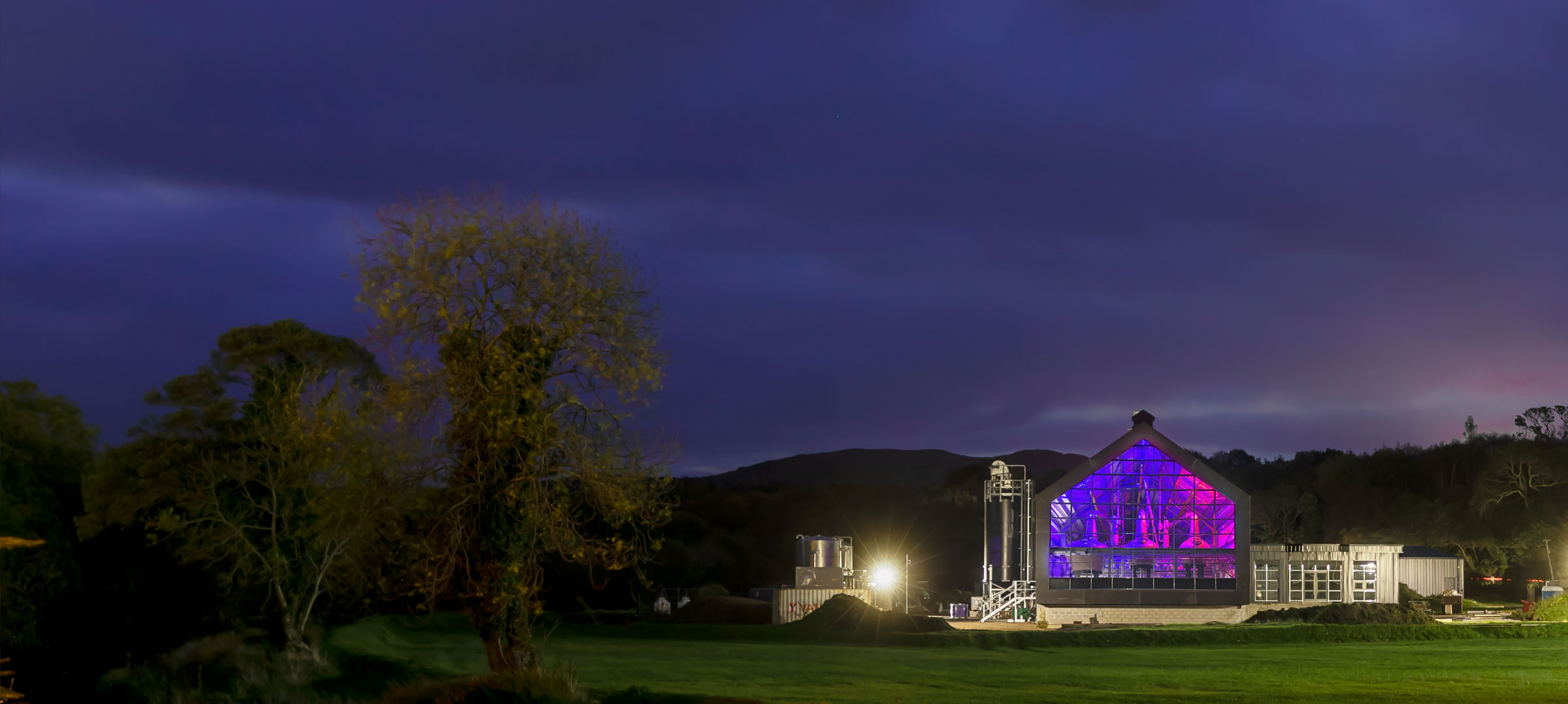
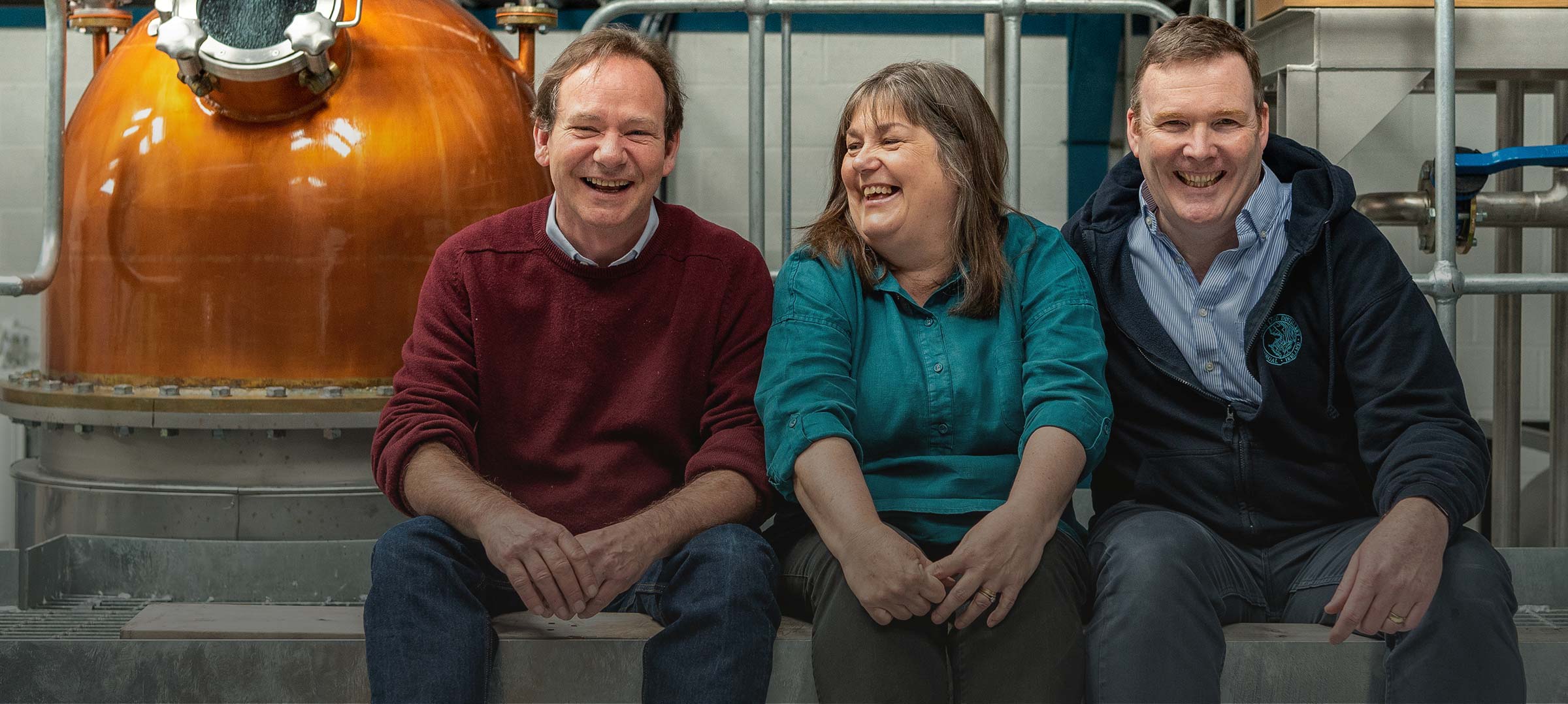
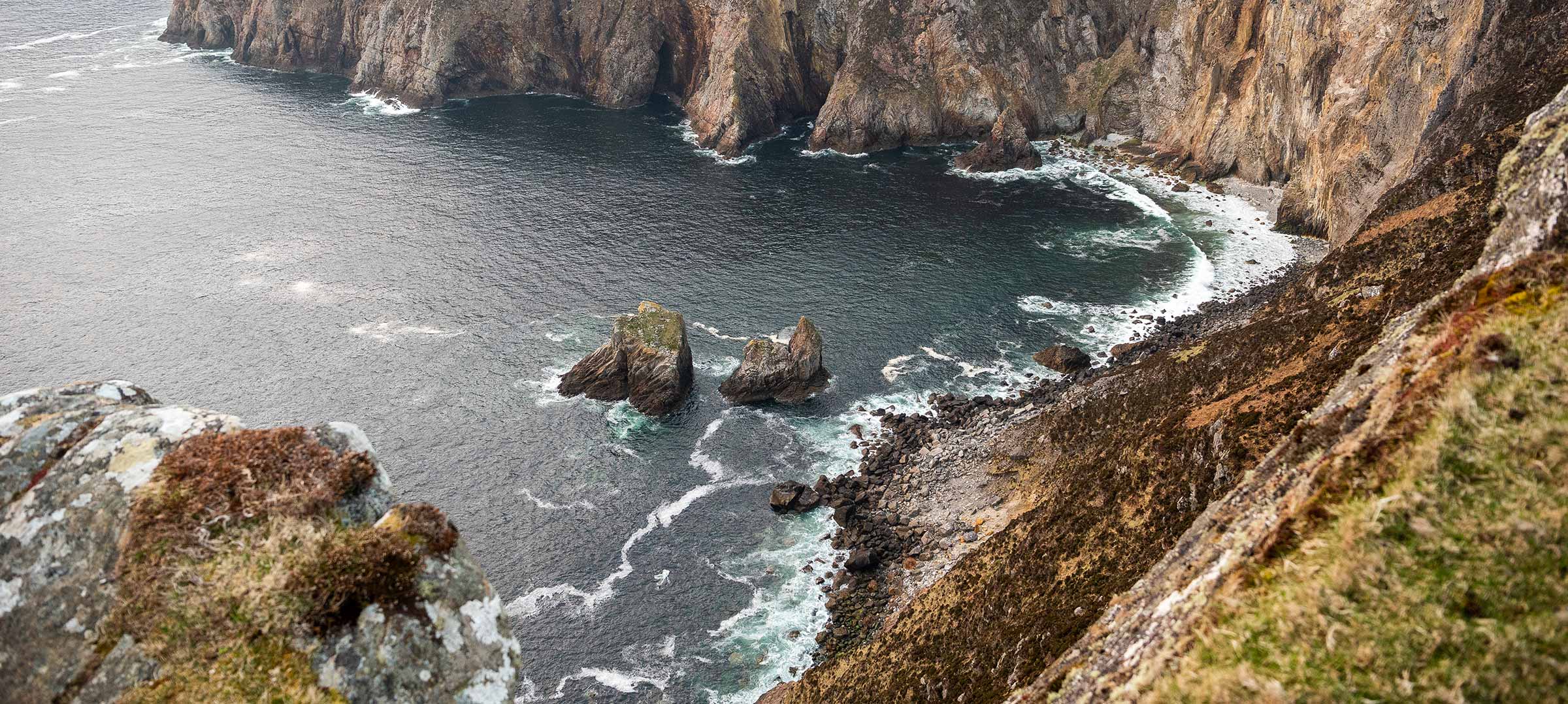
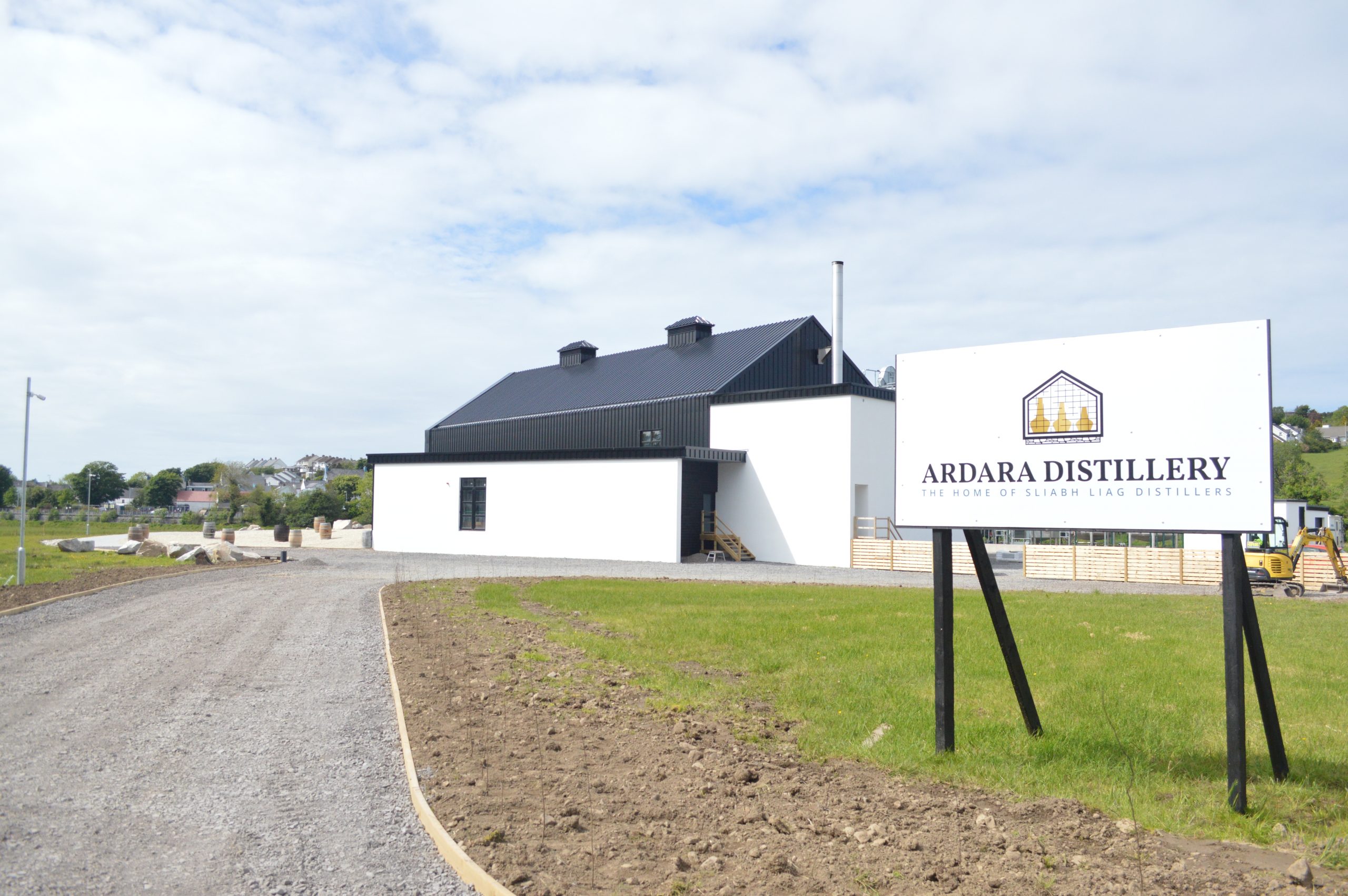
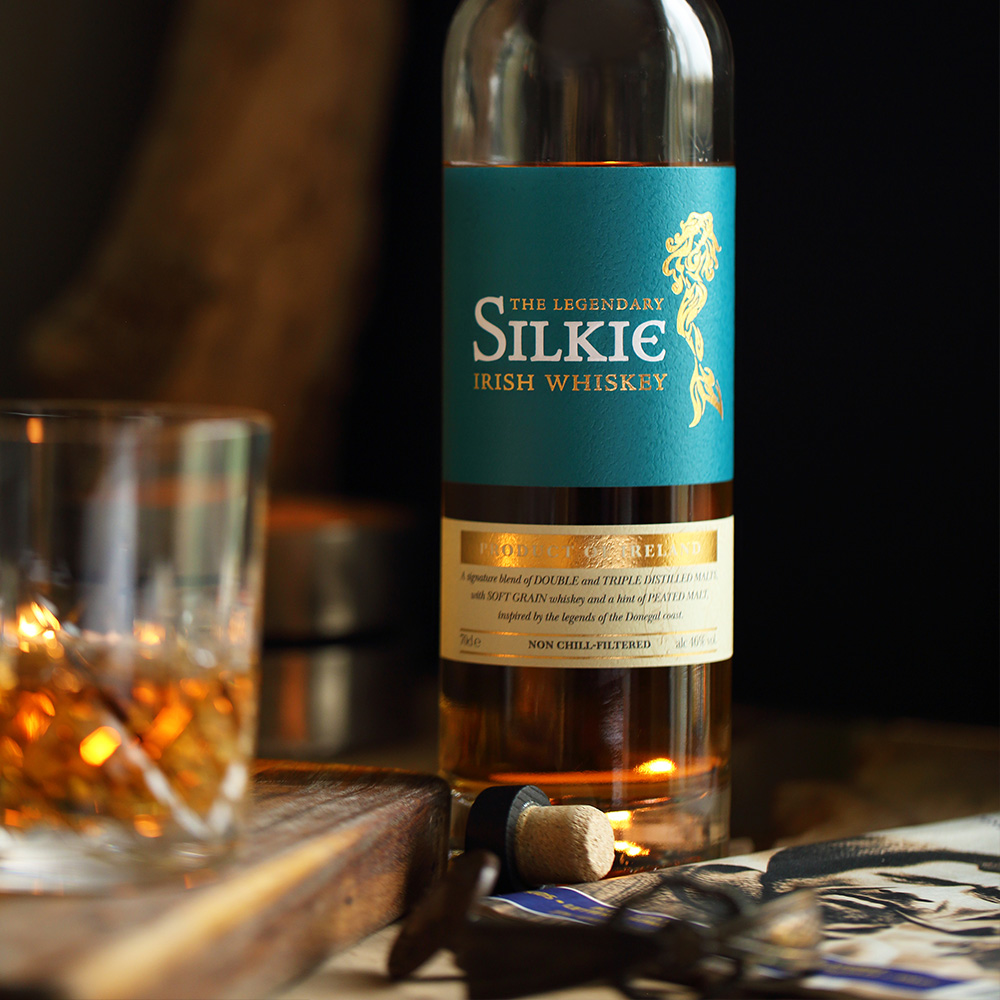
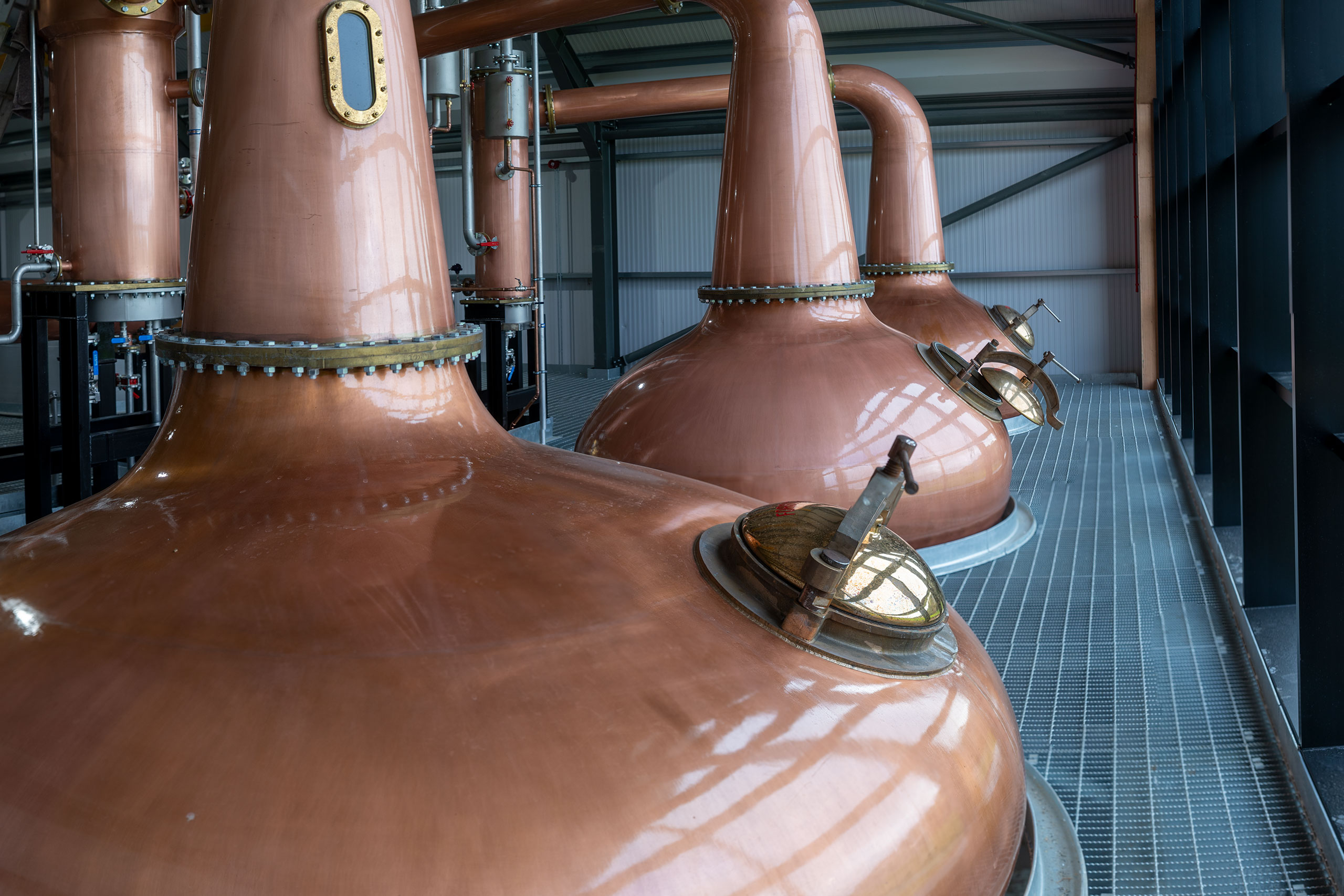
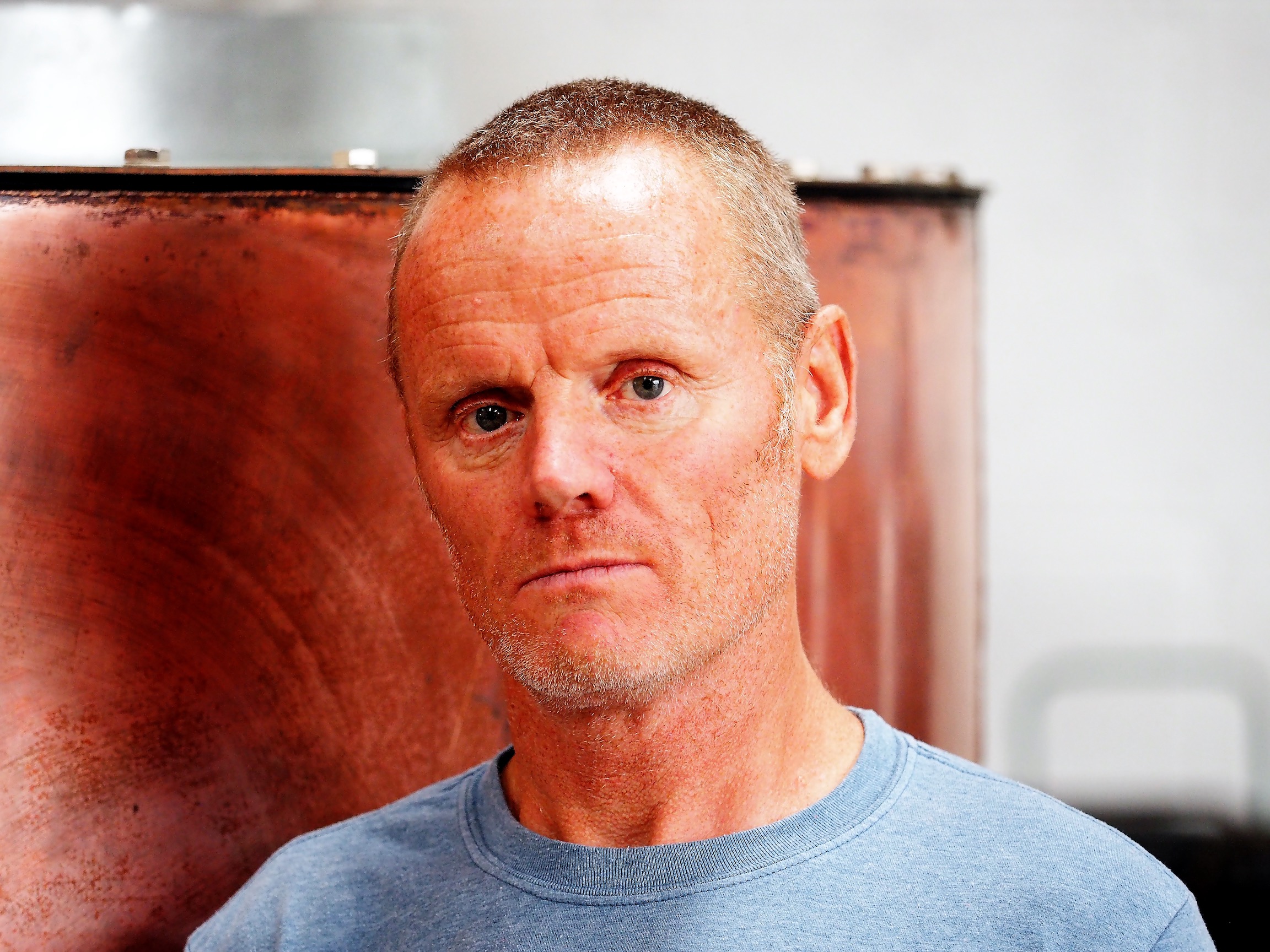
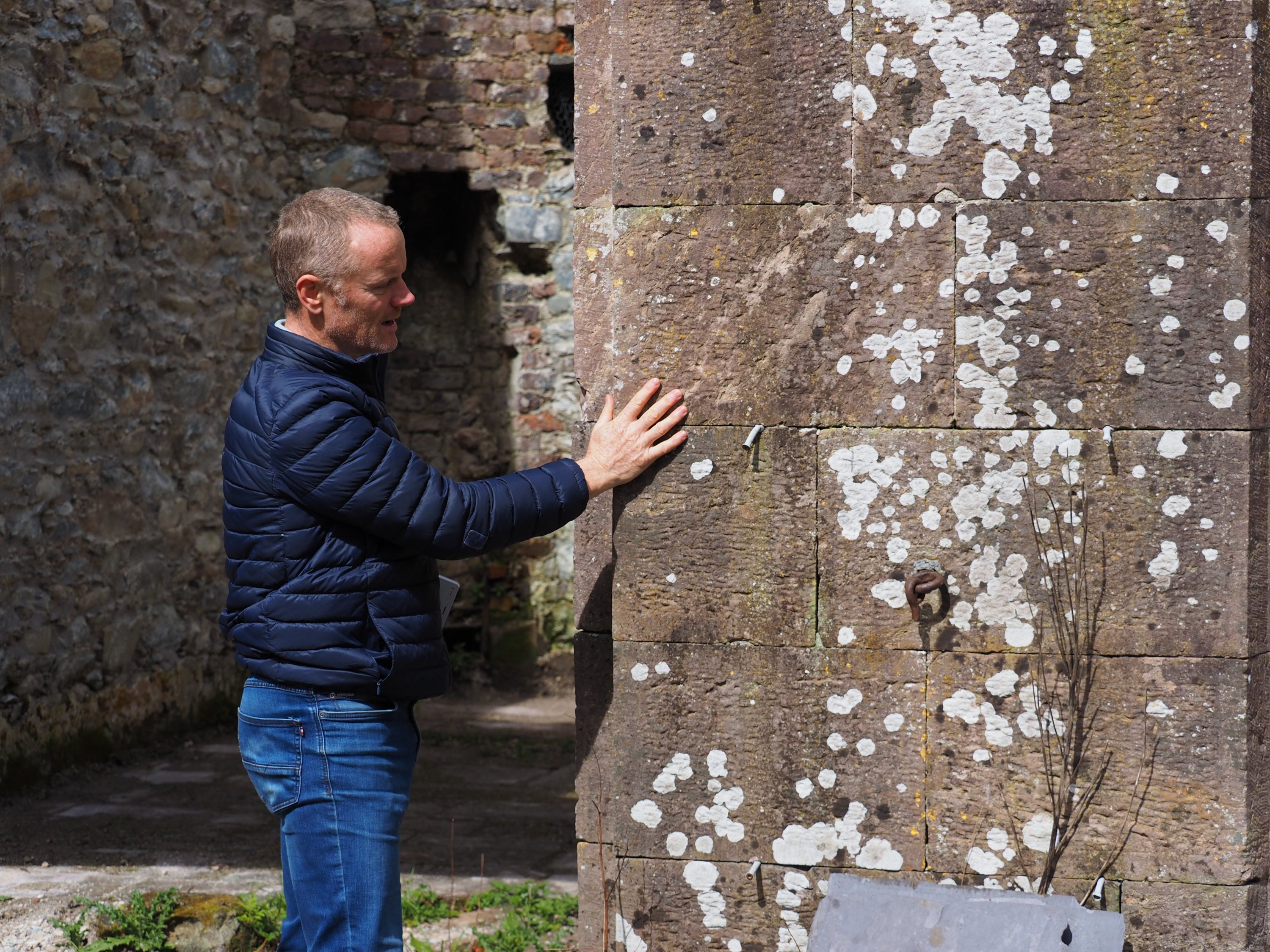
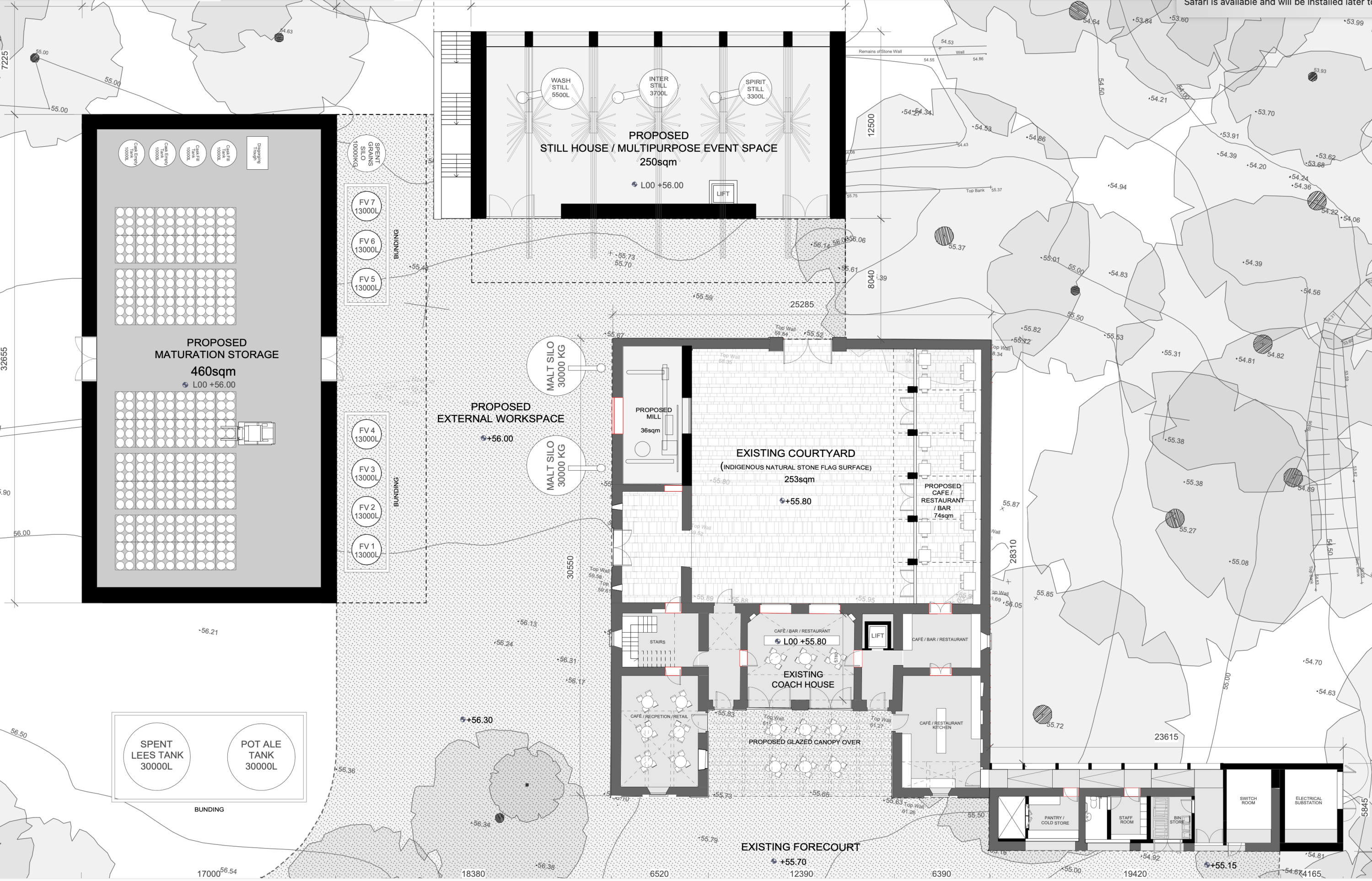


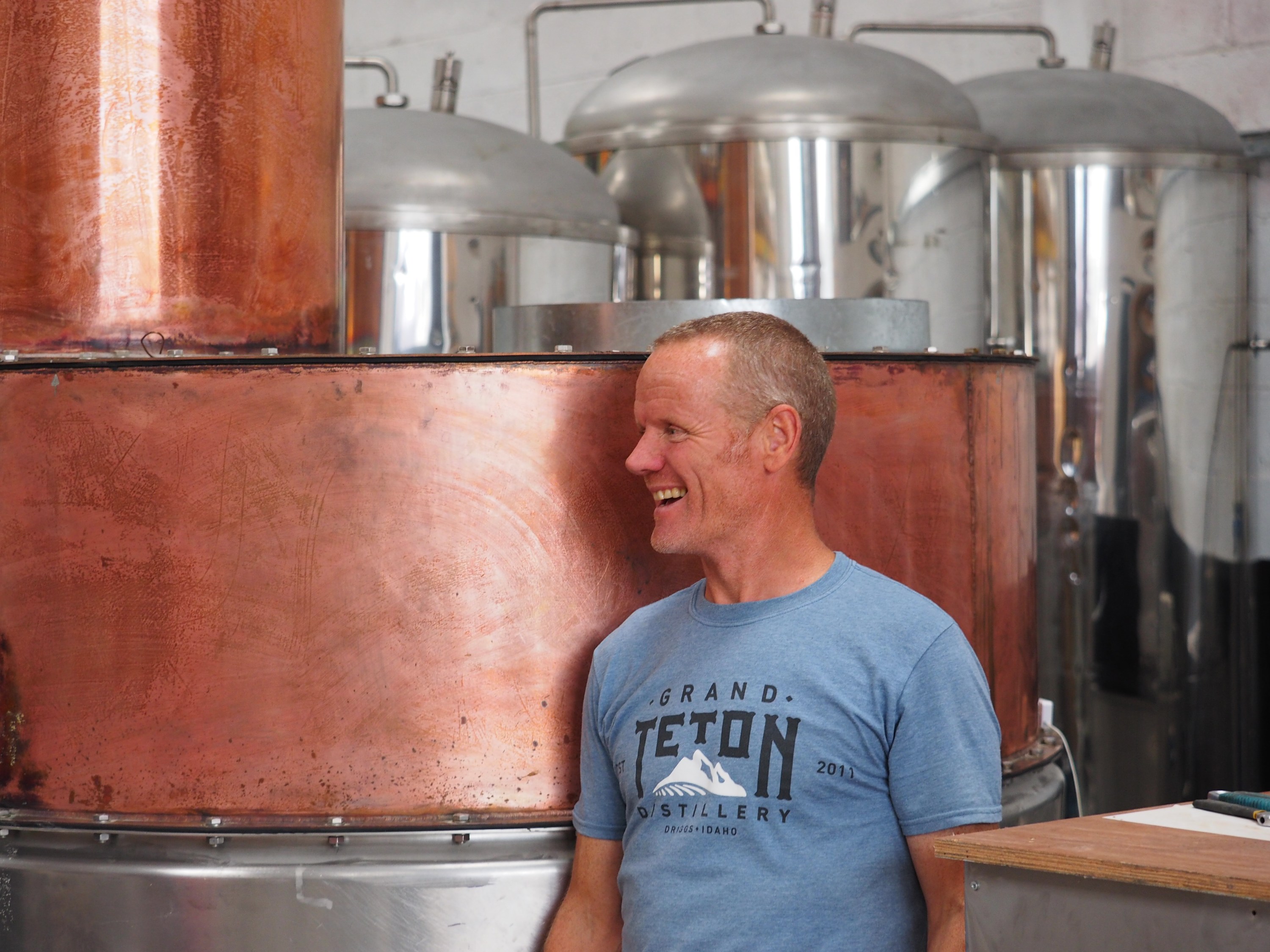

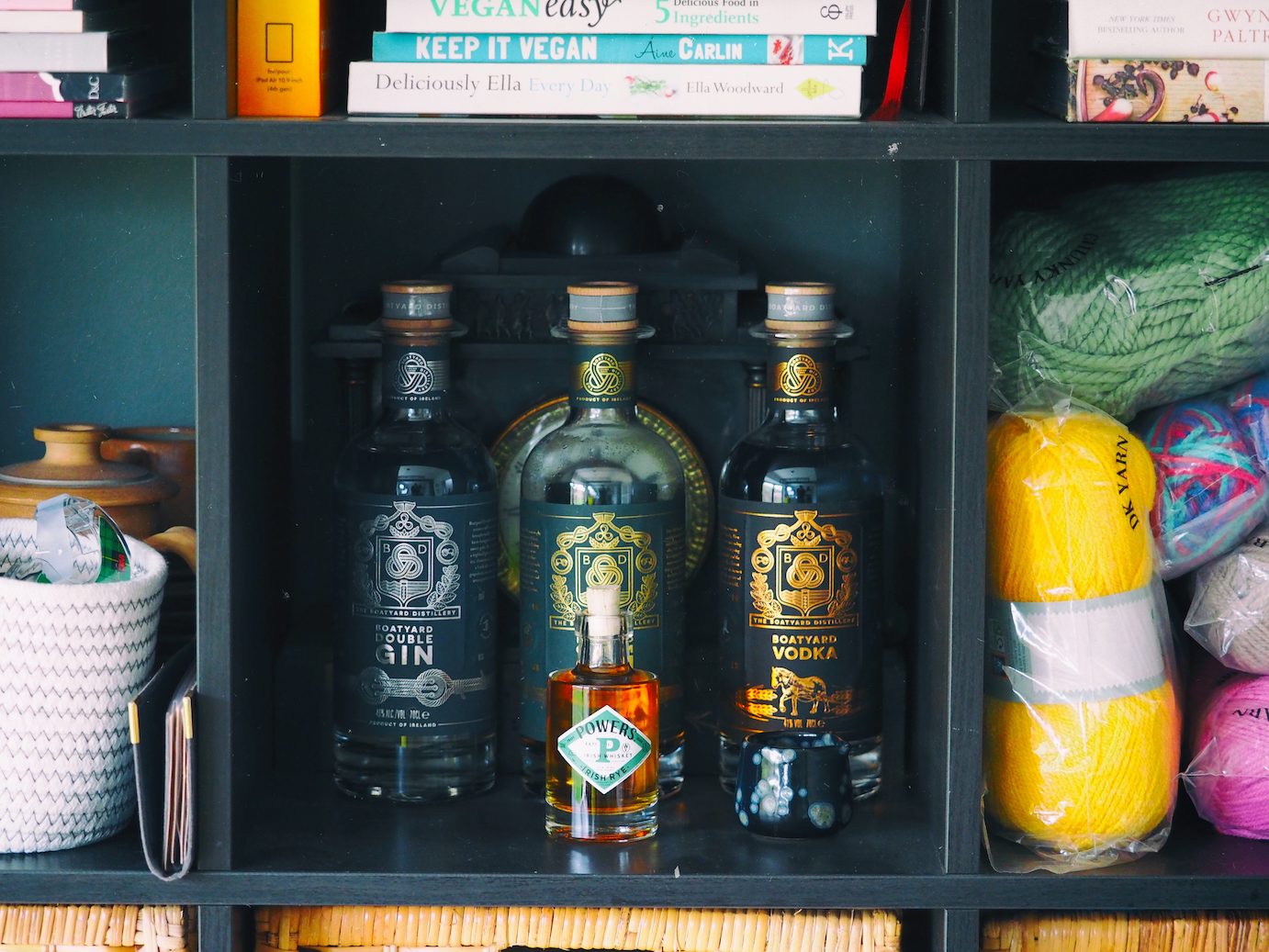
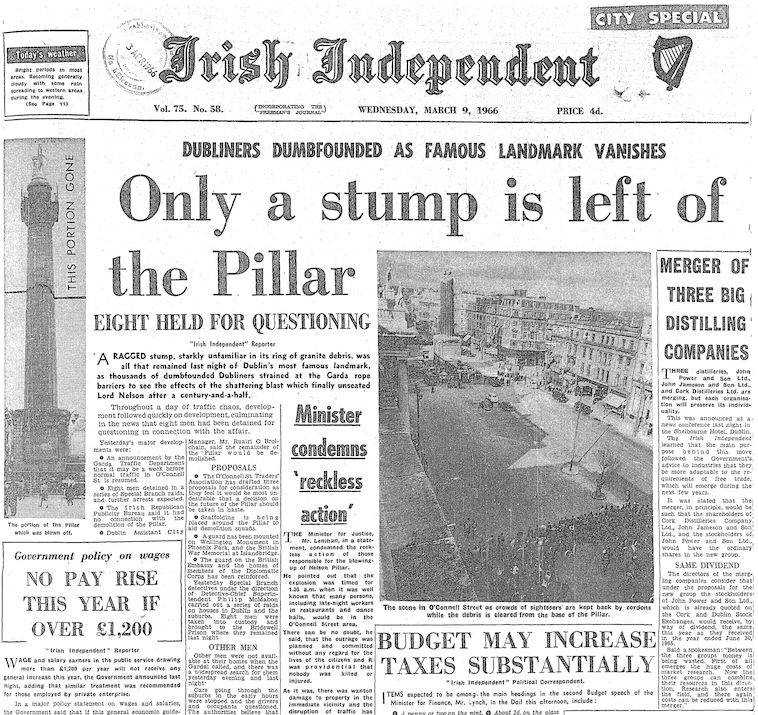
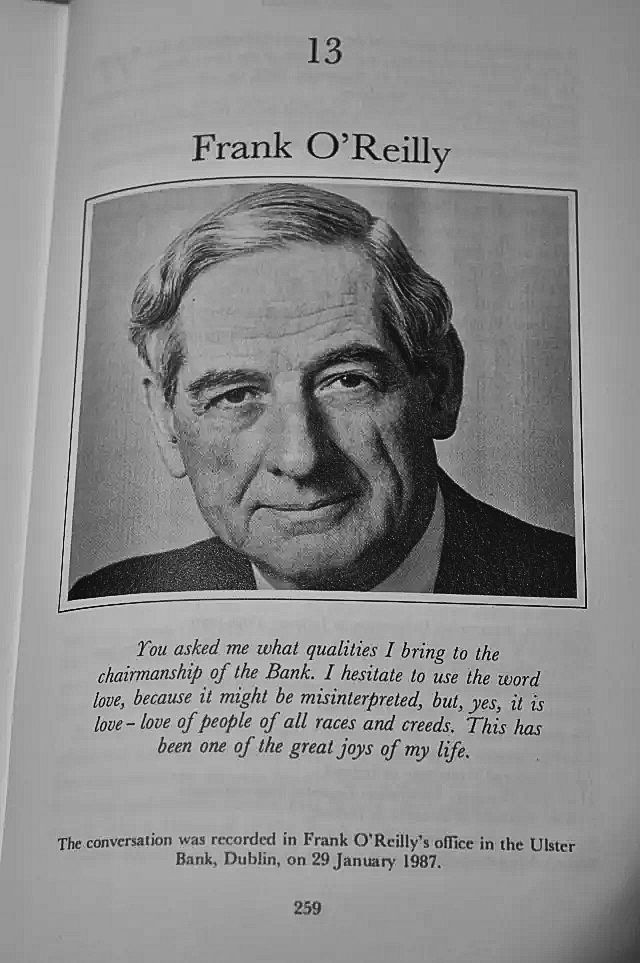

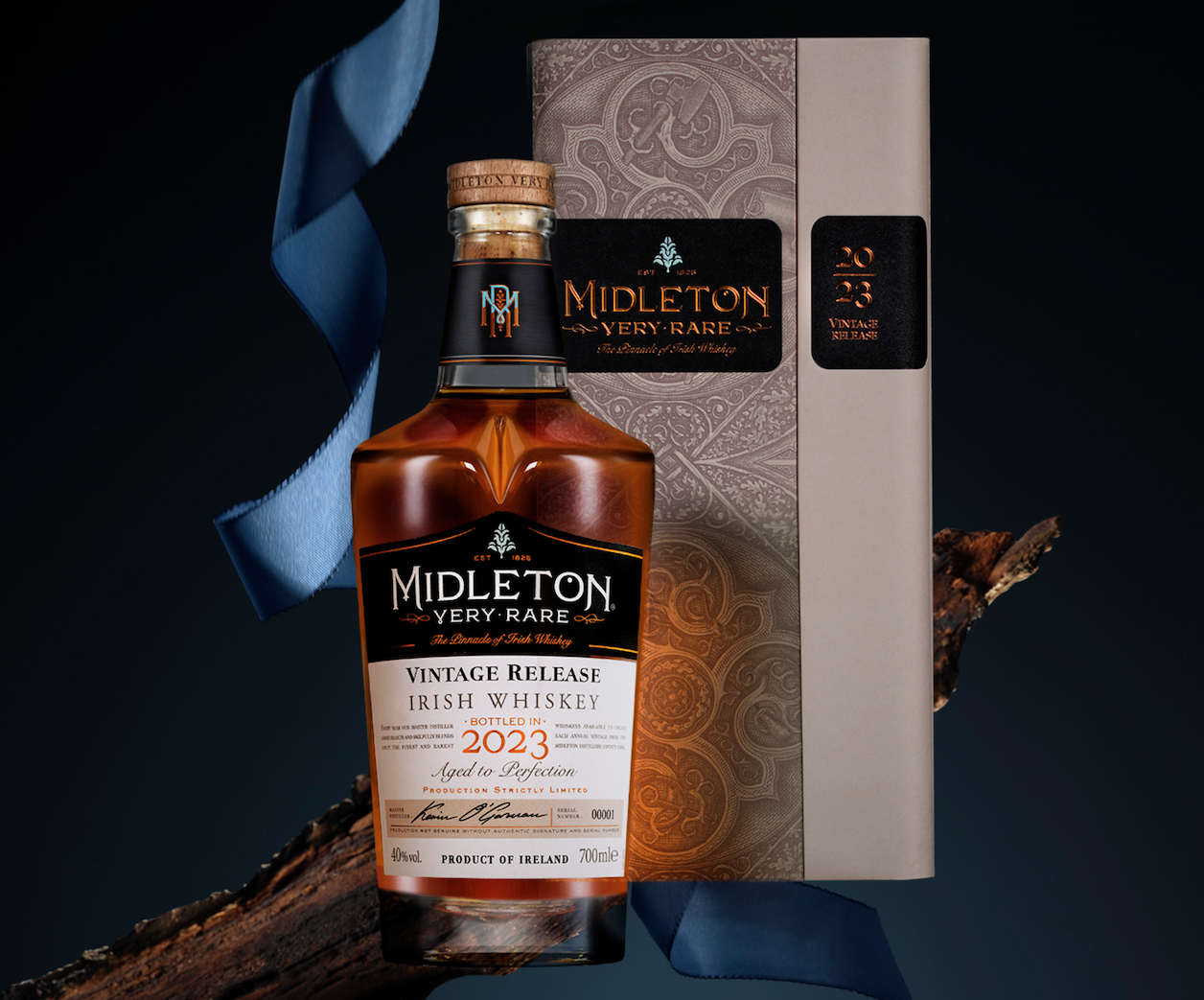
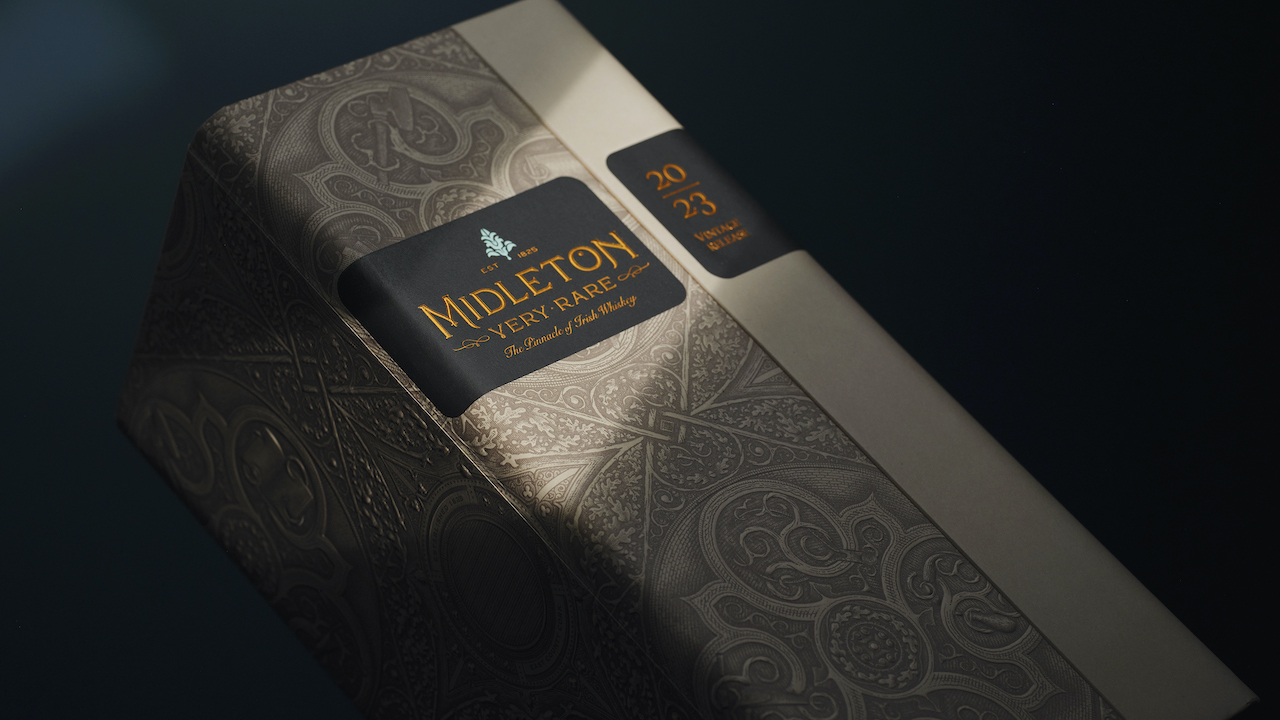
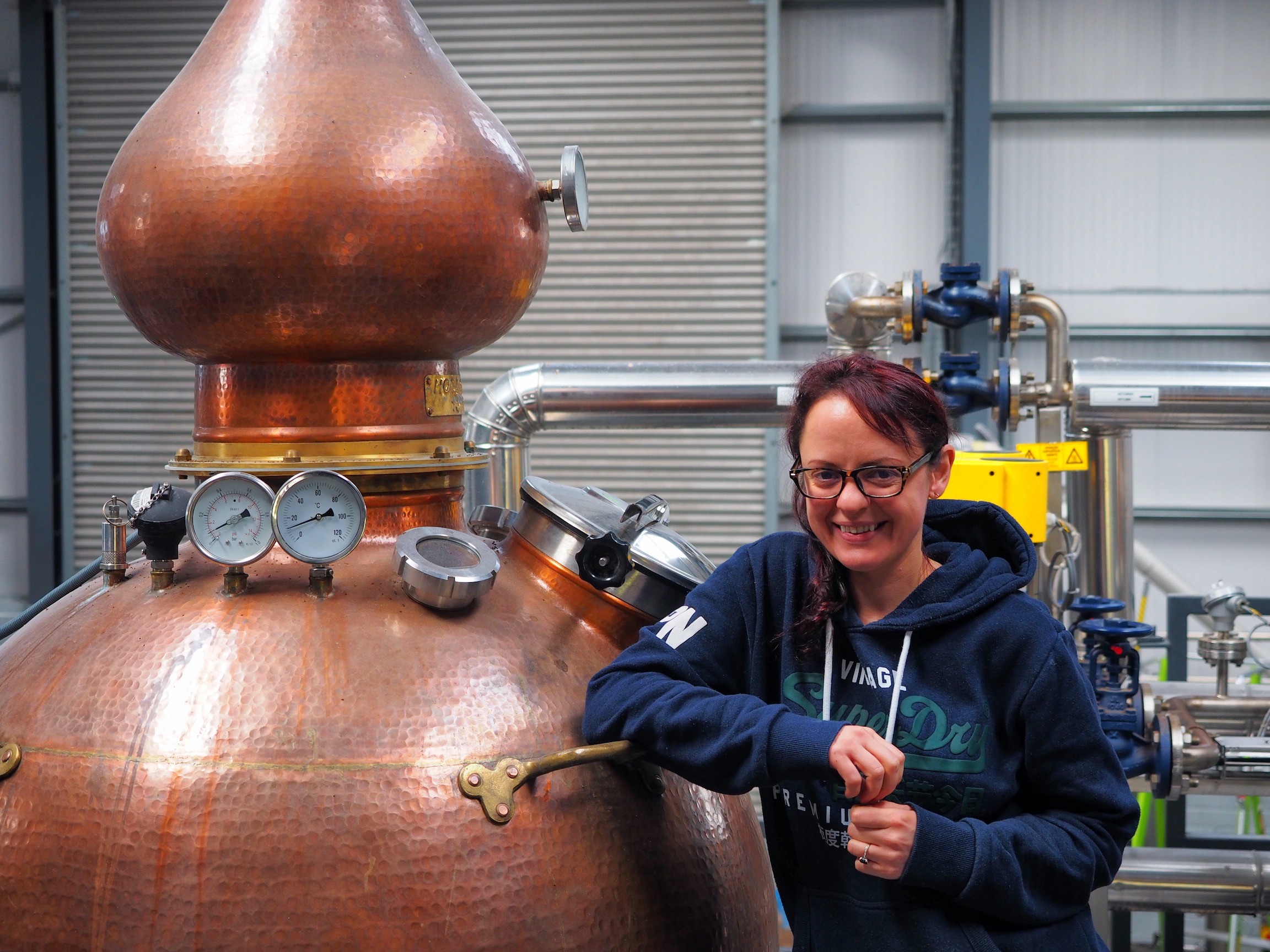
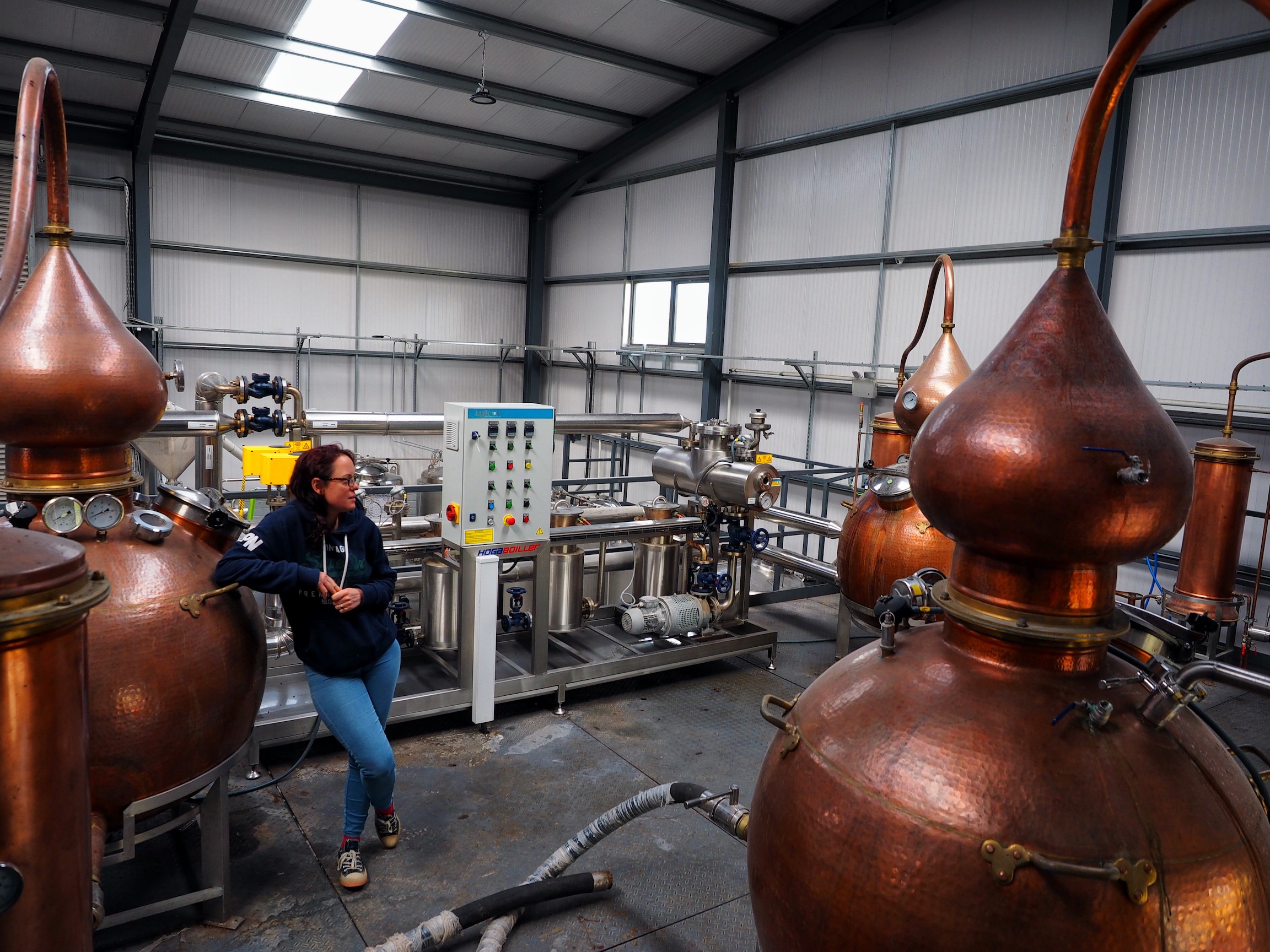
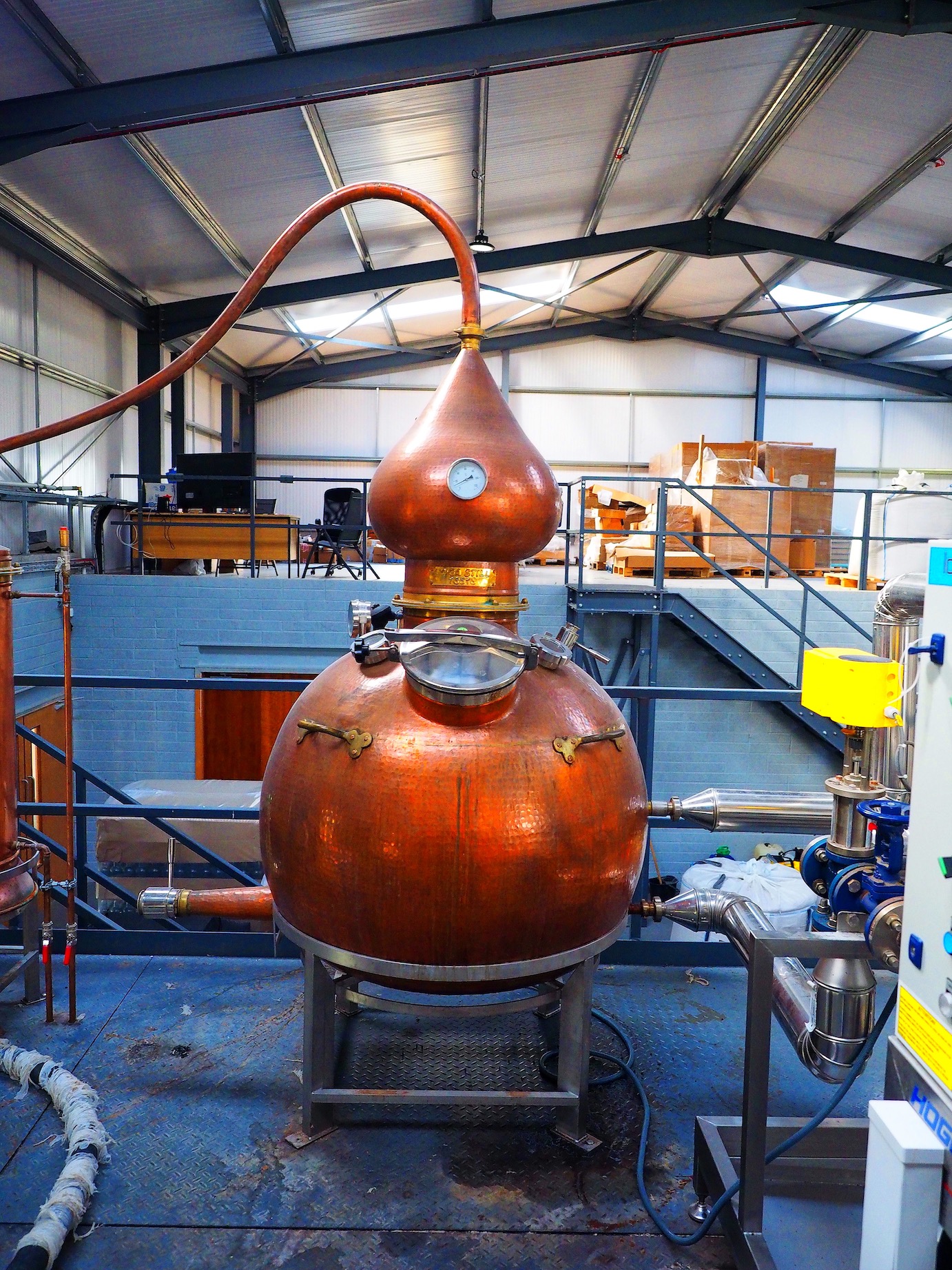


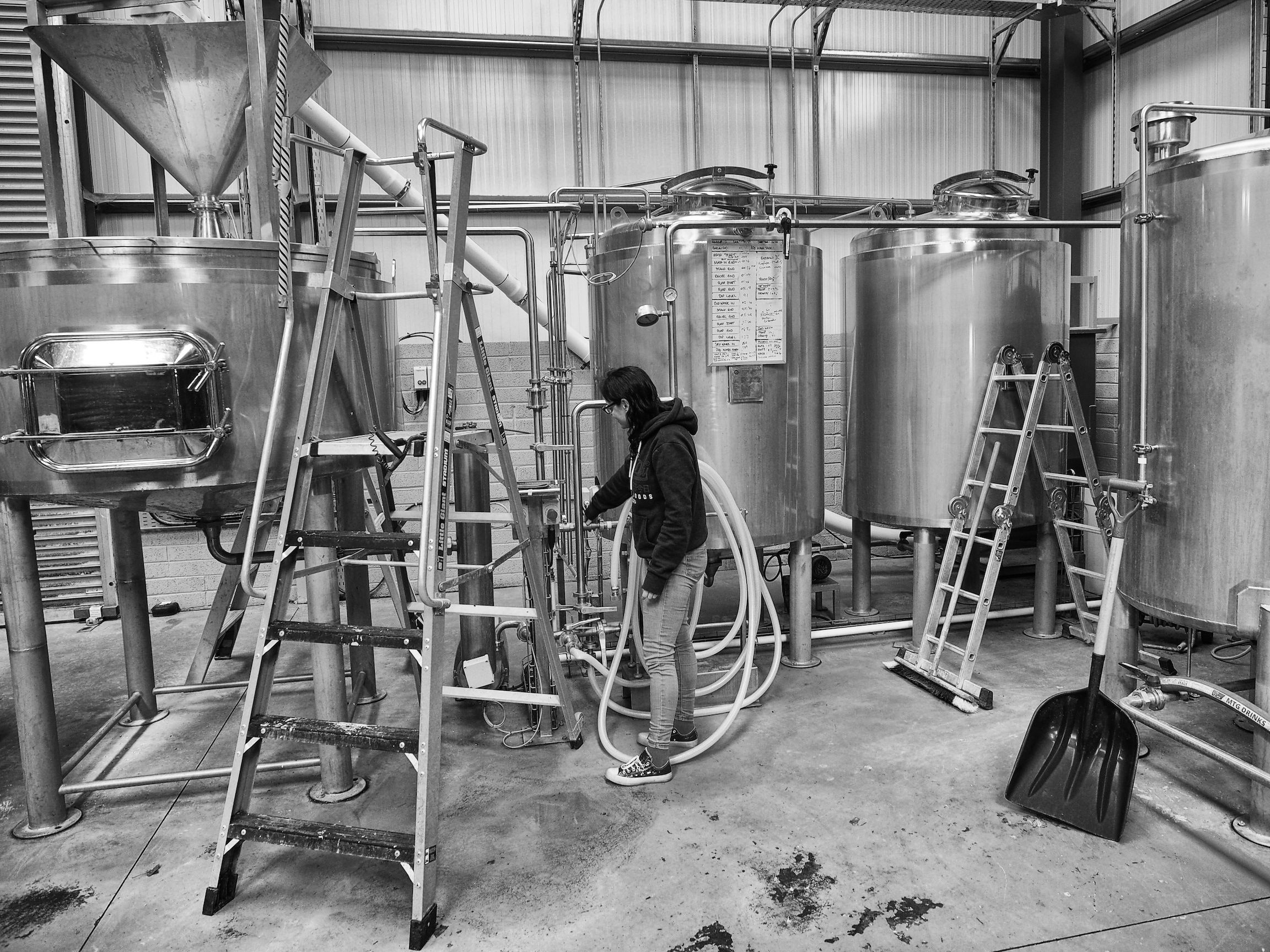
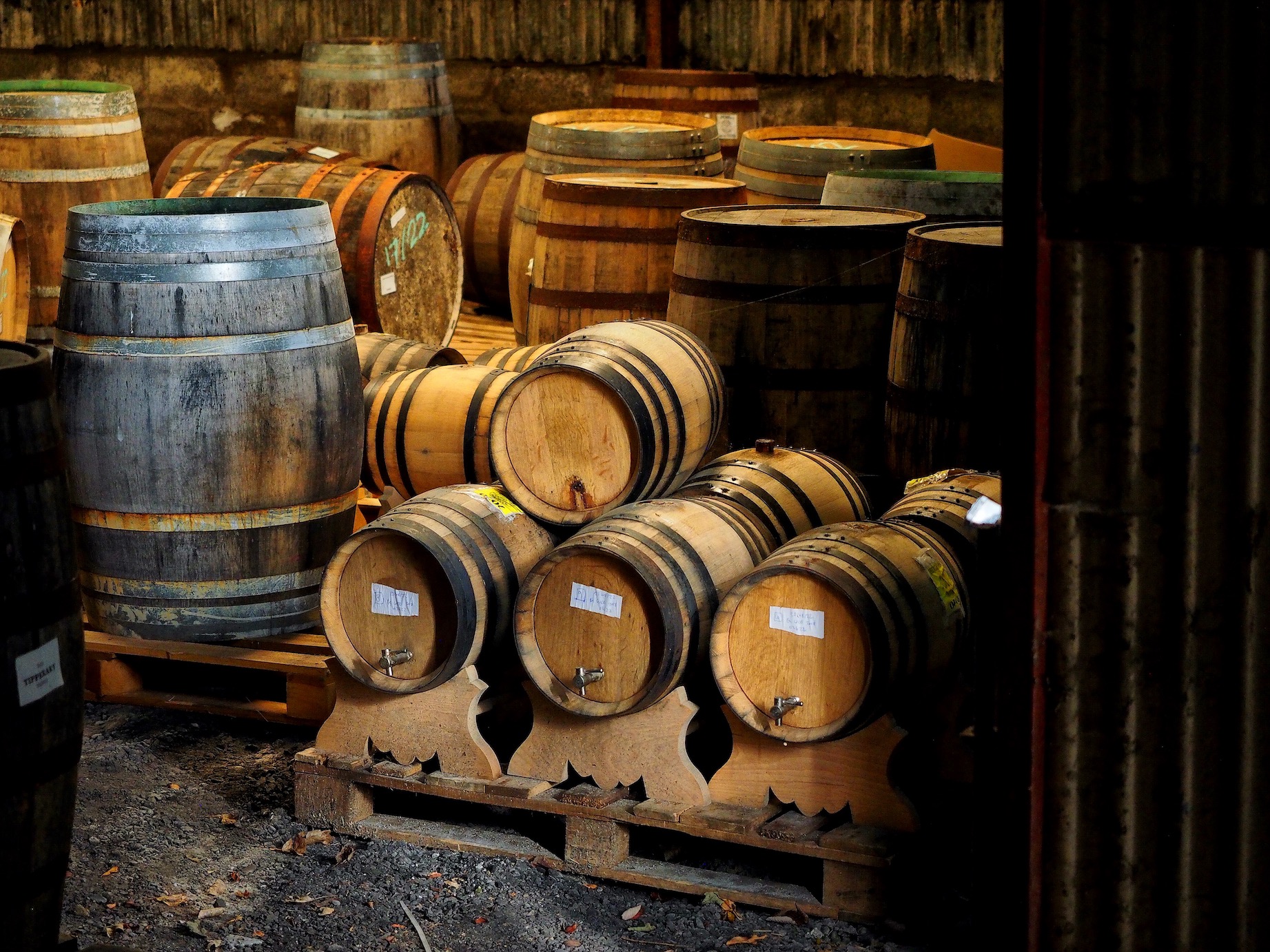

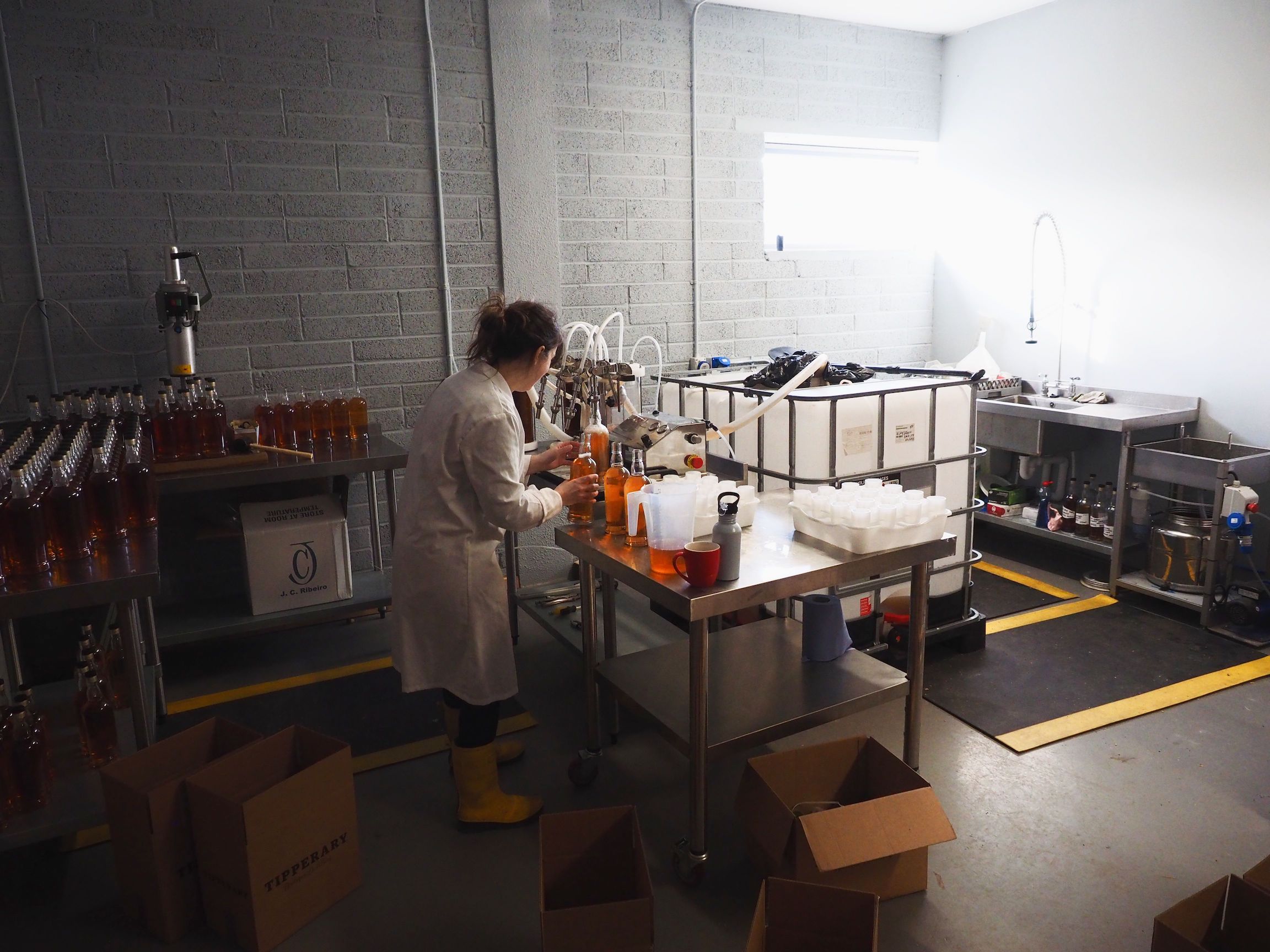


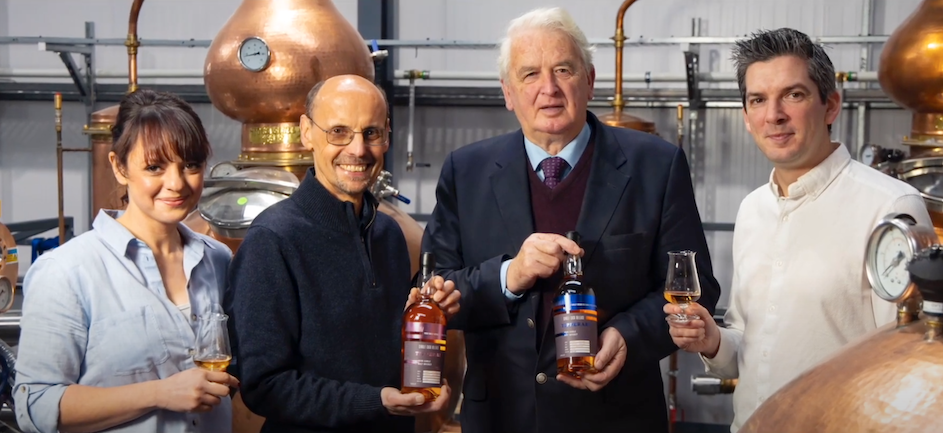
 Triple Distilled Communications