There is a long history of Scots working in the Irish whiskey business – from consultants to blenders to master distillers, they turn up in quite a few distilleries across the country. It makes sense – our industry is a relatively new one having gone from a handful of operations a decade ago to almost 50 now, so there is a dearth of experienced industry professionals. And besides, the king of them all, Jameson, was started by a Scot.
But there was still an oh moment when Dingle Distillery announced in late 2019 that their new master distiller was proud Scot Graham Coull. At that stage he had spent 14 years with Speyside distillery Glen Moray, but says he was looking to expand his horizons. Irish whiskey’s resurgence was in full flight and Dingle was the first and most beloved of the new breed of distilleries that had been set up around the island, and was about to enter an important phase of expansion both in physical terms and in markets. Coull’s considerable experience would be central to those changes.
A native of Elgin on Speyside and the son of two teachers, he grew up in a whisky obsessed household, with his father writing a course on whisky production. After graduating chemistry in Edinburgh University, with few jobs available in whisky at the time, Coull had a choice of either working in the nuclear power industry, or going into brewing. He got a job with Webster’s Brewing in Halifax, then moved into bottling and in 1994 started working with Wm Grant & Sons, and then became the process leader in Dufftown, which gave him distillation responsibilities for Glenfiddich, Balvenie and Kininvie, before joining Glen Moray in 2005. He spent most of his life working in Scotland, as he explains: “Apart from a short period of two years after university working in Halifax, England I had spent all of my working life in Speyside. Eleven years at Glenfiddich/Balvenie and 14 years at Glen Moray. My only visit to Ireland previously was a few days in and around Dublin attending the Alltech Alcohol School and as you can imagine my memory of that is a little fuzzy.
“Prior to accepting the job Fay and I spent less than 24 hours in Dingle but the town and especially the late Mary Ferriter won us over and persuaded us to up sticks and make the move to Kerry. As blow-ins we were made to feel very welcome not only in Dingle but also by the wider Irish whiskey community.”
But as the proud owner of a definitively Scottish accent, how did he manage with the local dialects and inflections down on the tippy toes of Ireland?
“The West Kerry accent is unique and it definitely took us a while to tune in. Living a full calendar year in Dingle is an experience; the hustle and bustle of the summer months were completely different to the dark, stormy damp months of January and February. However, it was the winter months where we got to know the town better and the town got to know us – well Fay mainly because she speaks to everyone.”
And while there might not have been too many cultural changes moving from rural Scotland to rural Ireland, moving from a mid-sized Speyside distillery to a boutique (a nice word for small) Irish distillery was a challenge: “Dingle and Glen Moray have very little in common. Glen Moray is an established medium to large sized distillery producing spirit mainly for blending but also for single malt, whereas Dingle is small and very much in its infancy as a whiskey producer. However, it is well established as a gin producer and vodka to a lesser extent.
“From a job perspective it was very much back to basics for me. Along with my knowledge of whiskey production, I was able to call on my bottling and packaging experience from Glenfiddich to help me find my feet quickly. I was heavily involved in long-term whisky planning at Glen Moray and it was this area that I focussed on initially at Dingle. I remember in my first couple of weeks explaining to Managing Director Elliot Hughes that the warehouse would be full in four years’ time! As owners of a young distillery, they were quite rightly only looking at the next few months and not years ahead. The success of the gin had allowed Dingle to lay down more whiskey stock than they probably thought possible. My challenge was to create a plan for when to release the stock.
“The batch releases which had served the distillery very well in the early years were reaching the end of their natural lifespan. It would also be fair to say that whiskey consumers were beginning to grumble a bit about Dingle and were looking for better value for money. When the time was right and stock levels allowed it, I created the Dingle Single Malt as a permanent expression. It broke the consumer habit of buying Dingle whiskeys and shoving them in a cupboard unopened. I was delighted to see bottles of Dingle being opened, consumed, enjoyed and a repeat purchase made.”
The Dingle single malt core release is made up of 61% PX sherry cask matured spirit and 39% bourbon cask, aged between five and seven years old. At an ABV of 46.3%, it stands out in the Irish whiskey scene as being a reasonably priced bottle retailing for €55.
“I also had to create Dingle whiskeys to satisfy the almost insatiable desire amongst Irish whiskey consumers for something ‘new’. To satisfy this thirst for new releases I created the Celtic Wheel of the Year Series which consists of nine releases which are all cask finishes. The series is made up of single malt and pot still releases, some of which are finished in the same type of cask.
“These releases were the result of my own education process to see how the different spirit types interacted with different cask styles. When I joined Dingle the cask profile in the warehouse was very much ex bourbon and ex sherry. Using different cask styles was my way of learning about the differences between single malt and pot still.”
Coull had developed something of a name for himself with cask experimentation at Glen Moray – at the time, the Scotch Whisky Association’s strict rules on cask types prohibited cider casks being used for whisky maturation, so Coull took ex Glen Moray casks, aged hard cider in them and then took the casks back for spirit maturation. There has since been an amendment to the SWA rules, but without creating too much wriggle room:
Scotch Whisky can only be matured or finished in new oak casks or oak casks which were previously used to mature wine, beer/ale or spirits but not if those casks were previously used to mature
wine, beer/ale or spirit produced from, or made with, stone fruits
beer/ale which has had fruit, flavouring or sweetening added after fermentation
spirit which has had fruit, flavouring or sweetening added after distillation
Irish whiskey can be aged in any wood, typically oak, and cider casks have been used in several releases here. Coull naturally seized the opportunity to experiment with casks and put Dingle spirit into non-oak casks, as well as creating peated Dingle expressions – he sourced peated malt from Muntons maltsters in England which was at a 40-50ppm level, then double distilled to a 20-25ppm single malt, some of which would be coming of age of late. But for these and other experiments, he won’t be in charge to oversee their release.
Earlier this year, Coull announced that he was leaving Dingle for a large project back home in Scotland. The European spirits company, Stock Spirits Group, owner of the Clan Campbell whisky brand, lodged a Planning Application Notification with Argyll and Bute Council for the construction of a €30 million whisky distillery at Inveraray Castle, seat of the Duke of Argyll, who is Chief of Clan Campbell. Like a lot of aristocrats, there are many stories which brands can be built around, but a quick browse on Wikipedia reveals this gem: During the 19th century, a distant Prussian descendant of the family, Jenny von Westphalen, became the wife of the philosopher Karl Marx. When exiled to Paris and reduced to poverty, Marx was nearly arrested for attempting to pawn a part of Jenny’s dowry: a silver dinner service bearing the coat of arms of the House of Argyll. Surely a tale worth of a single cask release down the road.
Clan Campbell is one of the leading scotch brands in France and sells 1.2 million nine-litre cases across Europe. It has been recently launched in Germany and the Czech Republic with further plans to offer it to consumers in other countries. The brand was acquired by Stock Spirits Group from Pernod Ricard in 2023. Stock Spirits owns and manages more than 80 brands, which are available in more than 50 countries worldwide. It employs over 1,800 employees and operates eight production plants – in Poland, the Czech Republic, Germany, Italy and France. The current CEO is Jean Christophe Coutures, formerly CEO of Pernod’s Chivas Bros and Irish Distillers Limited.
For Graham, it’s not just about career progression, or being back home near his family and old friends, but about legacy.
“It was always going to take something special to tempt me away from Dingle and the opportunity to head up the Clan Campbell brand in Scotland and build a malt distillery at Inveraray Castle was too good an opportunity to miss. To be able to bring together all the experience I have gained from working in whisky for 30 years and use it to create not only a new distillery but also a new single malt will be a nice way to complete my career.
“I don’t think anyone likes moving house so being settled back home in Scotland is a nice feeling. We loved Dingle but it was always our plan to return to Scotland at some point. Our grown-up children seem to be happy with the move and get to spend more time with us before we become a burden to them.”
As for the category he leaves behind, the future is bright, but perhaps less blindly optimistic than it was in 2019 when the Coulls joined the Irish whiskey fraternity. Bord Bia’s Export Performance and Prospects report 2023/24 revealed that the country’s drinks exports fell by 8% to €1.8 billion – and Irish whiskey, which holds a 49% value share of Irish drinks exports, declined by 14% to €875 million in 2023. Coull sees choppy waters ahead for the category, the success of which was very much built on overseas markets rather than domestic.
“Unfortunately, I think there are some tough times ahead for the new Irish distilleries. Many of them are small producers in the grand scheme of spirits and trying to break into new markets is difficult. The domestic market can only give so much support and domestic consumers have to make choices as to which brands they will follow and support.
“America is obviously a key market for Irish whiskey but it is very difficult to gain traction there because of the different state systems. European markets are easier to reach but are very competitive. Weaning consumers away from scotch whisky to Irish whiskey is not that easy. Irish whiskey does not have age on its side and unfortunately age is still highly regarded amongst many whisky consumers.”
What the Coulls brought to Dingle Distillery and the category as a whole was not just years of experience but a deft use of social media and engaging online personalities – landing as they did right before COVID-19, they became brand champions and storytellers online, sharing their Irish adventure each step of the way. The Irish whiskey discourse is a little poorer for their departure.
But Graham points out that there is much to be hopeful about and that the future is bright for Irish whiskey as a whole: “The new distilleries are by necessity filling into high quality first fill casks so the spirit is maturing quickly and to a high standard.
“The almost industry wide choice to go down the non-chill filtered, natural colour, > 46% abv will also reap dividends in the future giving Irish whiskey a premium ‘feel’ and one up on its whisky producing near neighbour. I think the future success of Irish whiskey will be built on collaboration. This could be through distilleries coming together through common ownership (for synergy and economies of scale) or working together to market Irish whiskey as a ‘brand’ in itself.”
Killarney Brewing and Distilling are on another round of fundraising, focussing on the US and aiming to bring in €7 million. The 62k square foot brewery, distillery, event centre and restaurant which lies just outside Fossa on the outskirts of Killarney is estimated to have cost €20 million. If you are wondering where the money went, it is worth going down for a look, and a bite to eat. It’s an impressive place, and the food is great – my family ate there and all loved it.
They also started exporting beer to the Nordics, Eastern Europe, and are heading for Italy, France and the UK next. Key personnel hired recently included head distiller Kerr Petrie. Having trained as an engineer at biotech giants Ipsen and Novartis, he moved into drinks with Diageo in 2012, working in Speyside, covering 28 malt distilleries across the region. After that he went to the US Virgin Islands at the Captain Morgan Distillery, before he came back to Ireland in 2018, joining Irish Distillers in Midleton as production supervisor, and then moving to Killarney as master distiller. The head brewer in Killarney is Mike Bank, formerly of Long Trail Brewing in Vermont, Ithaca Beer Company in New York, and Oyster Bay Brewing in Long Island.
After what seemed like a lot of delays, distilling finally started last September and this round of fundraising is aimed at driving whiskey, gin, and beer sales through increased marketing and distribution internationally. They can produce up to 250,000 cases pa or one million LPA, and claim they have the potential to double output with a modest investment in the future. They also have both pot and column stills, while their 500 litre Bavarian copper gin still from Mueller can produce 80,000 cases pa.
If you are feeling flaithiúlach with the money you can read the prospectus here.
“The ultra-premium category is going to grow” – Brown-Forman Irish whiskey brand Slane eyes opportunities https://t.co/AzkiNMzPx9
You could run endless stories about how much a distillery loses in the first 15 years of their life. The places are money pits, but when a story does pop up it always makes the news because a lot of people don’t realise that whiskey is a long-term thing. Nevertheless, it’s always interesting when accounts are published; at the end of March, the Irish Times had a piece about Slane Distillery’s finances and how they saw losses rise to €25.7m: The most recent accounts show that it had made a loss of €3.2 million in the year to the end of April 2023, up from the previous year’s trading loss of €2.7 million. During that year the value of the company’s whiskey stocks rose from €23.5 million to €29.2 million, made up of “finished goods and goods for resale”, according to the accounts.
Not long after this piece, Just Drinks had a long interview with Alex Conyngham, who started the brand with his father Lord Henry Mountcharles before they sold it to Brown Forman in 2015. The distillery, which is adjacent to the family castle, started distilling in 2018, but Alex told JD their own stock would only be released in the next five years. In the meantime they are using their sourced whiskey to drive their triple cask blend, which is at around 50,000 cases globally. It is, as one rock behemoth opined, a long way to the top if you want to rock n’ roll.
'The presentation of twenty-nine bottles of Bushmills 10-Year-Old Single Malt whiskey last December cost €668.45 while the bill for the same number of porter cakes was €130.21'https://t.co/kJYEN5Bh4z
Shamrocks for our real friends, real shocks for readers of the Irish Mirror in early April when it was revealed that Taoiseach Leo Varadkar bought bottles of whiskey for the leaders of each of our EU partners, as well as the Presidents of the European Commission, European Council, and European Parliament: The presentation of twenty-nine bottles of Bushmills 10-Year-Old Single Malt whiskey last December cost €668.45 while the bill for the same number of porter cakes was €130.21. Ever eager to police Irishness, some asked why he chose Bushmills rather than a Republic Of Ireland distillery, and while I think you could write a dissertation on why he chose an iconic Northern Irish distillery as the source for his gifts at a time when the prospect of a united Ireland looms large in the discourse, chances are he chose it because it is about the cheapest age-statement Irish whiskey you can buy. Redbreast 12 is about twice the price, and I’m not sure the ordinary person – or average diplomat – knows the difference between a 12 year old single pot still and a ten year old single malt, so saving hundreds of euro makes perfect sense. And besides, it can’t hurt to acknowledge that one of the island’s great distilleries just happens to lie on the other side of the border.
Dublin Liberties Whiskey reports losses of over €3.5m in 2023
On the topic of distilleries being money pits – the Dublin Liberties Distillery is one that, because of its Dublin location, tends to receive a lot of scrutiny from our national press. Unfortunately many of the headlines tend to be similar:
The Business Post piece goes into a lot of detail, but again, whiskey is a mug’s game when it comes to money. It does include this absolute gem though: In 2021, Alex Pollard, chief financial officer at Quintessential, told the Business Post that the firm was playing the “long game” with its Irish investments, and that the Dublin Liberties Distillery arm of the company was not designed to be majorly profitable.
“It’s there to be as efficient as possible as a distillery, and produce liquid as cheaply as possible,” he said at the time.
A refreshing frankness.
Early April also saw a piece in the Sunday Times suggesting that Powerscourt Distillery might be up for sale: The Sunday Times understands that the company hired Key Capital, a Dublin-based adviser, to handle a potential sale in recent months. The distillery, which is co-owned by the Slazenger family, owners of the Powerscourt Estate in Co Wicklow, last year secured a €25 million asset-backed financing facility.
The departure of both investor and MD Alex Peirce (whose family were behind both Arran and Lagg distilleries in Scotland) and then legendary master distiller Noel Sweeney both in the last couple of years is the kind of thing that adds weight to any rumours of the distillery being for sale. But everywhere is for sale if the price is right.
'Since it began producing in its Dublin city centre distillery in 2015, Teeling has been the most likely of Irish whiskey’s new wave to challenge the hegemony of the Pernod-backed Irish Distillers.'https://t.co/j5ajCnGj3C
Drinks International gave a rundown on Teeling Distillery in Dublin, which Bacardi took majority control of in December, six years after the spirits group first invested in the brand: While the brand will now be within the Bacardi group’s portfolio, Stephen and brother Jack will maintain ownership of a portion of the company and continue to run the day-to-day operations.
Teeling now have their own Dublin-distilled whiskey on the market but they also still have a very large amount of sourced stock which wasn’t made in Dublin and which they sell under their own distillery label, which is normal in Irish whiskey, apparently.
Hinch Distillery posts £2m operating loss for 2023, but the value of its whiskey stock continues to grow year-on-yearhttps://t.co/ZdV8ZA7sVm
Back up North of the border and Hinch are the ones getting a run through of the accounts. The distillery officially opened in 2021 following a £15m investment. The Co Down distillery was founded by serial entrepreneur Terry Cross and recorded an operating loss of £2 million last year, according to accounts. It brought the total losses for the three years ending June 2023 to £4.2m. Like I said, money pits.
Speaking of celebrity backers: The Muff Liquor Company bagged a few high-profile ones in the last while, with Ed Sheeran, Jimmy Carr, Ronan Keating, and Russell Crowe investing in the firm. The brand name is, depending on who you ask, a fun and cheeky bit of wordplay enabled by the fact there is a village in Donegal named Muff, or play on a homophobic, misogynistic term that really would have been better off consigned to the dustbins of history. The fact the firm is fronted by a woman has probably helped the name avoid too much scrutiny but a big bunch of lads investing means we now have videos like this one, where Ed and Rusell celebrate MLC landing a distribution deal in the USA: Sound up if you like dying inside:
Muff Lovers !! Donegal’s own @MuffLiquorCo have signed a distribution deal with Lucas Bols in the USA. Young Sheeran and I had High Tea at the Dorchester to celebrate ! pic.twitter.com/BpgHmbyXly
You have to have a sense of humour though and so it was with a sensible chuckle I noted that the Muff Liquor Company isn’t even headquartered in the titular village, but rather some 20 kilometres up the coast in Moville. There are plans for a brand home and distillery in Muff so I look forward to many wonderful jokes about his incredibly funny name going forward. And if any blokes out there want to balance the scales with a liquor company just for the lads, there is a townland in Mayo that has the perfect name.
Further proving Linnane's Law that in the future everyone will release an Irish whiskey, it would appear the Lord Of The Dance himself Michael Flatley is about to launch one in the US. Impossible not to read the label blurb in the Gift Grub voice https://t.co/siX4wjUCCwhttps://t.co/YM4Vbld2Bz
It’s a five year old blend with Noel Sweeney listed as master blender. The label has some tasteful blarney (but then what Irish whiskey doesn’t?):
This exquisite blend is a tribute to the undaunted dreamers who shape the world. Savour the spirit of ambition and the warmth of achieving the extraordinary. May each sip inspire your path to greatness.
Naturally, impressionist Mario Rosenstock gave it a run-through.
“A 30 year old triple cask malt whiskey with the strength of Cú Chulainn himself” 🥃
Other notable labels appearing on the TTB pages include the usual sublime and ridiculous selection, but most notable in the last few weeks was this one:
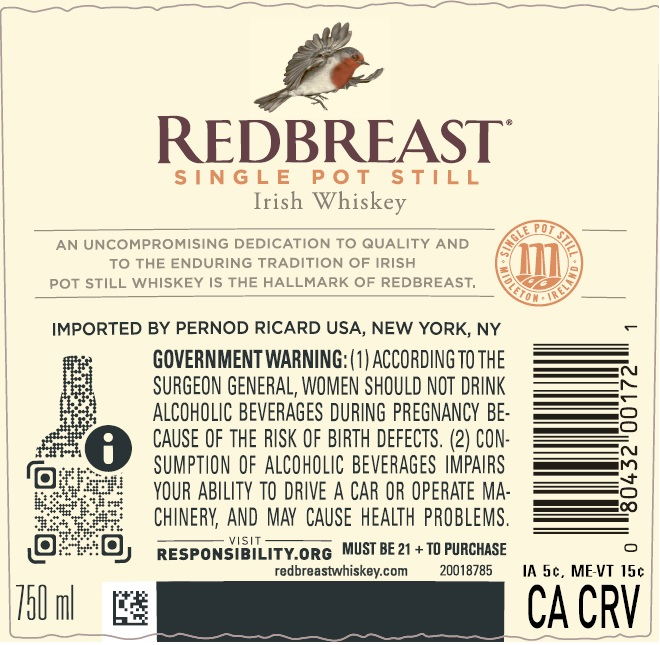
With a flock of releases across the last four years, this one seems like it might be worth getting excited about. Or it would, if premiumisation hadn’t pushed most of the Redbreast range out of the price range of normal whiskey drinkers who enjoy fine spirits but don’t want to have to sell a kidney to pay for them. After the labels were posted on Twitter, a hive mind came to the conclusion that this release will most likely cost around €160-€220, as there is a gap in the range around that price:
Redbreast 12 continues to hover at the €60-€70 region but it is probably a matter of time until it gets jacked as well (as ex-IDL guru Brendan Buckley stated). If you see it sub €60 online, it might be an idea to grab a couple.
On the topic of Midleton’s premium offerings, the Waterford-based company that bottles IDL’s upper-end releases sought court protection as it tried to save 115 jobs: Admiralford Limited, whose biggest customer is Irish Distillers, was granted an order appointing an interim examiner to temporarily run the company’s affairs in a bid to save it from collapse and the loss of 115 full- and part-time jobs in and around Waterford.
The court was told that the plant specialised in premium whiskies, exclusively bottling many of Ireland’s most famous brands such as Midleton Very Rare, Redbreast, Paddy, Cork Dry Gin, Writers Tears, as well as Irishman and Waterford among others. Rising costs and war in Ukraine were blamed for the company’s struggles.
In court also – or narrowly avoiding court – were West Cork Distillers, who had a fish kill case against them withdrawn by Inland Fisheries Ireland, which blamed internal issues for the withdrawal: In 2022, West Cork Distillers had pleaded guilty to three offences relating to a discharge of liquids into the River Ilen in Skibbereen on July 21, 2021, which its was alleged had led to the deaths of approximately 2,000 fish including salmon and sea trout, though they denied that the discharge was responsible for the deaths of the fish. Judge James McNulty had ordered the company to “make amends” by donating €1,000 each to the 26 tidy towns group across West Cork… Stephen O’Donoghue, defending, told the court that his client had donated 26 cheques to the value of €26,000 as suggested by the court which he noted was a significantly higher sum than the maximum penalty of €15,000 which could have been imposed. He asked that legal costs of €5,500 paid by his client directly to Inland Fisheries Ireland would be reimbursed as there was no longer any basis for them to pay the fees as the prosecution had been withdrawn.
Judge James McNulty said that West Cork Distillers had dealt with the matter in “a noble and gracious manner” and he ordered the legal fees to be repaid to which Mr Coakley agreed.
Per the Indo: The new distillery will have a floor area of 1,357 square metres incorporating the installation of plant, together with minor alterations/works to existing building, together with all ancillary site works and services.
Roscommon County Council approved the development, subject to 18 conditions.
One of conditions states that the developer will engage the services of a suitably qualified Conservation Architect or other suitably qualified professional with proven conservation skills for the detailed design and specification of the works to the historic structure, in particular the reinstatement and repair of the existing building/elements
You can nose around the distillery website here and the webpage for the warehouse complex they already have in operation here. More on the family behind the plans here.
The official figure for whiskey distilleries here still floats between 45 and 50 – but with some high profile operations never getting beyond the planning stages, or smaller ones going silent, I would guess that it is unlikely we will go past 50, or at least we won’t in the next five years – Scotland has 145 (and counting) so we haveplenty time to catch up. Slow and steady etc etc.
And finally, a distillery opened in a remarkable building:
A whiskey distillery has been officially opened in the wing of a former Belfast prison, which once held loyalist and republican prisoners, including a current Stormont minister | Read more: https://t.co/2gE2t89jZopic.twitter.com/4BNUlCk6Q3
A new whisky distillery in a former Belfast prison which once housed paramilitary prisoners “epitomises the journey of transformation”, a Stormont minister has said. Economy Minister Conor Murphy, who was once held in the Crumlin Road Gaol accused of Provisional IRA membership, also described himself as a living embodiment of the process. The jail housed scores of political prisoners up to its closure in 1996, before reopening its imposing Victorian doors as a tourist attraction in 2012.
Asked whether there was any alcohol available in the prison in the 1980s, Mr Murphy added: “Not made to the standard that McConnell’s make it… a few people tried their hands at distilling then, thankfully I didn’t have to experience any of it.”
At the launch of Nephin Distillery in July 2014: (L-R) Mark Quick Sales Director Nephin Whiskey, Peter Hynes Chief Executive Mayo County Council, Jude Davis Operations Director Nephin Whiskey, An Taoiseach, Enda Kenny, Paul Davis, Managing Director Nephin, Joanne Grehan Head of Enterprise at Local Enterprise Office Mayo, Vincent Coleman, Project Architect Nephin Whiskey, Dara Calleary TD, Michelle Mulherin TD
Dublin City University lecturer Dr Paul Davis and his wife Jude fell in love with Lahardane in County Mayo from holidaying there, and soon realised that its windswept lakes and rugged landscapes in the shadow of Nephin Mountain would be the perfect backdrop for a distillery. Along with a Ballina native called Mark Quick, they formed Nephin Whiskey Ltd in 2013, and theirs was to be Connaught’s first distillery in a century, with a vision of bringing peat back into whiskey production. In 2014, they lodged plans for a distillery, with Jude moving west to manage the project, and Paul staying in the family home in Swords, County Dublin, so their three children could keep attending school.
Speaking to the Irish Independent in July that year – after Enda Kenny, proud Mayo man and then Taoiseach, performed the official ribbon-cutting on the project – Dr Davis said “We believe it will result in 18 jobs for the area. It’s a 24-hour-a-day operation but it’s a very quiet process. We hope to have 1,900 casks ready to go after three years.” They were due to start distilling by the end of 2015.
By mid-2015 things seemed to be going well – they had acquired the services of master cooper John Neilly, who had overseen the cooperage at Kilbeggan, but distillation seemed a while off. Speaking to Business & Finance in July of that year, Mark Quick expressed frustration that the project had not moved faster but that he was happy with what they done and the way they had done things over the past year: “For example, most start-up distilleries buy bulk whiskey and bottle it, so they have a product on-shelf before they distill and mature their own. We made the decision that this didn’t fit with our core principle of authenticity. So despite the obvious cash-flow benefits that might bring in the short term, I’m delighted we haven’t gone down that road.”
By September 2016, the Business Post was reporting that the trio were close to completing a €5 million fundraising round, with Paul Davis telling the paper that while they had not laid down any whiskey or started distilling, they expected to be able to bottle their own whiskey by 2020.
In May 2018, their master cooper John Neilly died.
A feature in Fora.ie at the end of 2018 said that internal installation was due to begin in January 2019, which would mean production could finally begin four months after that, adding that the distillery had raised around €6.5 million to that point and there were plans to have another funding round in 2019 to raise €1.5 to €2 million.
The business had attracted a small number of private investors, such as Michael Walsh of shoe company Dubarry, through the EIIS tax-relief scheme. Paul Davis was quoted in the piece as saying that he always knew it would be a long-term project: “It’s a tough business, but it’s not a business you go into thinking you’ll make money in the first year or two.” He also spoke about how their tourism plans could draw 20,000 or 30,000 visitors a year:
In October 2019 The Nephin Whiskey Company Facebook page announced a special occasion to mark the arrival of the stills at Lahardane. The same month the Western People newspaper covered Nephin Whiskey Company’s €2.5m investment from the Davy EIIS Fund and upcoming completion of the final works at the distillery, with the front page headline promising that they would be making whiskey in 2020.
The Davy EIIS Fund recently emerged as @NephinWhiskey latest backer after the Mayo distillery received a €2.5m investment from the fund.
Front page (good) news from Orla Hearns in the @WesternPeople today, about our recent €2.5m investment from Davy EIIS Fund and upcoming completion of the final works at the distillery. https://t.co/cCUG1v4AgR
On March 3 this year the Irish Independent revealed how Paul and Jude Davis had resigned from their directorships, with control being transferred to two Ukranians – Tamara Antonova (aged 70) and Halyna Matiyash (aged 73), who also live in Swords. Paul and Jude Davis remain as shareholders. Nephin Whiskey also officially moved its office address to a unit in Malahide, Co Dublin. The piece also highlighted how a decade on, the distillery in Lahardane was still not finished.
Nephin Whiskey Company Limited’s Abridged Financial Statements for the financial year ended 31 December 2021 ‘outlined the uncertainly related to going concern which centres around the ability of the company to secure funding from investors to complete the capital expenditure on site and commence production: “As stated in note 3, these conditions indicate that a material uncertainty exists that may cast significant doubt on the company’s ability to continue as a going concern. Our opinion is not modified in respect of this matter.”
The accounts also detailed the issues which arose during the pandemic on the company and the implementation of its business: “In particular, the commissioning of the equipment by Frilli, an Italian company, was postponed in July 2020 due to COVID-19. The company had planned that production would commence in late 2020 but this has not happened at the date of approval of these Financial Statements. In addition, the company anticipated that sales from the Visitor centre and merchandise would materialise following the commencement of production. This income stream has been delayed due to Covid 19.
“The company was committed to capital expenditure of approx €1.1 million at the balance sheet date. This expenditure is necessary for the completion of installation of and commissioning of plant to enable the company to commence production. The funding of this committed capital expenditure and the commencement of production is dependent on the receipt of funds as outlined above. The Company has not at the date of approval of these Financial Statements obtained commitments in respect of the funding required. Based on ongoing negotiations taking place with prospective new investors, the company directors are confident they can secure the funding required.
“In the event the company does not obtain the additional funding required this is likely to have a material impact on the company’s finances and its ability to meet the cost of the capital commitments to allow it to commence production and to meet ongoing working capital requirements.
“In circumstances where additional funding is not obtained in the timescale required, the company would be unlikely to be in a position to continue to trade and to meet its day-to-day expenditure requirements.
“Should the company be unable to continue to trade,
– this may result in the company being unable to realise its assets or discharge its liabilities in the normal course of business.
– the value of their assets would be in question. The ability of the company to realise the book value of their assets would, in all likelihood, be dependent on sourcing another entity who would be engaged in whiskey distilling and would have the desire to set up business at the company’s facility in Lahardane.
– the company may be liable to repay the sales value of pre-sold cask and bottles of whiskey which is material as at the balance sheet date.”
I spoke to one person who bought a cask from Nephin Distillery with a few friends in 2017. It cost them €6,500 at the time, and while he said they bought it as a bit of fun, the amount of money was still not insignificant for them. He said they were in receipt of regular updates about the distillery and its development up to 2019 but they trailed off after that. The last communication was in November 2022 and said that with the litigation settled they would now focus on getting the distillery completed ‘as fast as possible’.
After the piece in the Irish Independent, he emailed Jude Davis again, and this time got an automated message informing him that her relationship with Nephin ended on February 3. The email included a contact email for Herbots, a law firm with offices in Dublin and Brussels. He emailed them and got no response. Similarly, the Irish Independent was unable to contact either the Davis’s or the law firm.
Whether or not Nephin Distillery will be completed is not known.
The September 2023 issue of The Spirits Business magazine carried a feature about the previous ten years of growth in the Irish whiskey category and asked the question – what now? Where do we go from here? What works and what doesn’t? And can all this growth continue?
You can read the full piece here. However, the people who were good enough to answer my questions put a lot of thought into their responsese, so they are included in full below.
Louise McGuane, Chapel Gate and JJ Corry
What’s driving this continuous growth in the category, in your opinion, and what could potentially be holding it back?
“The aggressive growth we are seeing I think is really a market correction. The category was wholly ignored for several decades, the bigger players coming in and focusing on key brands as targeted consumer offerings in the past 15 years are doing their job of category education well. This has allowed for smaller independent players to capitalise on that and to bring variety to the category as a whole, which in turn attracts more of those ‘flavour seekers’. The burgeoning younger skewing ‘Flavour Seeker’ consumer’s interest in brown spirits as a whole is helping to grow it.
“The absolute dominance of one multinational’s market share could prove fractious in the years to come. Unless we see some aggressive moves by other multinationals in the Super Premium space in particular the category could stymie again. The category must have producer diversity and variety to push it forward. We cannot fall into the Irish version of the tartan trap that Scotch is fighting to get out of now. “
Can it continue to grow over the next decade and do you see that slowing down to a plateau, and when might that happen? Are there any threats to the category’s growth, either internally or externally?
“There are leaps and bounds to be made in the next decade. We are really only at the beginning of growth. There are entire continents which have had little to no exposure to the Irish category but are huge whiskey markets in general.
“The Ultra Premium and Luxury sub categories are wholly underserved at the moment and as consumers learn the quality and rarity of Irish matches that of Scotch, Japanese etc. we will see demand sky rocket there from a base of almost zero today.
“The threat could be that the bigger players continue to focus on the lower end of the shelf and establish Irish as a whiskey for ‘release’ rather than ‘discernment’. This makes it very difficult for independent craft led brands to get their message across. IF consumers in new markets like China become accustomed to Irish being low end it will be difficult to break that mindset, which is what we are seeing to some degree in the USA today.
“For newer brands the conversation just cannot be about price or single occasion driven sales (St. Patrick’s Day) it has to be around sessionability and quality.”
I know you have had a big focus on America, but what other markets do you see opportunity for your brand or for Irish whiskey as a whole?
“Anywhere the multinationals decide to go and do category introduction and education is where the opportunity lies. India, China, SEA all have great potential but the category needs to be established there first and that’s a job for the multinationals. For JJ Corry the luxury and private client side of the market is where we are squarely focused. We have scalable multi award winning retail brands which is vital for us right now but our future is in the curation of fine & rare stocks and catering the the luxury end of the market. This is wholly under exploited in Irish and its coming.”
I’d also love to hear about any insights you might have into the breakdown of demand – single malts vs pot still vs blends.
“The Irish category has inherited the well worn tropes which were established in the last few decades by Scotch. For many consumers single Malt is regarded as the best, blends are looked upon as lesser. Having said that the best selling Irish whiskey in the world is a blend….. For the average consumer Pot Still is simply not understood at all. Pot Still has its challenges as it has caught on in the U.S.A. with many U.S.A. distilleries releasing whiskies under that sub category, this makes it even more difficult then to communicate a credible distinction. With the re-introduction of peated Irish, the rise of single and double grain it will be interesting to see where demand shakes out, for me it’s too early to say. “
Conor Hyde, Hyde Whiskey bonders and bottlers
What’s driving this continuous growth in the category, in your opinion, and what could potentially be holding it back?
“Growth is being driven by the marketing activities of the Big 5 Irish whiskey brands internationally. They are doing all the heavy lifting to communicate and build the Irish whiskey product reputation internationally. I don’t see anything holding Irish whiskey growth back, except for possible supply line issues.”
Can it continue to grow over the next decade and do you see that slowing down to a plateau, and when might that happen?
“I see growth continuing in double digits for the next decade as Irish whiskey is still relatively a very small whiskey category player in the worldwide market share. We have lots of export markets to enter as yet and also lots of market share to take from Scotch as a result of the Brexit export barriers they are experiencing. There are 195 countries in the world and Irish whiskey is only in about 50% of these export markets in any meaningful way and most of these sales are being generated by the top five Irish whiskey brands like Jameson and Tullamore…etc. According to IWSR, overall sales of Irish whiskey in 2022 grew by 10.3% from 2021 to 15,245 million cases.
“There has been significant growth in global travel retail in the US, Ireland and UK which are included in the overall figure of 15,245 million cases. The United States remains the largest market for Irish whiskey, up this year by +5.4% (excluding travel retail) accounting for over 38% of global sales. India is now a top ten market recording substantial growth in 2022 with sales up +81% from last year. Poland, South Africa, and Bulgaria also recorded solid growth.”
Are there any threats to the category’s growth, either internally or externally?
“Supply of good quality mature Irish whiskey of five years and older is an ongoing issue. Mature older stocks of 10 years+ are almost non-existent. The category needs Irish whiskey stocks of 10 years and older in maturity to be put aside by distilleries in order to grow the Irish whiskey category into the more lucrative premium and super premium whiskey sectors worldwide. Especially in Asia where age statements and premium packaging presentation are very important to consumers.”
Is America at saturation point, or is there still plenty of room there for more Irish whiskey brands?
“America is a very difficult market for any new Irish whiskey brand to enter yet is where they all head first off because it accounts for 38% of global Irish whiskey sales. What is not widely spoken about is the fact that 95%+ of all Irish whiskey sales in the US market are made up by just the top five Irish whiskey brands. That leaves over 200 other smaller Irish whiskey brands slogging it out for the remaining 5% market share. Far too many new Irish whiskey brands are entering the US market at a relatively high $50+ retail price point on shelf – this is not working as it is far too expensive. I see these brand bottles just gathering dust on shelf in every state I travel to (except for a sales bump for Christmas special occasion sales). The reality is you have to be below the $35 price point on shelf in the US market to move any significant volumes on a consistent basis. Anything above $40 bucks is special occasion territory only.”
What other markets look ripe for expansion into now, and what will it take for those to really open up to Irish whiskey?
“The up and coming markets are South America, Africa, and Asia. These markets will open up further with the continued expansion of the big Irish whiskey brands into these markets with their marketing machines. The smaller brands will benefit subsequently once the big brands pave the way.”
I think Hyde has reached far into Asia so I’d be interested to hear any insights you might have about those markets.
“Asia is all about whiskey quality, taste consistency, and business relationship development. Hyde is exporting to over 75 markets worldwide and Asia is our fastest growing region right now.”
With your own whiskeys, where do you see the demand – single malt, pot still, grain, blends – which is doing the best?
“Demand is growing fastest for the cheaper blended Irish whiskey expressions followed by single malts. Pot still is not fully understood by many export markets and it takes a lot more work to explain the difference to new Irish whiskey consumers. Peated is also growing on the back of lack of supply of scotch due to their Brexit exporting difficulties and UK price point inflation.”
David Boyd-Armstrong, Rademon Estate Distillery, Shortcross gin and whiskey, and Irish Whiskey Bonding Company
What’s driving this continuous growth in the category, in your opinion, and what could potentially be holding it back?
“Growth is being driven by the revival in interest in Irish whiskey and the abundance of different styles. The other key thing for me is that given the relatively small number of distilleries and the fact that there is not a wholesale market to sell into for blends, the spirit that the distilleries produce needs to be good to drink from the word go which means the quality has to be there.”
Can it continue to grow over the next decade and do you see that slowing down to a plateau, and when might that happen? Are there any threats to the category’s growth, either internally or externally?
“Yes it will definitely continue to grow but maybe at a differing rate, that really depends on how markets that Irish Whiskey plays only a small part in open up and the category gets real traction. The biggest threat is the point at which buyers believe they can buy Irish Whiskey at, as the newer distilleries began to release their own stock the cost of liquid will rise and they can’t supply at the pricing of the more macro scaled distilleries.”
Is America at saturation point, or is there still plenty of room there for more Irish whiskey brands? What other markets look ripe for expansion into now, and what will it take for those to really open up to Irish whiskey? And is there life beyond Jameson? Who will be the next contender?
“I think there is definitely room for more brands and premiumisation in America. I think the markets that are ready for expansion will be those that brands make the decision to invest in and that will be for a variety of their own reasons.”
Looking ahead to your own whiskeys, where do you expect to see the demand – is single malt still the most recognisable style, is there a buzz about pot still beyond the diehards, are blends still king?
“I think single malt will remain the number one premium category as that’s what 99% of the consumer understand to be premium. That said mixed mash bill Irish whiskies such as our Shortcross Rye & Malt and the broader Pot Still category means the variety of Irish whiskies available is almost infinite and I think that will bring more people to the category. With that the types and styles of Irish whiskey blends will continue evolve as the largest segment, and that’s exactly why we have created our Irish Whiskey Bonding Company brand to create new and exciting blends.”
Gareth McAllister, Ahascragh Distillery
How does the Asian market differ from say the American one when it comes to Irish whiskey? Surely it is more of an uphill battle than having that vast body of Irish America to pitch a product to? Is single malt the go-to when selling into various Asian markets, does single pot still have a future or is there just too much explaining with that style? Is SPS still too niche when trying to tempt drinkers away from scotch or bourbon?
“The Scottish have done an excellent job with Asia compared to the Irish. And they have done this without a large Scottish Asian community to pitch to. The SWA has worked on the ground in Asia to raise awareness of the scotch whisky category. They are years ahead of us. The Irish category needs to come together, collaborate more and go as a united front, perhaps through the IWA, Bord Bia and Enterprise Ireland, to raise awareness of the category and our unique style which is Single Pot Still. I don’t think it can happen if we continue to go alone. Yes Asia is all about Single Malt and preferably if it has an age statement. But you cannot ignore Asia. There are 83 cities in the world with populations greater than Ireland. 7 out of the top 10 cities by population are in Asia. 4 out of the top 5 are Asian. Tokyo alone has a population of 37 million people. By 2030, 66% of the world’s middle class will be in Asia. It is really a no-brainer and a huge opportunity for the Irish Whiskey category.”
With the continued growth of the category, is there a possibility it’s due to plateau or even recede in the next five to ten years – surely it cannot go on forever. What does Gareth see in his crystal ball for Irish whiskey over the next decade?
“Asia, South America, Africa are huge opportunities. As above the rising middle class in these regions will have the purchasing power for luxury products such as Irish Whiskey. If we, as a category, continue to work hard to maintain a premium and high quality product with unique Irish innovation, keeping consumer interests and needs at the centre of everything, and protect that in such regions, I don’t see any significant threats. With more distilleries coming on line in Ireland now, bringing their own innovation and differentiation, there will be far more choice for the consumer than in the past, and more to offer than scotch. But we need to go after this as a unified category, with government support and not dampen our chances by over regulation, non-sensical health warnings and brand protectionism for example.”
John Quinn, Tullamore DEW/Wm Grant & Sons
How has Tullamore DEW been performing across the last ten years? Is America still the key market, what other markets are being explored?
“Tullamore DEW has performed exceptionally well over the last 10 years, consolidating its position as a strong number 2 in the IW category. The past 12 months have been challenging as we weren’t able to source our bottles for 3 months due to a fire at our bottle-making facility – but we recovered from that and are back on a good growth trajectory. America is our biggest market in terms of sales and obviously offers the biggest opportunity for growth given it’s the largest market for the category. But we have a strong position in many other markets and over the last 10 years we have been the biggest selling Irish whiskey in markets like, Germany, Czech, Sweden, Poland, Denmark, Slovakia – so while the USA is a key market for us and all Irish whiskeys, we are very strong in Northern and Central Europe also.”
What’s driving this continuous growth in the category, in your opinion, and what could potentially be holding it back?
“What’s driving the category is the consumer appeal of the approachable taste of Irish whiskey – that’s kind of obvious. But the bigger brands, including ourselves, have been investing millions of Euros and Dollars in advertising and promotion with key target consumers such that many have chosen to include Irish whiskey in their repertoire and many others, particularly those choosing spirits for the first time, are adopting Irish whiskey as their spirit of choice. Irish is seen as cool and non-traditional and this makes it attractive particularly to younger consumers.
“I don’t think there’s anything holding Irish back in general. In some markets like India for example the category is getting a strong foothold but is still small relative to Scotch and local whiskies. Local and import taxes are punitive relative to locally produced spirits so for many consumers it’s still a little too expensive but hopefully developing trade agreements will help reduce the significant difference in taxes in the near future.
“We still need to remember that being Irish is not enough, we need to spend a lot of money talking to and attracting consumers. Smaller brands will continue to benefit from the growing size of the category but they will all know that it’s a tough business getting a share of shelf-space and even tougher to get a share of the consumer’s mind.”
Can it continue to grow over the next decade and do you see that slowing down to a plateau, and when might that happen? Are there any threats to the category’s growth, either internally or externally?
“Of course Irish whiskey can continue to grow, if we compare ourselves just to Scotch we sell 15m cases against Scotch at over 90 million cases – so there’s loads of headroom. And we have many new distilleries now offering consumers a wider choice than ever. Also there are many unconquered markets in Africa, South America and Asia – where Scotch and American whiskies thrive – so lots of potential. But we need to keep talking to consumers, through investment in our brands. We need to ensure bartenders continue to recommend our brands and we need to ensure retailers give us sufficient shelf space for consumers to see us among all the other whiskies – and other spirits even. We won’t grow just by appointing distributors, any brand or category can do that. We need to continuously invest behind our brands. Because that’s what all our competitors will do. Where any Irish brands have been successful you’ll find a history of significant investment over a long period of time. Consumers don’t change their whiskey preference without good reason. This is a slow-moving consumer goods business. But if you get a consumer to love your whiskey there’s a good chance they’ll love it for life.”
Peter Mulryan, Blackwater Distillery
What’s driving this continuous growth in the category, in your opinion, and what could potentially be holding it back?
“There are several growth drivers. Firstly the machine that is Jameson, and the fact that it has made the Irish whiskey category hot. Secondly there is the ripple effect, so the entire category benefits from the Jameson halo. Finally, you need to appreciate how low the category had fallen, so in many ways we are still playing catch up. On the global stage, compared to Scotch, the Irish category is still relatively small.”
Can it continue to grow over the next decade and do you see that slowing down to a plateau, and when might that happen? Are there any threats to the category’s growth, either internally or externally?
“There is plenty of scope for growth, but the category will need to premiumize. In the US, growth has largely been driven by shots, long term that is a dodgy strategy – it will also be hard to premiumize if this and Irish coffee is the category proposition. With only a couple of distilleries pumping out the majority of brands, right now that is out Achilles heel, we need more distilleries bringing their own stock to market and that will just take time (and money).”
Is America at saturation point, or is there still plenty of room there for more Irish whiskey brands? What other markets look ripe for expansion into now, and what will it take for those to really open up to Irish whiskey? And is there life beyond Jameson? Who will be the next contender?
“There is plenty of room in the US for more Irish brands, but that will take a lot of cash and even more luck. You need to remember that Diageo failed with Bushmills, so money isn’t everything. They key to unlocking growth in the USA is to move the upmarket, so less focus on blends and more single malt and pot still whiskies.”
Looking ahead to your own whiskeys down the road, where do you expect to see the demand – is single malt still the most recognisable style, is there a buzz about pot still beyond the diehards, are blends still king?
“Single malt is still the most recognisable style of whiskey, indeed the Scots have created a lot of the whisky language we use and expect to see – from age statements, to cask treatments to regionalisation. The nerd buzz about pot still will therefore take time to spread but will be helped by the huge growth in world whiskies. Also many of the Scotch whisky tropes are now hindering the Scottish industry, as their drinkers get older and the youth market searches for fresh new tastes. In fact new world whisky is now much more of a threat to smaller Irish distilleries than anything coming out of Scotland.”
Mark Reynier, Waterford Distillery
Can Irish whisky continue to grow over the next decade?
“Yes. One needs to differentiate between Pernod Ricard and Everyone Else; while they have done an amazing job – there can’t be a bar in the world that doesn’t have Jamesons – they have rather defined what Irish whisky is. That’s what happens when one has a monopoly for nigh on 20 years. The company has single-handedly shaped the entire category, technical file and all. That leaves opportunities for alternative, more independent takes, “premiumisation”.”
Are there any threats to the category’s growth, either internally or externally?
“Whisky distilling is no longer a Gaelic preserve, with many new entrants, both craft and larger distilleries from India to Illinois. Inevitably there are differing attitudes, qualities, budgets and visions. One mustn’t forget there is a high proportion of IB to OB bottlings: clarity, authenticity, integrity – in my view – will become ever more pertinent attributes.”
Is America at saturation point?
“I don’t think so. The Irish sector is going to widen, there are now several layers to the Irish whiskey onion, as the product offerings upscale and diversify. So there is still plenty of room for more Irish whisky brands – as long as they move away from the ‘me too’ lookalikes and can differentiate themselves, have a vision, honesty, a USP or ten.”
What other markets look ripe for expansion into now?
“I guess it depends who one thinks Irish whiskey’s target drinker is: Scotch or bourbon?”
What will it take for those to really open up to Irish whiskey?
“Back in the nineteenth century Scotch did it with a singular proposition of the blend, a quality reputation backed with marketing muscle. Single malts followed. Jamesons, one can argue, has fullfilled that trail blaze… it’s up to the new Irish distilleries to add the diversity, and individuality to really ‘fill out’ the Irish proposition.”
What are the next big things in Irish whisky – is single pot still the next single malt?
“Possibly, but it does risk adding to the confusion a little. Cunningly appropriating, from under the Scots’ nose, an inanimate copper object for the title of an entire whisky category already creates a certain level of confusion: every single malt whether Scottish or Irish (and almost everywhere else) is, by law, distilled in a pot still. The increasing genuine diversity of Irish whiskey, away from the handful of ubiquitous suppliers to date, as new smaller distilleries come on stream, can only add to the Irish whisky revolution; this is exciting.”
Donagh McHenry – Global Brand Director, Bushmills
What’s driving this continuous growth in the category, in your opinion, and what could potentially be holding it back?
“Growth and dynamism of Irish whiskey on the whole has to begin, quite simply, with its intrinsic differences of smoothness and approachability and good job done by the category leaders in promoting them. Beyond that, specific to Bushmills, while our overall brand growth is strong, we are seeing healthy momentum for our Irish single malt portfolio and are confident we will grow our single malt share in the years to come.”
Are there any threats to the category’s growth? Beyond America, in which markets is Bushmills seeing potential for growth?
“Irish whiskey has shown continuous growth in all its key markets in recent years and we expect it to continue. For Bushmills, beyond core US and European markets, we are seeing healthy momentum in Eastern European markets, exciting early acceleration in India, China, key markets in Asia and Africa and consistent expansion and growth in GTR.”
John O’Connell, West Cork Distillers
What’s driving this continuous growth in the category, in your opinion, and what could potentially be holding it back?
“It would be my opinion that the continuous growth of Irish whiskey is being driven by the international markets outside of the US. The perception of Irish whiskey being a one brand category and that Irish whiskey is overpriced could threaten growth in my opinion. There is a certain element of truth of both these issues.”
Can it continue to grow over the next decade and do you see that slowing down to a plateau, and when might that happen? Are there any threats to the category’s growth, either internally or externally?
“I think that the Irish whiskey market will continue to grow for at least the next 15 years. The US and origin markets for Irish whiskey and Scotch account for circa 50% and 10% of total volume sales respectively. This would indicate to me that Irish whiskey is only at the very start of the internationalisation process. The real lack of a age declared subcategory of Irish whiskey will threaten growth, particularly in Asia, in Asia in my opinion. Trade barriers such as trademark registrations may well hinder growth in my opinion.”
Is America at saturation point, or is there still plenty of room there for more Irish whiskey brands? What other markets look ripe for expansion into now, and what will it take for those to really open up to Irish whiskey?
“I do not think that the Irish whiskey market in the USA is saturated. Irish whiskey only accounts for circa 7% of total whiskey case sales in the US and there are many states in the US where Irish whiskey is not even on the radar. We would think that Africa and Asia present huge opportunities for Irish whiskey. Central and Eastern Europe will remain to be very important also.”
With your own whiskeys, where do you see the demand – single malt, pot still, grain, blends – which is doing the best?
“There is strong demand for single malt Irish whiskey but blended Irish whiskey remains to be the dominant subcategory. The growth of pot still Irish whiskey has been slower than I would have anticipated.”
James Doherty, Sliabh Liag Distillers
What’s driving this continuous growth in the category, in your opinion, and what could potentially be holding it back? Can it continue to grow over the next decade and do you see that slowing down to a plateau, and when might that happen? Are there any threats to the category’s growth, either internally or externally?
“The category growth is I think a factor of the international appeal of Irishness which I think is generically a positive in most contexts. The category is being driven by Jameson in the main and their style of youthfull sweet smooth and flexible drinking plays to some generational changes that has to be positive. There is a counterpoint to this which is the growth in premium plus and into luxury collectibles that has also seen extraordinary growth over the last 5-8 years.
“The growth opportunity is still there and the fact that Irish whiskey is growing from a relatively small world whiskey base leads me to think that the potential is still there. It requires a real and consistent focus on quality and protection so that the bigger prize that is 10 years hence isn’t compromised by short-termism and poor quality. It strikes me that we have work to do on the language around the category in that Pot Still as a concept and category is poorly understood and championed even in Ireland and we need to find a way to communicate the flavour benefits of multigrain distilling and its evolution in Ireland which I don’t think is done very well yet.
“The commoditization of bulk Irish whiskey as an investment asset is a concern and could get in the way of the development of brands seen in market squeezing margins unhelpfully and the longer term access to capital and banking facilities in a highly regulated capital intensive industry needs to be watched and this isn’t helped by the current geopolitical environment.
“I think the new wave of distillers and brands need to find their voice individually and collectively – we are at once the oldest distilling nation and relatively speaking the youngest too and that messaging is tough to navigate.”
With your own whiskeys, where do you see the demand – single malt, pot still, grain, blends – which is doing the best?
“Our biggest opportunity in the near to medium term is in our Silkie Irish Whiskeys. I believe the 5-10 year horizon play is in blends and then we see the Ardara Whiskeys being seeded and developed over the next 5 years with the ultimate goal being in that 10+ year window for them. We are idiosyncratic in process and distinctive in our smoky taste which wont be for everyone and are laying down 70% single malt and 30% pot still. I would love to lay down more Pot Still but for many consumers Single Malt is seen as the pinnacle of whiskey making and I think we need to improve the language around the category and enhance consumer understanding for the opportunity to grow and to give me the confidence to shift the balance of production.”
I dislike most words associated with not drinking. I don’t want to get bogged down in the semantics of abstinence, but ‘giving up’ is rarely a positive thing. I am giving up drinking, I am giving up sweets for Lent, I am giving up on life. Giving up sounds like defeat – same goes for I quit drinking. I have been bested by this thing, I have no self control, and I am now choosing a life less indulgent and less fun; I am a husk of a person. The best phrase I have heard for not consuming alcohol is to be off it. It’s not finite, everything is still to play for – it accepts and embraces the human potential for change, you are off it now, you may be on it again. It is simply a switch – on/off, off/on. Right now I am mostly off it, and have been off it since the start of the year, because I have to accept that although I love alcohol – the craft, the culture, the camaraderie – it sometimes doesn’t love me back. The older I get, the more one-sided the relationship becomes.
At some point on New Year’s Day, I started to feel odd. I had overdone it across The Christmas and wasn’t really sure if I was sick or just saturated with fats, sugars, and booze. Soon there was no confusion – I was sick. I assumed it was the norovirus and that it would pass. Four days later it was only getting worse, and I was getting weaker and weaker, unable to hold down food or water. At some point I started to pass blood, which swiftly transitioned to simply losing blood. I got weaker again, and came close to losing consciousness. Part of the growing sense of horror was fuelled by the fact that my biological father, who I never knew, died of colon cancer when he was around my age, and the first thing he knew about it was when he started bleeding. You start to focus on your priorities in life pretty sharply when you think that some ticking time bomb in your genes has just hit zero hour and you will soon be dead.
I made my way to the GP, then to an emergency department, and then into a CT scanner. Results – inconclusive, with more tests to follow next month. It’s unlikely to be cancer, but that’s not the most reassuring thing I’ve ever been told by a consultant. Chances are it was a severe bout of e.coli, or salmonella, but even with those, bleeding is rare. But while I was on a trolley in the ED I got chatting to a nurse, and she asked me if I had any other health issues, and I said well, I have been battling blepharitis and rosacea, and before I had finished the latter word she asked if I drank. I mumbled some vague-yet-optimistically-low estimate of weekly units and she cut me off – just give it up, she said. She had suffered rosacea and quit drinking and it cleared up. At that stage I was pretty pliable as I hadn’t eaten in a week and had lost a lot of blood so I did take it on board, and so once I got out of there and back home, I had to think long and hard about my relationship with alcohol. I don’t think I’m unique in this – it’s part of the midlife experience, realising that you have just one life. So I stopped drinking. It was never a permanent thing, but after a mildly hedonistic Christmas I had become bored with booze. My gifts to myself on Christmas morning were two beautiful armagnacs, a sublime 30 year old assemblage from the negociant Darroze, and an unctuous, jaw-dropping 18 year old Plant De Graisse armagnac from Château du Tariquet. I milled through half of each bottle, and did so without really savouring just how good they were. But abstinence makes the palate grow fonder and I’ve spent a rather tragic amount of time since January 1st thinking about them and yearning to get back on it so I can revisit them with a renewed appreciation.
Alcohol is a large part of my life now – I never thought I would end up writing about it in any capacity, and when I started blogging a decade ago I would not have foreseen writing about booze professionally (even in the very, very small way I do). I’d say none of this was part of the plan, but that implies there was a plan – I just ambled through all this and ended up here. But when booze is your hobby, and a small part of the work you do, you need to think hard about what it does for you and what it does to you. I’m reminded of an interview with an adult film star I read many years ago in which he said that when he went home to his partner he just wanted to relax and watch nature documentaries. When pleasure becomes your business, what do you do in your down time? I can’t imagine what it’s like for full-time drinks writers who have to review spirits, but I know that when I worked in a newspaper I used to write a lot of music reviews and it got to the point where I would barely listen to the album, maybe read a review online, and base my judgement on that. Everything became very mechanical and tiresome.
What I have found about being off the drink is that while my rosacea cleared up (possibly helped by me giving up tea and coffee at the same time as booze), my general health didn’t change all that much. I didn’t lose weight or feel brighter or more alert or alive. I didn’t drink all that much so maybe it made no difference, but I was expecting great things from not drinking and those didn’t really materialise. My weekend evenings became a little greyer and I found myself doing a lot more late night driving to collect people from places but overall there was no great transformation.
I did spend one day back on it in the intervening period, when an old friend was home from the UK, and I had some exceptional pints of Beamish in various Cork city hostelries, but then went back off. I was surprised at how easy it was to stop drinking – I just decided to see what it would be like. It was fine. But this weekend is the Irish national holiday, St Patrick’s Day, and I have a four-day weekend, a four pack of Beamish, and a lot of bottles to reconnect with so I will be back on it. After that I will most likely be back off it again, because what I have found so alluring about booze isn’t just the mood altering quantities, but the peripheral stuff – chatting about it and thinking about it and arguing about it. There’s a great thread where someone asks about a teetotal whiskey sales person and whether that is a positive or negative and it shows that many perceive being a drinker as being part of the gig. I’d imagine it’s the same with drinks writers – I struggle to think of any who are teetotal, unless it is kept as a very private thing. I can think of some who have struggled with alcohol addiction, or whose health has been impacted by their drinking. The older you get, the harder it is to ignore that as much as I love it, a bit of conscious uncoupling now and again won’t hurt either it or me.
Noel O’Loughlen standing at the rear of Burren Distillers in County Clare.
Noel O’Loughlen is a Burren man. His family once ruled the area – the chieftain of the O’Loughlen clan was known as the Burren Prince and the family seat was in what is now known as Gregans Castle, not far from where Burren Distillers operate. O’Loughlen is a fast talker – his sentences tumble into each other as he jumps back and forth from the ancient past to the present day. He is part folklorist, part seannachaí, rattling off factoids and lore from the last six centuries of the Burren; and he is equally a raconteur with a few stories to tell about the swinging sixties in London town. But underneath the surface he is clearly someone who gets what he wants – the fact he got this distillery built in this unique landscape is testament to this, although he is quick to pay tribute to those who were on the journey with him – in the distillery office one wall is covered with a giant mural of the Battle Of Corcomroe with O’Loughlen and business supporters as the protagonists. His distillery proves the old adage that if you want to go fast, go alone, but if you want to go far, go with others.
After he left school, with a dearth of jobs along the remote west coast of Ireland, O’Loughlen made for France and arrived in time to celebrate his 16th birthday there. He picked up shifts in vineyards, helping with the harvests, but realised he needed to get some qualifications to get ahead. He did his O and A levels in London in the mid-1960s and followed that with a diploma in wine and spirits. He worked with a number of wine sellers and found himself part of a group that would ultimately become Oddbins. It was the booming 1960s in London and O’Loughlen did whatever work came his way, working in bars or delivering high-end wines to the rich and famous around the west end on his Harley Davidson. Alongside this he was involved in insurance for the building trade – he credits his upbringing in the Burren with his willingness to do any job that comes his way. In the lonesome west, jobseekers didn’t have the luxury of choice. You took what came your way with no hesitation. He says that because of this, all his peers grew up to be entrepreneurs, just as he did.
His shifting work patterns meant that he often spent months at a time at home in the Burren and as a result he never forgot his roots. He saw the potential of its alien, rocky landscape as a draw for tourists. Inspired by tales of feudal lords placing tolls on roads and bridges, he came up with the idea of turning the region into a huge open-air venue and charging the public for access. He approached Clare County Council with his idea. He was refused permission ‘about a dozen times’ and was taken to court at Lisdoonvarna ‘three or four times’ although he says that the sticking point was that in a time before Portaloos, latrines were an issue for any large scale event to be held. But O’Loughlen eventually got his way (after latrines were dug out) and he was able to stage events in his beloved Burren. He ran pony races in the fields below where his distillery lies, and in 1971 he ran the Peace Festival, a huge rock concert, which drew tens of thousands of music lovers who managed to consume all of the alcohol in the nearby villages of Ballyvaughan and Lisdoonvarna. Three years later he put on a festival in Swindon headlined by Led Zeppelin, but after that he focussed on wine rather than rock ‘n’ roll.
In 1985 he bought some vineyards in France which ultimately became Les Vignerons Irlandais, his main focus for the following two decades. The vineyards in the Languedoc region, had almost 170 investors, most of them Irish. At the same time, O’Loughlen was offering investments in olive oil which he claimed were expected to double in two years and treble in ten years. At the time O’Loughlen said he was confident Les Vignerons Irlandais could ‘‘equal, if not better’’ many other investment opportunities.
But in the back of his mind was the idea to start a drinks firm back home in the Burren. Having helped source a still for the Burren Perfumery in the 1970s, he started to toy with the idea of a distillery of his own. Initial approaches to the bank in the late 1990s were not especially well received, so he kept his focus on France, but in the background he started to map out his plans. Fast forward to 2014 and his planning was submitted. Given the location, it probably shouldn’t have come as a surprise that it was appealed.
The Burren is a karst landscape – vast plains of stone, twisted hills, deep caves, and a significant quantity of castles, cairns, abbeys, and forts. It’s a place out of time – for many Irish people it is where you get brought on a school geography trip to learn about clints, grikes, glacial erosion, or soil ph. It is a place of extraordinary beauty, a collision of Ireland’s famous forty shades of green with a multitude of greys. This is recognised by it being an internationally designated area of geological interest at both European and global levels. So developing almost anything there is tricky.
After O’Loughlen’s application to build a distillery within the Burren geopark was granted by Clare County Council in 2014, it was appealed to An Bord Pleanala by An Taisce, Ireland’s national trust. It stated that buildings like distilleries should only be sited in rural areas where there was ‘a sound site-specific location rationale’ for doing so or where there were historic buildings that require a new use. An Taisce claimed that neither of those conditions applied to the proposal and suggested it should be located within an existing settlement, and they claimed the location would harm the character of the area. A Bord Pleanála inspector concurred, and claimed the applicant had not demonstrated that every effort had been made to reduce the visual impact of the proposal and advised: “To grant permission in these circumstances would be contrary to the proper planning and sustainable development of the area.”
The set up in Burren Distillers.
The inspector’s recommendation was rejected, with the board stating that O’Loughlen had taken reasonable steps to minimise the visual impact. Anyone who has visited the distillery might agree – on a just-about-secondary route, it sits high above the road, nestled into the hillside like a bothy of yore. O’Loughlen says that what swung it for his distillery was that it would never be a large producer – this was to be a small scale whiskey producer using only local barley, floor maltings, and working with Irish oak casks (as well as the more traditional array of port/sherry/whatever you’re having yourself). The barley comes from a farm down the road, the draff goes to another farm, rainwater is harvested and the yeast is cultivated in house. No caustics are used in cleaning equipment, everything is as natural and balanced as possible. O’Loughlen says that while the planners may have wanted the distillery in an urban area, it is an agricultural endeavour and it belongs in the countryside (several of their small staff are farmers) – with it’s petite Portuguese stills and devotion to the land it is more reminiscent of a Cognac producer than a lot of the distillers currently operating in Ireland.
In late 2018 distilling started in Burren Distillers but O’Loughlen says it was 12 months spent ironing out kinks before they produced the soft mellow whiskey he is so proud of. His production schedule shifts with the seasons – a poor harvest affects their output but they average three barrels a week. Initially working with Dr Jack O’Shea, the head distiller at Burren is currently Karen Connole, whose mother Catherine – Noel’s sister – runs the nearby Burren Fine Wine and Food. On what they make, O’Loughlen says it is mainly malt whiskey from their own floor malted barley and occasionally the odd barrel of mixed grain: “Usually 60% malted with 20% unmalted oats, and 20% wheat.”
Noel O’Loughlen in Burren Distillers.
He calls his spirit a ‘sean gael’ whiskey, which he claims is a more traditional, authentic style, despite the fact there are many others making whiskey in almost the exact same way – small stills, all natural, Irish oak, floor maltings – around the island. It’s not an uncommon claim – many new distillers push the message that their whiskey is somehow the origin of the species, the first, the most pure, the truest Irish whiskey the world has ever seen. Often these claims will contain either direct or indirect digs at larger distillers, implying that their product lacks soul, or craft, or even an authentic Irish identity.
In a recent piece of advertorial in the Business Post newspaper, O’Loughlen claimed that Burren Distillers were ‘not just the only ones to revive and successfully make whiskey according to an ancient, indigenous method, but are also the first to offer an alternative investment opportunity in addition to our barrel investment options’. He also says their whiskey is something ‘more original and refined’, with ‘small yields of barley grown here in Ireland’, over ‘huge amounts of imported barley used by other manufacturers’. Many are making whiskey exactly as Burren Distillers are, many are using more wild and weird mashbills and are resurrecting ancient mashbills, while even the ‘investment’ being offered by Burren is commonplace – advance bottles and casks were also part of the parcel of potential investments offered elsewhere. The first whiskey from Burren Distillers has just been released and it comes with a princely pricetag of €595. I asked if there would be a more affordable release down the road and didn’t get an answer.
This whiskey is the product of an extraordinary landscape but that does not guarantee that it will be an extraordinary drink – a fascinating terroir does not automatically make an exceptional whiskey. If Burren Distillers don’t make their product affordable and accessible, it won’t matter where it is made as nobody will be able to enjoy it, and O’Loughlen’s love for his rocky home will only be celebrated by a select few.
Most drinks categories are old. Beer, wine, spirits – all come with vast and ancient histories that slowly branch out into various subcategories before they eventually end up encapsulated in a kaleidoscope of brands. But there is one drinks category that is a recent invention, built around one idea which blossomed into one category-defining brand, and became a global behemoth.
By now you will know the story of Baileys Irish Cream – if you have read David Gluckman’s brilliant That S**t Will Never Sell(the title of which was a drinks executive’s reaction to his most famous creation), you will know that it opens with the story of how this world-conquering drink came into being. A chance meeting between Gluckman and a man named Tom Jago on Lake Maggiore in Italy in May 1969 led to a partnership that would bring some incredible brands to life, but it is Baileys that both are best known for.
Jago, as head of product development for the drinks group International Distillers & Vintners (IDV), tasked Gluckman and his agency with creating a new Irish drinks brand for their Irish export wing, Gilbeys Of Ireland. The brief was typically vague, with no written instructions, to the point that the agency referred to these kinds of briefs as the Wexford Whisper. The only concrete detail was that they should limit the amount of Irish whiskey the new drink required as IDV didn’t have any strong relationships with Irish distilleries and would be at their mercy should the product take off. It seemed unlikely as it was 1973, and Irish whiskey was in the doldrums – there was plenty Irish whiskey to go around, and then some. During a brainstorming session, Gluckman drew on his experience with the hugely successful Kerrygold brand in the 1960s, and suggested using Ireland’s reputation for excellent dairy produce to build a product around. His business partner, Hugh Reade Seymour-Davies, casually suggested mixing Irish whiskey and Irish cream.
They went to the nearest supermarket, bought a bottle of Jameson and a tub of single cream, mixed it back in the office kitchen, and had a sip. It was not great. They added sugar. It improved. They went back to the supermarket, searching for that key ingredient that would pull the whole affair together, and found it in the form of Cadbury’s Powdered Drinking Chocolate. Gluckman called Tom Jago and brought the product straight to him. Jago liked it. In his book, Gluckman says of Jago, “The real heroes of ideas are not the people who have them – they are the people who buy them.”
What Gluckman didn’t know was that Gilbeys Of Ireland, who oversaw the product development (the first Baileys prototypes were bottled in Gilbeys’ old Redbreast whiskey bottles with their distinctive sloping shoulders, a style they still use today), had reached an agreement with the then Irish Minister for Finance that export earnings for this new product would be tax exempt for ten years. Gluckman notes that at the ten-year birthday party for Baileys, the company had sold four million nine-bottle cases in the previous year alone. Gluckman and Seymour-Davies were paid about stg£3,000 for the development, and if that sounds mean, he does note that the company kept employing him for another 30 years. Last year Baileys generated volume sales of 8.8 million nine-litre cases worldwide, while Gluckman and Jago both went on to create iconic drinks brands throughout their glittering careers. Jago passed away aged 93 in 2018, and his daughter Rebecca now continues one of his last ventures, Last Drop Distillers.
Baileys built an entire category, one which needed a technical file, the rules by which it must be created. The Irish cream technical file is held up by farmers as being a great example of demanding that this Irish drink uses only ingredients from the island of Ireland – all of the cream and all of the whiskey must be produced within the geographical region of Ireland (the whiskey, however, is not legally bound by its technical file to be made from 100% Irish grain). But if you are wondering how a bottle of Irish whiskey cream liqueur can cost so much less than a bottle of even the cheapest Irish whiskey, it’s because not all of the alcohol in them has to be whiskey. In fact, the file dictates that the alcohol content of Irish Cream shall contain a minimum of 1% of Irish Whiskey.
The file adds: The minimum alcoholic strength of Irish Cream is 15% v/v which is obtained by the use of ethyl alcohol of agricultural origin or from distillates of agricultural origin. A portion of the final alcohol content will arise by reason of the presence of Irish whiskey and additionally any alcohol of agricultural origin present in the flavours used in the production of Irish Cream.
Despite the tiny amount required by law, the presence of Irish whiskey is used as one of the three reasons for Geographical Indication status in the technical file, along with the use of Irish dairy cream, and the fact it has to be made on the island of Ireland. But the bulk of what you consume in your Irish whiskey cream liqueur is neutral grain spirit. Sales would suggest the public do not especially care – it tastes nice, is not expensive, and has a pleasant mouthfeel, or, as the technical file puts it, The product has a homogenous and smooth consistency providing a stable emulsion without appearances of physical instability during its commercial shelf-life. The dairy cream in addition to the process of homogenisation of the cream liqueur, which occurs during production, confers a smooth texture and perceptibly pleasant mouth-feel whilst, on imbibing, the gradual melting of the butter-fat over time delivers a progressive release of the flavour compounds present and improves sensory perceptions during consumption.
For all its luxuriousness, Irish cream liqueur had been a relatively mid-shelf affair. All of Bailey’s competitors were cheaper than it, but nobody had tried to create a premium Irish cream. The closing chapter in Gluckman’s book covers how he did just that.
After 36 years with Diageo, he retired but felt that at 67 he still had plenty to offer the drinks world, so alongside David Phelan and Adrian Walker, who he knew from when they built the less-than-successful ‘Baileys The Whiskey’ brand, he helped create a new, premium Irish cream.
Baileys had its distinctive warm colour tones by pure chance – in the first mix they had used drinking chocolate powder which made the liquid brown, so when the brand came to life in its final form, caramel was added to give it that same tint. But there was no technical reason for it.
So this time they pledged there would be no caramel, no colourants, and no additives. They would steer clear of the sickly sweetness of some Irish creams, ensuring their drink would be 30% less sweet than those of their competitors. They also adhered to transparency and would declare all ingredients on the label, opting for fresh cream from County Cavan, vanilla from Madagascar, cocoa from Cote d’Ivoire and Belgian white chocolate. But they focussed more on the whiskey than any other element – this was the mid Noughties and they had three options, Midleton (the original source for Baileys’ whiskey element), Bushmills, and Cooley. After extensive research, they settled on a single malt. The source is never disclosed directly, but messaging about sourcing from the oldest distillery in Ireland could only mean Bushmills (less celebrated than all the above ingredients is one referred to as charcoal filtered spirit).
Then came the name – after a brief flirtation with the name ‘Rainbow’, they stumbled across WB Yeats’ The Wild Swans At Coole, and opted for Wild Swan. After sussing out some distributors in America, they were informed that the name flew a tad too close to one of the great American brands, Wild Turkey (a fact discovered by the Wild Geese Irish whiskey brand when they were challenged over their ™). The team settled on Coole Swan.
The whole look of Coole Swan was a rejection of the Baileys aesthetic – the bottle was tall and elegant with clear frosted glass, akin to Grey Goose. Instead of ‘serve cold’ they opted for ‘beautiful chilled’, and instead of ‘product of Ireland’ went for ‘made only in Ireland’. As for the liquid, it only took them 231 goes to get it right. Then came the selling, and the selling, and the selling. It won multiple awards, it won hearts and minds and palates, but in the end the battle to challenge Baileys’ dominance of the market – and its ownership of the entire identity of Irish cream – was too great. After a stellar opening, by 2014 it was languishing and the founders were looking to move on. Mary Sadlier, who had been CEO of Coole Swan since 2011, stepped forward.
Sadlier is one of nine children. When I ask if perhaps coming from a large family is more likely to give someone an entrepreneurial spirit – where fighting your corner and making yourself heard is part of the day to day – she says it may have had an influence: “Maybe kids from big families are also better risk takers. Or maybe it is in the stars and the opportunity finds you. Whatever it is, the drive, determination and will needed is personal.”
Six of the nine siblings are self employed, so it may simply be the case that they are a family blessed with a will to go it alone. From Blackrock in south Dublin, she graduated from college with an economics degree and started working as an accountant. Feeling hemmed in, she trained as a pilot and started flying commercially between the UK and Ireland delivering newspapers. After that she took a role as corporate finance director in Diageo, which involved travelling the world.
Husband and wife team, Philip Brady, Head of Operations and Mary Sadlier CEO of Coole Swan.
She met Philip Brady, who was to become her husband, and they came home to run his family farm in Meath (they supply dairy for Coole Swan). In 2014, they took over Coole Swan, and with their three daughters, set to work – selling, selling, and even more selling. Horse shows, agricultural fairs, Ireland’s national ploughing championship; they knocked on doors, got listed with supermarkets and travel retail, and pushed into new markets.
The Irish cream category is growing – in 2022 sales grew 8% and are closing in on 10 million nine-bottle cases per year. It is a long way off Irish whiskey sales, but the situation facing smaller producers in the Irish whiskey category is akin to the battle that Coole Swan, and the plethora of other Irish cream liqueur producers, face; in Irish whiskey there is a monolithic Jameson, in Irish cream, Baileys, both defining their respective categories. For smaller producers, they are both being carried along in the wake of behemoths and struggling to find their own path. Sadlier, however, says that having Baileys leading the charge is neither a help nor a hindrance: “There are many roads to success. One thing I have learnt is – make your own way in your own way and success will follow. Plus Baileys and Coole Swan are not on the same road.”
Currently Coole Swan sells around 300,000 bottles a year, miniscule in comparison to the Goliath that is Baileys, but this could still be the mouse that roars. Sadlier has the experience but more importantly, she has the belief. When I ask what it was that she saw in herself that convinced her she could take the brand forward from 2014, she replies: “Passion, enthusiasm, energy and belief. I can see its future; it is a world-class brand and will be still winning accolades and customers long after I am gone.”
Human settlements have been built around water for thousands of years. Springs, streams, rivers, harbours – all vital for sustenance, agriculture, transport, and trade. You could argue that part of Midleton’s prosperity as a town came from having two rivers running through it, and being sat alongside an estuary within Cork Harbour. Obviously you might not feel so blessed of late as you stood in your business premises in four feet of brown river water with a side order of whatever was in the drains and sewers of the town.
As you’d expect from a low-lying town sat on the edge of an estuary, with two rivers running through it, Midleton has flooded in the past, but this was the worst in living memory. This time the Owenacurra – the river which approaches from the north – burst its banks at multiple points and raced through the town to greet the rising waters of the Dungourney river – which arrives into the town from the east.
There is of course another water source in Midleton, and anyone who partook in the distillery tour would be able to tell you that some of their water comes from an aquifer. The entire region is limestone so underground water is par for the course. If Irish Distillers Ltd (IDL) had any sense that they might be vulnerable, or if there were any records of the distillery flooding in the IDL archives, they showed no sign of it. Local historian Tony Harpur has a great blog post about historic incidents of flooding, many of them very severe. But the problem facing the town, and the producer of Jameson, its most famous product, is that the floods are getting worse.
The Flood Maps website has a handy tool that allows you to implement various flooding scenarios. The below shows an illustration of the River Flooding Low Probability Scenario for Midleton. This shows the modelled extent of land that might be flooded by rivers in a severe flood event. Low Probability flood events have approximately a 1-in-a-1,000 chance of occurring or being exceeded in any given year. This is also referred to as an Annual Exceedance Probability (AEP) of 0.1%. It also illustrates, to a certain degree, what happened to Midleton recently, and specifically the distillery’s tourism wing – the main entrance to which is marked with an X.
In July 2020 as Covid gnawed into their global sales, IDL lodged plans to revamp their tourism wing in Midleton. It was a good time to do it – with a pandemic still raging, tourism was off the menu for most people for the foreseeable. The Jameson Heritage Centre, as it was then, had been opened in 1992 and although it had been updated over the years, it was a tad stale in comparison to some overseas distillery experiences. After all, it was the home of so many Irish whiskey brands, not least the gargantuan Jameson, that it deserved a bit of the old razzle dazzle.
Over the following two years it was completely renovated at a cost of €13 million – adding to the cost was the fact that the buildings dated back to 1794; contractors made upgrades to preserve the fabric of the site using like-for-like materials, and with sustainability and efficiency central to the design. New and efficient heating, ventilation and air conditioning systems and the retrofit of existing buildings was set to deliver improved energy performance throughout and help reduce the amount of energy used. The switch to LED lighting throughout – close to 1,000 bulbs – was estimated to bring an 80% reduction in consumption of electricity. The design team also manufactured the new experiences’ bar counters and tables from repurposed oak from an old vat situated in Irish Distillers’ Fox & Geese bottling plant in Dublin.
On September 29th, it opened as the Midleton Distillery Experience to much fanfare. Designed by experiential tour supremos Ralph Applebaum Associates, it offered a world class distillery experience, with multiple aspects – tasting rooms, VIP spaces, a café, restaurant and bar, and sizable gift shop.
At around noon on October 18th, the river from which they make the whiskey poured through the doors. Soon there was up to a metre of water throughout the ground floor. The working distillery, located on higher ground, was unharmed, although it shut down briefly as a precautionary measure. Below is a photo taken by Guileen Coast Guard at around 3pm on October 18th which shows the distillery site underwater. The red X marks the entrance.
If you zoom in below you can see the waters of the Dungourney river surging through the white archway alongside the main gates of the distillery. This is what that area looked like after the waters receded.
The problem now isn’t just the potential millions of euro it will cost to refurb the refurb – it’s the fact that IDL’s entire webshop is run out of Midleton Distillery, it’s the fact that in 2025 – a little over a year away – the distillery marks two centuries of whiskey making, and it’s the fact that weather extremes like this are only going to become more common. The last seven years alone saw record breaking winds via Storm Ophelia, record breaking snow from Storm Emma, and now record breaking rainfall – a month’s supply in one day – via Storm Babet. The Office Of Public Works’ 2018 flood risk management plan details other lesser flood events in Midleton over the last 15 years, in June 2012 when the lower end of the town near the distillery flooded, in February 2014 when Bailick flooded, and in December 2015 when the rivers burst and flooded the town, with groundwater flooding compounded this and causing the N25 to be closed for a prolonged period between Castlemartyr and Killeagh. But that was only a practise run for the recent floods.
These three examples show a steady progression in terms of severity and impact. There is a €40 million Midleton flood prevention plan in development but it may be years before that is complete, and in the meantime, IDL are planning a second distillery just across the river from their current one. There is an extensive flood report lodged as part of the planning for it which can be downloaded here.
The problem facing all distilleries now is the same as that which is facing so many towns, villages, and cities – that the water which brought life now brings the threat of destruction. You can argue that nobody died in the Midleton floods, but the stress factor combined with the economic impacts of living through something like that will have a severe effect on health, mental and otherwise, within the community. Midleton distillery laid off tourism staff after the flood – no visitors centre meant no jobs, and with up to 58 people working in the tourism wing, that is a blow to those people as individuals but to the area as a whole (IDL say all layoffs were seasonal and that it was only a small number who were let go).
Small firms across east Cork were damaged or destroyed by the recent floods in the region, but Midleton distillery’s loss was massive. Following queries about the microdistillery and archives, a representative had this to say:
“The Irish Distillers archive was not damaged following the flooding of October 18th, 2023. Given the significance of the records in the archival repository, Irish Distillers has plans in place to ensure the protection of the archive in the event of a disaster, including extreme weather events such as the one Midleton experienced in October.
“While the micro distillery was affected by the flooding, the damage was not significant.
“The production side of the business was unaffected and continues to operate as normal.”
Going forward the issues facing Midleton will be the same ones facing any low-lying distillery, which given their preference for a nearby water source, is many of them – even the historic distilling site of Clashmore flooded on Octover 18. There are modern distilleries in lock-ups and barns that can be moved, but there are others that were put in place, alongside rivers or next to estuaries, at a cost of millions. Not everyone can run to the hills. Sustainability has been a byword for the industry in the last decade, but that won’t stop the situation we are currently in, where distilleries are under threat from the very thing that sustains them.
Ireland tends to romanticise lawlessness. As in a lot of former colonies, there is a rich seam of dislike for authority and a fondness for rogues, loveable and otherwise, in the Irish psyche. The persistence of poitín is a testament to this love of the forbidden – outlawed in 1661, it spent centuries embedding itself in folklore with colourful stories about the illicit stillman cooking up mountain dew in his hillside hideaway. Everyone, it seems, has a poitín story; their first time trying it, where the best local producers might be found, how their great-grandparents made poitín. If you were to believe it, the country was awash in the stuff for centuries, and while many newcomers to the whiskey business here like to claim ancestors who made it, it was not especially common in the last 30 years. It was, like its American counterpart moonshine, something that was hard to come by and not especially sought-after – often cited as a good muscle rub for greyhounds, rather than something you might want to actually consume. The code of secrecy around it meant that few could tell you what was actually in it, or where it was made, or how it was made, and by whom. As society evolved, taking the risk of consuming a clear spirit of unknown origin in the hope it was well made and not some dubious gutrot (some producers allegedly used bleach to make the liquid clear) became less attractive, and as Irish society became more affluent, it slid into obscurity.
In 1987 a man named Oliver Dillon was granted permission by the Revenue Commissioners to distil his Bunratty poitín as long as he did not sell it in Ireland. A decade later, they simply went ahead and legalised it. For a long time, not much happened. Poitin brands came and went, some persisted, but there was never any real buzz about it. Like the modern iteration of absinthe, once it had lost its air of danger, it also lost its allure.
Then, a decade ago, Irish whiskey started to take off and with it a range of clear spirits – distillers looked to gin and vodka as revenue-generating products they could get on the shelf while they waited for their whiskey to mature. Some started to dabble in poitín, trendy bars started to pick up on it, and soon the category was being whispered about as a potential next big thing. It is now a fully formed, GI-holding spirit category, complete with technical file which sets out in law how it is to be made. It even has its own festival.
Francis Leavey
Francis Leavey is an illustrator by trade, and his works can be seen in the Kilkenny Design outlets and Brown Thomas. Now in his 50s, he got into whiskey almost three decades ago, but his conversion to poitín was a more recent event: “I don’t see distilling as being all that different to what I do as an artist. Substitute paint and canvas for grains and pot stills and we’re both creating something that is unique to each of us.”
Like a lot of Irish people, Leavey’s first experience with poitin was in its illegal form, when he and a friend plundered a parent’s stash. Unimpressed, he didn’t try it again until he came across Bán, a poitín brand owned by Dave Mulligan, whose award-winning cocktail Bar 1661 (host venue for Leavey’s Poitín Now festival on November 18) has been championing the drink as an ingredient in more modern drinks such as the Belfast Coffee. After Bán, Leavey discovered Galway’s Micil poitín and Killowen Distillery’s experiments with the spirit, and he was hooked. He realised that he was not alone – that there was an appetite for the spirit and a growing cohort of aficionados. So the festival was born; “I have always puzzled over the lack of interest in the category and decided to do something to promote it by starting the Poitín Now event. I see it as a starting point for a new era in Poitín and hopefully it will play a part in the knowledge and understanding of this renegade spirit reaching a wider audience.”
Now in its second year, the festival is all but sold out. Leavey accepts that there are many who might be cynical about a drink that in the olden times was, at best, hit and miss in terms of quality.
“There are a lot of non believers and I think this is down to a couple of reasons. Firstly, people of a certain age have a negative view of the spirit which is largely down to tasting some pretty awful, high proof spirit made in someone’s back shed. Secondly, so much marketing of whiskey world focuses on age being equal to quality. So, a 32 year old has to be better than a 12 year old right? This idea has led to a mindset in many people such that they can’t grasp the idea that a young spirit could be any good because it hasn’t been aged for x amount of years. This simply isn’t true. Distillers such as Michael O’Boyle in Baoilleach Distillery have proven time and time again as has the aforementioned Brendan Carty. The flavour they are getting out of spirit that is no older than 10 weeks is immense and the variety of flavours is amazing. Along with Micil Distillery in Galway, who can boast six generations of poitín making and Bán Poitín they are spearheading a new era for this amazing young spirit. This genie isn’t going back in the bottle.”
Corkman Laurie O’Dwyer is another champion of the spirit, and it features regularly on his WhiskeyChats podcast. A qualified distiller, O’Dwyer fixed his sights on this particularly Irish spirit and started realising that it was so much more than it once was: “Killowen and Baoilleach in particular are the stand-out potcheen innovators on the island. They have beautifully demonstrated the potential spirit flavours that can be achieved through long fermentations, wild fermentations, yeast experimentations, grain mashbill explorations and the boundary pushing of what can be achieved, through the 10-week ‘rest’ allowed in a vessel, under the current Technical File.”
The technical file for poitín had a struggle to put shape on a category that was almost solely defined by its underground, secretive production, but the drink, like a lot of distilled spirits across Europe, was first and foremost an agricultural product. Farmers at the end of the harvest would use whatever crops they had left over to make some hooch to get them through the winter months; so the technical file describes it as traditionally brewed, fermented and distilled from cereals, grain, whey, sugar beet molasses and potatoes, and a minimum of 50% of the ingredients must be sourced in Ireland.
There was never a set strength, so the file suggests a minimum of 40% alcoholic strength by volume, but allows it to run as high as 90%. The file notes that it is traditionally distilled in small pot stills but adds that “more recently a variety of stills have been used including hybrid and column stills”. It also allows macerations and infusions made with indigenous Irish ingredients such as fruits, spices, berries, herbs and other naturally occurring plant materials; flavourings which are consistent with indigenous Irish ingredients and naturally occurring plant materials; and up to ten weeks maturation in cask.
The technical file made verifiable facts out of what was previously myths and folklore, and it also built a guide for any distillers around the world who want to make poitín. Irish poitin has to be made in Ireland, but you can make poitín anywhere. The French, when achieving GI protections for their drinks, were fortunate in that they were named after regions – if you want to make Champagne, Cognac, or Armagnac you need to be in Champagne, Cognac, or Armagnac. As a result this is another Irish gift to the world and poitín is now being made all globally.
Ibec’s Irish Spirits Market Report 2022 noted that Irish Poitín’s estimated sales in 2022 showed some decline compared to an ‘exceptionally strong’ 2021, but added that the domestic Irish and the GTR markets were key opportunities for development in the short-term. But with gin sales falling, there could be a gap in the market for another clear, flavoursome spirit for long drinks and cocktails, and for Laurie O’Dwyer, this new, bold, craft Irish poitín is not just the now, it is the future: “It is a far more romantic spirit being produced by our smaller distillers at the moment. Tipperary, Rademon, Fore, Connacht, Micil, Ardara and Blackwater distilleries, to name but a few, have all recognised the marketability of our native elixir and are genuinely doing their utmost to produce their own wonderful, quality version of potcheen. The greatest thing about raw, white potcheen is that it has nowhere to hide. Its flavour relies solely on the skill of the distiller.
“The future for the drink is with those who follow the traditional model – small operations, wild mashbills, and as much experimentation as the technical file will allow.”
For O’Dwyer, this edgy identity is what will ensure poitín stays underground: “It’s roguish, illicit reputation is very attractive, if I’m being dead honest. I don’t think it should ever lose that. You feel a little bit like a bold boy, drinking potcheen. The rebellious Irish nature in me loves that.”
Of the new wave of poitín distillers, few come as close to the original oldschool model as Michael O’Boyle of Baoilleach Distillery. Just like the old days, his operation is in an old stone cottage nestled in the hills of Donegal, a poitin making heartland; he uses a direct fired still, local agricultural produce, and a spirit of freedom that is not often found in clear spirits. His motto is small pot, big flavours (poitin translates as small pot), and his output has created a buzz among the new poitin purists.
O’Boyle’s journey to poitin began on the other side of the world: “I started distilling as a hobby about 10 years ago in New Zealand, I did a bit of homebrewing in the early 2000s, so I had an early interest which probably came from cooking. As a hobby distiller I made poitin, rum and fruit spirit, I also played around with small casks in those early days.”
A construction engineer by trade, his family had no background in the drinks business, so this was very much a passion project. When he started he only had one still so couldn’t make whiskey, thus poitín was a focus from the get-go: “I have done a huge amount of experimentation with poitín, a lot of hours and cost have been spent acquiring the skills, to make a good poitín, fermentation methods, distillation methods, cask preparation, seasoning and recharring, learning the craft with small stills and casks and only having 10 weeks to age poitin, accelerated the learning process which I have carried over to producing Irish whiskey.”
O’Boyle says that in his case necessity was the mother of invention: “My distillery set up came about, under the same forces as any poitin maker 150 years ago, few resources and the government. I had distilled as a hobby with direct fire and any equipment which was readily available, I produced excellent quality spirit so I took the same rationale into my legal distillery – don’t fix it if it ain’t broke.”
A batch at Baoilleach consists of 250-350 bottles with several spirit distillations needed per batch, and they are producing Irish poitín, Irish gin, rum and whiskey, the latter having started in early 2022.
“I have no opinion on what others do or do not do, in regards to how they make poitín, I make my poitín my way and that’s my only worry.
“I wouldn’t equate poitín with gin or vodka. Poitin is much more about the ingredient and distillation style, much more flavour and month feel, much more variation, much more interesting.”
This complexity is why a growing number of mixologists love it, and its success will hinge on younger people drinking it in cocktails or with mixers. Fran Leavey accepts that the drink will take work to build into a challenger for other clear spirits: “At home in Ireland we need to change the old narrative around it. I already see this change as a younger generation are willing to try new things and are not burdened with the old stories about the illegal stuff. In fact, I’d be surprised if you asked any ten 18-year-olds in Dublin what poitín was, they wouldn’t have heard of it.
“More support from within the drinks industry would be very helpful as well as recognition from Revenue that the majority of poitín producers are very small and something akin to the Artists Exemption would be helpful to allow the focus on the poitín production which currently is not a profitable spirit to make.”
O’Boyle agrees: “Most sales of the spirit are already in mixed drinks, we desperately need people to re-engage with Poitin to grow the category and cocktails are the only way, the amount of neat poitín drinkers in the country is in the hundreds.
“The biggest threat to poitín is that everything stays the same; I now produce poitín three days a year, I have to pay €1,000 for the GI and it’s a hobby/passion. There are plenty of small producers willing to make small-batch poitín which are very individual and interesting, this also has a far higher cost per bottle but there are no drinkers to support this. Poitín has to become more commercialised as a mixing drink and the cost has to be made accessible so bars/clubs etc can sell it and make a profit. Nostalgia and romance are nice and all, but most drinkers just wanna have fun.”
For the older generation, it may be too late to change minds about poitín. For them, it will always be the illicit, underground, potentially dubious stuff you might use in a Christmas cake, in a pinch. But it still has that romance, the echoes of a rebellious past. Now it is legal, well made, widely available, does it lose its appeal? More importantly, has it lost its soul? Is this modern poitín a wolf in a cage, staring out at distant hills with glazed eyes, troubled by fading memories of freedom? Has poitin, in becoming legal and mainstream, transformed into something slick and corporate? Is there a poitín now, and a poitín then? Maybe it’s time for the real poitín to please stand up.
Poitín Now returns to Bar 1661 in the heart of Dublin city on Saturday, November 18, and will bring together distillers and producers from across the island of Ireland along with industry experts to explore this unique spirit category. Tickets here.
I think Brendan Buckley will be ok. When it was announced in the Irish Independent at the end of September that Buckley – global marketing director at Irish Distillers Pernod Ricard and Whisky Magazine hall of famer – would be leaving the company, I thought, oh. It felt like either the perfect time to exit – Irish whiskey is booming and anyone with his experience is very, very valuable – or a terrible one – Irish Distillers is booming and surely there are a few more rungs on the ladder. Part of me also immediately thought well, another one off to Minnesota to join former IDL master distiller Brian Nation, former IDL brand ambassador Ger Garland, and former IDL regional manager of Jameson in America and latterly Pernod Ricard vice president of whisky, gin and aperitif brands Patrick Caulfield as they chase the American dream with Keeper’s Heart at O’Shaughnessy Distillers Ltd. I’ll be honest, if the Midleton distillery cat went missing for a week or two, I would assume he was on a steamship to the Americas with his bindle full of catnip to join the lads in the land of 10,000 lakes.
The headline in the Indo was at pains to tell us that Buckley had decidedto leave, and that his departure was separate to the announcement by the company that they would be cutting some roles as part of a restructuring to simplify the group structure, which would mean the replacement of its six-person executive board with a nine-person executive committee, and the phasing out of its regional entities – Europe, Middle East and Africa; Latin America; and Asia – regrouping them into 10 separate management entities. To further prove that this wasn’t a redundancy, the announcement was made that Buckley was to be replaced with Joao Rozario, former chief marketing officer for Pernod Ricard Italy.
This is not the first time Buckley has parted ways with IDL. Joining the company as a marketing manager in 2001 (his first day happened to be 9/11), he rose to brands director before leaving in 2007. A piece in Marketing.ie attributed this to having reached a point where his mid-management role could go no further and wishing to do his own thing. It would make sense, as his career is more than a chain of brand marketing roles.
After he left college, and a stint with the Irish Trade Board, Buckley worked with two companies that helped develop Irish pubs all over the world – the Irish Pub Company and Fado Pubs. Guinness started the Irish Pub Concept idea – where they would facilitate the creation of Irish pubs, but as Guinness rolling out a chain of pubs across America with a focus on Guinness would violate antitrust laws, there was a gap for firms to do fit-outs, and Buckley and co stepped in (for better or worse). Moving from Irish pubs to Irish whiskey might make sense but back when he joined IDL in 2001 there was not much to write home about.
When he left IDL after six years in 2007, he joined Impact Media, but returned to the IDL fold almost exactly a year later as project director for the Irish Whiskey Category Development. Given the category’s acceleration since then, you’d have to say he did a pretty good job.
I spoke to Buckley for a piece which ran in The Spirits Business magazine last month, about Irish whiskey’s past, present and future. Tight on space, a lot of what he told me was cut as I edited it, but below is what didn’t make it to print. First I asked about where Irish whiskey is going now – we have had a decade of growth, can that continue or will it have to plateau sooner rather than later.
“We are very optimistic for the future of the Irish whiskey industry. According to the IWSR’s 2022 report, the Irish whiskey category has remained the fastest growing whiskey segment over the past five years, with Jameson driving that growth as category leader. There are several factors fueling this. Firstly, the trend of consumers drinking less but higher quality spirits continues, supporting a growing global demand for premium and super premium offerings that the Irish whiskey category is well positioned to respond to. Secondly, we are seeing a diversification in the whiskey drinking consumer base. Our focus and determined brand building has led to impressive growth in less traditional whiskey markets across Asia and Africa, while new generations of consumers and changing lifestyles are boosting growth for the industry among younger millennial and gen-z consumer segments. And finally, the rise of e-commerce during and post-covid has provided more access to our portfolio of whiskeys.
“While no industry is infallible, we are confident in the continued growth of the Irish whiskey sector, and our investment in the new distillery is a reflection of this confidence. Increasing production capacity will enable us to sustainably meet demand for our products and continue our growth trajectory for many years to come.”
I asked him if Irish whiskey can continue to grow over the next decade, and if there are any threats to the category’s growth, either internally or externally.
“Irish whiskey only represents 11% of the total global whiskey category, and has incredible potential for growth over the coming decade.
“One of the greatest threats to the industry is production capacity to meet global demand. In the 1970s and 80s, our visionary predecessors took the initiative to lay down stocks, safeguarding Irish whiskey during a time when sales were struggling. This forward-thinking approach still guides us today as we continue to lay down stock, helping us to keep pace with the growth of our whiskeys now and for many decades to come. Our investment in a new state-of-the-art distillery targeting to be operational on a phased basis from 2025 will of course support our growth ambitions.
“Safeguarding access to high-quality ingredients in a sustainable way is also key to ensuring our future growth. We have a proud history of buying quality grain from Irish farmers and work in partnership with them to support sustainable agriculture now and for generations to come. All our barley is 100% certified and traceable and we have schemes in place to support the long-term viability of the Irish spring barley sector.
“Finally, operating and thinking sustainably is a necessity if Irish whiskey is to continue building on its success over the coming decade. We aim to ensure our new distillery will be a carbon neutral operation. With plans to increase production come, too, plans to make our existing operations more efficient and environmentally friendly. Since 2010, we have invested over €100 million to improve operational efficiency at the distillery and are investing a further €50 million to fund further projects aimed as transforming operations there. We have a clear roadmap to eliminate scope 1 and scope 2 carbon emissions and are leveraging breakthrough technology to reduce energy use on site, by improving energy generation efficiency and recycling waste heat in the distillation process. We will also generate energy from renewable sources including biogas.”
On the subject of America being so central to the Irish whiskey renaissance, I asked if the market there was saturated or if there were still lands to conquer there: “Perhaps most notably, Irish whiskey is becoming an increasingly significant player in the higher-end whiskey market there, with increased supply of super-premium, prestige and even ultra-rare Irish whiskeys. While in the past, as an industry, Irish whiskey has underperformed at this level when compared with Scotch, in recent years things have moved on considerably, with the launch of aged and rare whiskeys such as the Redbreast Irish Whiskey family and the ultra-high end Midleton Very Rare Silent Distillery Collection, Ireland’s oldest ever whiskey collection. In fact, figures from DISCUS (Distilled Spirits Council of the United States) show that more and more consumers are turning to Irish whiskey as their luxury whiskey of choice in the US. Since 2003, high end premium and super premium Irish whiskey grew a staggering 1,053% and 2,769% respectively.”
Beyond America, IDL are pushing hard on South Korea and Africa, especially Nigeria.
“We are still targeting many different types of markets globally as our brands continue to ignite, and re-ignite, a passion for Irish whiskey among new and existing consumers. Jameson has seen remarkable growth, having sold 10 million cases for the first time ever in the last financial year. Jameson is now a top three global whiskey brand and top eight global spirits brand according to the IWSR’s 2022 report.
“Our strategy has been laser-focused on growing the Jameson brand, and awareness of Irish whiskey more generally, in both historically strong markets like the US, UK, South Africa, Ireland, and Global Travel Retail, as well as developing the brand globally in markets like India, China, South Korea, Nigeria, Zambia and across Asia where new generations of consumers and changing lifestyles are boosting growth.
“A conscious focus of our efforts in certain markets have yielded great results and has solidified Jameson as a truly global brand. As always, this has been the result of grassroots bartender engagement and advocacy, localization of campaigns and a genuine appreciation for the taste, craft and quality credentials of the Jameson brand.
“The opportunity in Asia is also huge and arguably less advanced than a market like Nigeria, as we are at the beginning of our journey to success. For example, in South Korea we are exceeding our ambitious forecasts this year, building brand equity for Jameson through events, media campaigns and sponsorships, as well as grassroots trade activations. However, our impressive growth rates come from a very small base, and brand awareness is still relatively low when compared to our competitors. This represents a huge opportunity for us to grow the market, and with exciting plans for the coming year, it’s one we are extremely enthusiastic about.”
Finally, I asked if single pot still was fulfilling all its great promise – there are mixed reports in the industry about whether it has any chance to become ‘the Irish single malt’ (or equivalent).
“Single pot still is continuing to establish itself as the whiskey of choice for discerning drinkers and those in the know, certainly rivalling single malt as a category. Indeed, in Irish whiskey’s strongest market, the US, Irish whiskey sales are forecast to exceed scotch by 2030.
“Innovation is also at the heart of the growth of the Irish whiskey industry and becoming deeply associated with the category. Irish whiskey has ample space to innovate when compared to Scotch, thanks to a broader technical file that allows for varied wood types in maturation. Building on this advantage, our Method and Madness brand is dedicated to pushing the boundaries of Irish whiskey, bringing experimental distillates and wood finishes to consumers around the world.
“We are also seeing many Irish whiskey brands draw on their rich histories to create new offerings, with stunning expressions being launched that nod to the past. For example, earlier this year we released Powers Irish Rye, made with 100% rye that is Irish grown and inspired by old mashbills from Powers’ John’s Lane Distillery.
“Ultimately, whether it’s the quintessential style of Irish whiskey in a single pot still, a unique wood finish, or an experimental grain that you enjoy, Irish whiskey breaks down the elitism associated with traditional whiskey drinking and I truly believe its USP is that it has something to offer everyone.”