• Sportz, Dr Who, piano bars, robots

    Completely lost all sense of who I am and what I am doing with this column, but here’s this anyway:


    It’s been a busy season for us non-sports fans, as we struggled to avoid the all-encompassing maelstrom of the Lions tour. Normally we can avoid sports chat by simply explaining that we don’t have any real interest in sport, even though that usually is received with the furrowed brow and slight look of disgust that greets a statement like ‘I’m not into sports but rather do enjoy skinning live animals and making lampshades with them’.

    An interest in sports is seen as vital to human existence, and especially so when the males of the species are involved. I have fond memories of going on a double date many years ago, where the other chap had obviously been told that I was not into sports, but was studying film in college. Clearly trying to find some middle ground that would normally be facilitated by sports, he spent 45 minutes talking about his favourite film; Event Horizon – a truly awful, derivative pile of space junk –  to the point where I really wished I could steer the conversation around to something less awful, like the repealing of Rule 42, or the finer points of sledging, or the Manson murders.

    But big events like the Lions tour make sports chat unavoidable. You’d be there, nervously sipping from the office water cooler, when up pads a pride of Lions fans, ready to draw you into their yawning maw with the latest rumours out of the camp. Your eyes glaze over and you succumb to smiling and nodding and trying to chuckle at the right time, like one of the replicants undergoing the Voight-Kampff test in Blade Runner.

    By the end of the conversation you all concur that you will be up early to watch the big game, while you secretly think ‘I will be up early for a Paw Patrol marathon with little people who will grow up as outsiders because their dad couldn’t teach them about sport’. But at least I will be able to teach them that a draw doesn’t mean everybody wins, it means nobody does. And that Event Horizon is a really terrible film.

    Rejoice, people of the second city, for you are getting a piano bar. The latest addition to Cork’s nightlife will surely complement the aura of fading 1970s Americana created by the presence of about 20,000 donut shops in the city centre, whilst also bringing the je ne sais quoi of 1980s Leeson Street to the Rebel County.

    Piano bars are a sort of nightclub for people who don’t like loud music, and who think waving your arms over your head whilst sitting down constitutes dancing. The venue, part of Rachel Allen’s new restaurant, will hopefully go down the same route as one of Europe’s great piano bars, the wonderfully titled Fingers Piano Bar in Edinburgh, a basement venue that welcomes you with its rich odours of urinal cake and desperation. There are few better places to enjoy an irony free singalong with Billy Joel’s classic The Piano Man, whilst also enjoying some mild frottage with a middle aged tax consultant. Fingers is the piano bar at the end of time, where it’s fin de siecle atmosphere comes off like a Graham Knuttel painting of an orgy at Mrs Dalloway’s. One can only hope that Rachel’s new venue attains this high standard of wanton sadness, or, failing that, that it offers good food in a nice atmosphere for those of us too old to go clubbing.

    The announcement of Jodie Whittaker as the new Doctor was roundly welcomed, with the exception of a few coots who screeched that ‘it’s DOCTOR Who, not NURSE Who’. Overall the news received a positive reaction, primarily because science fiction fans are a progressive bunch. Sure, they are reared on a diet of dystopian cityscapes where mankind stage their last stand against the dehumanising effects of technology, but they are also excited to see what the future holds, and accordingly embrace change.

    Look at all the developments foreseen by sci-fi author Arthur C Clarke – everything from the cell phones, to the internet, to 3D printers. But just this week another one of his predictions – self destructive existentialist robots like HAL in 2001: A Space Odyssey – came true.

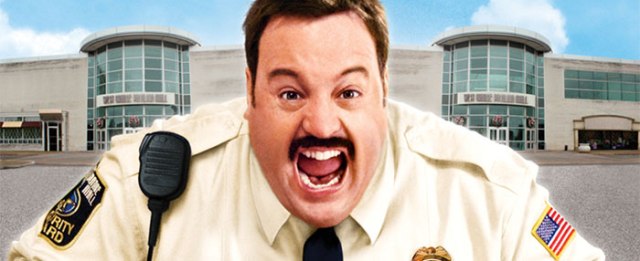
    A shopping centre in Washington DC was faced with the grim task of fishing their new security robot out of the centre’s water feature after it threw itself in there. No cause for this bleak end has been suggested, although it’s quite possible it had to endure a double date in a piano bar where somebody assumed it would want to discuss Paul Blart Mall Cop for 45 minutes, when it just wanted to talk about the match. Or perhaps it simply couldn’t navigate steps, like one of those poor Daleks in Dr Who.

  • Allsuds

    Somebody said something silly, so here’s this:


    Kirsty Allsop knows a thing or two about home layouts. As the host of Location Location Location and Kirsty’s Homemade Home, she taught us all about where and how to live. So when she recently told us that having a washing machine in the kitchen was disgusting, we were a little taken aback.

    Where is it meant to go we pondered; in the shed, with the dusty exercise bike and letters from ex boyfriends? Or just plonked in the garden next to the compost bin, so that when it goes into spin cycle it can roam free range around the lawn, possibly even nudging its way through the griselinia into the neighbour’s garden, only to tip over and disgorge its precious cargo of faded jocks into their coy carp pond?

    Part of the confusion over where Kirsty wants us to stick the washing machine is explained by the fact that she is an aristocrat. Despite having a name that sounds like a brand of detergent, Allsop is actually the daughter of the 6th Baron Hindlip, making her the Honourable Kirsty Allsop. So while she may think we all have larders, back kitchens, ballrooms and vomitoria, her cries of ‘Let Them Eat Calgon’ have just caused confusion in this land of peasantfolk who feel blessed to have a kitchen, a living room with a giant TV in it, and, if you are very fancy, a shed with electricity.

    However, there are some parts of the average household that are simply out of place in modern Ireland.

    1. The dining/ironing room: The dining room is great in theory, but in reality you eat standing over the kitchen sink, while your kids eat in their rooms, in front of the TV, or anywhere away from you, so you can’t see them blast peas out of their nostrils at each other, or feeding your terrible lasagne to the cat. Thus the dining room becomes a depository for a year’s supply of unironed clothes, and has all the class and sophistication of a cargo container loaded with fake charity collections, destined for Eastern Europe.
    2. The bidet: Now a relic of a bygone age, the bidet is not an object you stumble across all too often, unless you are buying a dilapidated starter home recently vacated by a dead person. The bidet started popping up in Irish homes in the 1970s, as the first whiff of the sexual revolution wafted across our shores. Irish people had no idea what this revolution actually entailed, but thought it best to be prepared anyway by having the cleanest arse possible, in much the same way you only wear clean jocks in case you get hit by a bus and end up in hospital. The bidet, like the toilet brush, asks more questions than it answers, and really needs its own bidet to clean itself with after use.
    3. Soft furnishing in the toilet: Again a throwback to the 1970s, when luxuriant plush synthetic fabrics were all the rage, carpet cleaners hadn’t been invented yet, and nobody really understood that the bubonic plague was being resurrected by having a carpet and velvet drapes in the toilet. Thank god for tiles and blinds, otherwise it would have been curtains for us all.
    4. The sacred heart: Sat up high in the kitchen, the sacred heart watches over your attempts at cooking, like a benevolent Mary Berry, quietly judging your collapsing souffles and crumbling marriage. Back in the olden times the sacred heart was vital for two reasons; one, Jesus needed to make sure you didn’t put too much sherry in the trifle, and two, the little flickering light was the best way to tell if there was a power cut or not. Now you know when there is a power cut because the WiFi goes and your children start talking to you for the first time in months.
    5. JFK painting: While the sacred heart keeps an eye on the kitchen, the JFK portrait is usually in the living room, as he was the patron saint of fun, so you don’t need to feel any shame having a drink and possibly attempting to flirt with an au pair beneath his squinty gaze. Morally, it’s the equivalent of having a framed picture of Dick Byrne from Glenroe in your living room.
    6. Ashtrays: Once upon a time you had to offer smokers an ashtray when they were in your home, in case they felt the urge to enjoy their delicious, obnoxious habit within the confines of your house, thereby shortening their life and damaging the health of everyone in your family, including the pug, who was struggling to breathe anyway. Now you welcome smokers to your home by making them stand outside in the icy dark, so they can get pneumonia or abducted by aliens. If you still have an ashtray in your home just for smoking guests, why not take your hospitality to the next level by offering them a tincture of laudanum or perhaps a toot on your opium pipe?
    7. Home bar: With all the drink driving legislation now making it impossible for a simple country person to have ten pints and four shorts before driving a combine harvester home whilst eating a steak at the same time, the home bar seems more and more practical. In reality, it makes you look like you have been barred from every pub in your province and thus are bitterly setting up your own pub, where you will drink mostly alone until your unclean taps give you e. Coli and you die alone, face down on a beer mat that has your own face printed on it.
    8. Entryway shoe storage: Having one of these inside your front door is a great idea, as we live in a country where, if it didn’t rain 300 days a year, we would be up to our knees in dog faeces. Every guest to your home comes with the gift of traces – or chunks – of dog turd on their shoes. However, even though you believe that the shoe rack gives your home a certain zen feel to it,  it actually makes your hall look like a poorly lit bowling alley, complete with moist insoles, lifting floorboards, and the faint odour of parmesan.  
    9. Fondue sets: Fon-don’t. A tin pot trough for government cheese or discount cooking chocolate that brings nothing to your home except mouth blisters and high cholesterol.
    10. Actual swimming pool: If it’s a medical necessity, you get a pass. Otherwise it is there solely so you can feel smug on the 12 days a year we get great weather on a weekend. The rest of the year it’s Davey Jones’s Locker for thousands of bugs and the odd rodent, unless you drain it and use it to store boxes and boxes of worthless AIB share certs.

    Kirstie Allsop backtracked from her claim that washing machines in kitchens were disgusting by saying that if you had nowhere else to put them, then it was fine, which is like saying having a jacks in the kitchen is disgusting, but sher if there’s nowhere else to go then it probably makes sense. A washing machine in the kitchen isn’t a sign of sloth or an indication of a lack of food hygiene – it’s a simple necessity for most of us. Despite being an expert on location, poor Kirstie failed to notice just how out of place her comments were.

  • The trouble with tribbles

    I wrote a second column for the Examiner for the same reason I wrote the first. Here it is:


    The London School of Economics this week published a cheerful report under the title Does Money Affect Children’s Outcomes: An Update. You’d be forgiven for thinking that the update might only comprise one word – ‘yes’ – but it goes into a little more detail than that. Reviewing 61 studies from OECD countries including Australia and the UK, the study found direct correlation between money – or lack thereof – and a child’s outcome in life, including their cognitive development.

    The report comes as great news for anyone of reasonable income who opted to have a sensible number of children – a figure between zero and two – but for those of us who opted to cross the Rubicon into legally needing a people carrier, the report was a further confirmation that we have too many kids.

    In much the same way a human year is seven dog years, having a litter of four kids today is like having 12 or 16 back in the 1950s heyday of Catholic Ireland. While back then it was seen as some sort of blessing from God to have more kids than you need or want, having a large family in the modern age means you lack a fundamental grasp of either biology or economics.

    When I tell people I have four kids I usually have to add ‘…with the same person’ as I worry it might make me seem like some feckless Johnny Appleseed wandering the hills of Munster, casting my wild oats about in every direction. When a friend of mine heard my wife was pregnant for the fourth time he declared ‘dear God man, she isn’t a clown car you know’. But here we are, with four kids aged from 14 to two and a half, arranging to sit down together for a meal once a fortnight, an event that usually gets cancelled as one or the other of us dozes off halfway through.

    Discussion of our kids with other couples is along the lines of a movie character back from a tour of duty in Vietnam, complete with thousand yard stare, whispering to themselves about the filth and horror they have witnessed. Not that we get to meet up with friends much, as going anywhere with four kids is like Hannibal mobilising his armies to cross the Alps. And of course there is no babysitter equipped to handle four kids, as not even the fastest Formula One car can shift through the gears at the rate you need to cope with a toddler, a teen and two vaguely manageable ones in between whose names you sometimes forget.

    Even a trip to the supermarket – which is now classified as a ‘day out’ for the kids – goes off like the opening scenes of Saving Private Ryan, chaos, screaming, someone missing a teddy. Charging up the cereal aisle in Tesco like you are storming a gun turret because you have to get six weeks worth of food in 15 minutes before one or all of the kids go off like a heavy artillery shell. Then when one of them finally does snap and realises they can do what they want and you can’t shout at them, you have to endure those looks from people who have forgotten what it was like to have kids; people who have used the Mandela Effect to convince themselves that their kids were better behaved than yours.  

    Before I had four kids kids I used to think the parents in Home Alone should have social services called on them. Now I watch it and think ‘this is funny because it will quite possibly happen to me some day’. Not that we will be vacationing anywhere anytime soon – I couldn’t inflict us on air passengers, they are tense enough these days without six screaming humans creating an atmospheric tension that makes United 93 look like The Love Boat.

    Of course, holidays aren’t even an option with four kids, because unless you are some sort of Celtic Tiger developer or Aztec god, you won’t have the money. My only hope is that when my kids grow up they can say ‘well, we didn’t have much, but we had each other’. It will be a comfort to me when they stick me in the cheapest nursing home they can find.

    However bleak the picture painted by the LSE report, there is hope: A conference in the UK late last year found that most human misery is due not to economic factors but to failed relationships and physical and mental illness, so while my kids won’t get iPads, hugs are free – and I can hug the goddam hell out of them. And the organisation behind the conference that made this reassuring announcement? The London School Of Economics.

  • Will work for undercooked food

    So I did a column for the Examiner, as their regular guy, Colm Tobin (please note, not the award-winning author Colm Toibin) was on paternity leave. So I wrote about office social events, a topic not selected by me but by my editor, and largely based on my experience of office bashes back in 2004-2007. So basically nowt to do with where I work now, who I work with, or anything else. Here endeth the disclaimer:


    Office summer party season is here again, an event that blends two fun concepts –  summer and parties – with a sphere that is utterly devoid of both fun and sunlight – the modern office.

    The counterpoint to the office Christmas party, which at least takes places in the dark evenings so no-one feels weird about being hammered at 8pm, the summer office party is really all about the build-up. The list is on the wall, who has signed the list, who has not signed the list, has anyone given even one cent of the five euro for the pig on a spit, or is everyone skipping that for a chicken snackbox al fresco at 3am? There is just so much giddy expectation, because deep down everyone is hoping that this goes off like the Red Wedding in Game Of Thrones, only with a charity raffle in the middle of the bloodshed.

    Of course, the secret desire of the office drone to revert to some primal form after a few free drinks is the worst nightmare of HR execs everywhere. Office human resources departments run a tight ship, ensuring that almost no trace of humanity remains in the workplace – vows of silence, chastity and poverty are all in the fine print in your contract – so the summer party is a chance to take your business off site where HR can no longer see you, in much the same way French aristocrats, when devouring rare songbirds, used to place a silk sheet over their head to hide their delicious crime from the eyes of god.

    Of course, for the socially awkward among us – and that is about 90% of the population of Ireland – the idea of going out with the ‘work crew’ is in itself hell. Who came up with the idea – spending time with the people you spend most of your time with anyway, only you’re not getting paid to be around them and you are drinking warm beer and getting food poisoning from an undercooked pig cheek. Not even the automatons of the accounting department could come up with such dry cruelty.

    Then there is the office Iago, sowing seeds of discord and dissent ahead of the big night; are you going, well such-and-such wants to know just in case there’s any awkwardness. Then off to such-and-such to report the exact opposite of what was said, lighting the fuse on the powder keg of simmering resentment that comes from being stuck in the same grey space with the same grey people for more than a decade.

    But in the run-up to the party – a period that spans the two weeks before the date but feels like it actually encompasses your entire life – you were asked so many times by so many people if you were going that eventually you just said yes, yes of course you will be there, all the while thanking god you have kids so you can cancel plans at the last minute and nobody judges you for it. In fact, you look even better as they think you am staying home to mind a sick child, as opposed to sitting alone playing Overwatch for ten hours straight. There comes a stage in life where cancelling plans is the sweetest drug of them all, and cancelling going to the work summer party brings a rush of endorphins that you haven’t felt since Sir Henry’s shut down.

    When it comes to the office summer party, it’s probably best to adopt the same policy you did for the company’s manual lifting course, hand hygiene course and alcohol addiction awareness course, and just not bother going.

  • Sharks, Lupus, gluten free Jesus, bears

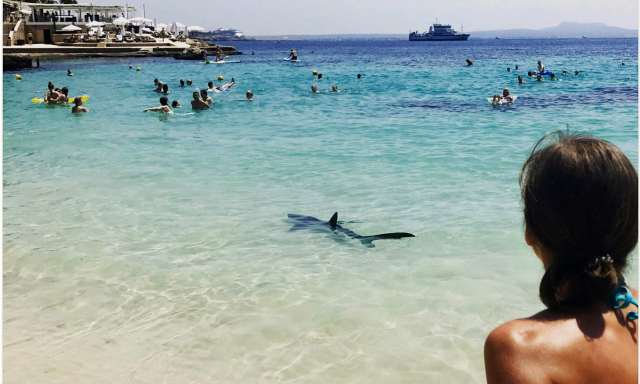
    Pic via https://www.theguardian.com/environment/2017/jun/25/mallorca-blue-shark-capture-beach-sighting-cala-major-can-pastilla#img-1

    Indo col week eleven, in which I slowly lose my mind.


    The alleged sighting of a shark in the shallows of a Mallorcan beach in recent days – the second sighting in a month – has caused much concern among holidaymakers. Along the beaches of Magaluf, anxious tourists stayed out of the water, as they knew they would make  delicious sharkbait, being stuffed with the full English and lightly flambéd by the sun, like sausage rolls on legs.

    Of course, there was little point in reasoning with them that virtually all sharks are harmless. Of the 375 shark species that have been identified, but only about a dozen are dangerous to humans, with three strains being responsible for most attacks. Still, it is hard to shift the fear that Jaws is patiently waiting for us just off Costa Del Wherever, or that every sea creature larger than a pollock is planning our demise.

    As a birthday treat I brought my daughter to swim with sharks. It didn’t matter that that the sand tiger sharks in the tank were just as harmless as most other sharks, people thought I was mad. But in she went, swimming about as the massive leviathans slid past, showing zero interest in eating my firstborn. I was almost disappointed by how peaceful they were.

    Afterwards, she struggled to get out of the wetsuit, having been plagued for a few months with aches that, in typical dad fashion, I had put down to growing pains. When we got home, we went to the doctor, and then on to a specialist, who informed us she had mixed connective tissue disorder, an umbrella term for more snappily titled Lupus. I had no idea what Lupus was, save that I would prefer if she didn’t have it. A terrifying google later, I knew that it is an autoimmune disease that varies in severity, from skin-based to systemic. She has systemic, meaning that her own immune system can turn on her at any time. There is no cure.

    As a species we foresee our deaths as being big dramatic occasions, like plane crashes, shark attacks, or bear maulings. It’s usually something gradual and mundane that brings about our demise, like driving when tired, running across six lanes of traffic to meet a friend for lunch in Costa, or just some random condition lurking within us. My daughter’s illness is potentially very serious, but in most forms it is manageable, provided you avoid the sun, which means at least she will never have to worry about being nibbled by a small shark on a sun holiday. Although if she announced she was off to Magaluf on a holiday I think a sharkbite or sunburn would be the least of my worries.

    Health and faith intersected this week when the Vatican gave us a definitive line on the current fad for gluten-free foods, saying that gluten-free bread was not suitable for use as hosts. I believe it was in the first letter of St Paul to the Coeliacs that he told them to ‘eaten ye unleavened, normal bread, for this coeliac thing is just a fad, and if gluten was bad for you we would have made being gluteny a sin’. It’s great to see the Catholic Church cracking down on food fads, and hopefully they will soon excommunicate people who think kale, spirulina, or apple cider vinegar are things we should be putting in our bodies. God knows the Church needs to limit the numbers clamouring to join their ever-growing congregations.

    Of course, sometimes our brushes with death are incredibly dramatic, as one Colorado teen discovered this week. Supervising a summer camp in the mountains, he was woken in the night by a crunching sound, which on further investigation turned out to be a bear – or shark of the woods as they are possibly known – trying to eat his head. The young man’s life was no doubt saved by the power of prayer, as the camp was being run by Seventh Day Adventists. Well, it was either the power of prayer or the fact that he punched it in the face and poked it in the eyes until it let him go and ran away.

  • In MySpace no-one can hear you scream

    Sometimes I worry that I’m becoming one of those hot take guys, but then I remember that money of money and money money money #money. Anyway, this piece on Xennials went in the Indo today:


    Is your name John Paul? Were you named after the guy from Led Zeppelin, or the artist formerly known as Karol Józef Wojtyła? Because if you were named in honour of Pope John Paul II’s visit to Ireland in 1979, chances are you belong to a recently discovered micro-generation known as the Xennials.

    Nestled between the wooly nihilism of Generation X and capitalism’s latest ground xero, Millennials, Xennials were born between 1977 and 1983 and are not to be mistaken for Xenomorphs, the monstrous creatures from Ridley Scott’s Alien, introduced to the world the same year the Pope came to Ireland. Unlike Xenomorphs, Xennials don’t have acidic blood, but they are strange beasts in that they came of age while the world transitioned from analog to digital.

    They made mixtapes that were recorded on actual tapes, later they owned a first-gen iPod, and now have a retro fetishistic turntable and accompanying cool vinyl record collection. Unlike Millennials, they don’t need what LCD Soundsystem called ‘a borrowed nostalgia for the unremembered Eighties’, as they were actually there.

    Coming of age at the dawn of the digital era means Xennials made all the mistakes so Millennials wouldn’t have to. Look at Tom Hardy – born in 1977, his MySpace page was still accessible until recently and was a treasure trove of terrible selfies and awkward braggadocio. Xennials also remember who Claire Swire was and why nobody says things like that in emails anymore (that’s what Facebook messages are for, and also, nobody really cares now). And thanks to the wonders of globalisation – a process accelerated by digitisation – the signs that you might be a Xennial are almost universal:

    1. TV: Your teenage years were shaped by the emo struggles of My So-Called Life, Party Of Five and Buffy, before you were cheered up by the humorously bourgeois debacles facing the guys in Central Perk. You transitioned from not having that many TV channels in your youth, to having too many TV channels, to Netflix removing the need to ever know how to Sky+ anything ever again. You remember when your parents’ outrage over Fr Ted’s sacrilegious take on the clergy became softened in the face of various reports into the fact that some members of the clergy might not actually have been a great bunch of lads after all. You also think that watching Nasty Nick get his comeuppance on Big Brother 1 was your generation’s moon landing.
    2. Internet giants: You once owned or possibly still own a Hotmail account, a sure sign that you are a Xennial. You remember the first search engines, when Ask Jeeves seemed like a sophisticated AI as opposed to the clunky mess you learned it was once you started using Google. You connected with people you didn’t really like on FriendsReunited.com, and people (and bands) you did like on MySpace. You remember the banshee’s screech of a dial up modem, the strange thrill of stealing music via Napster, and opening the floodgates of filth and wonder on the internet. You possibly even owned a Geocities page dedicated to Boyzone.
    3. Communications: You knew someone in national school whose dad had a phone in his car, and this was the most amazing thing, as anytime you weren’t at home you needed to queue up to use a payphone. You got your first mobile at the end of the Nineties and even though older people told you that using it was the equivalent of sticking your head in a microwave oven and setting it to high, you soon became utterly addicted. You transitioned effortlessly from making calls, to sending texts, to WhatsApp, but draw the line at Snapchat as you suspect it may be something like the voyeuristic tech in the noir sci-fi Strange Days.
    4. Consoles: You disobeyed your parents to go to the local arcade, when you blew your pocket money playing low-res Konami classics like Double Dragon, inputting your name as ACE (there were only three spaces) when you got a high score. But then you segued effortlessly into the age of the console, where you didn’t have to hang out with the school bullies in the local arcade, as you play 8-bit classics at home, learn the basics of computer programming, and become the geeks that inherited the earth.
    5. Attitude: The Xennials are mercifully spared the cynical mindset of Generation X, but also avoid the alleged ‘special snowflake’ mindset of Millennials, a generation who supposedly believe they can be anything, despite the fact that robots are about to take all their jobs. Having lived through the birth of digital and the dot com bust, followed by the 2008 global collapse, the Xennial is cautiously optimistic that things work out in the end, despite not being able to afford a house anytime soon.
    6. Music: As a Xennial you grew up on Spice Girls, Offspring and Blink 182, which explains why you found it easy to never pay for music again once you discovered Limewire.
    7. Movies: Every time you see a Millennial wearing a Goonies T-shirt you feel the urge to shout at them that you were there, you saw it first time round in a small town cinema with sticky floors and it scared the bejaysus out of you. You did not see some 75mm restored version on Imax at some festival of postmodernity curated by 16 year old hipster who owns an ironic Zune.
    8. Consuming: Just as Deliveroo has taken over from actually going out to eat, your trips to the shops and the shopping centre, once a central part of your socialising, have been flung into the dustbin of history.  Every day you are wearing a path to the sorting office or Parcel Motel to pick up your latest online splurges, secretly yearning for the days of the shopping trip so that you could control your relentless clicking and collecting.
    9. Chain reactions: You remember the first time you read Naomi Klein’s No Logo, your idealistic young mind being quite concerned by the idea of Starbucks outlets spreading like a virus. Now you claim Ireland is a Third World Country if you don’t have a Starbucks on every street corner, and cite the Geneva Convention if the baristas don’t write a humorous interpretation of your name on the cup so you can post it on Instagram.
    10. You feel like the before and after photos in an academic paper on how technology has dehumanised us. You remember real news, eye contact, speaking, and putting effort into writing letters. Now you can’t remember the last meaningful real-world interaction you had, and wonder sometimes if you are becoming less human, or just obsolete.

    Rejoice then that there are some aspects of Irish society that weren’t affected by the digital transition, for just as you listened to your parents droning on about the X Case as you drove to Knock a quarter of a century ago, you find yourself listening to the exact same rhetoric now. So at least that hasn’t changed.

  • Ken?

    As in, the Scottish for ‘y’know?’. But also a popular toy that got a makeover, promoting this work of genius in the Indo:


    Is there any toy more tragic than Ken? Since his creation back in 1959, his life has been one tragi-comic misadventure after another. Initially created with authentic felt hair, he had to suffer the embarrassment of many follicularly challenged men when it turned out that his lush head of hair fell off when it got wet. Physically, he has the rigid upright stance of someone with a slipped disc, or perhaps one of the guys from Kraftwerk, but it is his personal life that is most rigid of all. Ostensibly created as a love interest for Barbie, poor auld Ken has been boxed off in the friend zone for decades now, with his creators Mattel never precisely specifying the nature of their relationship, leaving Ken to ponder his place in her life – gay best friend, purely platonic pal, or creepy flatmate she mistakenly let out the spare room in the dreamhouse to?

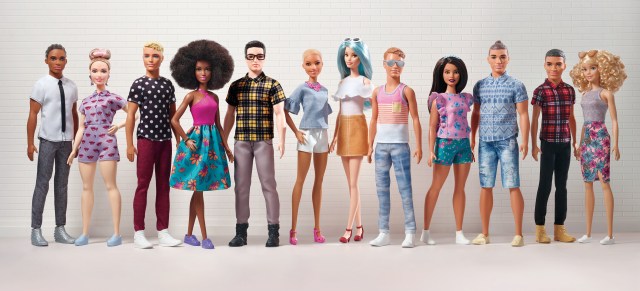
    After a life of loneliness (even lone-wolf hero Action Man has his life partner, GI Joe) and confusion about his role in life, the death blow to traditional Ken was dealt by Toy Story 3, in which he was thoroughly lampooned as a preening narcissist. There was no coming back from it. So the good news is that Mattel have relaunched Ken for our modern times, with a selection of fresh new looks, body shapes, styles and, ultimately, lessons for the child of today.

    Masculinity: The old Ken was a sexless prop in Barbie’s world. While his arch nemesis Action Man had a walk-on part in the war, poor Ken took the lead role in a cage. Granted, neither of them had any trace of genitalia, but while Action Man was out destabilising governments and having rocks thrown at him, Ken’s passive existence was a pity to behold. Not so now – the reboot takes him from ‘Ken doll’ to ‘Ken playfigure’, a huge leap forward for the toy world’s least popular eunuch. New Ken comes with attitude, and his fresh new looks show that he is more than Barbie’s accessory. He is still, of course, unrealistically perfect, but then living with no genitals means he has a lot more time to dedicate to sorting out his eyebrows, trimming his ear hair and treating his fungal nail(s).

    Body image: Old Ken’s body shape was just as alien as Barbie’s; a study in 2005 showed that for the average man to have Ken’s physique, he would need to grow 20 inches taller and add nearly eight inches to his neck circumference, 11 inches to his chest and 10 inches to his waist. Thankfully new Ken has scaled back these unrealistic ambitions, with three new body types – slim, broad and original. Presumably slim suffers from Marfan syndrome, while ‘broad’ is that same euphemistic term that your mam used when she couldn’t fasten the cape for your CBS school band around your neck. Broad Ken – or Fat Ken as he will most likely be called by the other toys – is probably the best Ken of the new breed, as his portly frame teaches young girls that some day their prince will come, then get settled, then get fat, and that golf is not really exercise.   

    Relationships: Ken’s new body confidence, man-bun, corn rows, and general swagger means he has his pick of partners, but given that he is still a child’s toy, he will presumably continue to be a bit part in a vague storyline about Barbie going shopping, standing around changing rooms while she tries on a selection of hats, like that scene in the hit romcom Sleeping With The Enemy. Ken is the non-threatening asexual longtime companion for Barbie, endlessly shifting and then perfecting his appearance in the hope that she will fall in love with him, but since he first met her back in 1959, she hasn’t shown the slightest interest. Perhaps it’s time for Mattel to release the poor guy from his loveless hell and issue a Tinder Ken – or Grinder Ken – because it doesn’t matter how many times he suggests they watch When Harry Met Sally, Barbie has no interest. It’s almost like her dead plastic eyes don’t even see him anymore.

    Career goals: Most people would say that the only job Ken ever had was as bag-minder for Barbie, but he has had almost 40 occupations since his creation. Many of them are more hobbies than actual jobs – bodybuilder, beach bum, and fraternity member being the bottom scraping of Ken’s less than illustrious career. This in itself is a positive message for girls, as they can’t all marry princes, astronauts or even guys with actual jobs that pay. The new Ken comes in a selection of looks, all of which make it seem he is either a digital marketer or aloof clothes-folder at American Apparel, neither of which pay enough for Barbie to get that Malibu beach house, or even a mobile home in Bundoran.

    The saddest part of Ken’s story is that this complete reimagining of him is Mattel’s last ditch attempt to make him and Barbie relevant. Kids today just aren’t interested in playfigures like Ken and Barbie, and they are fast becoming relics of a bygone age. Ken’s new look is really just a midlife crisis, as he tries to save his crumbling relationship and thus himself, because, like a lot of men, without his significant other, he is nothing.


  • Sunburn, smoking, Taylor Swift, Bonfire Night

    Week eight of my award-defying column, and yet no death threats. What am I doing wrong?


    Our traditional Leaving Cert weather finally arrived at the weekend. Much like the pagans of old would sacrifice the young to appease the gods, we sacrifice the mental well-being of our teenagers by forcing them to sit State exams while we barbecue ourselves outside until we are burnt raw on the outside and pink and unwell on the inside.


    The recent blast of hot weather – or Summer Paper I as it is also known, with Summer Paper II being scheduled for when the kids go back to school in September – was a reminder that we do not belong in the sun. The tan was once seen as the sign of the peasant, toasted by the sun from toiling upon the land, until Coco Chanel accidentally came home from holidays with a golden brown hue. She did not, however, walk around a shopping centre with straps down and shoulders burnt to the point that they look like two smoked hams, nor did she go ‘tops off’ at the first sign of sun, showing off her terrible tattoos and a Pointillist canopy of future melanomas. And it isn’t just one or two people on the street who are waddling around like newly liberated rotisserie chickens – huge numbers of us clearly have no idea how dangerous the sun actually is, or how quickly it can ruin your skin. Much like back in 2014 when it you woke up to the horrible realisation that everyone you knew was a closet Garth Brooks fan, people who previously seemed sensible were this week showing up to work with raw necks and red legs, explaining that while they slathered the factor 1,000,000 on the kids to the point where they looked like Casper The Friendly Ghost, they neglected to do themselves the same favour, thus significantly raising the chances of developing cancer and becoming an actual ghost.


    But what can we do? No wonder we get so confused by the big orange ball in the sky, as much like Hale Bopp, it only appears once in a while. Like the panic that sets in when Aldi  gets an especially good batch of Special Buys, we dash headlong into it in the hope that we look more exotic. Perhap RTE could wheel out Theresa Mannion to wander along Portmarnock beach dressed as the grim reaper telling people that they should cancel all unnecessary journeys to the beach and divert to their local dermatologist. Just as we say for most of the rest of the year, this really would be a great country if only we could build a roof over it.


    Speaking of the extermination of all human life as we know it – Taylor Swift. It’s hard to know how she achieved a level of unpopularity that has made her the ‘Isis Of Pop’ – all she did was sing a few songs and possibly make some frenemies – but few people in music today draw such absolute loathing. However, I for one stand with Tay Tay, because for two thirds of 2015, she kept me sane.


    I picked up my redundancy cheque on New Year’s Eve 2014, and a few days later, I bought her opus, 1989. The existence it portrayed, of giddily launching yourself into a world filled with possibility, was a million miles from the dole queues of my situation, with four kids and no job. As I trudged from job activation meeting to job liaison session, I played 1989 over and over to lift my spirits and remind myself that the turgid hell I was stuck in would not last forever.


    After eight long months of playing it on repeat while I sent out CVs, cold called disinterested HR departments, and was talked down to by tan-shoed recruitment goons, I finally got a job, and I never looked back. But I still love 1989, and am thus one of the millions currently awaiting news of her new album. So even though Tay Tay only seems to make headlines for her on-again, off-again relationship with Spotify (it’s back on) or her Tupac-and-Biggie-style blood feud with Katy Perry (Tay Tay’s relationship with Spotify went back on the same day Perry released her new album, in what the kids would call a sick burn), I will defend her to the hilt, because, for eight months in 2015, her shimmering pop stories about young love stopped me from turning into Travis Bickle. Although I might have got a job slightly sooner if I hadn’t been humming Shake It Off in every interview.


    Millenials may be feeling anxious that their jobs are all going to be taken by smartypants robots, but if the main street of every town and city in Ireland is anything to go by, they will always find work in a Centra, Starbucks, phone repair shop, or that most gaudy of shopfronts, the vape store. The explosion in vaping has seen a shift in the habits of the young, from the toxic, deadly habit of smoking, to the vaguely unsettling habit of vaping. Sadly, some people simply cannot give up the leaf. Good news then from a firm with reassuringly cheesy name of 22nd Century, who are working on a genetically modified variation of the tobacco plant that will offer all of the lethal flavour but almost none of the nicotine. The same firm is also working on a version of medical cannabis that contains almost no THC – the active ingredient that gives the high associated with its social use – and only offers the medical benefits. No doubt these two products will be a huge success, mirroring the massive uptake in creations like non alcoholic beer, softcore pornography and unsalted crisps.


    Bonfire Night is upon us again, the annual tradition in which the people of the Rebel County remember the Burning Of Cork by the Black and Tans. It is a tragic moment in the city’s history that is honoured by  locals dragging old suites of furniture, tyres, and bags of household refuse into the middle of the green before torching them whilst sitting around with cans as the toxic fumes cloud the sky. Except obviously, Bonfire Night has absolutely nothing to do with the Burning Of Cork at all – it is actually the ancient feast of St John’s Eve, a sacred time of year when John The Baptist would drag old scrolls, parchments, and bags of goat horns into the middle of the green before torching them, quaffing mead and later on that night, throwing rocks at the fire services. The celebration is a reminder that whether it’s our own skin, an old sofa, sweet tobacco leaf, or just poor auld Katy Perry, we all secretly love to watch things burn.

  • Forty shades of delicious

    I wrote a couple of pieces for the Irish Examiner Food & Drink supplement; one about innovation in food and drink, and one on (of all things) whiskey.

    And would you believe I didn’t get any free booze for doing this? Shocking. WTF is journalism coming to? Anyway, here you go:


    Brewing up a storm

    Our forty shades of green are more than just a tourism slogan – they are also a sign of just how strong agriculture is in this country. Whiskey sales may be rocketing, but our craft beer scene is also getting stronger, with a plethora of new brands coming on stream every month – to the point that many of the brewing giants are trying to cash in and creating ‘craft’ styled brands. When the titans of industry are getting rattled, you know a revolution is taking place.

    It has been 21 years since the late Oliver Hughes and his cousin Liam LaHart opened the Porterhouse in Temple Bar, and while the concept seemed alien at the time in a country where you drank one of three lagers or one of three stouts, the modern boom shows just what a thirst there was for change. A Bord Bia report released last year highlighted this, pointing out that there is an estimated 90 microbreweries operating in the Republic of Ireland, of which 62 are production microbreweries and at least 28 are contracting companies. There was a 29% increase in the number of production microbreweries from 48 in 2015 to 62 in 2016. The number of microbreweries has more than quadrupled since 2012.

    As the scene grows, so does innovation in the category. Munster Brewery in Youghal is one example. Last year the brewers, twins Padraig and Adrian Hyde, released 12 Towers,  Ireland’s first certified organic beer. They also signed up to a green earth initiative: “We’ve delighted to say we’ve just signed up to the Climate Neutral Now programme, where we promise to reduce emissions and offset any unavoidable ones by buying carbon credits. It’s an extra expense we don’t really need but one we’re happy to pay. We’ve gone and committed the entire brewery to the Climate Neutral Now programme so we’re busy as bees monitoring energy usage and fuel.”

    Apart from making their beers more earth and body friendly, they also make the ancient health drink kombucha under their HOLO (holistic and organic) brand. While they also offer tours, they are frustrated by the licensing laws, which prohibit small brewers and distillers from selling direct to customers. They can sell huge amount wholesale, but not a few bottles to a tourist – an issue for any potential drinks tourism.

    Innovation is integral to the drinks category – and with the explosion in craft breweries and distilleries comes new ideas. Perhaps one of the biggest success stories in drinks innovation here is Baileys, the first of the now ubiquitous Irish creams. A collision of two forms of famring – tillage (barley for whiskey) and dairy (the cream), it was dreamed up by David Dand in Dublin in 1974. Legend has it that it was first created using a simple mixer (blending cream and whiskey takes a bit more science than that),  it now sells 6.4m cases year, or 80m bottles – more than the entire Irish whiskey industry combined. Every three secs someone, somewhere in the world is having a Baileys. The brand has also expanded to include Baileys Gold, Baileys Chocolat Luxe, and flavours Biscotti, Vanilla-Cinnamon, Pumpkin Spice, Espresso and Salted Caramel. Each year, 38,000 Irish dairy cows produce more than 220 million litres of fresh cream specifically for the creation of Baileys.

    The success has prompted other entrants to the category, with Cremór, Kerrygold, Carolans, Molly’s, Brogans, Saint Brendan’s and Coole Swan all doing a booming trade.

    Kerrygold Irish cream is produced by the Ornua group, which recently released booming stats. As Ireland’s largest exporter of primary Irish dairy products, they delivered a strong trading performance in 2016, with turnover up by 9% to €1.75 billion – a figure all the more remarkable when you consider that this performance was achieved in a year of volatile milk prices and political uncertainty in some of their key markets.  The global giant’s ambition is to move Kerrygold from being a world-class butter brand to an instantly recognisable €1 billion global dairy brand in the coming years. 2016 saw the successful launch of Kerrygold Yogurts in Germany, Kerrygold Spreadable in the UK and the continued roll-out of Kerrygold Irish Cream Liqueur across Europe and the US.

    Ireland’s strength in the export of food and drink products is also reflected in the success of the Carbery Group, a global leader in food ingredients, flavours and cheese, headquartered in Ballineen, Cork. Founded in 1965 as a joint venture between four creameries and Express Dairies, UK, Carbery Group is owned by four Irish dairy co-operatives, employ more than 600 people, and manufacture from eight facilities worldwide, including Ireland, UK, USA, Brazil and Thailand. The group has moved far beyond the traditional bedrock of cheese to health and nutritional supplements and flavour creation.

    One knock-on from the distilling is the boom in gins, used as a revenue generator by distilleries as their whiskey stocks mature, while the use of local botanical infusions in the gins give them a regional flavour that sets each apart. One of Carbery Group’s success stories in drinks innovation blends the normally disparate worlds of dairy farming and distilling. Originating from Ballyvolane House in Cork, Bertha’s Revenge gin is named after a cow, a tribute befitting an alcoholic beverage distilled from sweet whey, the liquid produced during cheese making. Bertha’s Revenge is distilled with whey alcohol sourced from Carbery and derived from cow’s milk produced by Cork dairy farmers.

    Using specially developed yeasts to ferment the milk sugars in the whey, Carbery brew and then double distill the whey in large column stills. Justin Green of Ballyvolane House and his business partner Antony Jackson then distill the 96% proof whey alcohol a third time in their custom-made 125 litre copper stills along with botanicals such as coriander, bitter orange, cardamom, cumin and clove as well as foraged local botanicals such as elderflower and sweet woodruff. The resulting gin has won local and international acclaim since its launch in 2015, and Bertha’s Revenge is now exported to the UK, mainland Europe and even South Korea – and, later this year, to the US, where it just won a Gold Medal at the San Francisco World Spirits Competition 2017.

    Bertha’s Gin has shown that innovation, experimentation and even the occasional odd idea can get the best out of Ireland’s tradition of agricultural excellence – and proof that those forty shades of green can always keep us in the black.

    Distillers of future past

    The old adage of ‘you’ll never beat the Irish’ may not be true in all fields, but in whiskey it might just be. With a history of distilling dating back to its first mention in the Annals of Clonmacnoise in 1405 (the Scots’ earliest mention is 1494), we were the world’s greatest whiskey makers by the late 1800s, with distilleries dotted all over the country. But that changed – a combination of war, pestilence, famine and a simple changing of tastes saw us go into a period of decline that hit a low point in the Seventies and Eighties, with only two distilleries left on the island of Ireland – Bushmills and Midleton. We were an also ran in the world whiskey scene, with our neighbours the Scots having left us for dust.

    Fast forward to the last six years: Through careful marketing – and our old friend ‘changing tastes’ – Jameson has rocketed to the fasted growing spirit brand in the world, and that rising tide of smooth irish liquor has lifted a number of boats, with distilleries popping up all over the country. This is great news for the whiskey fan, but the wider effects will be felt in agriculture and tourism. In the short term, more distilleries means a need for more barley, more maltsters, and thus more employment. In the longer term, it will mean more tourists.

    Whisky tourism is worth tens of millions to the Scottish economy – travel across a region like Speyside, where there are 50+ distilleries, and you can see how a coherent strategy has been built around whisky – there is even a walking trail you can take, bringing you through the hills from distillery to distillery. But they have had decades to draw a roadmap for tourism, while here our industry is still in its infancy, with a number of distilleries in operation, in the process of being built, at the planning stage, and some that are still trying to get beyond being a pipe dream.

    Dublin has a number of distilleries at various stages – the merchant princes of Irish whiskey, Jack and Stephen Teeling, sons of the legendary John Teeling, who opened Cooley distillery and democratised whiskey by selling it direct to bottlers, have an incredibly slick operation in Newmarket Square. Alltech agrifoods billionaire Pearse Lyons has his eponymous distillery housed inside an old church in the Liberties, while a couple of hundred years down the road the former owners of Bushmills, Diageo are building a distillery within one of the biggest tourist attractions in Ireland – the Guinness site at St James’s Gate. Also nearby is the Dublin Liberties Distillery, which has recently commenced construction. Meanwhile, the longest serving whiskey tourism hub in Dublin, the Bow Street Jameson Heritage Centre, recently re-opened after a massive €11m overhaul.

    But Dublin doesn’t need a selection of distilleries to attract tourists – it is simply another string to the city’s bow. It is the distilleries spread across the country that need to be brought together under one tourism vision.

    Outside the Pale, the Jameson Heritage Centre in Midleton is the biggest whiskey tourism draw that Ireland has right now, bringing in hundreds of thousands of tourists each year. But what gives Midleton the edge over their Dublin wing is that they have the heritage, the history, and – tucked away behind it all – one of the most modern, efficient distilleries in the world. In recent years Midleton added another attraction – an experimental micro-distillery.

    Ignacio Peregrina, General Manager at The Jameson Experience Midleton: “Since we opened in 1992 we have been delighted to welcome over 2.3 million visitors to Midleton. We’re always delighted to bring our heritage to life for new audiences and send people home as strong ambassadors for Irish whiskey. In the last 25 years, we’ve welcomed people from all over the world from Hollywood royalty, Kevin Spacey to Cork royalty, Roy Keane!”

    Since opening in 1992 the Midleton centre has welcomed 2.3 million visitors, while last year it hosted 125000. Of the top four countries of origin for visitors, USA made up 25%; Germany 12%; Britain 11% and France 10%.

    To the east of Midleton, along the Ancient East, lies Waterford, Ireland’s oldest city and home to Mark Reynier’s Waterford Distillery, one of the most impressive operations to set up here in the last five years. With his background (he resurrected Bruichladdich distillery on the Scottish island of Islay, before selling it to Remy Cointreau) he was able to buy an old Guinness brewery, and transform it into a state of the art distillery.

    Reynier’s project differs from many others in its dedication to barley – he has been using barley from individual farms to distill individual batches of spirit, meaning you will be able to taste the difference from soil type to soil type, thus proving the concept of terroir. His project is one to watch – and having just secured another 20 million boost from investors, it has no signs of slowing down.

    Not far away in the sleepy village of Cappoquin, Peter Mulryan has been creating award winning spirits under his Blackwater Distillery brands. A journalist, author, and whiskey expert, Mulryan is getting ready to move his operation to a larger premises in the nearby village of Ballyduff and, with that, to move to the next stage of his business plan – whiskey tourism.

    To the west of Midleton is West Cork Distillers in Skibbereen, and beyond that, Dingle Distillery. Dingle was the vision of the late Oliver Hughes, credited as being the father of craft beer in Ireland after he set up the highly successful Porterhouse chain. Hughes saw opportunity in whiskey too, setting up Dingle before the current boom properly took off. As a result of his foresight, Dingle Distillery single malt is hitting the market at a time when all other whiskeys come from one of the other big three – Midleton, Cooley or Bushmills. Dingle whiskey, much like the town itself, is in a league of its own.

    The process of creating whiskey is one of the complications to building an immediate tourism industry around it. First you need to build the distillery, distill your grain, and cask your spirit. Then you wait – while three years is the legal minimum requirement, anything between five and ten years is the accepted minimum for the serious whiskey drinker – and thus, the serious whiskey tourist.

    In order to draw tourists here in the same way Scotland draws thousands from across Europe, Ireland will need well-established and well-respected distilleries with quality output. The casual tourist will be happy to visit one distillery on a trip to Ireland, the whiskey tourist will want more than that – they will want distillery exclusives – whereby the distillery sells a particular brand on its own premises and nowhere else – and to be able to visit a number of distilleries in one trip. The Irish Whiskey Association has launched a document laying out its vision for whiskey tourism here, creating a whiskey trail from distillery to distillery so that when the plan comes of age in 2025, there is an accepted route for the discerning whiskey fan.

    One thing is for certain – after decades of struggle, Irish whiskey is back with a bang.