• The ghosts of Christmas past

    tumblr_oi9agdozHB1rfd7lko1_400.gif

    Wrote this for the Indo about everyone I went to school with, burn in hell guys.

    Ah Christmas – a time to get together with old friends, when everyone comes back home and reunites, talks about how their lives have changed and gain a deeper understanding of who we really are, and the strange elliptical paths that lead us back into each other’s orbit once a year. Of course, there are also the ghosts of Christmas past who suddenly materialise in front of you in the pub, before you have the chance to run and hide – here are ten of the worst offenders:

    1. The Wild Goose – Up until 2009, they sounded like Micheal O Muircheartaigh being possessed by a sean nos demon. But then they emigrated, and depending on whether which hemisphere they ran away to, they now either sound like Ben Affleck in Good Will Hunting, or Alf Stewart in Home & Away. But it’s not the accent that makes them grate – it’s the confidence they have been imbued with, as they talk down to you about the land of milk and honey they have discovered, repeatedly mentioning the great ‘quality of life’ in a country either plagued by mass killings, or a species of spider that nests in toilets and can kill with one bite. You smile and nod and casually ask them when their flight back is, so you can count down until this wild goose takes their grey wing, jumps in the tide and effs off back to where they now claim to come from.
    2. The Swan – The easiest way to track your own demise is in the faces of your classmates. You look at their thinning hair, wrinkly eyes, and Nineties clothing and think – do I look this goosed? The answer is a ghastly ‘yes’. But there are always those genetic freaks who seem to age like a fine wine, as opposed to the bitter vinaigrette that you have become. The Swan went from so-so extra in the soap opera of your teenage years to looking like an actual movie star, all rippling physique, Milan style and an inner glow that blinds your weary, squinting eyes.  You desperately try to avoid them but are drawn to their beauty like a moth to a sexy flame. After resisting the urge to stroke their face and hair, you go home, stare in the mirror and weep.
    3. The Success Story – They made a fortune selling their company after getting deep into either tech or something to do with gluten. You know this because not only did your mother tell you this fact repeatedly, but The Success Story is now nonchalantly telling you the exact same thing. After their 20-minute TEDxThePub talk on how great they are at blockchain (you assume it’s something to do with Minecraft), they finally get round to asking you what you do, and then offer a nondescript ‘good for you’, before you are finished telling them. They eye the room looking for fellow moguls, before offering you a business card and disappearing, much like your own sense of self worth.
    4. The Breeders – So how many kids do you have? That is their opening line. Kids are all that matter, the validation of your entire existence. No kids means no life, right? Wrong, and they are about to get a masterclass in what it means to be alive. Just as they try to whip out their phone to show you photos of their sticky brats, you show them the tribal tattoos you got after spending six months living with pygmies in the Amazon basin, or the crocodile bite on your leg, or just the photos of your studio apartment in the city centre, which is overflowing with Bang & Olufsen kit and smells like sandalwood and lemongrass. You can tell you just ruined their evening, as they desperately wanted to feel sorry for you, to crinkle up their already-crinkly faces as they tell you ‘it could still happen’. No it couldn’t you tell them, as this planet is hurtling towards its doom thanks to overpopulation, and someone had to be the hero who wasn’t vain enough to believe their bloodline had a right to continue. Satisfied with yourself you walk away, covering up the bite mark from your neighbour’s cat and the rubbish tattoos you got on an Ibizan booze cruise.
    5. The Ex – Oh my god, there they are, across the bar, the same bar where you first met, this has to mean something, this is deeply serendipitous, it’s basically the video for Last Christmas by Wham! It’s like the last few decades never happened, your eyes lock and you are both back in that moment all those years ago, young and wild and free. No kids, no mortgage, nothing but an open road, vodka shots and the morning after pill. Your heart is jackhammering and you think you might be about to have a cardiac arrest as your left arm has suddenly gone numb. On closer inspection your arm is numb because the actual love of your life has your elbow in the vice like grip. Through a frozen smile they whisper ‘what are you staring at?’ followed by ‘is that drool?’ You snap back to the present and the moment has passed, you are back where you are fairly sure you belong, and everything is fine, this is fine, as you are almost certain that this is happiness. On mature recollection and reflection you remind yourself that The Ex used to eat with their mouth open, read terrible crime novels and believed in homeopathy, so it probably wouldn’t have worked out anyway. Probably.
    6. The Poor Mouther – Despite coming from the largest farm in the province, they talk as though they grew up on an allotment in the inner city. Everything is terrible, the whole country has gone to ruin, it’s all the fat cats at the top who have it all. You wonder whether you should bring up the 80,000 tax bill they got for never mentioning their plant fire firm to the Revenue, but you don’t want to ruin their Christmas by pointing out that they are actually incredibly wealthy. The conversation reaches a crescendo when they declare that we would all be better off dead, before wishing you a merry Christmas and heading off into the night to drive their poor auld 171 Porsche Cayenne back to their 800-acre smallholding.
    7. The Who – Hey! It’s you, how are you, how is…..everything? This is the traditional greeting for the person you don’t quite recognise. You know them from somewhere – Irish college, scouts, Bebo – but you aren’t 100% sure where. One thing you are entirely sure of is that you have no clue what their name is, despite the fact that they have used yours six times in five minutes of chat, so the pressure is growing, especially now your partner is staring meaningfully at you and waiting to be introduced to your friend. Clearly there is only one way out of this – offer to buy them a pint, and never come back from the bar. The only thing worse than this particular social nightmare is being the one who nobody remembers.
    8. The Bully – They made your life a living hell for six years, yet somehow here they are, chatting away as if nothing happened. They seem to have suffered some sort of memory loss as, not only are they talking to you, they are talking about ‘the good old days’, as though there were such a thing. Your brow furrows as you wonder if they are luring you into a false sense of security before giving you a dead leg, purple nurple or atomic wedgie, like the one that you got in 1994 which means you now can’t have children. No, they just want to chat, and you slowly come to realise that they managed to take all that anger they had in school in channel it into something more productive than giving you PTSD, as they are now CEO of a vulture fund.
    9. The All Star – They won an All-Ireland in 1996, and somehow the celebration party is still going on. They look like they might be about to have a heart attack, as they play online poker, swill pints, and complain about the modern game, and how the young stars now have no class, before drunkenly hopping into their car and screeching off to a lock-in or possibly into a ditch. Never meet your heroes.
    10. The Hero – Back in school they told everyone they were a Level Eight Vegan (they only eat gravel) but secretly ate a big dirty kebab every time they had a lash of pints. After school they got seriously into Facebook activism, endlessly posting conspiracy theories about how Big Oil and Big Government were secretly watching us all through our webcams, and Infowars was the only real news left in the world. Despite their strong opposition to capitalism, they actually live and work in Saudi Arabia, wiring up the homes of oil-rich royals with IoT technology, so they can watch beheadings on their tablets. The Hero sees nothing wrong with this at all, but somehow thinks Ireland is a police state, just because they got busted with a nodge of hash on New Year’s Eve 1999.


    There are of course, many more contenders for this list, including old teachers, disgruntled former co-workers, cousins you don’t have anything in common with, or racist friends of your parents. While once a year really feels like more than enough time spent with any of these ghosts of Christmas past, they do serve as a reminder of how much you love your oldest friends, your family and the people you chose to surround yourself with, because Christmas is all about the present.

  • Christmas, shops, Matt Damonnnn, Popefest

    tenor-2.gif

    Week 35 –

    It turns out that I wasn’t all set for the Christmas at all. I think I was asked the question so many times that I actually lost all sense of the true meaning of being ‘all set for the Christmas’, and basically forgot that gift-buying actually takes a little bit of effort. The kids were easy – with four children I usually start the next year’s shopping on St Stephen’s Day, getting the best out of the sales while also fitting in the festive tradition of fainting in a queue in Smyth’s, or shoving someone out of the way when Next opens at 5am. However, as Christmas is all about the kids, I more or less forgot about everyone else, and by everyone else I mean my long-suffering current wife.

    For the budget romantic who is as short on ideas as he is on disposable income, there is only one place to go – TK Maxx. A sort of Brown Thomas for people on zero-hour contracts, TK Maxx has it all – literally. It’s like the treasure horde of a flock of time-travelling magpies – mounds of relics of ancient and alien cultures all collected and dumped into a warehouse just off the highstreet. You want a stuffed grizzly bear? You got it. You want a leather onesie? You got it. You want a million different household decorations, all themed around pineapples? Tragically, you got it.

    But even when you think you have found the most bizarre items of clothing, footwear or soft furnishing, and are holding it aloft in mild horror, you will see someone looming behind you, gazing at your find like this diamante pineapple is the final missing piece in their presumably hideous home. Tk Maxx is a reminder that everything has its place, and every ugly lamp will someday meets its ugly nightstand in an ugly house.

    Few people have the stamina for TK Maxx- you need to clear your schedule, get loaded up on protein shakes and Red Bull, and go at those rails like it’s an old-style threshing, wildly grabbing items and flinging them in the general direction of your basket or possibly just the ground, arms flailing like you’re drowning. Using this technique I managed to select a range of reasonably priced gifts, including some jewellery that appeared to be made from Kryptonite she reacted so badly to it, and a pair of gloves that it turned out were for men, thus reigniting the old ‘shovel hands’ debate that has been raging since our GP passed a remark that she had big hands.

    She also got a bag that by some miracle she actually liked and some other stuff that I can’t even remember as I went into one of those capitalist mate-spawn-die trances halfways through, a sort of Xmastential crisis. Long story short, she got a present, and it wasn’t the worst she ever received, which is what I would call a Christmas miracle.

    Much of my Christmas was spent assembling Lego and wondering what Matt Damon was thinking. After a year in which abusive men finally started to get their comeuppance, Damon cast aside his ‘Hollywood nice guy with a high IQ’ stance to adopt the rather weak ‘not all men’ angle, where instead of condemning people like Harvey Weinstein, he said people should be celebrating the nice guys. Guys like, well, Matt Damon basically. He misread the room in glorious fashion, veering off in the direction of becoming a sweater-vested masculinist, rather than seeing serious issues at the core of masculinity itself.

    His Good Will Hunting co-star Minnie Driver even wrote an op-ed about his tone deaf comments – Driver, of course, being the girlfriend who found out she was dumped by seeing him tell Oprah Winfrey that he was single. Let he who is without sin cast the first #NotAllMen.

    Now that we have Christmas out of the way, it’s time to start focussing on the summer and that most special of seasons – festival season. This year there is only one gig in town, only one headline act worth seeing, and that is Pope Francis’s visit here. This Electric Popenic, which includes Mass on the main stage in the Phoenix Park and an acoustic duet with Queen Elizabeth up North, this is one show that everyone will want to see.

    It won’t be divisive, like when Garth Brooks threatened to bring his accursed sounds to this land, but it will be a shining beacon of hope and positivity, like when Garth Brooks failed to get a license for his gigs. Granted, the pope’s visit is set to cost about 20 million euro, money that will presumably be wired here from the Vatican by Western Union transfer, but it will be worth it as this is the coolest pope ever – even though it isn’t that hard to be the coolest when your predecessor looked a bit like a panto villain and was once a member of the Hitler Youth.

    Pope Francis is a sign that the Catholic church might actually be able to change – he is the first Jesuit pope (Jesuits being the Kraftwerk of the Catholic Church), the first from the Americas, the first from the Southern Hemisphere, and the first pope from outside Europe since the 8th century. He’s also the first Pope fully trained to deal with the wild atmosphere of festivals, given that before his seminary studies he was both a chemical technologist and a nightclub bouncer. The countdown to Popefest 2018 starts here, let’s just hope the touts don’t snap up all the tickets. See you in the pit.


  • Varadkar kar away, more Brexit, Meehawlll, Celtic Phoenix

    Screen Shot 2017-12-31 at 21.00.33.png


    Week 34  –

    At this time of year, there is nothing better than settling down to enjoy a classic movie. I was delighted to catch a screening of Disney classic Darby O’Gill And The Little People at the weekend. It is a gem of a film: There is something so natural about the old special effects, where they made the leprechauns look tiny by using huge sets and simple lighting. I wasn’t long into the film when I realised that it wasn’t the original I was watching, but rather some sort of reboot starring Leo Varadkar. The story had changed slightly too, and instead of being about some zany shenanigans involving special people from a magical land far away, it was about Brexit. Soon it clicked with me – this wasn’t Darby O’Gill at all.

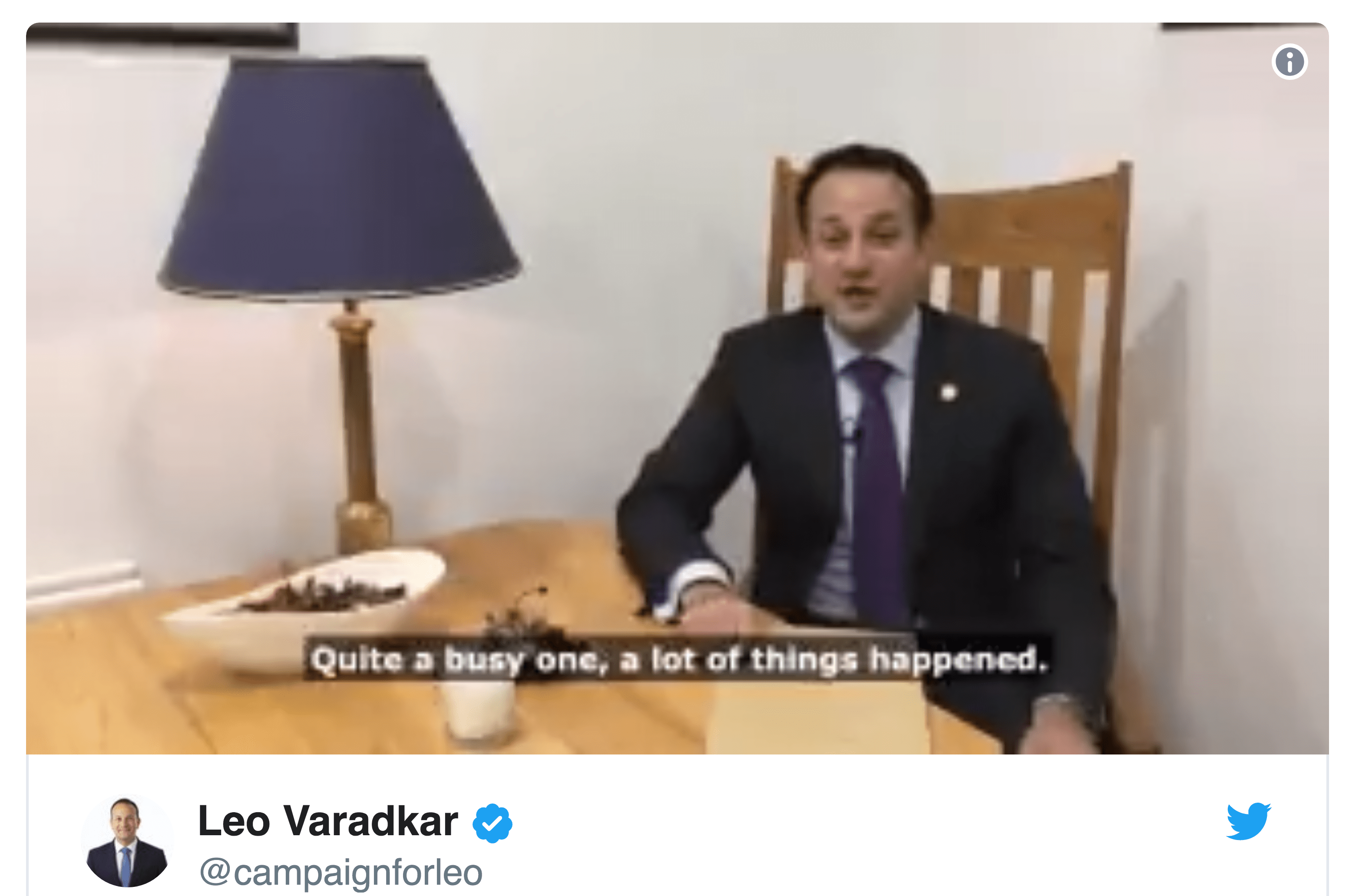
    It seems that the crock of gold we are paying to the magical Strategic Communications Unit is all being spent on oversized lamps, vast desks and enormous chairs just to make our leader look more like one of the little people, ie, you and I. The Taoiseach’s weekly video was a wonder, as it was impossible to take in anything he said because viewers were too busy trying to figure out if the corridors of power were either very small or just far, far away. I’m no fan of big government, but for our Taoiseach to actually shrink himself seems a little drastic. If he is trying to win the youth vote by looking like a child, perhaps he could try to be a little more BFG than YFG.

    The whole Brexit debate was a piquant end to the political year. The Brits came crawling back to us after we kicked them out, begging us to sign the divorce papers so they could move on with their new lives in a bedsit in Crouch End, with Union Jack duvet on their single bed, counting all that money they now have for the NHS, like a modern day Silas Marner. It’s hard not to feel sympathy for them: The Brexit talks were basically that diner scene from Good Will Hunting, with us screaming how you like them apples after getting Donald Tusk’s mobile number.

    One person who did not share in our festive orgy of schadenfreude, however, was Micheal Martin. In an interview with Joe.ie, he slammed what he called the modern ‘megaphone diplomacy’ of the Taoiseach and his human-sized colleague, Simon Coveney. Deputy Martin tut-tutted at political announcements by Twitter and even going so far as to lament the absence of Bertie Ahern’s quieter diplomacy, a skill that shone in 2014 when Bertie told a party meeting (sans megaphone) that he didn’t think much of Martin and wouldn’t be saying anything nice about him. If he had just subtweeted him it would have been less cruel.

    Speaking of the collapsed bouncy castle that was the post-Celtic Tiger decade, it seems we have finally bounced back from our pit of despair. Things are picking up – no more will we have to worry about discerning between wants and needs, no more will we need to furrow our brows as we try to understand what a CFD is (I think it’s the stuff that makes fridges cold?), no more will we have to have actual money when we can rely on credit. But more than all those things, no more shall we have to pretend to be happy about buying off-brand goods, as we are now actually happy. According to the 2016 European Quality of Life survey, carried out by Eurofound, the EU agency for the improvement of living and working conditions, we are back to Celtic Tiger levels of life-satisfaction. The signs were there – a bar (roll those Rs) just opened in Dublin that charges eight euro a pint, various property developers are back from whatever limbo they were hiding in and are raring to go, and, according to public health experts, our cocaine use is rising – all the benchmarks of a society that is ready to lather, rinse and repeat the same mistakes of the 2003-2007 years. Hopefully some developer will get cracking on a few thousand shoebox apartments filled with tiny furniture where Taoiseach Varadkar can shoot his next video, because if there’s anything a life in politics teaches you, it’s the concept of forced perspective.

  • Milkshake duck, Keaton Jones, blogging, my glittering career

    b6d.png

    Indo col week 33


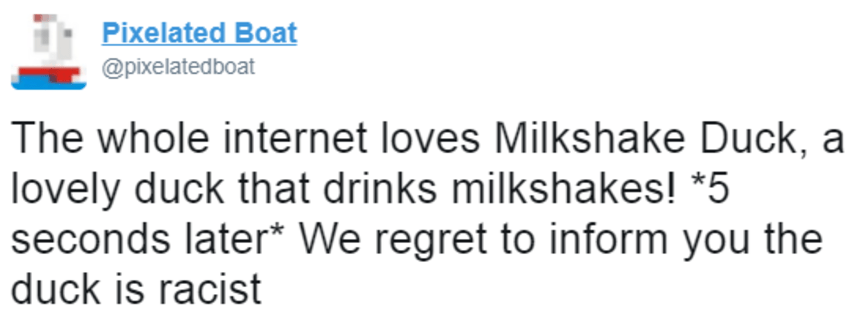
    In June last year, Australian cartoonist Ben Ward, known by his Twitter handle @PixellatedBoat, tweeted a joke. It was a simple three-line gag about a character named Milkshake Duck, the cartoon duck who everyone loves…until five seconds later when the duck is revealed as racist. The joke perfectly fit its medium and obviously enough loses a lot in translation to print, but the use of the term Milkshake Duck has since taken hold and has become shorthand for the perils of internet fame.

    Andy Warhol may have predicted that in the future, everyone would be famous for 15 minutes, but thanks to the internet it’s really more like 15 seconds. As soon as someone is thrust into the limelight for a viral video in which they wear a funny jumper or a write blog post about feelings (all blog posts are about feelings), the internet regurgitates some dirt from the person’s past, and their brief moment of fame rapidly pivots into a slightly less brief moment of notoriety.

    The latest Milkshake Duck is an American schoolboy named Keaton Jones. The 11-year-old made a short video, shot by his mother, in which he called out the bullies who made his life hell. She shared it on her Facebook page, and it has gone on to be viewed more than 20 million times. Soon, Hollywood celebrities like Mark Hamill, Chris Evans and Mark Ruffalo were tweeting their support, offering to bring Keaton to movie premieres, while a GoFundMe page set up for the family racked up US$60,000.

    It was at this point that the mechanics of internet fame kicked in, as I regret to inform you that it would appear this Milkshake Duck’s mother Kimberly is a racist. Old Facebook posts by Keaton’s mother showed the family draped in Confederate flags, with one daughter holding a gun. In other posts Mrs Jones mocked civil rights protesters.

    Then the recoil started – these people weren’t innocent victims, they were the monsters all along. The mother set her Facebook page to private, but it was too late. The GoFundMe accounts were frozen, and a little kid who was upset at being bullied has become the innocent victim of viral hate.

    By today, Keaton and his family have learned some hard lessons about the internet and how it works. It is an archive of every mistake you have ever made, a treasure trove of casually abusive comments, off colour jokes and general obnoxiousness – and that’s just your Facebook account. In the silent world of the internet we can be our worst selves, falsely believing that we are invisible and anonymous, when actually almost none of us are. When we post, we might as well be standing on a street corner with a megaphone screaming out our thoughts, or going to the toilet with the door open. Take it from someone who learned the hard way.

    More than a decade ago I was working in a job that I didn’t especially enjoy. I was going through the proverbial ‘difficult time’ personally, and a lot of my frustrations with myself and my then employers came to a head with a series of splenetic posts on the absolute mess that was MySpace. Soon I was in an office with the head of HR and CEO being given a final written warning. I’m glad it happened; it served as an incredibly valuable lesson at a point where the digital age – led by social media game-changers like MySpace and Bebo – was shifting into top gear. Internet 101 is be prepared to stand over everything you say, because sooner or later it will come back to haunt you.

    I spent another seven years working with the same company, living under a cloud of shame. I kept my head down, worked hard and worked well, and atoned for my mistake. As the company came asunder, I heard there might be redundancies – so I got in early with my requests, and kept rattling the cage until New Year’s Eve 2014, when I picked up my cheque and skipped out the door. I no longer work in the media, and I’m happier for it. I found the old written warning recently, and briefly contemplated getting it framed – it’s a reminder that I shouldn’t take life too seriously, but also a reminder that change, no matter how traumatic at the time, can often be a positive thing.

    The company I worked for, Landmark Media, is being sold to the Irish Times. This was news to nobody; it was a miracle that TCH – as they were known when I Milkshake Ducked myself – managed to make it this far, and I would imagine there are a lot of people breathing a sigh of relief. However, there are many more who are now facing redundancy. The problem for anyone working in the media in Cork who loses their job is – where do you go from here?

    The perils of being one of the few outposts of the national media that lies beyond The Pale is that once you leave, you can’t stroll into another paper and start work there. There are other options – for subeditors it seems technical writing is the best fit for their skills, while journalists can segue into content creation, PR or communications jobs, but the problem is in how many get let go at the same time, and how many jobs there are out there. The economy is picking up, but if a hundred media professionals in Cork lose their job at the same time, there simply won’t be enough jobs to absorb them all.

    But it isn’t the end of the world – you will get another job, and you will look back and marvel at how you resisted the change when it came. Although it might be an idea to delete all those Facebook photos of you in Pairc Ui Chaoimh draped in a Confederate flag before you go into any interviews.


  • PTA, pride, failure, Brexit

    tenor (1).gif

    Indo col week 32

    It seems something of a miracle that I managed to avoid attending a parent-teacher meetings until last week. I always had great excuses for not being there – either work or just a complete lack of interest in going – but the day finally came where I could no longer avoid it, as this wasn’t just any parent teacher meeting, but the only one of my daughter’s Junior Cert cycle. This was Serious Business – no more chats from disinterested national school teachers about colouring inside the lines or how good the child is at sharing; this was a serious talk about the foundations of a life and career – this was education with a clear purpose. So I stuck on a tweed waistcoat so I would look more erudite, had a quick peruse of some memorable quotes from Pearse’s The Murder Machine in case it kicked off, and headed along.  

    As soon as I walked into my daughter’s school I felt a familiar sense of dread. The nicotine yellow walls, hand-crafted motivational posters with ‘positivity’ and ‘prayer’ written in gradually diminishing fonts, the dead light from halogen bulbs – this was an anxiety dream made real, all it needed was my teeth to fall out or for me to wet myself, which seemed increasingly likely as I was starting to panic.

    I was given a printed guide to the classrooms, informing me which teachers were in which rooms. It might as well have been written in Sanskrit. I tried to read my daughter’s report card to match up some names, imagining the teachers as depressed Pokemon, adamant that I was gonna catch ‘em all. Obviously, I wasn’t going to catch even half of them, as the whole system was rife with confusion. Other parents milled about, queues formed with no beginning and no end, with no-one quite sure who or what they were queueing for.

    I started to wonder if this was a test in itself, if we were the ones being secretly graded and judged by the Department of Education. I’m very clever for thinking that, I thought to myself, wishing there was someone else around in a tweed waistcoat who would appreciate my tremendous wit. No, I thought, save it for the column – this sort of grand insight is the premium content that my readers deserve. Don’t waste it on these poor schmucks shuffling from desk to desk. Besides, I appeared to be in the wrong queue again and needed to move.

    Eventually a helpful transition year student saw I was struggling and guided me to a corner, and there I was, the perennial buachaill dána, back in bold boys’ corner, surrounded by rather shoddy paintings of Jesus. All I was short was a dunce cap.

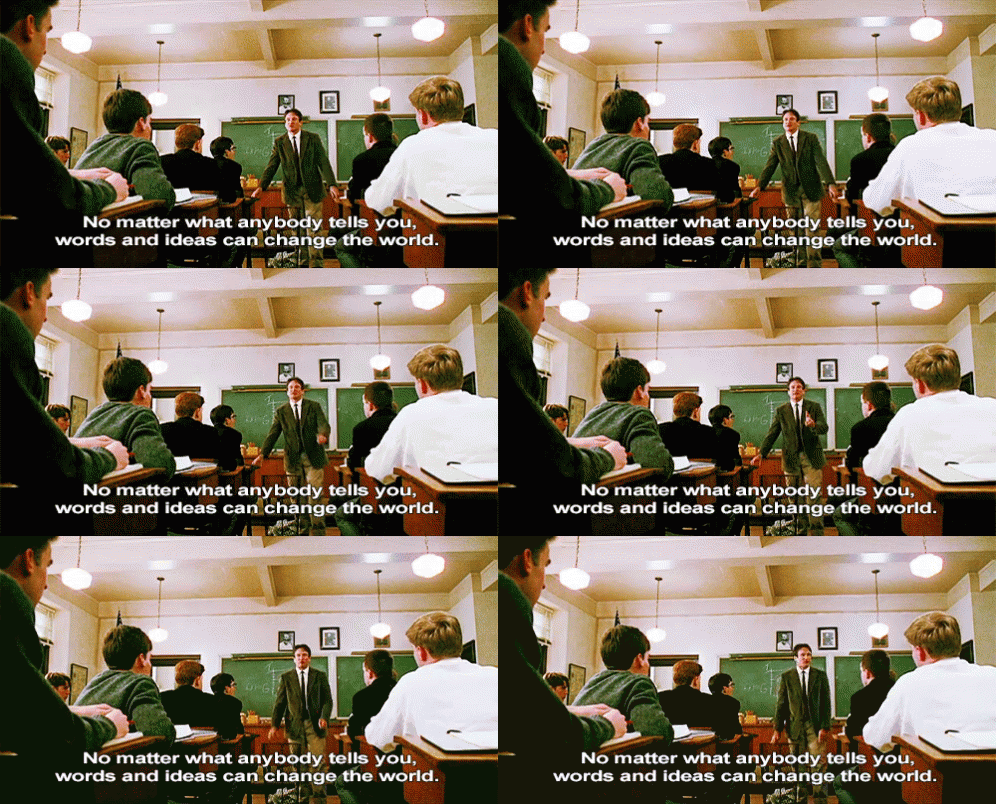
    Finally I got out of the corner and got facetime with some teachers; the first one didn’t seem to know my daughter at all but told me about the class and their self care plan for the year ahead. Back in my day self care was a sin and they said you went blind from doing it. We smiled and nodded at each other, and said goodbye – she went back to correcting homework, I went back to my corner thinking that really, teaching isn’t all Dead Poets Society, is it? If someone stood on a chair in the self-care class and shouted ‘oh captain my captain’ you’d probably have a departmental inquiry before small break.

    I moved on to the next teacher, who did know my daughter, and this was when things got intense. She was full of praise for her, saying how hard she works, how she was a pleasure to teach. I could see the teacher wasn’t just saying this because of my tweed waistcoat and obviously eruditeness, but because she meant it. The next teacher was the same, and the next. As I moved from one to the other I started to get more and more emotional, and by the time I got to the fourth teacher I was blinking back tears.

    It’s a strange thing to realise that you might be an okay parent. We spend so much time fretting about passing on all our bad habits and mistakes, that it is extraordinary to think that we might be raising someone who will be better than us. In theory, every generation should be some sort of upgrade – it didn’t work that way for my poor parents, who used to have to grit their teeth for my parent-teacher meetings, as all but the art and English teachers said I was going nowhere fast.

    Perhaps a knock-on of that experience is that I would give myself a C- as a parent – fair to poor, could do better. After my daughter’s parent teacher meeting, I realised that my wife and I might actually be getting a solid B+ – there is always room for improvement if we worked hard, but we weren’t failing by any stretch of the imagination. It feels good to know your best might just be enough.

    That said, my self-satisfied bubble burst when I got home and my wife and daughter realised I left the parent teacher meeting without talking to half the teachers. I tried to explain that the last thing the event needed was a middle aged man in tweeds in the middle of a classroom, sobbing with pride. That, I claimed, was a scene better suited to one of those sensitive Educate Together places; if poor auld Jesus up on the convent school wall managed to hold in the tears, then I should too.  Besides, is it not the spirit of continuous assessment that I should go along next year too and speak to the other half of her teachers?

    The biggest shock of the night wasn’t that my daughter had given up history, but that anyone is allowed to give up history. I had assumed it was compulsory, but apparently not, which I assume is also the case in the UK, where there seems to be a lot of cramming about what the Empire may or may not have done to their neighbours over the past few centuries.

    The current stumbling blocks over Brexit and the border seem to cause confusion with many on the mainland, as they wonder what they ever might have done to deserve such a hardline approach from the Irish Government. Presumably the same people avoided watching Ken Loach’s The Wind That Shakes The Barley as they assumed it was a documentary about the impact of agriculture on climate change, or In The Name Of The Father because they thought it was one of those Jeremy Kyle Show DNA test specials.  Yet while there may be some gaps in the UK’s educational policy when it comes to their own history, it is great to see so many people frantically try to brush up on several centuries of imperial unpleasantness in the space of a week. Here’s to lifelong learning.

  • Ikea, Amgen, elections, promises

    tenor-1.gif

    Indo col 31

    I woke my wife at 5.30am when I read the headline. She was panicked – where the kids ok? Was the house on fire? Had we won the Lotto? No, it was way more dramatic than that – Ikea might be coming to Cork. She sat up in the bed. ‘What?’

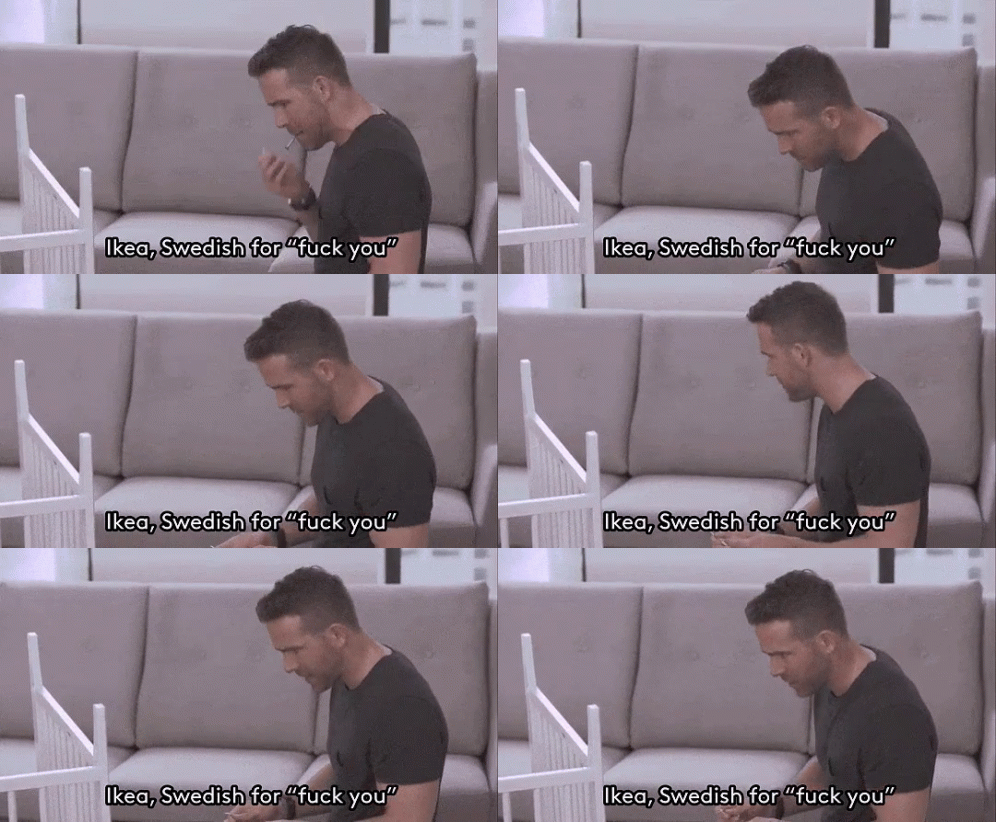
    Exactly – what? There had long been rumours that us tasteless culchies would get our own outlet of the iconic Swedish store, but now it looks like it might finally be happening. No more will we have to use our imaginations or creativity to furnish our homes – now we have world’s greatest purveyors of budget taste. Granted, within six months of it opening, every home in Munster will have the exact same interior, but that’s what is so great about shopping in Ikea – no more thinking. We can just walk around it with smears of meatballs sauce on our lips and dead eyes calculating heights and widths of various bits of storage that we only need to store the small bits we already got in Ikea Dublin and were able to bring home in the boot.


    So it’s an exciting time for us boggers – now we can take the old sideboards and chaise lounges that have been in the family since Famine times and throw them all in a skip, only to replace them with a Fuurkenfoola or Ziffoowqska or whatever goofball names Ikea have given their furnishing this week.


    Although the location has yet to be officially confirmed, it appears a lot of the focus is on the old Amgen site. It’s called that not because the pharma giant Amgen are based on it, or were ever on it, but rather that they were supposed to be there.


    The Amgen announcement came back in 2006 – the site was to be developed and a staggering 1,100 jobs were being created. Everyone in Cork started preparing their CVs and readying the plans for their leaving do, as these weren’t just any jobs, they were pharma jobs. We were all going to be rich, rich I tells ya. But then the rumours started, whispers that the plant wasn’t going ahead.


    This was roundly refuted by the then Minister for Trade and Enterprise, Micheal Martin, who when asked about these rumours, asked: “Who is spreading these rumours? Who is putting it around the place? It is outrageous that this would be said. Why would I want to do that? … This is a fairly stupid rumour, to be frank.”

    If he seems tense, it’s probably because he was making those comments in April 2007, a few weeks before the general election. One month later, Fianna Fáil and the Greens swept to power.  


    Then, in August 2007, the announcement was made that the Amgen plans were being scaled back. For any of us living in east Cork, the dream was already over. Everyone had heard the rumours – the parent firm was in freefall and the plant was never going to be built.


    One look at the site confirmed most of those claims. It had gone from being a hive of activity, to having a few lonely machines moving piles of earth about the place with no real purpose. Finally, in December 2007, what we all knew was confirmed; Amgen were not coming to east Cork, and we were all back to staring at the wall in our dead-end jobs.


    So now, as we teeter on the brink of the another general election – the least desired one ever called – the petit bourgeoisie of Munster can only hope and pray that this isn’t some ergonomic carrot on a Swedish-designed stick, and that the old Amgen site doesn’t become the old Ikea site.


    It seems strange that a people who fought so long and so hard for the right to vote could now be at a point where we really don’t want to vote at all, but that is the case right now. Frankly, we have better things to be doing than standing on a freezing cold doorstep being bothered by people who aren’t going to change our minds, smiling insincerely through chattering teeth as they try to undo several generations of Civil War politics that have been written on our hearts.


    Nobody wants those old wound reopened, or to see a fight outside a chipper at 3am on December 23rd because somebody called someone else a ‘Free State Bastard’. And what about all the posters – this is the time of year for tasteless festive tat and Yuletide advertising, not grinning politicians looming over us on every lamppost, watching our every move like Father Christmas if he was chair of the local branch of Macra. So please – give the people of Ireland what they want for Christmas – no election, and an Ikea that we can get to without having to navigate the Fury Road that is the M50.

  • Taxes, welfare, Black Friday, KISS

    tenor.gif

    Indo col week 30

    I quite like paying taxes. This is partly because, as a low earner, I don’t pay a lot of tax. However, it is also because I have been so well supported by the State over the course of my life. In my 20s, I went from work to the dole to the back to education allowance, which – along with third-level grants – saw me through to masters level. When I took redundancy three years ago, I got a similar level of dole payment to what I had been earning for a 37-hour week, as well as full medical cards for my family and I. After eight long months I was fortunate enough to get a job, but even then the State supported me, via the Family Income Supplement (FIS). We recently got a statement from the Department of Social Protection on how much we were paid in FIS last year  – more than 12,000. This is because we were a single income household with a low wage and considerably more children than we can afford. I can give you various reasons for the excessive amount of human life I have co-created, but overall I would say that economics rarely features in the romantically engorged mind. Except maybe in David McWilliams’s mind, he seems to really, really like economics.


    So I pay tax, and I get support in return. From my point of view, Ireland is a good country to live and work in. I’m always slightly bemused by the various Robespierres of the hard left, talking about Ireland as though we were currently trapped in a live re-enactment of Swift’s Modest Proposal. There are things that need to change here – a quick flick through the pages of this paper will give you a dozen or more good examples – but overall I would say that I love living here, and I love my country, not in some chest-thumping, nationalist fashion, but rather in a pay-my-taxes, clean-up-after-myself way. That said, I’d always be open to finding a solid tax efficiency – or loophole as they are more commonly known.


    The furore over firms using offshore structures to increase their profits and reduce their taxes isn’t all that different from me claiming credits for waste disposal or pet ownership or just about anything I can legally use. But I felt great sympathy for poor Bono, who gets the most stick for this, as though he should give all his money to Revenue and go live in a wheelie bin to be true to either his beliefs, his lyrics or his attempts to make the world a better place through whatever charity it is he has been going on about recently. At this time of year especially I think of poor Bono, getting dogs abuse for being a tax exile, albeit a charismatic one. It must suck to be rich sometimes. So tonight, as I do every night at this time of year, I thank god that it’s Bono who is the multi-millionaire tax-exile hate figure, instead of me.


    Obviously all this gauche talk of money or my lack thereof is leading to the pleasing announcement that I no longer qualify for FIS as I landed myself with a second job (it’s this, my role as opinionista). This means I will now pay more tax – hooray! – and also will get less support from the State. I’m delighted. Obviously, I’m still not quite at the level of earnings of Bono, but I can at least now buy the odd treat without feeling like I am tightening the Primark corset of the ‘squeezed middle’. There is a great joy in spending money you have worked hard to earn. Except of course on Black Friday, when there is no joy in spending money at all.


    I’m sure there are upsides to globalisation – having a Starbucks/Subway/Costa on every street corner, or our kids talking about sidewalks and gas stations – but Black Friday is not one of them. This is especially true of our watered-down version of it. While the Americans get to have the real fun, stamping each other to death and shooting assault rifles into the air as they try to buy a six metre wide TV for a fiver, over here it is just a big sad rip-off. This is partly due to the fact that the US is a low tax economy – anyone bleating about how much cheaper things are in the States might want to try getting sick there, or losing their job there, before they start seeing it was some economic utopia.

    Yet somehow we have decided that Black Friday is something worth adopting, despite the obvious disparity between our economies. UK consumer group Which? Has pointed out that more than half of the deals offered in the UK on Black Friday last year were cheaper or the same price at other times of the year. It is no different here, but we get swept along in the hype, acting as though 15% off electronic items is worth queueing up for. It seems only a matter of time until we adopt Thanksgiving itself, holding a celebration of the arrival of the Normans in 1167 and all the awful things they gave us, such as feudalism and Dublin.  

    If you need a good example of how different we are from Americans, just spend a few minutes watching Fox. It’s like the TV station in The Hunger Games, if it were hosted by an animatronic Adam Smith and Libertarian Barbie. You would imagine it would take a lot to get banned from the station, given the Rolodex of the criminally insane it uses to keep its couches warm. Step forward Gene Simmons: The KISS frontman, best known for having an oversized tongue and some terrible opinions about women, was on Fox to promote his new book, which comes with the snappy title On Power: My Journey Through the Corridors of Power and How You Can Get More Power. The book, which gives expert tips on how to be more like Simmons – ie, ‘powerful’ – is actually a follow-up to the equally snappily titled Me, Inc.: Build an Army of One, Unleash Your Inner Rock God, Win in Life and Business.

    After his interview on Fox Business, he burst into a Fox News meeting, shouted ‘hey chicks, sue me!’ and mercifully only exposed his chest and navel. He also took the opportunity to thump two people on the head with his book, which is probably as close it will ever get to actually stimulating a human brain. Sadly, Simmons is now banned for life from the station, which means he has one less platform for his various lessons on economics, which, unsurprisingly, are largely centred on how rich people like him shouldn’t have to pay tax to support ‘the welfare state’. So if you needed one more reason to feel pride in being a taxpayer, it is that it makes you that little bit less like Gene Simmons.

  • Cars, freedom, men, Weinstein

    maxresdefault.jpg

    Week 29:

    I am driving. Not as I write this – I’m not quite at that level of proficiency just yet, where I can stare down at a glowing screen in my lap while careering across lanes at 105kph. In fact, I’m not even at the stage where I can confidently pick my nose when at traffic lights. I am still at the stage of the death grip on the wheel, hands locked at ten and two and nothing else will do, eyes peeled open to a degree that would make Malcolm McDowell in A Clockwork Orange wince a little. But yes, I am generally driving, and after two decades of only using public transport and the kindness of friends, family and my long suffering wife/chaffeur, I am now an independent road user.

    Things have changed out there; the last time I drove it was in a Nissan Sunny, and it was so long ago that the salesman pointed out that it had ‘electric windows’ as though he was telling us it could fly. Fly, it could not. The car was a sluggish lump of ugly metal, and the few journeys I made in it felt like I was leading a platoon of Soviet tanks into the badlands of Afghanistan. Cars today are remarkable – even my sexless Fluence drives like a hovercar from 2525 in comparison to that so-called Sunny.

    Using the bus is a distant, troubling memory. It seems like a long time since I had to join the human centipede that is public transport, surrounded by the sniffling masses, listening to the tinny din of those people who don’t know about headphones and instead choose to play their music on a phone’s miniscule speakers. A lifetime on the buses and trains taught me that hell isn’t other people – it’s being trapped with other people. I quite like the human race, even with their headcolds and lack of headphones, but I like them a lot more now that I am not trapped in a metal tube with them for an hour a day.  

    But one thing has jumped out at me from my few months on the road: Leaner and new drivers are not the menace I thought they were, but fully qualified men of a certain age, usually mine, are. When I see someone aggressively cutting across lanes in a tunnel, running a red light, or just being casually obnoxious, it is almost always a guy like me behind the wheel. Is life this short that we have to nuzzle up against the rear bumper of the person in front like an aroused canine, or just beep at everyone over everything? What is it with blokes in cars? In fact, what is it with blokes in general?

    On Saturday I was in the game shop with my son. A man in his fifties came in to buy some games. The girl behind the counter told him that since he had spent more than seventy euro, he could have a free T-shirt. Any T-shirt, he asked? Any T-shirt, she said. Can I have that one? he asked, pointing at her T-shirt. She made some flippant comment to brush it off, he got his stuff and left. I felt a mix of emotions – pity for the man, who was so tone deaf that he didn’t realise that what he said wasn’t flirty, or funny, or anything other than unsettling; embarrassment for the staff member, even though she seemed wearily used to this sort of ‘top bants’; and a general sense of shame over being a bloke.

    I tend to drop kick all these aspects of men into the same cauldron of oedipal horrors – the aggressive driving, the creepiness, the inability to read the room. How did we get here? We spent so long styling ourselves as some sort of apex predator that we sacrificed essential components of our own humanity. We have devalued ourselves in this process. Look at jobs where nurturing is required: What percentage of creches staff are male? If you advertised for an au pair and a man showed up, would you call the cops right away or wait until he was gone? We just can’t seem to free ourselves from this predatory status, even though we have devalued our role as carers. Look at the concept of the stay at home dad – why isn’t that more common (apart from the limits of the glass ceiling, which is really more like a Temple of Doom-style descending stone roof with spikes in it)?

    The horror stories emerging about rich and powerful men and how they treated women have led me to conduct a rather grim internal audit of my relationships. Overall, it’s been pretty bleak. I can give you a few weak reasons for this – growing up in a viciously Catholic Ireland, or just the magic porridge pot of emotional problems that is being adopted, but while there are reasons, there are no excuses. I just treated people poorly, and especially women. I try to be a better person, but it’s hard to tell if I’m a decent human being or just better than I was. This change can’t happen fast enough: I worry about my sons and the sort of men they will become. I just don’t want them to have my problems, my hangups. They may have the advantage of growing up in a more enlightened time, but they also have a father who is trying hard to overcome a cultural hangover. Hopefully by the time they reach manhood, those self-driving cars we keep hearing about will offer them some moments of quiet contemplation on the commute home to think about how to improve their relationships with the opposite sex. Or they may just use the time to give their noses a really good pick.

  • Gods, death, poppies, war

    images.jpg

    Week 28 of the column.

    Being an atheist is a lonely old slog. Most people will cling to the belief that there is something out there watching over us, be it Jesus, Yaweh, Allah or whatever MechaGodzilla the Scientologists funnel their taxes towards. Few people will actually offer such a bleak world view as the true atheist – that there is nothing else out there, no higher power, and we are all alone. Of course, you don’t sell it to people in quite such a bleak way – you say that you believe people are innately good, that all religions were just an extension of that goodness, an extension that ultimately got corrupted by the power-hungry, in much the same way the leaking extension you got built during the Celtic Tiger got corrupted by lazy builders and pyrite.

    Us devout atheists are few and far between, but what makes it even more isolating is the fact that we don’t have the structures of religion. There are no parish tea dances, no community hall bingo, no festive services. But in the broader sense I’ve wondered that the hell I’m going to do when I die. Being freed from the strictures of Catholic rites is great, but we still need some sort of ritual – I can’t just get stuffed into a recycling bin and turned into Soylent Green, or have my ashes chucked into a landfill. How will we say goodbye when we know there is no journey to the other side? Do we have a sacred decommissioning of our Facebook profile, a ritualised restoration of factory settings on our iPhone, or one final Instagram shot of our bespoke artisanal funeral buffet? Or just have Siri conduct a service, while Alexa paraphrases Mary Elizabeth Frye for the eulogy:

    Do not stand at my grave and weep

    I am not there. I do not sleep.

    I was cryogenically frozen, it wasn’t cheap,

    So the money I owe you all I will have to keep.

    The hardest part of being an atheist has been dealing with loss. The absence of an afterlife isn’t just hard to come to terms with for yourself, but for your loved ones. Since my father’s passing I have been crushed by grief, as I know that he is gone and I will never see him again. I’ve spent much of the last 12 months breaking down at inopportune moments – I meet people in work who knew him and they tell me how much they liked him, and I break down. I find an old letter from him to my mum written in the 1970s in which he promises not to drink and drive (apparently it was all the rage back then) and I break down. My son points to a photo of my father and asks me who he is, and I break down. It has been a year when I occasionally thought I was going to have some sort of breakdown, as I try to make sense of it all – this life, all our lives, and the fact that we all die. The dormant Catholic in me still sees November as the month to think on all these things, to remember all the souls no longer in existence, and the supreme importance of trying to follow the one commandment shared by all religions – try not to be a total jackass.

    Speaking of remembrance and jackasses – it’s poppy season again in the UK, a time for flag-waving jingoism of the highest order, when the atrocities of war and sacrifice of the fallen is completely overshadowed by an orgy of imperialism. Where’s your poppy mate, don’t you honour our brave boys, spit on the flag is it mate, do you want to bring back Hitler, is that it? No more can UK TV presenters or sports stars quietly think about war and honour, they need to stick the biggest poppies they can find on their lapel or they are deemed to hate freedom.

    I have a distant relative who fought in the First World War, Colonel Jim Fitzmaurice, and of his experience he wrote: “Dead German, British and French soldiers lay about in every conceivable position and condition—here and there a dead horse, a broken field gun. I had never seen a dead man before. I looked again at those dead soldiers — I looked at the poor dumb beasts — dead with their poor glassy eyes turned to the heavens. It was impossible to think. I decided that a very serious job had to be done, that I had better stop thinking and get along with my own particular portion of this big job — C’est la guerre.”

    He was 17 when he fought in the Somme. I wonder what he would think of the obsessive poppy-watching in the UK, whereby every weatherman and celebrity chat show guest has to wear a big red poppy or be torn apart by the media; what would he say to the rising nationalism, of the UK’s plan to remove themselves from the European project? After the war Fitzmaurice made aviation history by making the first east to west Atlantic flight, which he managed with two Germans. Even though he fought in the Great War, he understood that divisions make us weaker. The poppy has become that most awful thing – a virtue signal, a way of telling people you care, whether you actually do or not. It’s like an analog hashtag, or the words of the gauche bore who feels the need to tell you about their many donations to charity. It seems a tragedy that there is a sense of relief when Armistice Day has passed, and we no longer have to endure shallow displays of remembrance.

    In terms of overcoming divisions, you have to admire the gumption of the three Alliance TDs who are riding out to North Korea to try and find a resolution to the secret state’s nuclear Mexican stand-off with America. Of the three, Waterford TD John Halligan should be best placed to find some common ground with Kim Jong Un as they both have sentient hair, complete lack of belief in god, and experience dealing with difficult characters (Shane Ross and Trump, respectively). If nothing else, this could be the greatest episode of Hall’s Pictorial Weekly never made, and sher if it stops us all from dying in the Third World War, isn’t that much better than fixing the roads?


  • The end of the beginning

    It’s hard to say if 2017 was what you would call a great year. It was certainly one of changes – we settled into our new home (my old home) and learned to adapt to terrible broadband (PS4 games take a week to download), rubbish windows (we all wear parkas indoors) and beautiful scenery (it overlooks a distillery). For my family it was a lot to take – my kids were far from their friends, my wife was basically operating a shuttle back and forth from Midleton – sometimes up to 12 trips a day – and they all had to cope with a father lost in grief. But things got better – after avoiding it all my life, I started driving, which saved my wife at least two trips a day, and things have generally moved on and become less bleak since I posted this on January 1st of this year. 

    I still work in a hospital, something that I love. To simply be able to be kind to people in need is incredibly humbling – even basics like giving someone directions, or walking them to their destination (it is a massive hospital) is an important part of making that person’s experience in the hospital as pleasant and positive as possible. Clerical staff like me have our own minor roles to play in patient care, and it isn’t all about crossing Ts or dotting Is – sometimes it’s about chatting to a patient about the weather, or parking, or Brexit. To be able to say, don’t be scared, it’ll be fine, is a great thing. And everything is always fine, in the end.

    When I worked in the media I became desensitized to the suffering of others. I sat at a desk and helped sell grief and horror. Obviously, not all journalism is about car-crash rubbernecking, but much of what we call news is unnecessary voyeurism. The coverage of the Hawe tragedy was one that had me asking what it’s all about – what greater truth was going to be uncovered in the details plastered across every page, what lessons for society? I’m not saying I was any different when I worked in papers – as a sub it was my job to make these stories as dramatic as possible using words and images, so I was just as much part of the grand harvester of sorrow as anyone. I can still remember the thrill of a tragedy happening on a slow news day, when you knew you had it for the front page before anyone else. In the end, newspapers are a commercial product – everyone has bills to pay, everyone has an owner, and everyone is selective about what they consider to be the truth. Clark Kent didn’t change a goddam thing in his day job.

    One of the most curious parts of the period after my father’s death is just how creative it has been. A piece I wrote about caring for him and preparing to say goodbye ended up being the springboard to a strange sort of renaissance, and ultimately ended with me getting a weekly column in the Irish Independent, which I am contractually obliged to tell you sells 90,000 copies a day and is one of the biggest selling papers in the country. I try to explain it to my daughter as being like having a blog with 90,000 followers. She is duly unimpressed.

    Apart from that, I have written more for the Irish Examiner, the Indo and even just this blog than I ever have, as I slowly worked my way through the grief. All this meant that even though I was working two jobs, both were very fulfilling – the hospital is rewarding in a very human way, while the writing has been both cathartic and, obviously enough, a boost to my own self esteem at a time when I suffering a sort of professional midlife crisis. I also like the extra money, as it allows me to buy a decent bottle now and again without feeling like I was stealing from my kids’ piggy banks.  

    This brings me, as almost everything does, to whiskey. Obviously, one post this year stands out – the publication of a long-overdue post on transparency in Irish whiskey. I have another long-form follow-up piece on that topic, so I won’t waste my breath on it here. Suffice to say, it was a conversation that needed to be had. I don’t really care how many brands there are, or where they come from – I care where they don’t come from, and I don’t want us all to look like fools.

    Irish whiskey is booming – sales continue to rocket, distilleries are getting over the line with funding and planning, and – a sure sign that we are entering the golden age – Whiskey Live Dublin is going to be a two-day event next year. This year’s event was packed – more stalls, more punters, more fans, more nerds.  We even have our own Irish whiskey glass, the Tuath, two magazines, growth in the Irish Whiskey Society (and an incredible year for the Cork Whiskey Society, who put on mind-blowing tastings with extinct drams), and more and more whiskey fans on Twitter, and presumably, that toilet of the soul, Facebook. Irish whiskey sales are even at the stage where multiples are starting to take note.

    It was Whiskey Nut who noticed it first – Aldi were going to be selling a 26 year old single malt for under fifty euro. It had to be an error, I thought – this was presumably a Bushmills, of the same age as some of the (presumably) Bushmills that Teeling sell for hundreds of euro. How could it be this cheap? I had to find out. So on the day of the special buys, I was in Aldi Wilton at 10.25am practically frothing at the mouth. There was no sign of it. Could it have sold out, I wondered? No, it had never arrived, a staff member informed me. I left….only to return at 4pm. Still no sign. Over the following week I visited four Aldi branches a total of seven times. I could see on Twitter that others up the country were getting them – ‘that’s more of it’ I thought to myself. ‘The metropolitan elite being catered for’ I realised. ‘The pricks’ I mused.

    Of course, it was not that Aldi hates Cork people (everyone else does, presumably out of jealousy or possibly because of the accent), but a logistics SNAFU at their Mitchelstown hub. I know this as the good people of Ballyhoura Mushrooms told me, proving what I knew back in the Nineties – that mushrooms bring enlightenment. Eventually, Cork stores got the whiskey, and I selfishly bought five. One was a gift for my goddaughter, another for a friend, one was sold to a fellow whiskey fan from Dublin (I flipped it for fifty euro, clearing a cool profit of one cent), and the other two are there on a shelf, staring at me, judging me for my greed. They are my tell-tale heart. Of course the saddest part of the whole escapade was my son being dragged from Aldi store to Aldi store to beat the customer quotas, leading him to call me an Aldiholic, which is both impressive and more than a little depressing.

    There was one rare whiskey that I didn’t have to work quite so hard to obtain. Two weeks ago I came home to find a package on the front door. A gift from my neighbours, the good people at Irish Distillers. I’m not sure what I did to deserve such a generous gift; or what I might have to do. Part of me is now concerned that one day a message will come from IDL that they want me to go back in time and kill Aeneas Coffey, or egg Andre Levy’s house. Frankly, I’d do both for free.

    I’ve got a few bottles of MVR over the years, most of which I have regifted. It is just too expensive for my tastes. I don’t have much disposable income and there is something obscene about spending that much on a bottle of booze. My cut off for whiskey is about 120, max; I recently picked up a 21-year-old Ardmore for 90, but that was too good a bargain to pass up.

    But, despite the price, MVR sells like hot cakes. Part of that is the vintage aspect – it is used as a marker for weddings, births, business deals, promotions, graduations; it is a stamp in time. When the bottle relaunched earlier this year I pointed out that, while I didn’t like saying anything was ‘just a blend’, MVR was that – a blend. But while it is a blend, it is also a product of its time. When first released in 1984, it was genuinely rare as it included spirit from the old Midleton distillery. Obviously those days are long gone, unless there is one of those cask circle offerings that date back to old Midleton. Matt Healy has an excellent post on the history of MVR – it’s well worth a read, not least because of the comments section, where people queue up to ask Matt how much their various vintages are worth. It’s a testament to what a nice guy Matt is that he doesn’t do what I would have done and told them all to JFGI (Just Fucking Google It). 

    Part of the reason MVR was the world’s first premium blend was one of necessity – Midleton don’t officially make malt (they do now in the micro-distillery), so a world-class single malt was not something they could bring to the table. They had aged pot still whiskey stocks – but back then, who knew what that was? How would you sell that as a premium drink, when category awareness outside of whiskey geeks was basically nil? So they brought out a premium blend, and it has gone on to become one of the best known whiskeys from Midleton, outside of the triumvirate of Paddy/Powers/Jameson.

    So MVR  is well-made, well-aged and well-marketed. But is it any good? Guess what, this post – much like my childhood drowning story became a review of Laphroaig QC, my story about Storm Ophelia became a review of Teeling Brabazon II, and my piece on Converge became a review of A’Bunadh – is about to awkwardly segue into a whiskey review.

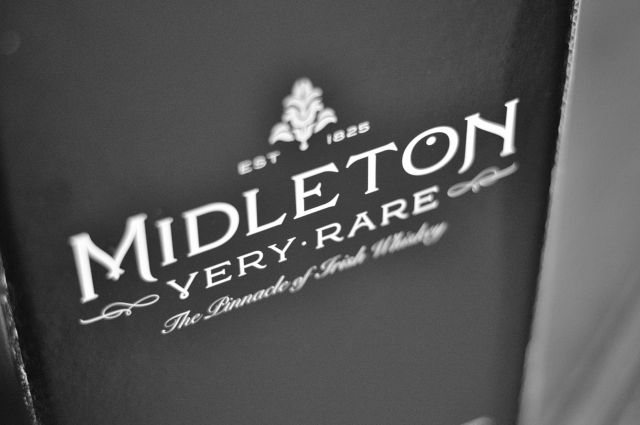
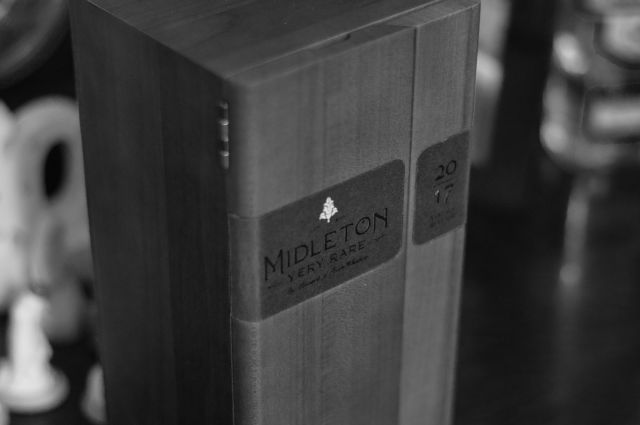
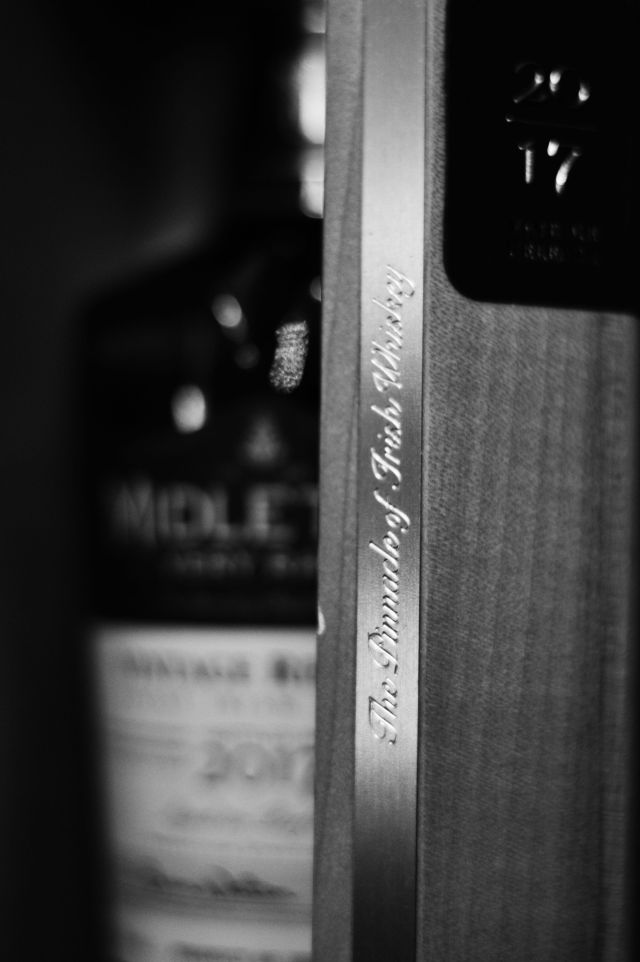
    MVR 2017 comes in two versions – the oldschool edition for collectors who want to continue the line, and the new, disruptive remodel that I got. It comes in a beautiful wooden box, all copper seams and tasteful design, and looks well worth the pricetag.

    Pouring it, I am hit by how thick it is, and how guilty I feel about drinking something that costs this much. On the nose lots of cloves and cinnamon, hot cedar – and less oomph than I expected. I feel like the weight just isn’t there – but this is once again with the obviously prejudiced mindset of someone who uses phrases like ‘just a blend’. There is also that soft sweetness of Haribo strawberries, but sadly none of the toffee/caramel notes that get my sweet tooth jonesing. On the palate – before any real flavour there is that incredible smoothness. This is that smooth Irish they talk about – velvet, creamy texture, possibly aided by a disappointingly low ABV of 40%. Honestly, everything should just be 45% upward. I don’t care if it makes the drink less like the soft kiss of moonlight and more like Pompeii is happening in the middle of your face, I love that holy fuck effect you get from strong whiskey. It’s the pupil-dilating suckerpunch I crave, it makes you sit up and take note of what’s happening.

    With the MVR, that smooth, oily glide makes way to reveal a little caramel, biscuity notes, a little plum, but then I get that from almost every whiskey.  Very light hints of vanilla, but really more of that freshness from the nose. It’s surprisingly light and eerily drinkable. I poured a single dram for tasting and was onto a generous second in no time; this isn’t science, guys, no need for laboratory conditions.

    The finish here is deceptive – you think it’s all over, but there it is, reverberating away in the background for some time. Again, this is just so smooth, it is remarkable. While I would favour a Redbreast 21 (or possibly even the CS version of the 12) over this as a personal choice, this has a luxuriant grace that is hard to find fault with.

    MVR calls itself the pinnacle of Irish whiskey – back in ‘84, that may well have been the case. The entire category was struggling to survive. But this is 2017, and the pinnacle, we now realise, is yet to be achieved. MVR has been overtaken by the Dair Ghaelachs and, if I’m totally honest, the Connemara 22 year old, which is a beauty, or any number of other great Irish whiskeys. But MVR has what other brands aspire to – an aura that has permeated the consciousness of the average consumer. It is the ideal gift for a collector or for anyone as a special gift to mark a special year.

    As for the premium blend as a concept – I honestly don’t think we can unseat the Scots without a single malt that will reshape how whisky drinkers see Irish whiskey. A world-class, world-beating single malt – and we are more than capable of this. For a small nation, we excel at adapting (a skill learned through centuries of brutal oppression). Look at our attitude to rugby – the garrison sport, the one the outsiders play. Ten years ago we took on our old foes England at their own game in Croke Park. Mountain-made-flesh John Hayes cried during the national anthem. We crushed them 43-13, and suddenly rugby is an Irish sport.

    It’s all very well to say single pot still whiskey is the greatest drink on God’s green earth, but not many outside of Ireland understand it. It’s like hurling – we know its bullet-time mayhem makes it one of the most skillful games in the world, but to outsiders it is – as described in Blitz –  a cross between hockey and murder. Single pot still whiskey is amazing, but to grab the attention of the world we could really do with a jaw-dropping single malt – much the same was Japan suddenly became the one to watch thanks to Yamazaki. It’s an oversimplification, but the point is that we can be the best again. It’s not about sales, but respect.

    So that was 2017 for MVR, Irish whiskey in general, and my family and I. Some good moments, some bad, but overall a positive year, one for regrowth and resurgence. My hopes for 2018 are the same as last year – that multinationals stop playing pass the parcel with Bushmills and actually invest some time, money and vision into what should be our Macallan/Glenlivet/insert global scotch brand here. That place has the stocks, the brand, the staff – it has everything. So why is it so hard to let it shine? Red Bush, are you fucking kidding me? The name alone makes me want to pour it down a drain. With looming Brexit, confusion over what sort of border we are going to have, and a lurch to the right over on the mainland, it’s time to embrace Bushmills as the prodigal child of Irish whiskey that it is. This isn’t some nationalist rant – NI is a phantom limb, and we need to let it go – but I am saddened by how one of the great distilleries of this island has been allowed to languish. I know I’ve said this several times before, but I’ve spoken to a few people who worked there in both marketing and production, and they said the same – no owner has loved that distillery like they should have. That isn’t right.

    Aside from that hopeless hope, I’d love to see more Irish whiskey bloggers in 2018. I don’t fit that bill, as virtually everything I write is about really only about myself, with whiskey having a sort of walk-on part in my existential crises, so it would be great to see more blogs like Liquid Irish, still one of the best food and drink blogs in Ireland. More voices, more diversity, more people with the knowledge of whiskey to celebrate and, more importantly, defend the category from itself.

    Here’s to better days, better drams and those unscaled peaks.