Wee 41 of the column and this time I get political, with terrible results.
As a portmanteau, Brexit works quite well. It rolls of the tongue, and its similarity to the word breakfast gave great material to headline writers: Full English Brexit, Brexit buffet, bed and Brexit – all potentially great headlines. Granted, none of them make sense right now, but you just come up with the snappy headline first, and then everything follows after that, much like Brexit itself, or when Elton John out on loads of weight and some wag in the tabloids ran the photos because a sub came up with the headline ‘Goodbye Normal Jeans’.
Sadly, the only part of Brexit that appears to work so far is the term itself. The tidy little quip is the only part of the UK’s will they/won’t they trial separation that isn’t a dysfunctional mess. Yet somehow, there are some who think that Ireland should adopt an ideology that neither works as a portmanteau nor as a concept – Irexit.
From the get go, this word does not work. It is clunky, and slows down your eye as you try to figure out how to pronounce it – Ire-Zit? I – regsit? Or perhaps the gallic Irezii? Surely whoever forced this term into existence could have tapped into the usual seam of rampant nationalism by offering us ‘Ourland’ or ‘Hiberniaaah go on’, with a poster of Mrs Doyle in full Nazi regalia. No, they went with Irexit instead, and even hosted a conference around this stupid theme.
I was glad to hear there was a solid turnout from that most silenced of majorities – white Christian males. They are the voiceless ones in society, they were told, and who could possibly disagree – the last thousand years of human history is devoid of any mention of this vast, annoying section of society. How many times have you offered an opinion on human rights on the internet, with no-one jumping into your timeline to tell you how things really are for the struggling gender. Where oh where are all the angry white men you wonder, as you yearn for a flood of ‘well actually…’ corrections, casual racism, nonsense logic and death threats. Who will stand up for the forgotten millions of angry white blokes? Nigel Farage, that’s who.
As a preamble to his headline slot at the conference, Farage went on Marian Finucane’s show to offer some thrilling insights into Irish history, pondering why we fought the British for our freedom only to be ‘ruled by Brussels’. It seems a little childish to bring up the 800 years of brutal British rule again, but it’s hard not to. While his ancestors standing back as we died of starvation in our millions may seem like ancient history, it’s still a bit of a stretch to compare the EU building a load of roads for us to the brutal rule of a nation that saw our people as akin to dogs. Still, perhaps Nigel’s grasp of history isn’t that great, as last September he somehow ended up talking at a far right rally in Germany after being invited there by the granddaughter of Hitler’s finance minister. Surely he wouldn’t have done that if he had even the vaguest knowledge of the Holocaust, would he?
The themes of the Irexit conference were the usual smorgasboard of half-baked notions held by the angry white men of the internet – the media is silencing them (despite much of the audience on the day being journalists), the EU has too much control over Ireland (despite the clear evidence that Ireland really could have done with a lot more control in the years 2005-2007) and Nigel is the man to lead us into this glorious future (‘us’ being an army of internet weirdos).
What made the conference more remarkable was that people actually paid to go and see a man who looks like Kermit the Frog and sounds like Oliver Cromwell tell them in a plummy English accent that they should do what he says.
The turn-out at the conference was reassuringly low, but the problem with events like this is that it gives legitimacy to an ideology that is inherently wrong. No matter how I chortle at it, I know that there are people who will read the coverage and think that Farage is right, that civilisation is falling, and immigrants are to blame. The Farage Roadshow may make for a laughable affair to most of us, but there are many who find truth in his lies, who believe they are oppressed, or under threat, or are the guardians of their race. You have to question where the line is between emboldening the supposedly disenfranchised white Christian males to become politically engaged, and the sort of deranged anti-immigration rhetoric that led to Thomas Mair murdering Jo Cox in cold blood. How far do the right have to go before they are seen as a threat to democracy, to decency, and to civilisation?
Do we really need Farage and his ilk, bringing their PT-Barnum-meets-Joseph-Goebells sideshow here, trying to set up our own Alt-Right here – or Alt-Deis, to use the gaelic? We’re only just getting over a hundred years of having lads in black marching around, preaching at us about how to live our lives, and frankly, we’ve really had enough; we need to be more open, more connected to Europe and less insular. So to to quote Melvin Udall in As Good As It Gets, go sell crazy somewhere else Nigel, we’re all stocked up here.
Me, getting some free shit in April 2015 at the launch of ‘Bottle Your Own’ in the Jameson Experience, Midleton. Blogging pays guys! Pic by John Sheehan Photography
Loving whiskey can be a bit lonely. It’s a bit like trainspotting – both involve a love of history and engineering, lots of note taking and bringing a camera everywhere. Granted, whiskey is a lot more fun, as you get to do all those things whilst half cut, but you get the idea – it can be a solitary affair. It can be hard to find others who share your boundless enthusiasm for what most people see as ‘just a drink’. This is where the internet comes in. In the absence of a local network of fellow enthusiasts, we have a digital fan club that spreads across the globe.
When I go online I can see thousands of people who are equally enamored with whiskey, sharing insights, reviews and photos – but we could always do with more, especially for Irish whiskey. More voices, more opinions, more reviews, more insights, more people holding industry to account. So cry havoc and let slip the blogs of war with this handy guide to destroying your life via blogging.
Writing – When I worked as a subeditor we used to have a Leaving Cert (Irish GCSE) diarist who would write daily columns about the exams. Some of the columnists were great – but some were what we would call ‘Englishmakers’. The kids were so used to writing to impress an English teacher that they would be doing linguistic acrobatics. Perhaps in some parallel universe their work would be seen as good, but we thought they were shit, and spent a lot of time unpicking the elaborate tapestry they had woven. So the best tip I could give anyone on writing is via Yoda – there is no try, only do. Don’t try to write, just sit down the hammer the keys. Don’t worry about crafting a masterpiece or you will take a lot of the fun out of writing and a lot of fun out of the writing itself. Just give it a lash. As long as what you say comes from the heart, everything else will work just fine. And, obviously enough, never, ever plagiarise. In the past I have plagiarised, which is why I feel completely comfortable telling you that only cunts do it. Write every word you can, give attributions where necessary, and shoot straight.
Platforms – I started blogging on MySpace, the clunky mess where I more or less ended my career, then moved on to Tumblr, which I soon realised was a hipster wasteland, and then finally came to WordPress. It’s user-friendly, but it has awful storage. To get unlimited storage you need to buy premium – a princely 300 per year – which I have and get almost no use out of apart from being able to store all the rubbish posts I imported from my Tumblr when I started here. If I could go back I would host images elsewhere, like Flickr, which is free, and then embed them here. But for the vast majority of folks not uploading massive image files, either Blogger or WordPress are perfect, with lots of nice templates to make you look like a pro…or at least semi-pro.
Images – Speaking of looking like a pro, a half decent camera is a good thing to have. I have a Nikon D3200, which retails for about 400 euro. It takes lovely photos, is sturdy and not so freakishly expensive that you would be scared to bring it anywhere. Mine is always with me and has been bashed off several stills over the years, along with almost falling into several washtubs. Nice photos can make all the difference to distillery trips and can catch details that you might miss otherwise. To make the photos look better I use Google Nik, a free software package. It has very simple editing software, but also has loads of cool templates which means you can edit your own photos easily, or you can also work on product shots you get from PR firms to make your use of them stand out from the crowd. Humans are visual creatures – a nice layout with strong visual content is always a good thing, even if it’s just millions of photos of bottles, or pictures of you clutching John Teeling or Charlie MacLean.
Features – There is always something to write about with whiskey – especially with Irish whiskey. There are all these new distilleries just waiting to tell their stories. Wherever you live in Ireland, there is going to be one within driving distance. Ring them up, ask them if you can pop round, and get your geek on. One handy piece of advice is to download a dictaphone app to your phone and record the visit. This is also a good tip for when you attend tastings with reps. You don’t want to be scribbling details in your notebook when you can relax and enjoy, and then go back over what was said later to check any details you might be hazy about. Use your own internal barometer on what to include in any coverage and what to leave out. Obviously, I never follow this advice, as I write massively overblown long-form pieces, but it keeps me busy and thus out of trouble. Or does it?
Trouble – If you don’t like a whiskey, you say it. It doesn’t matter if you got sent the bottle for free and you fell you should really say nice things about it, don’t. If it’s not good enough, then why should anyone else go out and buy it, simply because you didn’t want to hurt the feelings of the creators? They aren’t going to learn that way. Everything is, of course, relative to price, and is worth bearing in mind with every review, no matter how you got your hands on the sample. Give credit where it’s due, and don’t be negative just for the sake of it. Everyone has their favourite brands or distilleries, but try to be objective and give everyone a fair crack of the whip.
Evidence versus opinion – If you are going to take on a brand over claims they make, you need to make sure you have cold, hard facts. Gather evidence – screenshots, PDFs, newspaper interviews. You need to be able to stand over what you say. This is the internet – assume everyone in the world is going to read what you write. Be nice to brands when they deserve it, be critical when it is needed, and be clinical when you need to take someone down. Offering your thoughts on the liquid is fine – it’s not defamatory to say a whiskey is shit, that’s honest opinion – but all the other cultural stuff about sourcing, marketing etc really needs to be backed up in fact, otherwise you could end up defaming someone.
Defamation – To defame someone is to lower their opinion in the eyes of right minded people. One classic example of this from the whisky world is the annual shit tornado that comes when Jim Murray releases his best-of list. People line up all over the internet to make accusations about how he comes to make the choices he does, yet no-one seems to be able to produce evidence to back up the slurs. Frankly, I’m amazed no-one has been sued over it – perhaps he doesn’t care, or perhaps he doesn’t need the hassle. But it’s worth noting that if you make an accusation against someone, they are not legally required to prove you wrong, you are legally required to prove yourself right. Unless you can back up what you said with evidence, you are fucked. Of course, there are always going to people who claim they have been defamed simply because they don’t like what you say, or because their feelings are hurt. So know what the law states, and remember that this is the internet, you need to get used to the rough and tumble of online discourse. Defamation is a very, very expensive process, both to prove, or to have proved against you. If an incorrect or inaccurate statement has been made, usually a correction or clarification is issued and that puts the matter to bed. Never be afraid to say you are sorry. Unless you weren’t wrong, then just tell them to go fuck themselves.
Don’t be a mouthpiece – Approach brands for samples, bottles, photos, press releases, their first born – there is no shame in asking for free stuff. When I worked in the paper there were senior reporters who used to blag free holidays for themselves, or free concert tickets, or free anything. Newsrooms are awash in freebies, to the point that we used to be turning down free holidays. Take a freebie as long as it doesn’t compromise you. If you’re in the blogging game to gain favour with distilleries, that’s fine, but your blog will be shit. Nobody wants to visit your site to read a nonsensical press release. If you don’t have time to rewrite what they sent you just use the salient points and cut out the colour – give the data, but try to do your own tasting notes. Your tasting notes are unique to you, your memories, your culture, your life. I love tasting notes as they are objectively meaningless, but are a brilliant way to profile people, as one might do with a serial killer: ‘This is the Zodiac speaking, and I am detecting notes of heather honey’.
Shamelessly whore yourself out – You need to help people find your blog. I use Twitter, so when I tweet a link to a blog post, most of the traffic comes from there. Most people use Facebook, which works more or less the same. On a related note, never buy followers. It is deeply transparent and truly desperate. Make sure you use relevant tags in your blog posts. WordPress and most other blog platforms have time settings so you can write a load of posts and then set them to be published at a rate of one a week. I write all my pieces in Google Docs, which is available everywhere (obviously), and then I rework them and copy them onto WordPress and quickly throw the layout together. It is all pretty simple – I’m really quite the Luddite, so if I can do it, pretty much anyone can. Or, you can get your kids to who you how to do it. It is also worth getting business cards – Vistaprint are cheap and cheerful and have loads of options, Moo have nicer ones that cost more but look far superior. Make sure before you buy that you are happy with your blog title, domain name, email address and so on as once the cards are printed you will be held to them. Also, be reasonable – I got 700 cards printed up in 2015, and think I gave away about 40, max. Even though they are handy, they are also quite cheesy and a little bit Eighties. Like, who couldn’t find you using Google?
Work at it – I’ve always loved the internet, as I was the kid in class who couldn’t shut up. Twitter and WordPress are just extensions of that. But blogging still takes effort. You won’t really know how much you like it until you try, but it is, at the very least, worth a shot – all the freelance work I get these days comes from a blog post I wrote about whiskey back in 2016; for some young blades their blogs became a way into the industry as ambassadors, but for most of us it is a hobby that gives us a way to share our thoughts and our passion with other fans. With that in mind, here are a few of the Irish whiskey blogs that I read and enjoy:
Liquid Irish – the first whiskey blog I ever read and still my high benchmark for food and drink blogging. I still use David’s site as a resource for information not available elsewhere about the nitty gritty of Irish whiskey. He is Obi Wan Kenobi to my Jar Jar Binks.
Westmeath Whiskey World – Short, snappy pieces about Irish and Scotch, thinkpieces about the future of Irish whiskey, and a really unique voice. Really like this one.
That’s Dram Good – From entry level to high end, Omar knows his whiskeys. Excellent taste and although just started, Omar has been writing and posting at a wicked speed.
Dave’s Irish Whiskey – Another passionate fan starting a blog, one of Dave’s first posts is about how he drove 500km for a bottle of whiskey. Hoping this blog will be the On The Road of Irish whiskey blogs.
Whiskey or Whisky? – Liberties-based Marc asks the eternal question – how should we spell the word anyway? A welcome focus on the new/old distilling hotspot, the Liberties.
WhiskeyJAC – Jamie is NI-based, and is putting out the posts at a solid rate; coverage of events, pieces on other spirits, and no aversion to a dram of Scotch.
Bourbon Paddy – A blog about bourbon from Ireland. What’s not to love? Some amazing bourbons out there, and this is a good place to learn more about them.
Causeway Coast – Phil writes for the excellent Malt but his own NI-based blog is packed with excellent news, reviews and features.
Pot Stilled – Matt Healy moved on to become Tullamore DEW’s man on the ground in Philly (fly Eagles fly!), so his blog is a little quieter these days, but still has excellent critical mythbusting pieces on whiskey.
Whisky Belfast – Stuart’s blog gets quite deep into the detail, like an episode of The Wire. A real nerd’s blog, which in whiskey terms is actually quite the compliment.
Insider blogs:
Chapel Gate blog – A voice from inside the industry, but one that shoots straight. Louise McGuane has insights into how the industry works that bloggers never will.
Waterford Distillery blog – Mark Reynier is a masterful communicator. You may not agree with him, but you can still enjoy the message.
Blackwater Distillery blog – Peter Mulryan, like Reynier and McGuane, makes the industry more interesting by going full Jerry Maguire on it. Big things ahead for their distillery, share the journey with the blog.
I’ll update this list as I find new ones, but this is a good start. Obviously this isn’t a comprehensive list of all Irish whiskey blogs, but these are the ones I enjoy. It’s heartening to see so many newcomers, as this is all about diversity and discourse. There is no single voice of Irish whiskey – it’s up to all of us to help guide people through the category, and share the passion and knowledge we have of the subject with the world. And sher, if you get some free booze out of it, how bad.
In the original ending of The Emperor’s New Clothes, there was no child. Hans Christian Andersen had written the story as an adaptation of an earlier folk tale, where devious tailors play on the insecurities of a vain emperor, telling him that they have made him an outfit that is visible only to those of great intellect and taste. The emperor parades through the city in his non-existent garment, as the crowd, scared to be seen as ignorant fools, applaud his wondrous attire. In his first version of it, the story ended there.
It was only when the work was on its way to the printers that Andersen decided to add the child who points out that the emperor is in a state of undress, thus causing his undoing. There are many theories as to why Anderson made this change, but it generally believed that it had a lot to do with his own experience of the bourgeoisie in Copenhagen. Having strived to gain acceptance among them, he was disappointed by their elitism and snobbery once he was accepted into their ranks.
If I had known the Hyde blog post was going to be read by so many people, I might have swore less. Or I might have swore more, it’s hard to say. But there was only one minor change that I made to the text. I added the word ‘many’ to the statement on whiskey bloggers. There are many who endlessly post press releases instead of critical, creative reviews or thinkpieces, those who are willing to operate as mouthpieces for industry rather than challenging the status quo – or, as the Whisky Sponge titled them, bribe units.
However, there are also many who are excellent, and write insightful, thorough, thought-provoking features and reviews – the ones who are more than happy to point out that the emperor wears no clothes. Much of what I have learned about whiskey, its craft and culture, and how the industry works, has come from blogs.
So that was the only change to the Hyde post. The rest of it – including the comments section – I stand over 100%. You may not like the tone, or the content, but anyone who feels like actually accusing me of perpetuating falsehoods can take me to court. The statute of limitations on defamation is seven years, so we have plenty time.
The first defence of the Hyde business model was ‘everyone knew it was Cooley’, which begs the question: Who is ‘everyone’? In reality, ‘everyone’ is the tiny collective of Irish whiskey fans who watch the industry closely, can decode the language and understand the dog whistles. How many consumers who bought a bottle of Hyde Whiskey could actually tell you where it was from? Perhaps they wouldn’t care either way, perhaps they just liked the bottle – and it does genuinely have a good look – but it’s worth noting the case of Templeton Rye. Consider this from the Chicago Tribune in 2015:
Under a preliminary settlement announced Tuesday, anyone who has bought a bottle of Templeton Rye since 2006 is entitled to a refund of $3 per bottle, up to six bottles, if lacking proof of purchase. For anyone with proof of purchase, the refund is double: $6 per bottle, up to six bottles.
The terms were hammered out almost a year after a Chicago man filed a class-action lawsuit in Cook County claiming that Templeton Rye Spirits was “deceptively marketing” its whiskey as an Iowa product.
In fact, the spirit is largely distilled and aged at a plant owned by MGP Ingredients in Lawrenceburg, Ind., along with many other ryes on the market. A second class-action suit against Templeton was also filed in Cook County, and a third was filed in Polk County, Iowa, according to the Des Moines Register.
In addition to compensating customers, the Templeton whiskey label will now feature the words “Distilled in Indiana” on the back and remove the words “Small Batch” and “Prohibition Era Recipe” from the front.
According to the suit, plaintiff Christoper McNair, along with “thousands of consumers across the country … thought they were buying authentic Iowa whiskey and were unaware of the actual origin of its whiskey.”
McNair claimed in the suit he had bought more than a dozen bottles of Templeton Rye (at an approximate cost of $34.99 per bottle) since 2008 and “liked” the company on Facebook, all while believing the product was made in Iowa.
Bear in mind that this case took place in America – the top market for Irish whiskey sales.
Clearly, the Templeton case was different because it made false claims directly on the bottle – something that theoretically would not happen here, as was pointed out in an excellent post by whiskey bonder Louise McGuane. She details the scrutiny of her label by the controlling authority, the Health Service Executive, and how they made her change aspects of it. So labelling is being controlled – to a degree. But if the State was to start trying to sort out issues like deceptive marketing and false provenance, they would have some sizeable adversaries outside of whiskey – Tesco’s fake farms and the wild shenanigans of massive brewing firms (as exposed continuously by Jaq Steadman on her excellent Liquid Curiosity account) are just the tip of the iceberg. In fact, the recent shambles that is Origin Green showed the State has enough trouble just promoting food and drink.
Origin Green was a food sustainability programme that was run by Bord Bia, the national body responsible for promoting Irish food and drink at home and abroad. The idea was that firms would apply for Origin Green status on the basis of their ongoing endeavours in sustainability and ecologically sound practice. As recently as last September, Bord Bia announced that they were spending one million euros on promoting Origin Green. That money is, of course, funded by the taxpayer.
Within days of that announcement, three firms who were certified members of Origin Green were named by the Environmental Protection Agency as some of the worst polluters in the country. This in turn led the Irish Wildlife Trust to call Origin Green a sham, accusing it of ‘greenwashing’ for firms that are actively damaging our environment. It’s hard to ascertain just how stringent Bord Bia were when giving out the verification awards, but Hibernia Distillers – who, once again, do not own a distillery or warehouses – are among the firms who have Origin Green status.
You can read their entry here, but this is a key point:
All barley and corn used in the distilling process is 100% sourced in Ireland, with the whiskey produced in small batches.
Given that much of what they are selling was distilled in either Cooley or Bushmills between five and ten years ago – when their firm didn’t even exist – I find it highly unlikely that they could possibly claim that all of the grain used was Irish.
All of the corn used for grain spirit in Ireland has to come from other countries, as we do not have the climate here to grow it without incurring large costs. If the Hydes can show paperwork to prove beyond a shadow of a doubt that the grain spirit they are selling was made from 100% Irish-grown maize, then I would love to hear from them. Sadly it won’t be on Twitter, where they went from ignoring my questions for two years to actually just blocking me after my post went live in August.
Then there is their use of the term ‘small batch’ – malt whiskey is made in batches. It is, by its very nature, a batch process. However, I would find it hard to call the sizeable distilleries of Cooley or Bushmills ‘small batch’, for it is from one of those two that Hibernia Distillers get their malt whiskey.
As regards their single grain whiskey – grain spirit is made in a continuous process, which is why the still that makes it is known as a continuous still. If you care making grain spirit, you are making it non-stop in as large quantities as you can manage. Pot whiskey is batch, like a kettle, while grain is non stop, like a tap. So the grain whiskey Hyde are bottling and selling is not small, nor is it batch.
It’s also worth noting that their most recent release – which falsely lists Alan Hyde as master distiller – states that their single grain is triple distilled. All grain whiskey is distilled once, as the process is so efficient it doesn’t need more. You can argue that the compartments of a column still constitute three processes, but let’s face it, nobody does that, except the Hydes.
Meanwhile, under the ‘social responsibility’ section of their Origin Green profile, the Hydes list sponsorship of sports teams (they claim the Church Of Ireland hockey team is one of the best known sports clubs in Cork, which will be news to Cork City FC) and donations to charity. Sponsorship is marketing, while charitable donations are just PR masquerading under the flimsy banner of corporate social responsibility. Somehow, all of these things are listed as reasons why Hibernia Distillers deserve Origin Green certification. I put all of these points to Origin Green in an email on November 2nd last year, asking if they actually verified any of the claims in the profile, and this was their immediate response:
Hi Bill,
Thank you very much for your email and your interest in the programme. Please note that because all Origin Green plans are treated as confidential, we are not in a position to disclose any further information than what is publically available on our website. However, all Origin Green plans must achieve 3rd party verification before they’re accepted to the programme, and all targets are audited on an annual basis for their validity.
Thank you again and have a nice day.
Kind regards,
The Origin Green Team
One point I’d like to make to any communications people out there – nobody in Ireland says ‘have a nice day’ without it being a passive aggressive ‘fuck you’. It’s the equivalent of ‘have a great weekend’ or ‘enjoy your evening’ on Twitter – it means ‘don’t bother to contact me again’. So if you are starting out in your career of firefighting with journalists, don’t use ‘have a nice day’ to sign off on a request for information that you clearly do not want to share, as this sort of brush-off rarely works the way you hoped. Naturally, I set my jaw and responded:
Hi,
Thanks for getting back to me so quickly. While I appreciate confidentiality, I’d like to quote from the Bord Bia strategy statement document: “Transparency and safe supply chains are a critical component of the Origin Green ambition. Consumer trust in where their food comes from and how it is made is vital for manufacturers, retailers and, indeed, the reputation of Ireland’s food and drink industry. Producers recognise the priority that should be given to transparency throughout the supply chain – to form a chain of trust– starting at the source of the raw ingredient or farm of origin. Without safe and transparent supply chains, the vision for the Irish food and drink industry cannot be achieved.”
Client confidentiality is important – so is transparency. If the Hydes are allowed to use Origin Green as a platform to boost their brand and use it for corporate virtue signalling, I would suggest that it might be in the public interest for you to go back over their claims and see how much of it they can actually back up – especially the part about using 100% corn and barley from Ireland, which is audacious as they don’t have anything to do with actually making whiskey.
On a related note, I would very much appreciate it if you could furnish me with the official Bord Bia/Origin Green definition of ‘sourced in Ireland’ – does it mean grown here, or simply purchased here?
Finally – were the three firms named and shamed by the EPA stripped of their Origin Green status? Who audited them on their claims, and who verified their status?
Many thanks,
Bill
Granted, the last part was just a giddy snarl, but it is all part of the bigger problem – offering this rubber stamp from the State to firms that they don’t seem to scrutinise all that well.
A week later, I hadn’t heard a peep. So I emailed again:
Hi there,
Concerned that you might have forgotten to reply to me – my questions still stand: Do you stand over the facts as stated on the Hibernia Distillers Origin Green website page; do you have an official definition of the word ‘sourced’ as used by Bord Bia/Origin Green; and what was the outcome for the three Origin Green-certified firms named and shamed by the EPA?
Regards,
Bill
This is the point where a badger has latched on to your leg and you are desperately searching for a twig to snap so he lets go. They answered, with a rather more pleasant tone than the ‘thanks for the email and have a nice day’ opener.
Hi Bill,
Apologies for the delay, just to inform you I am following up with this. I’m just gathering the information needed and will be back to you in due course.
Kind regards,
Anna
That was the tenth of November. Cue silence. On November 25th I emailed again:
Hi,
Any updates on this situation?
Regards,
Bill
Then on November 30th I got this:
Hi Bill,
I hope you are well.
Sincerest apologies in the delay in getting back to you – we are just waiting for input from a colleague ad will get back to you as soon as possible.
Kind Regards,
Katie
Katie is an assistant brand manager with Origin Green. So there was a faint hope some clarity might be coming. On December 5th, I got this:
Dear Bill,
Sincere apologies for the delay in getting back to you and thank you for taking the time to enquire about the Origin Green Programme.
we can confirm that their sustainability commitments are a summary of their sustainability plan, that was independently verified by SGS http://www.sgs.ie/
Regarding your query looking for an official definition of the word ‘sourced’ as used by Bord Bia/Origin Green:
Sourced in relation to Origin Green can be sourced from Ireland i.e. produced in Ireland or sourced from outside i.e. produced outside the country. Companies are eligible to join Origin Green as follows:
‘Origin Green is a sustainability development programme that encompasses the Irish food supply chain and all associated activities from farming to food processing. Where ingredients are sourced from outside the Irish supply chain the food processing undertaken in Ireland must represent a significant element of the total manufacturing footprint. Where seafood is exported without further processing the producers involved are required to be members of a recognised Quality Assurance programme and which incorporates a sustainability element.’
Regarding your question asking about the outcome for the three Origin Green-certified firms named and shamed by the EPA:
We are investigating the issues with the Origin Green companies on the EPA’s priority list and will be progressing these on an individual company basis. We have an ongoing working relationship with the EPA.
All companies are third party verified to Origin Green by SGS.
Exactly as you would expect, almost no clarity. ‘Third-party verified’ means ‘we wash our hands of these claims’. Yet they are the ones pushing these firms. So naturally there was another email from me to them on December 8:
Hi,
Thanks for the reply – as a follow-up question, what is the Bord Bia/Origin Green definition of ‘produced’? Does it mean actually made or grown in Ireland? Or is it more about processing and packaging here? I’ve checked with a few brewers, distillers and grain farmers here, and they all say that no maize grown in Ireland is used for distilling – so despite the Hibernia Distillers claim that all the grain used in the whiskey they sell being sourced in Ireland, it seems utterly impossible that the maize used in their single grain was grown here. That’s something you might want to check more thoroughly with SGS.
As for Hibernia Distillers and their wild claims, if you are happy to stand over their statement, I assume it is because SGS have backed it. However, it is basically a press release that deserves far greater scrutiny that SGS seem to have given it – even just the claim about CoI HC being one of the best known sports clubs in Cork is absolute nonsense. Perhaps going forward you should let firms stick to their green credentials and not use Origin Green as a platform for shameless self-promotion that has little to do with the environment.
I’m glad to hear about your working relationship with the EPA, and look forward to hearing the outcome of your enquiry.
On a personal note, I am saddened to see that the information you have provided me with took a month to send through. None of it is revelatory, and I see no reason why you couldn’t have just sent it in reply to my initial email.
Regards,
Bill
Finally, on December 11, they sent me this:
Hi Bill,
Thanks for your follow-up query. Please accept our sincere apologies for the delay in responding to your previous query.
With regards to the word ‘produced’, this would refer to products that are made or grown in Ireland. In some instances, materials or ingredients will be procured which may make up a product that is still produced here. From an Origin Green perspective, we strongly encourage local sourcing wherever possible but in all cases, the aim is to implement robust sustainable sourcing credentials.
We cannot comment on individual cases with our verified members but please note that all companies are audited by SGS against the targets and claims in sustainability plans on an annual basis. This occurs from January to March each year. For companies that became verified members in 2017, they will go through their first annual review in Q1 2018. If a member fails to submit the Origin Green annual review, membership may be suspended. Also, if a member is found to have made claims that cannot be verified or not made sufficient progress against set targets, SGS may outline a clear action plan to be enacted by the company or recommend suspension of membership.
Kind regards,
The Origin Green Team.
These are the people who are in charge of marketing our food and drink overseas. It took them a month to provide me with very simple, utterly useless information. So while they piss away a million euro of your money promoting ‘green’ firms like the ones the EPA condemned as some of the worst polluters in the country, the team at Origin Green seem incapable of simply answering a basic question about one of the brands they have given their blessing to.
As for the firms named and shamed by the EPA, one of those firms was Carbery, who made the EPA watchlist in both 2017 and 2011. It would appear that Origin Green and its parent body, Bord Bia, have an even healthier relationship with Carbery than the one they claim to have with the EPA – a relationship that is about to get a lot stronger:
It’s also worth noting that the Minister for Agriculture who made this promotion, Michael Creed TD, is based in the Cork North West constituency – which is also home to Ballineen, where Carbery are based.
Sinead Treanor, sustainability manager, Carbery Group, Ballineen, with Minister for Agriculture, Food and the Marine, Michael Creed, and Dan McSweeney, CEO of the Carbery Group and now head of Bord Bia.
Announcing the appointment of Mr MacSweeney – who recently retired as head of Carbery – the Minister said this: “I am delighted to appoint Dan MacSweeney to the post of Chair of An Bord Bia. Dan is an outstanding individual, with a wealth of knowledge and experience of the Irish agri-food sector. Dan’s reputation for developing a successful international agri-food business, while placing the primary producer at the heart of the business model is widely recognised. I am confident that he will provide innovative strategic leadership and direction to Bord Bia”.
Of the outgoing chair of Bord Bia, Michael Carey, Minister Creed said: “I wish to place on the record my deep appreciation of Michael Carey’s commitment in chairing Bord Bia over the last number of year. His business experience, effective chairing of the Board and work with the organisation particularly in relation to the sustainability agenda and Origin Green has delivered tangible results”.
The bold emphasis was by me, a shorthand way of seeing ‘are you fucking seeing this too?’ The CEO of a firm that was named by the Environmental Protection Agency as one of the worst polluters in the country has now been made head of the Irish Food Board, which also includes Origin Green, which promotes sustainability.
So this is food promotion, food marketing, and food production in Ireland in 2018. This is the time for all Irish whiskey fans to ask: Quis custodiet ipsos custodes? – who will guard the guards themselves? Who is going to protect consumers? Because as we learned in the global economic crash of 2008, industry does not self regulate, especially not here on a small island where everyone knows everyone else. There is no invisible hand of the market guiding best practice – there is only human weakness and human greed. Libertarianism is a capitalist wet dream, and unless the whiskey community gets vocal on issues like basic honesty, renegade brands will hobble our resurgence. There is a vast difference between someone like Bernard Walsh, who has always been open about sourcing whiskey and has built a distillery through hard work and honesty, and this new breed of brand that has crashed into the market here.
Consider the Dublin Whiskey Distillery Company, whose CEO Lorcan Rossi told the Independent that you didn’t need a distillery to make great whiskey. Of course, he is right – there is distilling by contract – but one would hope that if he isn’t going to open a distillery, that he will remove the word distillery from the company title, and the bottle. We might be a while waiting for that however, as their new whiskey has hit the market, emblazoned with the tagline Dublin’s Own.
The defence among these brands is ‘’we never said we had a distillery’. But how is any consumer, here or – more importantly – in the States, meant to know that there is no such place as the DWD, that this spirit is not from Dublin? If you are using words like ‘crafted’ and anchoring your brand in a location other than where it was distilled and aged, then you are misleading consumers. Is it any wonder that this sort of thing happens?:
Absent from the tweet is the fact that they don’t actually have a distillery. Read the about section on their website and note a slight deja vu as they talk at length about purity of water and family tradition of pub ownership.
Nowhere does it say ‘we source our whiskey from the finest distilleries in the land and cut our whiskey to measure here in Wicklow’. Would you enjoy the whiskey less if it did? I wouldn’t. In fact, I wouldn’t write off Barr An Uisce like I do if they offered a little more clarity on what they actually are.
But this isn’t just about protecting consumers who may not be privy to insider information about how Irish whiskey works – this is about the industry itself. Few in the IWA want to openly start a war with each other, but they are ultimately fighting for the same market. Beyond the big five – IDL/Pernod Ricard, Beam Suntory in Cooley, Brown Forman in Slane, Jose Cuervo in Bushmills and the biggest distiller in the world, Diageo, in Roes of James’s Gate – there will not be much room for the smaller distillers, and they need to be aware that brands which endeavour to create the illusion that they have a distillery pose a threat to their business. Even the guardians of the category for the past 40 years are starting to take note.
In an interview with the Sunday Times, IDL CEO Jean Christophe Couture made the point that there is nothing wrong with creating a brand out of nothing – but misleading the public is unacceptable.
"There is nothing wrong creating a whiskey which has no history. Important that we don't invent stories or mislead customers IDL Chief Ex. pic.twitter.com/pTMiOOVkAw
But long before this, one of the smallest, most grassroots distilling firms in Ireland was making the same point. Eighteen months ago, journalist, author and distiller Peter Mulryan wrote a blog post on his frustration at being forced to compete with brands that create nothing except fanciful narratives. As Mulryan said at the end of his post, “So the question is this. As an industry what are we saying to the world? 1. Our spirits in Ireland are awesome, you just have to try them! Or 2. We’ll invent whatever shit we can get away with, stick it on a bottle and hope you are dumb enough not to ask awkward questions.”
This is the point where we all need to start asking those awkward questions. Jak Steadman asks those awkwards questions, Leslie Williams asks those awkward questions, Louise McGuane asks those awkward questions, and, whether you love him or loathe him, Mark Reynier asks those awkward questions. Brands that mislead are the enemy within, and the growing chorus of whiskey lovers who are willing to say this is not good enough are the only ones who can bring accountability to the sector. Whiskey bloggers, possibly the biggest nerds in the food and drink world, need to be that child who shamed the emperor, need to be able to use their knowledge and their voice to shout ‘fuck this’ when it is needed.
One of the the most surprising things to come from the Hyde post was the realisation that there is a whiskey community beyond Twitter. The analytics show that most of the push to the post came from Facebook and – oddly – LinkedIn, but there were people who contacted me via email just to share their thoughts on it. Not all of us agreed on everything, but in general it was great to hear from fans who had huge passion for whiskey.
One whiskey lover who contacted me even went so far as to rewrite the Scotch whisky regulations on marketing: Explaining his methodology, he wrote; “The main change was to put the technical file rules into it (much of the technical file is just descriptive in my view). I think it is now much better; it is jokey but effective to dress it up as a future statutory instrument. This is simply a rewrite of the Scottish Regs. It undoubtedly needs more work and may contain errors but can be a source of debate. The underlined parts clearly need change to Irish law.
“I had another look at the geographical point and I would argue that you should not put the locality before the category; e.g. a ban on “Kerry Single Malt Irish Whiskey” unless the whiskey was made in Kerry. This is what the Scottish rules say and I think this goes to the heart of the Hyde/West Cork thing and the place-marketing issue generally. I find it difficult to see how it can be any other way, otherwise opening distilleries is disincentivised.”
That is at the crux of this issue – why would anyone want to open a distillery when you can just pretend to open one? Why have a warehouse when you can pretend to have one? Why create when you can just relabel?
There is another issue, beyond all the shenanigans of the brands: Sameness. In an excellent piece in the Irish Independent, Dingle’s head distiller Michael Walsh made this point about a huge amount of brands coming from a small few sources: “People looking to explore Irish whiskey are being greeted with a vast array of new whiskeys under different labels professing to have something ‘unique’ contained within, when in reality it is anything but. You could find largely the same whiskey in any number of different bottlings, which could lead to potential customers getting a very narrow view of Irish whiskey – or simply a distrust of the product, which could turn people away before all the genuinely unique whiskeys come along from the new wave of distilleries. I don’t have a problem with independent bottles, as long as it clearly indicates that this is the case.”
Look at all the independent bottlers we have here – how many of them make it clear that this is what they are, right there on the label? I can’t understand why no-one has done it – look at the great Scotch bottling firms, there is a golden opportunity here for someone to do the same, and now is the time to get started when there are deals on casks with up and coming distilleries. Surely there is a gap in the market for a quality bottler, blithering on about how they traveled the land like a modern-day Barnard, sourcing only the finest casks of whiskey, how the distillers don’t want anyone to know where they got it from as it was some of their best stuff, throw in a few pictures of yourself copper dogging in a dimly lit warehouse or sniffing a bunghole, and away you go – you are an indie bottler.
Here, however, the norm seems to be pretending you made the stuff you are selling. How did we get to this point? And how do you think we look to the rest of the world? I met a brand rep recently who told me of the gentle ribbing he had been getting for years at whisky fairs overseas, as the Scotch brand ambassadors make jokes about the Irish pretending to have distilleries. Good natured as it was, it shows there is a problem, and while the Hyde post may have forced some of us to confront the issue, it hasn’t gone away.
This is the new whiskey from the Dead Rabbit, a pub in New York:
Here it is.
Distilled in Ireland. Aged in seasoned bourbon casks. Finished in first-fill American oak barrels. 100% Irish. With a hint of an American accent. The Dead Rabbit Irish Whiskey, launching February 12th 2018. pic.twitter.com/MaBZQzjaQr
On the label is the name of the Dublin Liberties Distillery, which is currently being built and is due for completion later this year. A valid question would be – why is there the name of an unfinished distillery on the label? Clearly this isn’t where the spirit was distilled, so why is it there? It is there to give the whiskey legitimacy.
Due to non-disclosure agreements they cannot legally tell you where the whiskey was sourced, same as any other brand, so they are instead using the name of a distillery that is owned by the firm behind the release – Quintessential Brands. An average consumer – especially one overseas – is going to look at that and make the assumption that Dublin Liberties Distillery is where it comes from. There is literally no other reason for that distillery to have its name on that bottle. It is there to mislead.
You can say – most people won’t care, they will drink this as it has the Dead Rabbit aura, after all, it is the world’s best pub. As a counterpoint to any ‘world’s best’ awards, I’d like to point out that Spike Island in Cork Harbour was recently voted the second greatest tourist attraction in the world – just behind Machu Picchu, and ahead of the Great Wall of China. Yes, the actual Great Wall of China is not as good as an island with a fort on it in Cork harbour. But while I may see ‘world’s best bar’ as a meaningless accolade, it will be enough for this whiskey to fly off the shelves, and help continue the grand tradition of Irish whiskey brands that mislead.
When I posted the Hyde piece, my wife wearily asked if this meant I had got it out of my system. She had to listen to me banging on about this transparency issue for two years, and didn’t want to hear the name Hyde again. Neither did I, to be honest. For their part, the Hydes have pivoted to being whiskey bonders, which at least is based in fact. I do feel sorry for them, as I think they simply failed to grasp where the lines were drawn for whiskey brands who source. In fact, the most common complaint I received over the last six months was ‘why just Hyde? Why not all the other brands doing the same thing?’ The simple answer is that most brands aren’t so blatant about it. Also, most brands don’t plagiarise vast chunks of copy for their site.
And, as if the Hydes weren’t already on enough of a downer, the influencer who helped give exposure to their brand – DJ, actor and prominent Scientologist Danny Masterson, who played Steven Hyde in That ‘70s Show – has had something of a fall from grace.
I’d like to point out that the whiskey the Hydes sell is not at fault here. I personally feel it is overpriced, especially when you consider that the sourced ten year old malts from West Cork Distillers are an incredibly reasonable 40 euro, but that isn’t to say that Hydes’ releases are poor, nor are any of the other sourced whiskeys on the market, it’s just the message that left a bad taste.
I’d love to say this is my last post on transparency in Irish whiskey, but the Dead Rabbit brand shows that this problem is not going away. We have everything to play for, but it will be a sad day for whiskey lovers everywhere if the second coming of Irish whiskey comes undone because people who know and love whiskey stayed silent while brands ran riot.
Not far from where I live is a little village named Ardmore. Just over the county line (and the River Blackwater), it is a pretty little spot, once dependant on fishing but now surviving well on reeling in the tourists instead. It’s home to the Cliff House Hotel, which has one of the better whiskey bars in the region, and it is also a popular spot for dives, with numerous wrecks just off the coast, including the HMS Scotland, which sank in 1875.
Scotland – the country, not the wreck – has its own Ardmore, one that is arguably more famous than the one in Waterford or any of the Ardmores scattered across the island of Ireland. Ardmore Distillery in Aberdeenshire was founded by the Teacher family to create malt for their blend, and it remains a primary component of Teacher’s. Their own bottlings include some TR NAS releases, and a recent 20-year-old that received a positive review on Malt, which pointed out that the 75 euro price tag made the release an excellent bang-for-your-buck whisky. By the time I clicked on to Master Of Malt to buy one, it had jumped up to 120 (as of now, it is back down to 75). So I had a rummage and found a Douglas Laing-bottled 21 year old from the same distillery for an equally reasonable 88 euro and bought that.
Ardmore means the same thing in Scots and Irish gaelic – great height. The links between our languages are a reminder of how much our countries have in common, culturally and historically. Obviously, when it comes to our beloved spirit drink, there are a couple of differences.
The much-touted renaissance of Irish whiskey has seen us rocket to an impressive 100 million bottles sold in 2016. For an industry that was in ribbons in the 1980s, this is like Lazarus rising and then winning a series of ultramarathons. However, we need perspective: In the first six months of 2017, Scotland exported 528 million bottles of Scotch, more than five times what we sold in all of the previous year. Yet Scotland’s staggering figure is a fall of 2.2% from the previous year. They are the whisky rulers of the planet, whether we like to admit it or not. So the question is, do we work to stand apart from them, or do we align?
When I spoke to Elliot Hughes and Peter Mosley from Dingle Distillery last summer, the subject of Irish food promotion came up. They talked about focus groups where brands were encouraged to separate themselves from the big success stories, and talk up how they were better than the best. The Dingle guys couldn’t see the sense of this, pointing out how ludicrous it was to be trying to lure consumers away from the big brands by claiming you are better on the basis of elements as random as the ‘air and water’ where your product is made.
Elliot made the point that you should let the big brands do the heavy lifting, then pitch yourself as similar, but separate. Think of it as – you’ve tried Guinness, Wrasslers is like that, why not give it a go? You don’t alienate consumers by telling them you are better than what they are drinking, you just say – have a sip of this and see what you think. I feel the same about whiskey. The Scots have inroads to markets, but more importantly they have inroads to hearts and minds. Theirs is a magical aura – of class, sophistication, quality. They also have an array of whiskies and distilleries that we could spend a century catching up to. So why not ride their coattails, rather than trying to row back decades of cultural osmosis? Why not say ‘Scotch whisky is a wonder, but Irish is too – and we aren’t all that different’? In short, why not just go ahead and drop the E?
In almost every Whiskey 101/Introduction to Whiskey article you read in the mainstream press, one of the most tedious and boring points is about how Irish whiskey is spelled with an E and Scottish whisky is not. It rarely goes into the subject deeper than that, mainly because the explanation is not very exciting – Dublin distillers wanted the world to know that their great whiskey was much better than that made by country distillers, so they shoved an E into the world to mark out how different they were. Or, Irish distillers wanted to differentiate themselves from Scottish blends, so they shoved in an E. Whoever started it, it all went a bit like Dr Seuss’s Sneetches On Beaches, where star belly sneetches get their stars put on and taken off as the unstarred ones do the same to fit in. So we were left with Irish whiskey, another construct of the Sylvester McMonkey McBean School of Marketing, where different and better are interchangeable terms.
I’m not saying that I want it taken off any of the brands already in existence, but for me, if I was a new distillery or indie bottler looking to make inroads into kingmaker markets like the US, or Asia, then I would have no problem with selling my brand as a boutique single malt Irish whisky. I wouldn’t stick a load of tartan on the label, or bagpipes, or anything to make it less Irish, but I would not bother with the E. Curiously, I would be fully entitled to do it.
In October 2014 the Irish Whiskey Technical File was published. It lays the groundwork for what will become the rules guiding Irish whiskey. There is an excellent study of it by David Havelin of LiquidIrish (and an excellent correspondence with Bushmills on use of ‘whiskies’ in one of their campaigns), but right in the title of the technical file one thing stands out – a dual spelling. It can be Irish whisky or Irish whiskey. So there it was, right on the front page. It was only a matter of time until someone chose to drop the E, but it seems fitting that whiskey-historian-turned-whiskey-distiller Peter Mulryan was the first. It also seems fitting that Déise-based terroirist Mark Reynier was the second. That both are distilling in Waterford is just coincidence, but in a few years time, Waterford whisky is going to be a thing. Both are outspoken mavericks, so it makes sense that they would grab the chance to be different, although this quote from Reynier resonates with me: “I loathe whisk(e)y. That PC catch-all spelling beloved of publishers and bloggers the world over – neither wishing to offend, nor prepared to make a decision, they use the tentative bracket to give us the worst of both worlds, like a unisex lavatory.”
We’ve just updated our twitter handle – so if you’re in dialogue with our old one, we’re not ignoring you…
There is an argument that the E is central to the identity of Irish whiskey. Marketing, it seems, is the key. The idea is that dropping the E would confuse consumers; that we are better standing apart from Scotland, and that the E does that. My point would be – do we want to stand apart? Do we not want to be seen in a similar light across the pond? The bigger question is one of category awareness, but also geographical and historical – how many consumers in the States see Ireland and Scotland and completely separate entities? Look at the Paddy’s Day photos from the States – bagpipes, kilts, tartan. Granted the Boston Irish might know what’s what, but do the vast bulk of consumers that we want to target know – or even care – that we are separate countries? Do we want to be the guys correcting them and saying ‘well actually that is completely separate from us’?
Beyond that, ask them what a single malt is, and they will probably tell you ‘Scotch’. Scotch whisky is embedded as the single malt in the hearts and minds of whisky drinkers over there, so shape-shifting a little and using that as an access point seems, to me, like a good idea. Do we want to stand so far apart from the gold standard for potable spirits? And does this one little letter really achieve that aim? I would like to see the category move beyond an ‘us versus them’ mindset to a ‘us and them’ one. I made this point a couple of years ago, saying maybe it is time to move beyond nation and see the Scots as our celtic family, as Canadian and Japanese whisky starts to take over. While I love the ‘you’ll never beat the Irish’ mindset, I certainly don’t want to see us setting ourselves up for a fall – and over-the-top sound bites aren’t going to help us be taken seriously on the world stage, especially in regards to whiskey tourism.
Joe Brandie had an ironic name, given his status as a whisky legend. As owner of The Fiddichside Inn in Speyside, Scotland’s distilling heartland, Brandie – who passed away late last year – became a well-known face among whisky tourists in the region, who would pop into his pub in between distillery trips. The Fiddichside was part of a disappearing world – there was no music, no TV, and no food. There was a big, open fire, a good whisky selection, and a warm welcome from Brandie, ever present behind the counter, unless there was a funeral nearby and he had to shut up shop for an hour.
Brandie’s passing is a reminder of the rich whisky heritage in Scotland – a heritage that dwarfs our own. Obviously, things are picking up here, but for the Irish Whiskey Association to declare that we will be the world’s number one whiskey tourist draw by 2025 is somewhat ambitious. Whiskey tourism is a very specific thing – it isn’t someone on holidays here visiting a distillery, it is someone coming here to visit a distillery. Whiskey tourists are going to be vital for remote rural distilleries, of which there are now many here, but in order for that to happen, those distilleries need to build up a following. They do this by bringing their own product to market, and for it to be a hit, even in cult terms. Then the fans will want to come visit the distillery, see the warehouses, picking up the distillery-only bottlings and spend time in the area before moving on to another distillery. While whisky tourism in Scotland only really took off in the 1990s, the distilleries involved had decades if not centuries of unbroken history – and decades old stock.
A busload of Americans at a loose end in Dublin doing the Jameson tour, or the Teeling one, or the Pearse Lyons one, is not whiskey tourism. A group of whiskey geeks coming here, hiring a car and travelling around Ireland, visiting every distillery they can find along the way – that is whiskey tourism.
— Irish Whiskey Association (@IrishWhiskeyAsc) June 12, 2017
Consider the above. Clonakilty in west Cork is a great town with massive tourism offerings – year-round festivals, and an abundance of attractions nearby. But for an unbuilt distillery to claim it will draw more than forty thousand people per annum to the town is at best ambitious. It’s not a claim that they will have 40,000 visitors – it is that they will bring that number of visitors to the town.
To give it some context: Talisker distillery on the Isle of Skye has 50,000 visitors per year. Talisker has been in existence for two centuries, and has its entry level ten year old single malt on every shelf in every Tesco store in Ireland. It is an iconic Scotch, which goes a long way towards explaining why Talisker welcomes almost a thousand tourists a week. I asked Michael Scully, the man behind Clonakilty Distillery, where he got his figures from. He said the numbers are projected to five to ten years after the distillery is built, and are based on what he claimed was a similar attraction, the Clonakilty Model Railway, which has 40,000 visitors per year.
I’ve been to the model railway, and it is great fun for all the family. I bought my wife and kids there, and the venue is also used to host kids parties. It’s a nice day out. If I suggested to my wife that we load the kids into the car and go visit a distillery, she would rightly tell me to fuck off. A distillery may draw people with an interest in food and drink, in chemistry, in history, but you are not going to convince kids that a distillery is a place worth visiting. Trust me, I’ve tried. So if you consider who in your family would like to visit a distillery, and who would like to visit a cool little railway town that makes kids feel like giants, then work out how many of the 40,000 would actually go to Clon to visit a distillery. I reckon it’d be generous to say between 15,000 and 20,000 is a more reasonable number.
You can say, well the 40,000 figure is hypothetical, but it was being used as leverage as the distillery sought planning and funding. If Clon distillery draws 40,000 visitors per annum in twenty years, I will be impressed. But for now we need to keep our feet on the ground and accept that our Irish charm and wit isn’t going to hand us success on a plate. Where is our Talisker? Our Macallan? Our Ardbeg? You don’t become a whiskey legend overnight, and this isn’t the Field Of Dreams – you build it, you make a great product, and if you’re lucky, they will come at some point in the distant future.
Similarly, we don’t have a Feis Ile, a Spirit Of Speyside, or any festival where we can celebrate a rich heritage of classic distilleries. We have so much to offer any tourist here, but large numbers of mature distilleries is not one of them. In a few years Dublin will have many distilleries you can visit – but Dublin doesn’t need tourists; places like Waterford, Clare, west Cork, Connaught, Donegal need them – to rural outposts, tourism is a lifeline and the difference between failure and success. I am as optimistic as the next person, but we need to talk in real stats, real plans, real distilleries, and real whiskey tourism.
Irish whiskey distilleries attracted 814,000 visitors in 2017, an 11% increase on 2016! – “Continued double-digit growth proves that Irish whiskey tourism is a hot trend right now and an increasingly important part of Ireland’s tourism offer" @LavelleAbfi https://t.co/QC0sDvsVVP
— Irish Whiskey Association (@IrishWhiskeyAsc) January 8, 2018
I'd never claim the math ability of Euclid but if the number of distilleries increases by 20% (10 to 12), while visitor numbers only increase 11%, doesn't that indicate a fall in average distillery visitors, 73300 for 10 down to 67833 for 12 (-7.5%)? https://t.co/LyUPouxYNmpic.twitter.com/8h911tMyRj
Scotch has beaten us repeatedly over the last 100 years, and will continue to do so for some time, both in sales, in tourism, and – crucially – in reputation. If we are going to earn the respect of the spirit world, we will need to be realistic in our approach, and walk the walk before we talk the talk. Joe Brandie could have told us how much hard work it takes to become an icon – in the 57 years he ran the Fiddichside Inn, he only ever took four days off, and that was to mourn the passing of his wife. Brandie’s passing is a lesson in the difference between being a legend and being a myth – everything is about time, hard work and patience, and a lot less about how you spell the word whiskey. That said, if you’re thinking about starting a distillery in Ardmore in County Waterford, you might want to keep that E right where it is.
NO REPRO FEE 12/01/2018 Kilkenny Whiskey Guild. Pictured at a Kilkenny Whiskey Guild (KWG) tasting event are (l to r) Eddie Langton, KWG and Langton’s Hotel; Cyril Briscoe, KWG; Paddy Purser, Forestry Consultant; Dave McCabe, Midleton Blender; Ger Buckley, Midleton Master Cooper; Jim Rafferty, KWG and The Dylan Whisky Bar; Kevin O’Gorman, Midleton Master of Maturation; and Patrick Blunden, Castle Blunden, in celebration of Irish Distillers next chapter in its Virgin Irish Oak Collection of Single Pot Still Irish Whiskeys; Midleton Dair Ghaelach Bluebell Forest edition. This exceptional offering has been finished in barrels made from Irish oak grown in the Bluebell Forest of Castle Blunden Estate in County Kilkenny. Photograph: Leon Farrell / Photocall Ireland
Agmondesham Cuffe was quite the operator. As detailed in Turtle Bunbury’s excellent work on the Irish aristocracy, Cuffe knew which way the wind blew. Cuffe disliked the policies of James II, who had plans to make Ireland a Catholic stronghold, as per the plans of the Catholic Earl of Tyrconnell, who wanted to strip the Cromwellian planters of their lands. James II did not take well to Cuffe’s attitude, and stripped him of his lands and titles, which included that of Mayor Of Kilkenny. But Cuffe did not have to wait long for his revenge – along came King Billy, ousting James II and restoring Cuffe to his land at Castleinch as thanks for helping to secure the Protestant succession. Cuffe became MP for Kilkenny in 1695, in an election that saw him cheat his way to a win. Whilst in this parliament, Cuffe played a blinder – as Bunbury puts it: Among the acts Agmondesham would have voted on were those forbidding Catholics from sending their children abroad for education, from owning arms or horses valued at more than £5 and from becoming solicitors. During this time his young son Joseph attended Trinity College Dublin. One wonders how often father and son met and walked together upon the muddy streets of the medieval stronghold that would one day become the second city of the British Empire.
This post isn’t about Cuffe’s sons, but rather his daughter Martha. She married the MP John Blunden, and their son became Sir John Blunden, First Baronet of Castle Blunden in Kilkenny. And this leads me, as almost everything does, to whiskey.
The Dair Ghaelach series of whiskeys from Midleton are excellent – innovative in their use of virgin Irish oak, with true depth and flavour that – even for a notorious cheapskate like me – justifies their price, somewhere in the region of 200 smackers. The initial release came from Grinsell’s Wood; here is some sweet delicious press release from three years ago that explains the background:
Midleton Dair Ghaelach, meaning ‘Irish oak’, is the result of a six-year exploration by the Midleton Masters into using native oak to mature Irish whiskey. Led by Master Blender, Billy Leighton, and Kevin O’Gorman, Master of Maturation, the project had two prerequisites. The first, was to ensure that all Irish oak was sourced exclusively from sustainable Irish Oak forests that could guarantee both a long-term supply and the re-generation of native wood, while the second was to explore what new taste profiles could be created from Irish oak maturation to craft a new and outstanding Single Pot Still Irish Whiskey.
In collaboration with professional Irish forestry consultants, O’Gorman and Leighton selected Grinsell’s Wood within the Ballaghtobin Estate, Co. Kilkenny, to provide the oak for the first in a series of virgin oak releases in the coming years. Each bottle can be traced back to one of nine 130-year-old Irish oak trees in Grinsell’s Wood, which were felled in April 2012.
To craft the oak into barrels, fellow artisans at the Maderbar sawmills in Baralla, north-west Spain, used the quarter-sawing process to cut the trees into staves under the watchful eye of the Midleton Masters. The staves were then transferred to the Antonio Páez Lobato cooperage in Jerez, where after drying for fifteen month the staves were worked into 48 Irish Oak Hogshead casks and given a medium toast.
At Midleton, a selection of traditional Single Pot Still Irish Whiskey distillates, matured for between 15 and 22 years in ex-Bourbon casks, were married together before being filled into the Irish oak Hogsheads. Leighton and O’Gorman nosed and tasted the whiskey each month and after almost one year, judged it to be beautifully balanced with just the perfect contribution of Irish oak.
Analysis shows that the Irish oak contains higher levels of some lignin derivative compounds, such as vanillin and vanillic acid, and furfural, in comparison to American and Spanish oak. These compounds further enhance the whiskey with vanilla, caramel and chocolate flavours, which are detectable on the nose of Midleton Dair Ghaelach and perfectly balance the classically rich, spicy Single Pot Still taste profile.
I don’t really care about the science behind it, but I loved this whiskey when I had it. According to those who have tried a few of them, they differ from tree to tree, which in its own way is another example of terroir.
So the first experiment was a success, commercially and otherwise, and now we have another batch of Irish oak whiskeys, this time aged in casks made from the trees of Bluebell Forest on the Blunden estate. I was invited to the launch, presumably by accident as I am the Jar Jar Binks of Irish whiskey. I couldn’t go anyway, but thankfully there were the photos above and the press release below:
Irish Distillers has unveiled the next chapter in its Virgin Irish Oak Collection of Single Pot Still Irish Whiskeys; Midleton Dair Ghaelach Bluebell Forest edition. This exceptional offering has been finished in barrels made from Irish oak grown in the Bluebell Forest of Castle Blunden Estate in County Kilkenny, imparting a true and unique flavour of Ireland.
Dair Ghaelach, which is Gaelic for ‘Irish oak’, is the result of an eight-year exploration by the expert production team at the Midleton Distillery, County Cork, into using native oak to mature Irish whiskey and follows the release of Midleton Dair Ghaelach Grinsell’s Wood in February 2015.
In collaboration with expert forestry consultant, Paddy Purser, the Irish Distillers team of Kevin O’Gorman, Head of Maturation, and Billy Leighton, Head Blender, chose Bluebell Forest on Castle Blunden Estate to provide the oak for the second edition in the Midleton Dair Ghaelach series. Each bottle can be traced back to one of six individual 130-year-old oak trees that were carefully felled in the Bluebell Forest in May of 2013.
Kevin O’Gorman, Head of Maturation at Midleton Distillery, comments: “It is a joy to be able to showcase more of our experimentation with maturation in Irish oak through the release of Midleton Dair Ghaelach Bluebell Forest. The naturally sweet compounds found in Irish oak work in perfect harmony with this whiskey to deliver milk chocolate and honeycomb on the nose, a beautifully round and silky-smooth mouth feel and a long, pot still finish.
“The nuances in flavour in the two editions of Midleton Dair Ghaelach come from our native wood, and offer whiskey fans a true flavour of Ireland – the range has provenance unlike any Irish whiskey before it and we look forward to exploring more of Ireland’s woodlands further in the years to come.”
Bluebell Forest is found among the historic stone walls of Castle Blunden Estate in County Kilkenny. Since the 1600s, generations of the Blunden Family have watched over a stand of Irish oak trees with a carpet of luminescent bluebells covering the forest floor. The carefully felled oak from these woods imparts its character and nuances into Midleton Dair Ghaelach Bluebell Forest to create an intrinsically Irish whiskey with historical provenance, traceability and a clear link to the sustainability and rejuvenation of Irish oak.
To craft the oak into barrels, fellow artisans at the Maderbar sawmills in Baralla, north-west Spain, used the quarter-sawing process to cut the trees into staves, which were then transferred to the Antonio Páez Lobato cooperage in Jerez. After drying for 15 months, the staves were worked into 29 Irish oak Hogshead casks and given a light toast.
The whiskey, made up of a selection of Midleton’s classic rich and spicy pot still distillates matured for between 12 and 23 years in American oak barrels, was then filled into the Irish oak Hogshead casks and diligently nosed and tasted each month by Leighton and O’Gorman. After a year and a half, the pair judged that the whiskey had reached the perfect balance between the spicy single pot still Irish whiskey and Irish oak characteristics.
Bottled at cask strength, between 55.30% to 56.30% ABV, and without the use of chill filtration, Midleton Dair Ghaelach Bluebell Forest is available from November 2017 in markets, including the US, Canada, Ireland, France and the UK at the recommended selling price of €280 per 70cl.
Here are the official Midleton Dair Ghaelach Bluebell Forest tasting notes:
Nose: Rich pot still spices are elevated by the clipped tannins of the toasted Irish oak. Fresh woodland character mingles with faint vanilla, giving the succulence of zesty pink grapefruit and pineapple along with ripe berries and green banana. The Irish oak influence imparts milk chocolate and honeycomb sweetness
Taste: Beautifully round and silky smooth with naturally sweet compounds from the Irish oak in harmony with the pot still spices. A touch of mango and kiwi bring some fruit undertones as the prickle of clove and cinnamon add their voice
Finish: Exceptionally long with soft sweet spices finally giving way to the proud Irish oak
Nothing tastes quite like proud wood.
The ability to create the Dair Ghaelach series came from the Irish Whiskey Technical File, which, unlike the rules guiding scotch, allowed for casks made from woods other than oak. To quote: Irish whiskey shall be subject to the maturation of the final distillate for at least three years in wooden casks, such as oak, not exceeding 700 litres capacity. This allows IDL to use virgin Irish oak, or whatever they want. It is an edge over our cousins across the sea, and allows for some interesting innovation.
One piece of wording in the technical file, however, is somewhat regressive. I noticed it first on the Irish Distillers pot still website:
Then Googled it:
Then I realised where it’s actually in the technical file.
Whatever I can say about our country’s relationship with the British Empire, using a landlord/tenant analogy is not it. I understand that this is a policy document, and needs to avoid incendiary language, but whitewashing the past is not helping the present troubles in the UK, where the Brexit omnishambles shows there is a certain amount of confusion over there about their relationship with us.
I don’t get stirred up by much, but let’s not pretend that we were somehow paying rent to a benevolent and kindly ruler for eight centuries. You don’t have to dig very far into the history of the great houses of Ireland to find that beneath many of the foundations lie the bones of our ancestors; the Blunden link back to Agmondesham Cuffe is as good an example of this as any. So perhaps ‘landlord’ could simply have been replaced with something equally beige but a little more accurate, like ‘former colonist’ or simply ‘former ruler’.
Obviously, had I made the launch in Kilkenny I find it highly unlikely that I would have brought any of this up with the current resident of Castle Blunden, Patrick Blunden, not simply because it would be rude, but also because he is six foot seven.
NO REPRO FEE 12/01/2018 Kilkenny Whiskey Guild. Pictured at a Kilkenny Whiskey Guild (KWG) tasting event are (l to r) Cyril Briscoe, KWG; Eddie Langton, KWG and Langton’s Hotel; Patrick Blunden, Castle Blunden; Kevin O’Gorman, Midleton Master of Maturation; Ger Buckley, Midleton Master Cooper; Dave McCabe, Midleton Blender; Paddy Purser, Forestry Consultant; Jim Rafferty, KWG and The Dylan Whisky Bar, in celebration of Irish Distillers next chapter in its Virgin Irish Oak Collection of Single Pot Still Irish Whiskeys; Midleton Dair Ghaelach Bluebell Forest edition. This exceptional offering has been finished in barrels made from Irish oak grown in the Bluebell Forest of Castle Blunden Estate in County Kilkenny. Photograph: Leon Farrell / Photocall Ireland
Rejoice, cheapskates of Ireland – the stars have aligned and for the first time in decades, St Valentine’s Day, February 14, is falling on Ash Wednesday, the first day of Lent. This is a true sign from the heavens that Jesus is a dude, as now none of us have to rush out buying chocolates or booking a table for two in a fancy restaurant, because this year the Lord has directed that we make do with some dry toast and a cup of black tea (no sugar).
Even in my godless house it was welcome news, as I still like to respect traditions, especially when they share my core belief of saving as much money as possible. I’m tempted to offer my vastly better half a lovely bouquet of rosaries, or relaxing ash facial at the local church, but instead I’m going to opt for what I get her every year – almost nothing. If that fails and she gets incredibly upset (highly likely), I can just tell her that she will get her real Valentine’s gift when Lent ends on Easter Sunday, which this year falls on April 1st, meaning her actual gift would turn out to be the gift of humour, as I don’t really have any gift for her at all. April fools!
Her celebration of Nollaig Na mBan went well, despite me mistakenly telling an elderly relative who phoned looking for her that she was off out for Cumann na mBan, leading to concern among her family that being married to a struggling writer was having an ill effect on her politics. But even Agnes O’Farrelly would have been proud to know that first order of the night was that great tradition of Women’s Little Christmas – a strip show. However, this one wasn’t some gratuitous commercialisation of the human form – it was The Full Monty for charity, although I think any woman voluntarily being subjected to an undressed male is an act of charity in itself.
The charity in question was the fund for a local community playground, because of course a children’s play area is what you think of when you heard the words ‘live male nude revue’ – a sort of Full Montessori, if you will. It was all in good spirits and through hard work, dedication and a lot of baby oil, the lads raised enough (money, you pervert) for the playground to be built, which hopefully will lead to many puns about zip lines, swinging and seesaw-yer-da’s-arse. The end of my wife’s night was nearly as thrilling as the start, as she received a half decent proposal at the taxi rank. I had her forewarned that there is a special breed of man who pointedly goes out on Women’s Little Christmas – he has crunched the numbers and he realises that with all the men folk minding the kids, and all the wives out on the lash, statistically speaking his odds are way above normal.
And so it was at the taxi rank that the local lothario set his sights on her. He told her that, serendipitously enough, he had only just separated from his wife the weekend before, which sounded like a fairly lousy way to ring in the new year. It must have been like watching When Harry Met Sally while it’s being rewound. He also invited my wife back to the hotel he was staying in, which was a smooth play as it told her that he was as feckless with his wallet as he was with the rest of the contents of his trousers, whilst also letting her know that he was technically homeless, which is very chic right now.
Somehow she managed to resist his charms – and his invite to take a stroll down the darkest alley in Munster – and come home to me, so she could giddily tell me she has still got it, before guzzling an Alka Seltzer and falling asleep for ten hours.
When I worked in a local paper, there was an elderly gentleman who would write to the letters page. They were on a variety of topics, but it was the ones about his wife I remember, as they all followed the same formula. He would recall sitting on the bus or train next to this beautiful woman, they would chat, and really hit it off, they would get off at the same stop, and they would – plot twist – both go to put their key in the door of the same house at the same time, because – spoiler alert – the beautiful woman was his wife of 37 years. When I first read them I thought they were a waste of newsprint, but as the years go on I realise I am slowly becoming him. I don’t need the huntsmen of Nollaig Na mBan to hit on my wife to know that she has still got it – I tell her all the time that she is a genetic freak (in a good way) as she has somehow managed to stay the same despite me burdening her with four children, the domestic equivalent of the hobbling scene from the film Misery. She still shines like she did when I first saw her at the local fair in 1989. Of course if you lived within earshot of our house you could testify that it isn’t all smiles and sunshine. Our relationship is like plate tectonics – two land masses collide, there are angry earthquakes and sexy eruptions, but over time all the rough edges smooth away. That said, I don’t really understand how either plate tectonics or relationships work.
She didn’t need to wake me at 3am to tell me about her fun night out, as I was, as usual, lying awake waiting for her to come home. It’s not a conscious thing, but we both do it – you just don’t sleep right when you know the other one is out, because life can be cruel and fickle, and there is a sense of dread lurking within you that your little cocoon may someday go pop. Of course, it isn’t always some terrible tragedy, accident or mishap. We used to live near a block of apartments that was known locally as Bold Boy’s Corner, due to the high number of separated men living there. It was conveniently located next to a McDonald’s, and you would see the McDads there on the weekends with their kids, sad faces all round. My Women’s Little Christmas was a solid reminder that I am fortunate to have found somebody to love and who loves me in return, and who isn’t going to leave me for a fundraising male stripper or desperate single dad who lives in a hotel room. Perhaps I will just start Lent on February 15 instead.
Footnote: The chap who hit on my wife happens to be in one of these photos. Just saying this in case I end up in a landfill.
Week 36 of the column, in which I stare at myself naked in the mirror, crying:
The Rarámuri are an indigenous people who live in the mountains northwestern Mexico, in the Sierra Madre. They didn’t always live here – this is where they fled to when the Spanish arrived in the 16th Century, and their remote location kept them safe from harm and from many attempts by various agents of ‘civilisation’ to homogenise their culture. It would appear that it was a wise move as many of their customs and traditions remain intact, such as the tesgüinadas, a sort of beer festival that they hold several times a year. Much of their social activity revolves around the tesgüinadas, which they hold to ask for rain, cures, or a good harvest. They also hold these festivals to mark Sunday gatherings, Holy Week celebrations, and curiously enough, race events. Despite having a thriving drinking culture, the most notable aspect of the Rarámuri is their ability to run – in fact the word Rarámuri, their own term for themselves, means those who run fast. While they do run fast, it is the distance they can run that is remarkable, as they seem to be natural-born ultramarathon runners. In May last year a 22-year-old Rarámuri girl, wearing a skirt, homemade flip-flops with an old rubber tyre for the sole, won the Ultra Trail Cerro Rojo, a 50-kilometre race through the mountains. María Lorena Ramírez had no special equipment, just a bottle of water, and she beat 500 runners from 12 countries. The year before, the goatherd came second in the 100-kilometer category of the Caballo Blanco ultramarathon in Chihuahua. But the success of the Rarámuri isn’t just about terrain – last November a Rarámuri family were finalists in the Polar Bear Marathon in Manitoba, Canada, where the temperature hit minus 20 C.
The Rarámuri are a reminder of the role running has had in human history, how we were able to use it to run from danger, chase down prey, and now, as we slowly eat and drink ourselves to death, it could be what saves us all.
I hated running, but I loved exercise. I started going to gyms two decades ago, and since then there were very periods when I did not train at least three times a week. While most people enjoy the social aspects of team sports, I loved the solitude of the gym, with my headphones on, working through stress and calories at the same time. But running was torture. About six years ago I realised that with a young family, the early morning was the best time to exercise, and that I would need to find a way to do it that was time-efficient, and non-dependant on gym opening times. I would, I realised, have to start running.
So I would be out pounding the road at about 5am. People used to look at me funny when I would tell them this – and, to be honest, when I would encounter another runner I would often think ‘what’s that quarehawk up to at this time of the morning?’ But in running I found a peace that I never found in gyms. Out there, with no-one around, I was all alone with my thoughts, in rain or ice or snow, hammering at the roads and enjoying the loneliness of the short-to-medium distance runner. I never ran more than five or six kilometres, and if I didn’t feel great, I would run slowly (or walk quickly), like you do in the office when someone holds a door open for you but are a bit too far away to it be be more mannerly than annoying.
While running may feel like torture when you start, you adapt very quickly, as you feel the athletic abilities hardwired in your DNA kicking in. Running is part of who we are.
There’s an old (scientifically inaccurate) analogy about boiling frogs – that if you put a frog in hot water, it will jump out. But if you put it in cold water and slowly turn up the heat, it will sit there until it cooks. Gradual change doesn’t feel like change at all. And so it has come to my attention that I have put on weight. Over the last two years I stopped exercising. A change in work patterns and a slight injury to my hip saw my gym attendance and running both dwindle and eventually stop. Then, the final nail in my oversized coffin, I started driving everywhere. My relationship with food and drink changed, as sought more comfort in both than I should have. Life is like a box of chocolates – thanks to those little cards telling you what each sweet is, you know exactly what you are going to get, and if you eat too many, you’re probably going to get diabetes. I haven’t got it, but if I keep going the way I am, it’s only a matter of time.
All this has came to a head with me asking my wife if she had been using the tumble dryer more than usual as I thought my jeans might have shrunk. After she had stopped laughing and realised it was a genuine question, she pointed out that I was just getting old, and maybe it was time to get some more elasticated waistbands. Over my flabby body, I thought to myself. So it is that I face into the new year with the same resolution as everyone else – to live a little better, and a little bit more like the Rarámuri.
Christopher McDougall’s book Born To Run, in which he spends time with the Rarámuri and tries to unlock their secrets, is a good inspiration. We may not all have their innate ability, but we can certainly learn a lot from their attitude to running. They don’t do it to win, they do it because they love it. They run in groups more than they do alone – the plethora of athletics clubs here would suggest this applies to all of us – and they also love those beer festivals – anyone who has witnessed an athletic club’s Christmas drinks will know that they aren’t exactly puritans. Neither do the Rarámuri need any high tech gear – you don’t need to break the bank to get state of the art trainers. When I started running I wore a pair of trainers I bought in Heatons for less than 20 euro. When I wore out the soles in them, I went back and bought another. Granted they may seem like high end equipment to a people who run in flip flops made from old tyres, but it shows that once you have the will, a high vis vest and a bottle of water, you can go at 2018 like Forrest Gump.
Brought my kids to an exhibition on the occult at the Irish Museum of Modern Art in the Royal Hospital Kilmainham. Never too soon to start teaching them about the importance of heavy metal.
Wrote this for the Indo as I am the go-to guy for middle class ennui.
There are few events in the annual calendar more middle class than Christmas, save perhaps the Grand National, Irish Open or Ideal Homes Exhibition. It is a time of year to gather round the Rangemaster in the back kitchen, earnestly discussing your fear of the hard left with neighbours you don’t really like, sipping some M&S mulled wine out of Waterford Crystal glasses wrapped in artisanal kitchen roll. No need to turn on the heating, as your own smugness keeps you nice and toasty. But wait – what if you aren’t having the most middle class Christmas possible? Here’s 12 key signs that should clear up any concerns.
Debating when Christmas actually starts – The debate over when the decorations go up is one that rages in the middle class home. The younger generation try to force a December 1st kick off, but the more traditional (which is code for religious) among us know that to do it before December 8 is a mortal sin. Granted, this makes December 8th a perfect storm – you need to get all the stuff down from the attic, source a quality natural tree (this year there is no such thing, as they are all lopsided thanks to an actual perfect storm named Ophelia), and still make it into your nearest city to bumble about attempting to get all your shopping done in one chaotic 24-hour period. Best to follow the advice of D’Unbelievables and have breakfast the night before to get a head start on the day.
Discussion of how Roses symbolise our decline – The fall of Irish society can easily be traced by one annual event – the diminishing appearance of tins of Roses. Firstly, they aren’t even tins anymore, but rather some sort of soulless plastic, which means you can’t use them as a long-term storage for leftover pudding or cake, but it is in their decrease in mass that we can see how we are failing future generations. The whole family discuss how, back in the olden times – ie, when things were great – a tin of Roses was the size of an indoor swimming pool, and there was enough chocolate to give the entire extended family Type II diabetes. Now there is barely enough for grandad to choke on, and the new wrappers should come with their own instruction manual. The whole country has gone to the dogs.
Giving Irish-made gifts – During the December 8th trolley dash, it is important that you charge headlong into the Kilkenny Design store to stock up on Irish gifts. You aren’t entirely sure how to ascertain the Irishness of the items you buy, but feel fairly certain Irish people were involved if they are vastly overpriced and made from scatchy wool that would not be tolerated by other nations. It also helps if the packaging has a picture of a dolmen on it.
The quest for spiced beef – A regional delicacy, the hunt for a good joint of spiced beef takes on aspects of a Homeric odyssey. Advice is sought from all quarters on which guilded butcher is best; do they have craft or artisan in the name? No? Well then they can burn in hell. Once the most artisanal producer is selected, the order is placed well in advance, usually the start of February, because another aspect of being middle class is being tragically well-organised. Of course, nobody actually eats spiced beef, as it is terrible.
Which turkey to buy – Bronze turkeys are better. You have no idea why, or what bronze means (Is it wearing fake tan? Is it an Olympian? Is it the bird from one of those old penny coins?), but somehow it seems superior to the ordinary loser turkey (technically they are all losers as they all get eaten) most people have. You get bonus points if you actually hand select the turkey on the farm, as this shows you are connected to the land and your place in the food chain, ie, at the top of it. If you are considering a goose, you have transcended middle classness altogether and are now ‘posh’, and therefore an exile in your own land. You probably call Stephen’s Day Boxing Day too.
Cheese board – The modern incarnation of those little hedgehog displays made from a pineapple, cheese cubes and cocktail sticks, the cheese board is really only suited to festive ads on TV, as everyone is already on the verge of a cardiac arrest and the last thing their arteries need is a solid tonne of unpasteurised lard injected into them. Nonetheless, a cheese board appears, with everyone forced to pretend they know which weird knife is meant to be used with which cheese. Later on the knives will be used by children pretending to have a Klingon honour ritual.
Midnight Mass – It’s Mass, but more traditional. It also follows the middle class traditional of preparedness, by giving you a clear run at the following day so you can baste the turkey every 15 minutes for its full six-hour cooking time. Of course, being up this late on Christmas Eve opens another can of festive worms – when to open the presents. Do you do it Christmas Eve, half cut on port, or on Christmas morning, half cut on mulled wine? Here’s a handy guide – if you do it on Christmas morning, your inner child is alive and well and is still caught up in the joy of Christmas. If you do it Christmas Eve you are admitting that you are old, that there is no magic in this world, and you have suffocated your inner child with cheese and port.
White lights, no tinsel – Tinsel is a little Eighties, n’est pas? So you subject your tree (and yourself) to a 60-yard length of fairy lights – in minimalist white only – and some 4,000 baubles. This is a great idea, as it turns dressing the tree into an extended game of Buckaroo, as you endeavour to get the baubles on the tree while a psychotic toddler, out of their head on those cherry Roses nobody eats, endeavours to knock them all off by kicking the tree like a proto-lumberjack.
Physical activity – For two days a year it is ok to sit and do nothing – Christmas Day and St Stephen’s Day. The middle classes feel chronic guilt about this, as they do about almost everything else, and so a brisk walk is needed on one or both of the mornings. This is carried out in the name of ‘working up an appetite’ or ‘working off that cheese board’, and will see the group wrap up in their new scratchy wool scarves and head out. Whilst on the walk the group will beam and greet every other walker they see as though they were long lost friends. These are the only days of the year when being friendly to strangers is deemed ‘not weird’ and is not something that should be carried through to the New Year as some sort of terrible resolution.
New Year’s Resolutions – Everyone else knows they are a waste of time. Yet each year you set yourself a new, insanely high bar – peak fitness, no more cigars, eat less cheese – and each February 1st you ditch all your big plans and just continue as normal in a general state of shame and that most middle class of feelings, disappointment.
Disappointment, the gift that keeps on giving – The middle classes understand that things are ok but could probably be better, which is why every single gift comes not just with a gift receipt but a loud declaration that the receipt is with the gift, information that is shared before the person has even got the present. ‘If you don’t like it you can take it back’ you nervously titter, as they stare in confusion at the set of Irish made cheese knives and dolmen-shaped cheese board.
Bickering – much like the centuries long storms on Jupiter, the middle class family is in a constant state of friction. It rarely hits full-on arguing, unless someone cheats at Monopoly, or denies that Liam deserved to win Bake Off, but it is always there, a constant loving hum of good-natured ribbing over what colour turkey should be, where to buy the best cranberry sauce, or who was meant to pick up the red cabbage in M&S. Then, after three long days locked in the house together, we all go our separate ways, simultaneously breathing a sigh of relief while also counting down the days until next year.



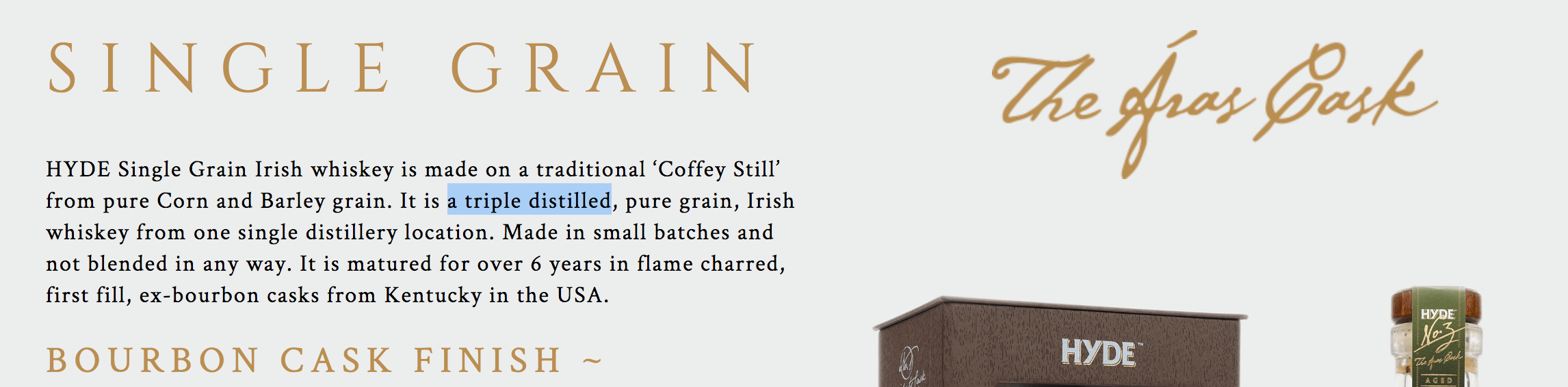

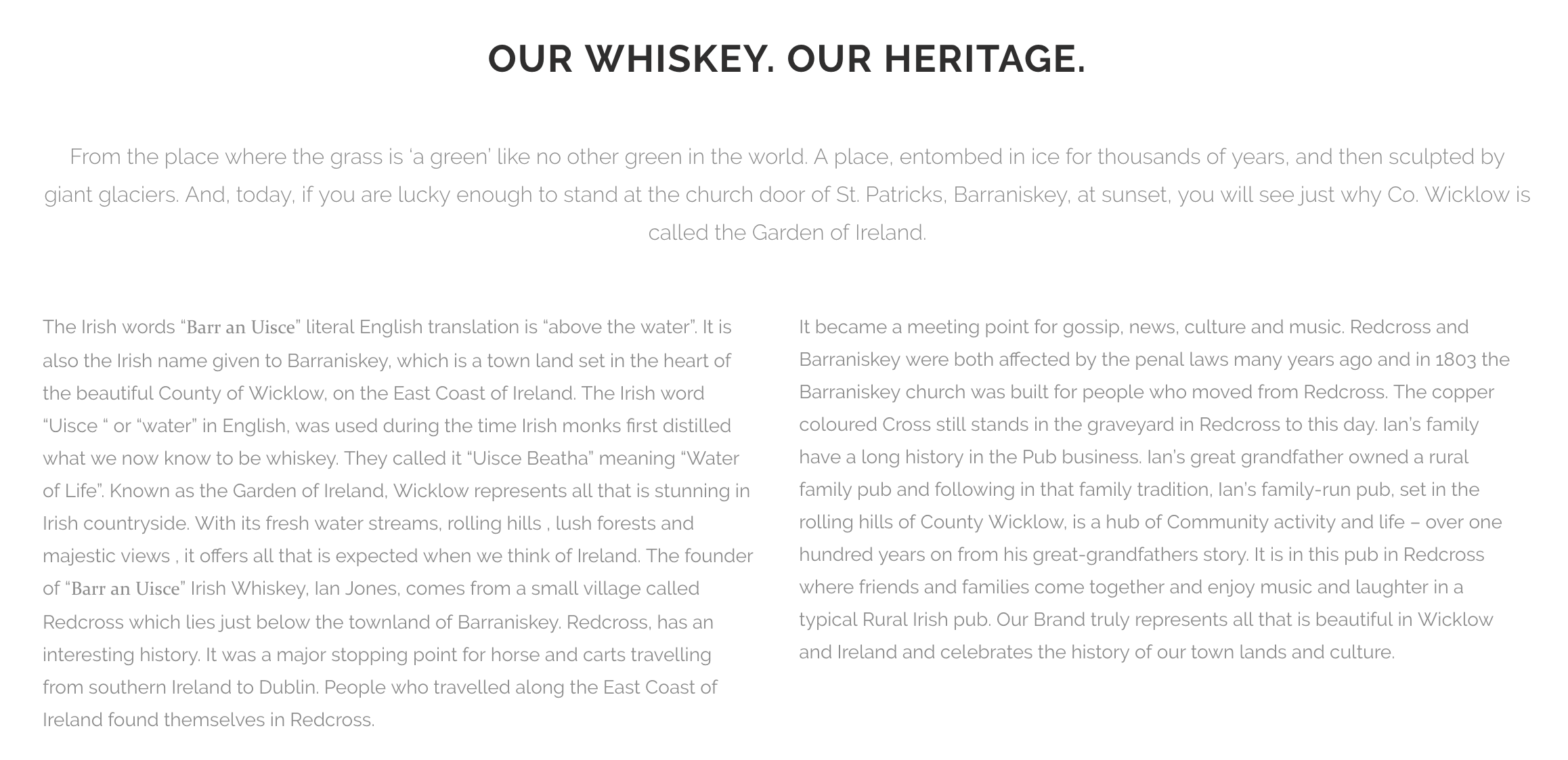
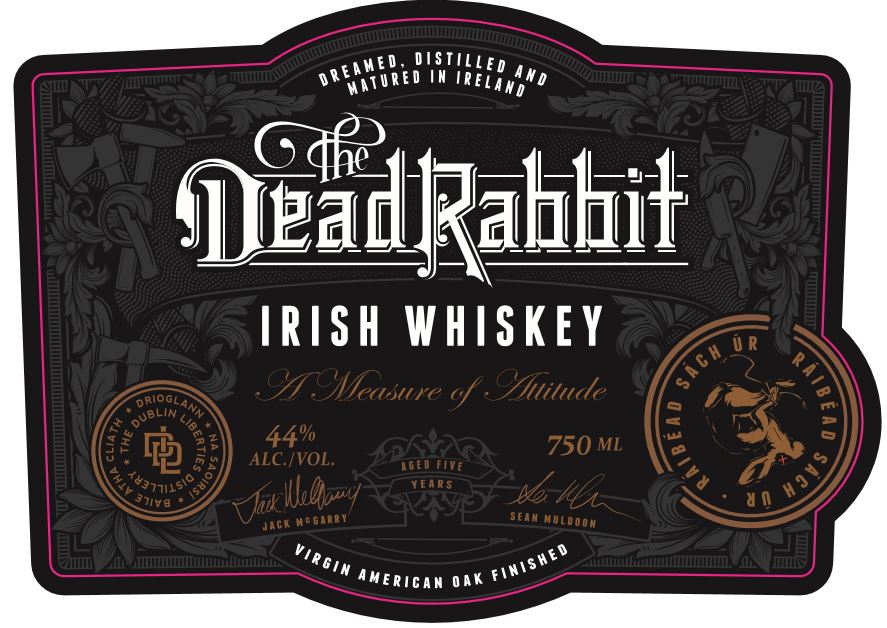
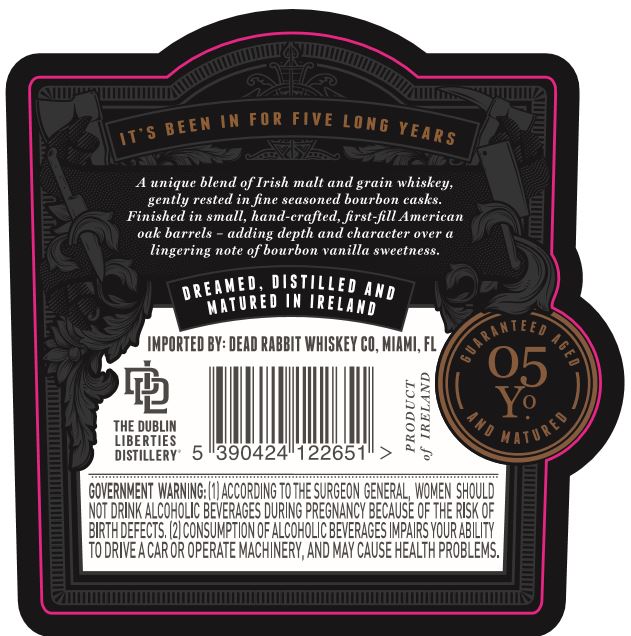
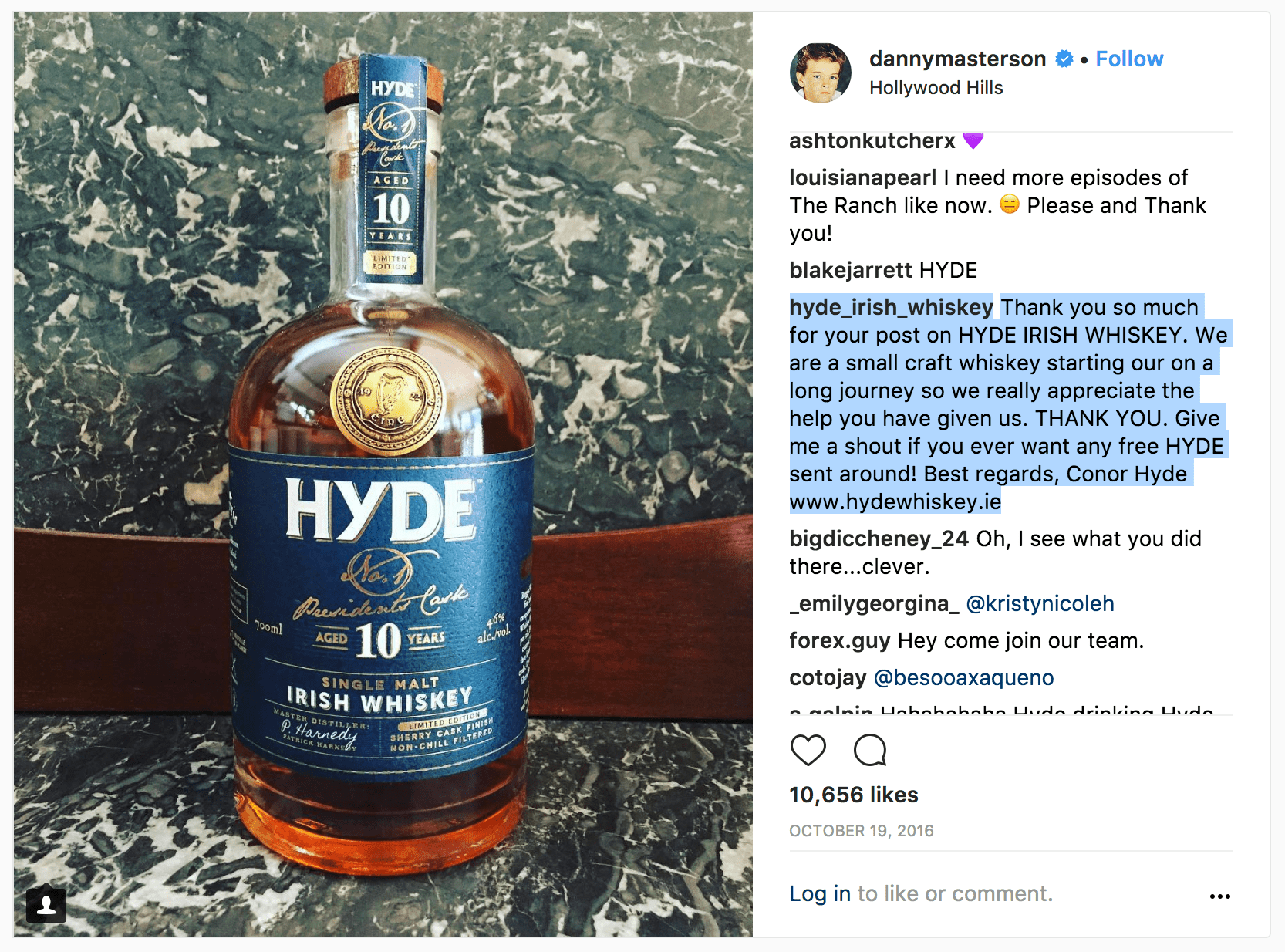
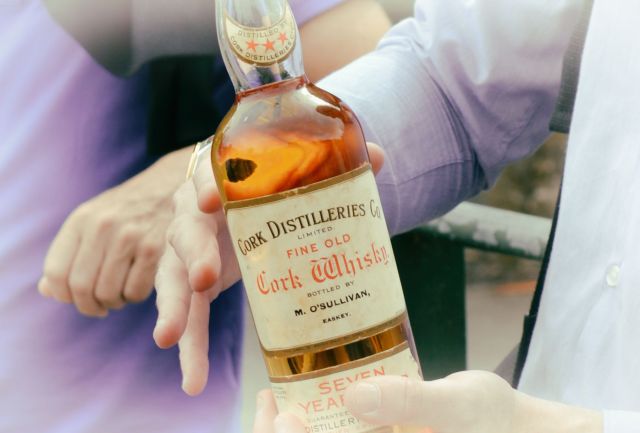

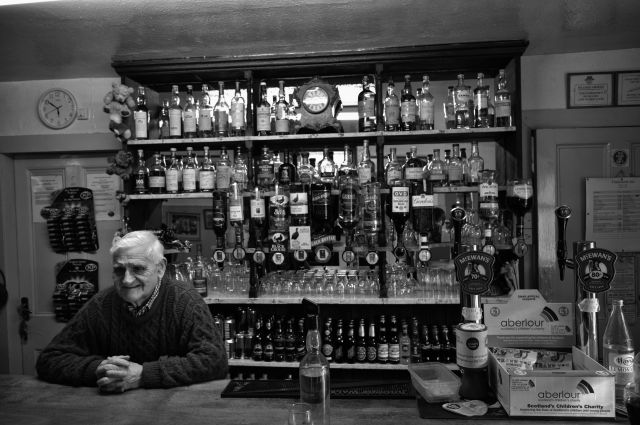
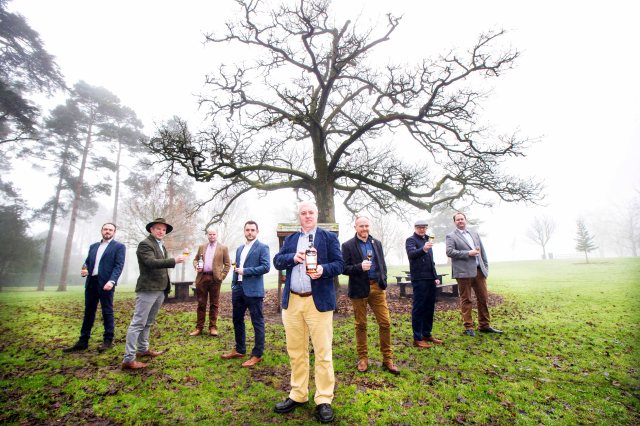


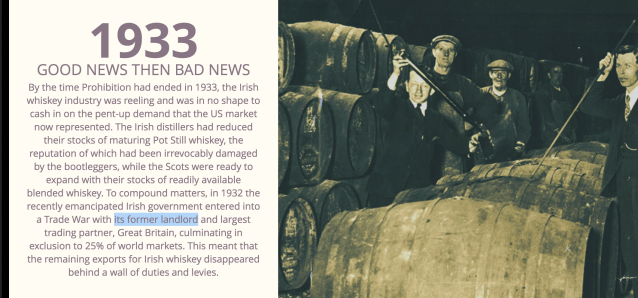

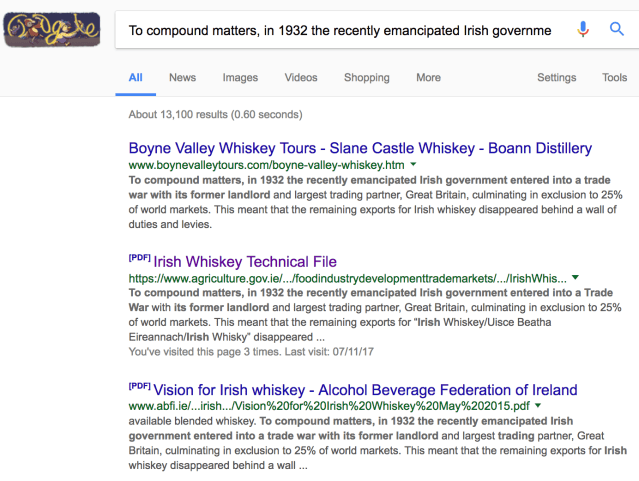

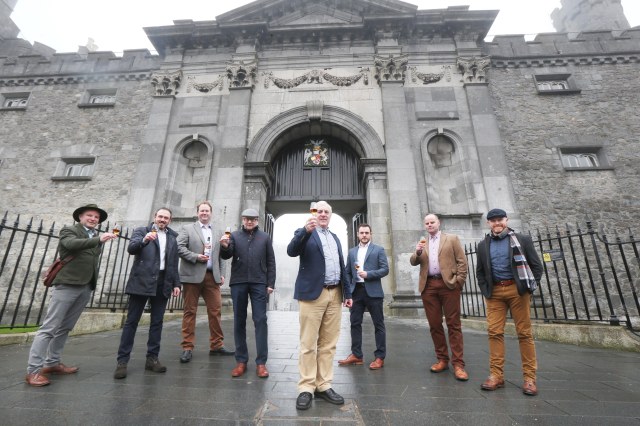




 Triple Distilled Communications