• Caledonia calling

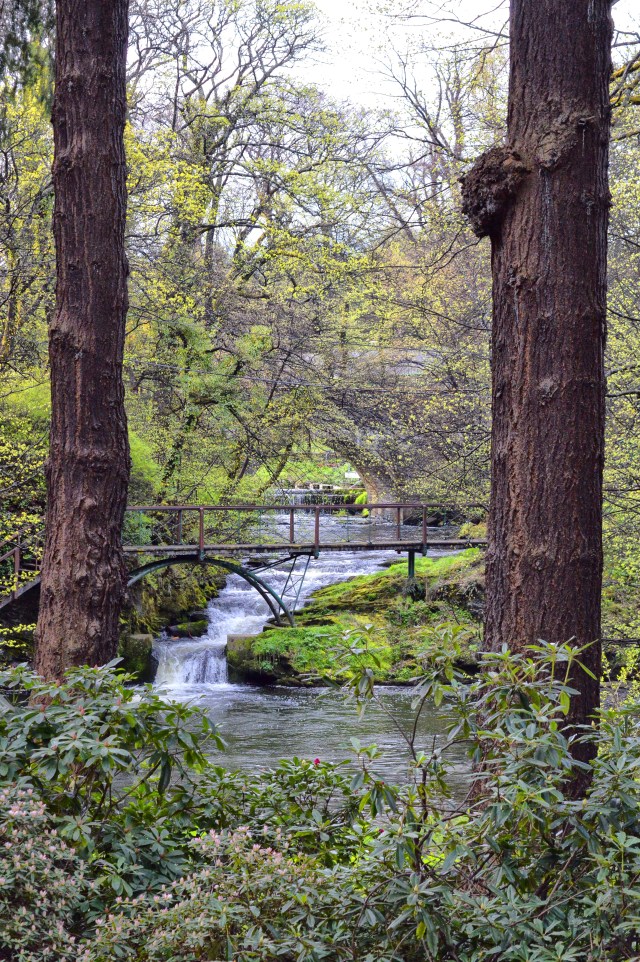
    The back garden of Linn House in Keith.

    Three years ago I flew home from the Spirit Of Speyside with a heavy heart. After spending a week there, I was going back to the real world in the knowledge that I would never have the time or, more importantly, the money, to come back. I went back home, wrote a piece for the Irish Examiner, wrote a sprawling blog post, and sang the praises of the festival every chance I got. That week in Scotland genuinely was one of the best things to come out of my time as a journalist, a once in a lifetime opportunity to sample great whiskies, meet industry legends and just lose myself in a beautiful part of the world. It saddened me greatly that I wouldn’t be back again.

    Fast forward three years and I am doing my usual blithering about whiskey on the internet when I get a DM, telling me that if I can make it to Speyside, Chivas Brothers will put me up and show me the sights. I didn’t bother asking for T&Cs, nor did I care is this was a set-up that was going to end with me waking up in a bathtub full of ice and my kidneys missing. All that mattered was that I was going back. And so it was that via car, train, bus and plane I made it from Cork to Speyside just in time for the opening ceilidh in Benromach.

    I love Benromach. Owned by the Urquharts of Gordon & McPhail fame – the firm without whom there would be no single malts – the whisky made in this compact little distillery has that perfect mix of smoke, fruit and attitude. The Scots learn ceilidh dancing in school, so when they have a hooley everyone can have a go. The pace of the dances ranges from fast to frenzied, with partners flinging each other around the place as though the sole aim is to launch another human being into the stratosphere. Frankly, I haven’t seen anything comparable outside of the mosh pit at a Napalm Death gig. Each table had a few bottles of whisky on them – we had a Glenlivet Founder’s Reserve, Aberlour 16, and a Strathisla 12, so those combined with some good wine, and great food meant we were all ready for a crack at the dancing. The key to survival on a Scottish dancefloor is to simply submit to the maelstrom and try not to fall over.  

    It was bizarre to see so many faces that I knew from Twitter whizzing by me, and it really brought home why festivals like this are so important. Whisky can be a lonely passion – it’s a great irony that something meant to be shared and enjoyed with others is so often consumed alone in front of a computer screen. Still, if it wasn’t for connecting with my fellow nerds on the internet I would think there was something wrong with me. But then you come to this festival and everyone is there in real life, going at the dancefloor like whirling dervishes, and you feel a little less alone. It set the tone for the rest of my stay – whisky, community, life.
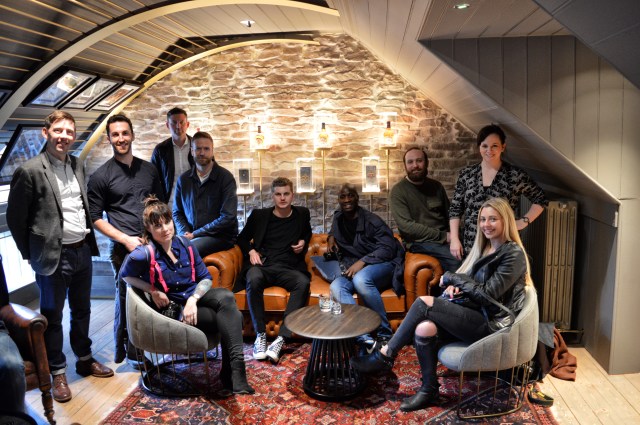
    The group of influencers, writers and journalists with Alex Robertson of Chivas on the left. But wait – what is that spectral figure at back left? Could it be a ghost?

    When I was at the festival in 2015 I was with three journalists. This time was different – while there were some dedicated whisky journalists, half the group were that most ephemeral of creatures – the influencer. Curiously, I was also there as an influencer, despite the closest I come to being an influencer is the fact that I drive a Fluence. The thought of me having influence over anyone is terrifying, as I’m a hair’s breadth away from turning into Jim Jones as it is. So there were bloggers, vloggers, whisky writers and me. It shows how journalism is changing; if you want to hit a certain demographic – ie, anyone under 65 – newspapers are becoming less and less important. If you want to grab the fabled millennial demographic, you are better getting a few smart blog posts than any amount of coverage in the mainstream press. Another sign of the times was the number of former journalists I met who now work within the whisky industry – PR staff, comms managers to brand ambassadors, so many left journalism because they wanted to have a job that offered security.

    My home for the four days was Linn House, a beautiful 140-year-old house in Keith, next to Strathisla and Glen Keith distilleries. Chivas Brothers own the house and use it for guests – this isn’t somewhere you book, you have to be invited there, which makes it all the more special.

    The bedrooms are all named after Chivas Brothers distilleries (I slept in Miltonduff), but the real celebration of whisky is in The Library. Here we had our aperitifs, all rare drams from the Chivas stable; I favoured a 17-year-old Aberlour that was like molasses, a succulent depth charge of a dram.

    We started Friday with a hearty Scottish brekkie and hit the road for Aberlour Distillery. There, Dr Kathy Ader brought us on a walk along the river that feeds the distillery, up to the waterfall behind it and through the woods, talking all the time about the vegetation that grew there, how it was used by picts to make medicines, and how the river and the soil influenced the forest, the town and the distillery. In essence, this was a discussion on one of the buzzwords in whisky right now – terroir. It was an exploration of place, giving insights into how the soil caused certain fauna to grow, and how these plants then drew druids, and in turn settlers, and then a distillery. Aberlour distillery wasn’t just plonked there because it was a pretty spot – it is where it is because it was meant to be there.

    After digging into the ancient past, it was time to embrace the future. One of the most recently built and most modern distilleries in Scotland, Dalmunach is a reminder that not all distilleries have to look like Strathisla. This building is a celebration of science, a vast distillery that can be operated by just one person. The still room looks like one of the ships in Alien, with huge bulbous stills and one desk monitoring it all, and one pilot setting the controls for the heart of the run. This is the next generation of distillery, built on the grounds of the old: Imperial Distillery stood here, but it is long dead – you can still pick up a bottle of Imperial from time to time, but it has never been held in the high regard allocated to other silent stills. The red bricks in the foyer of Dalmunach are all that remains of the actual Imperial distillery building, however the old offices and stores are still on site, providing a curious contrast with the science-fiction aesthetics of Dalmunach.

    Dalmunach is all about control and consistency, a point made to us by manager Richard Clark was our guide through the plant. I met Richard at a Glen Keith your in 2018 and he is one of those natural-born communicators who litter the whisky industry – part scientist, part historian, part raconteur, part comedian. I asked him if the future of whisky was a world where the master distiller is replaced by an algorithm; he made the point that the human, the natural and the organic will always be central to whisky, and that consistency did not mean ‘without soul’, just as it did not mean ‘better’. He also spoke about how the happy accidents of distilling that made for exception whiskies in the past won’t disappear as they will continue to experiment, albeit in a controlled fashion where they minimise waste and reduce margins of error. Any distillery built on the bones of Imperial needs to be aware that there is a price to pay for being a less-than-stellar producer.

    There is no maturation done at Dalmunach – the spirit is shipped off to be casked and aged, with a large amount of it to India for Pernod whisky brands there such as Royal Stag. At the end of our visit we sampled some of the Dalmunach whisky, aged just three years old – it was smooth, well-made whisky, as you’d expect from a Promethean monolith.

    After that odyssey through the Spey’s time continuum, it was time to go back to the past with a private tour of one of the icons of whisky – Strathisla. This is one of those picture-postcard distilleries that all others aspire to, and it is the birthplace of the Chivas story. It was a great contrast, going from Dalmunach to a distillery that has lived so long. Our tour guide was Alex Robertson, a former BBC journalist who heads up the Chivas ambassador programme.

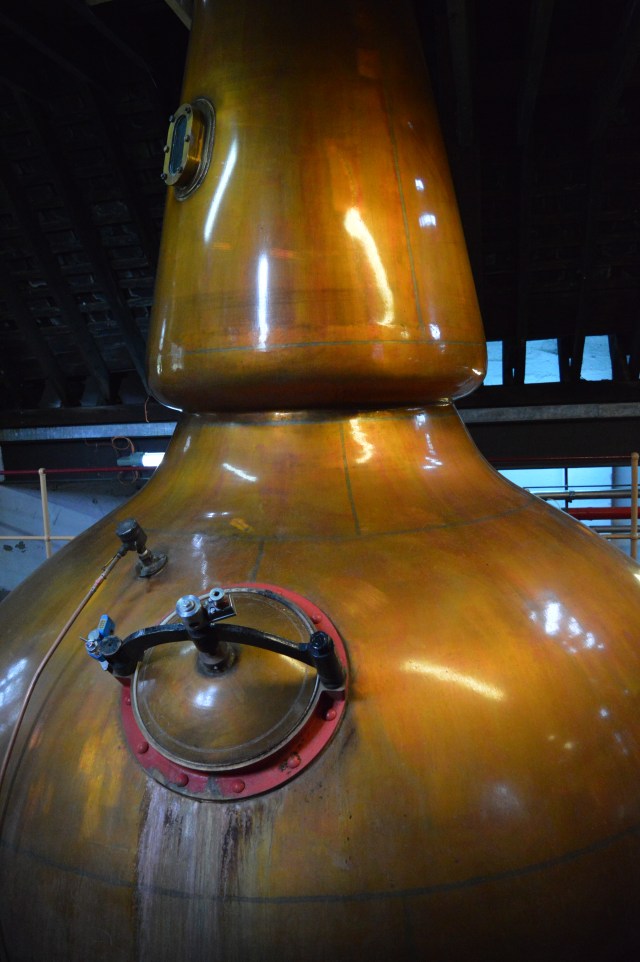
    One of the great things about visiting distilleries during the festival is being able to take photos – simply listen for the gas meter, and if it doesn’t go haywire, click away. And so it is that I can show you irrefutable proof that despite being one of the most beautiful distilleries in the world, the stills at Strathisla look a lot like butt plugs:
    After the tour we were brought to their newly revamped tasting space, a dimly lit room that uses LED striplighting to create the sense of being brought on a journey of flavour.

    The aged cynic in me raises my eyes to heaven even reading back over that, but it was very enjoyable – a lot of distilleries here could learn from how the Scots find new ways to make tastings more stimulating, or to challenge the stereotype of whisky being drunk by chaps in red trousers slouched in a plaid armchair in a gentleman’s club somewhere.

    The next event was designed to challenged the notion of single malt as an entity to be enjoyed on its own. The Dowans Hotel in Aberlour was the venue for a tasting of three cocktails made with single malts (the one made with A’bunadh was phenomenal), followed by a wonderful meal, more wine, more chat, more craic. Then it was on to The Glenlivet for Skerryvore and Banjo Lounge 4, and at this point I just wanted my leaba. So we skedaddled into the night back to Keith. I like live music, but man, I love to sleep.

    The Glenlivet Open Day is a sight to behold. Visitors from all over the world arriving by the busload (or trekking across the hills to get there), all to see the home of one of the most iconic whisky brands in the world. This is where my trip got deep. In the Guardians Library we had a talk on geology and its impact on water (and therefore whisky) from Ronald Daalmans, a softly spoken Dutchman who is the environmental manager with Chivas Brothers. Much of his work for the firm relates to the impact of distilling on the environment but also water preservation. It’s hard to travel through Scotland without being made aware of the power of renewable energies – across so many hills there are wind turbines looming to remind you that this planet is struggling, vast sentinels desperately flailing their arms to tell you that this planet is going to drown.

    Ronald talked us through the geological history of Scotland – one of the most interesting factoids to come from the talk was that both Islay and Speyside sit atop the same seam of rock, meaning that the broader geology of their landscapes is similar. We then had a comparative tasting of water that feeds into three Speyside distilleries and whiskies from same. Don’t ask me which distilleries the drams came from, I have no idea – but you could definitely taste difference in the water. Of course, the big question here is how much is the water that feeds the distilleries treated before it goes into production: How much of its original character does it retain through this process? It’s not quite reverse osmosis or deionising like they do to totally neutralise the water used to cut whisky pre-bottling, but you would wonder what how much limestone sediment etc any distillery would want in its system.

    Of course, back in ye olden times distillers were less particular, but the results were largely the same. During the open day, distillery staff ran what is known as the sma’ still, a little piece of the past brought back to life. The spirit from it was similar to modern new make, a creamy sweet drop, which we drank straight from the still.

    After that, it was time to disappear into the hills behind the distillery on the back of an argocat.

    Argocats, in case you didn’t know, are amphibious vehicles that are used mainly for hunting, or for transporting fey dandies like myself from valley to summit without having to break a sweat. At the summit we had a dram, and it all felt a bit Withnail & I, subjecting ourselves to the beauty of nature after about seven drinks.

    Back in the valley we also had a tasting with Glenlivet master distiller Alan Winchester. Alan is like a vast reservoir of whisky lore, and during the tasting he talked about everything, including how the old Dunville’s distillers in Belfast forced the local church to cover their bell in velvet so it wouldn’t disturb the whisky maturing nearby. We were treated to four Glenlivet expressions, including the new Cognac cask edition, and some incredible finger food by Ghillie Basan, who lives high in the hills above The Glenlivet. She actually took the roof slates from her house to serve the food on, and was hoping the rain would hold off until she got them all back on.

    Later that evening was a very special meal in Strathisla. With a menu selected by noted food writer and whisky aficionado Martine Nouet, and some incredible whiskies from the Chivas stable, it was a joy to be there and a wonderful end to my few days. I was sat beside Sean Murphy, food and drinks editor of The Scotsman newspaper, one of the few people who I met in Speyside who still worked full time in print. Sean’s family own the legendary Pot Still whisky bar in Glasgow, and he is one of those quietly passionate whisky fans who is a fountain of information. However, I was also sat near another fountain of knowledge, Alan Winchester.
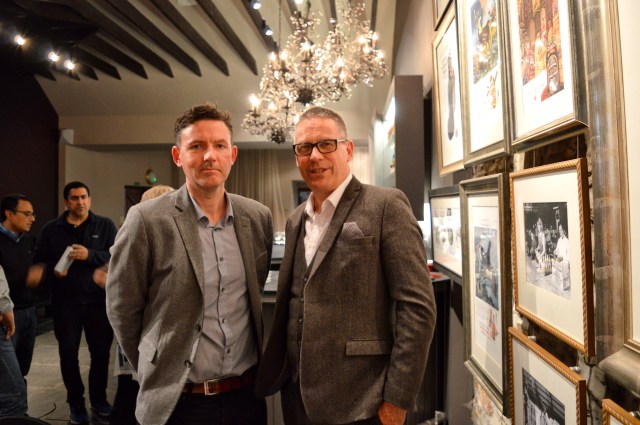
    Winchester is retiring at the end of the year, and it’s hard to imagine the Glenlivet without him. He was great company, as was his wife, who was sat on the other side of me, and they both regaled us with the tale of how she used a bottle of the Winchester Collection to make a Christmas cake, no knowing that it was worth twenty grand. As for life after whisky, Alan says he bought a campervan and is going to travel (he is an obsessive hillwalker), whilst also contemplating working on his memoirs. Note to any publishers or ghostwriters – he has kept a diary every day since he was in his teens, so there is plenty material there for one hell of a book. 

    Many thanks to Chivas Brothers for their incredible hospitality and generosity during the festival – I will be back.
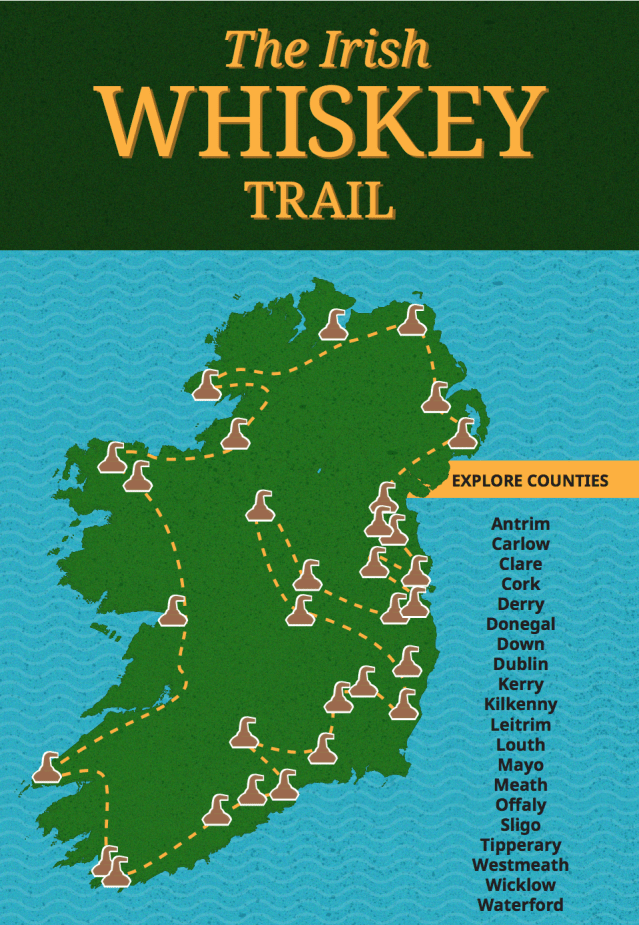
    My takehome from the four days I spent in Scotland was this – how do Irish distilleries emulate this event? How do we pull together to create a relatively localised event that celebrates food, drink, scenery, history and culture? Our whiskey scene is going to be more of a trail than a single detination, so the question is how do we facilitate this? The IWA has a document that tackles some of it by joining distilleries via a network of whiskey embassies – pubs and historical sites of interest to whiskey fans – but we are still going to struggle to create something on the scale of Speyside or Feis Ile, as the logistics are too complex. That said, we have great food, great drink, great people and a great country – we just have to wait a while for the new Irish whiskey legends to rise.
  • Adoption, abortion, politics, repeal

    Indo col 49 from a few weeks back, for the day that’s in it.

    I have no idea who I spent the first six weeks of my life with. I can tell you roughly where I was – St. Patrick’s Infant Hospital in Temple Hill – but as for who cared for me there, I know nothing. I have four children, so I know the fuss and the excitement of a new baby in those first weeks, when all the relatives queue up to cuddle them or squeeze their cheeks or try to figure out who they look like. During those times I often thought about my first six weeks of life – who was there to care for me? Because we certainly weren’t loved. Our needs were catered for, but nobody tasked with looking after a room full of newborns is going to bond with them all that much. I wonder if, during that six weeks, some part of me changed – if a little piece of my humanity died as my primal self realised that my parents were not coming back for me. But that odd period of limbo matters less and less as I get older, as I know what came after and – more importantly – what came before.

    I knew it was only a matter of time until adoption got dragged into the abortion referendum debate, but in a way I am glad it was by someone with the credibility of Fidelma Healy Eames, who I previously knew for her lapsed tax discs, unpaid plumber, and inability to say the word WiFi without lapsing into a comedic ‘Allo ‘Allo-style French accent.

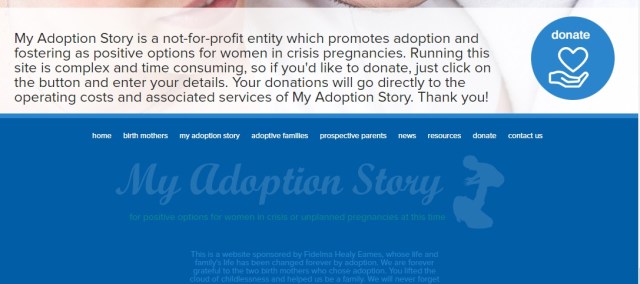
    Healy Eames has two adopted children, which inspired her to set up a website that attempts to pitch adoption as some sort of alternative to abortion. Please allow me to clear my throat – this isn’t a science fiction film, where we can rattle out what-ifs as though they are any kind of tangible alternative reality. The paths never diverged in the yellow wood, and there is no point in saying that if abortion was legal in 1975, I would not be here. It is as weak an argument as asking ‘what if Hitler had been aborted?’ and yet here we are. It’s a facile argument that is often used by the religious right as they try to force you to see a cluster of cells as a walking, talking human being, but that simply isn’t the case. In those first weeks of pregnancy, in your heart and in your mind, there may be a child, but in medical reality, there is not. So with all due respect to Healy Eames and her website – which features largely anonymous, presumably verified soundbites from people about how great adoption is – unless you are actually adopted, you don’t really know what it’s like.

    I always knew I was adopted. My parents even celebrated a second birthday for me, to mark the day they brought me home. I had an older sister who was also adopted, and it is usually at this point that I have to start explaining how adoption works – no, we were not blood relatives, no, my sister and I did not have the same biological parents, no, we were not adopted at the same time, in a sort of twin-pack buy-one-get-one-free deal at St Patrick’s. We were adopted, two years apart.

    My parents were, much like Healy Eames, deeply religious people who were products of that oppressive 1950s Catholicism, the same system that taught young men and women that desire was shameful, contraception was a sin, and you went to hell for having a baby out of wedlock; the same Church that believed adopted people don’t deserve to know who they are and where they came from.

    My sister’s biological parents got in touch with her when she was in her early twenties. They had wanted to keep her, but in the cruel Ireland of the 1970s, there were few options. After they put her up for adoption, they got married, and had a family, a surprisingly common occurrence. My sister met with her birth mother a few times, and things seemed to be going well. Then one day in April 1996, my sister suffered a massive heart attack caused by her epilepsy and died, aged just 22. I realised that life is short, so I started looking for my birth family.

    I met my birth mother more than two decades ago. I also tracked down my biological father, who had passed away by the time I got in touch – and this is where a very practical aspect of adoption comes in. While the Church chose to eradicate all trace of our past and identity so we never knew if we were the result of an act of love, violence or incest, the absence of a basic family medical history means that we didn’t even know what health problems we might face.

    My biological father died from cancer, and was just a few years older than I am now. I understand why St Patrick’s Guild couldn’t start giving a full rundown of medical backgrounds, as that might look a bit too much like a eugenics programme. After all, no Church organisation wants to accept that people might want to choose between having a child that grows up in perfect health or one that struggles with sickness and pain every day. St Patrick’s wasn’t about choice, nor were they open about what they did with us in Temple Hill – the Adoption Rights Alliance tried to find out more about conditions in the hospital, and described St Patrick’s Guild as being ‘very uncooperative’, unsurprising when you consider that St Patrick’s were involved in the secret export of 572 children to the US for adoption from the 1940s to the 1970s – more than any other adoption agency. We were currency to them – taken from the ‘bad’ Catholics and given to the ‘good’ Catholics.

    Adoption in and of itself is a necessity; there will always be room in Irish society for a functioning, open and transparent system, but to present it as some sort of ‘superior’ alternative to abortion is a grotesque oversimplification of two complex, utterly separate situations. I can’t speak for all adopted people, but I can say that I have lived an amazing life, and I love all of my confusing, messy family. I’m not bitter about my experience, but I know that finding out where I came from made my path through life considerably easier. My parents, if they were alive, would tell you the same. If Healy Eames wants to celebrate the joy that having adopted children has brought to her life, perhaps she should do so without using it to drive a pro-life agenda.

    Reading this column isn’t going to change your mind on how you will vote, and frankly the last thing the abortion referendum debate needed was another opinion being flung into the gyre, but if adopted people are going to be dragged into this and used as leverage, or told that their state of perpetual unknowing was somehow the best case scenario, I can’t stay silent. The experience of being adopted isn’t something that can be wrapped up in an ugly website with stock photos, vague testimonies, overuse of capital letters, and a request for donations at the end of every page.


  • Hirsutes you sir

    The Indo asked me to write something about baldness, Christ have they heard I’m thinning on top? Anyways:

    Flogging beauty products to men is a hard sell. We pay so little attention to our physical and mental well being that you have to feel sorry for Gerard Butler attempting to convince us that moisturizer is actually ‘face protector’ or for those Lynx ads that try to convince us that smelling like a silk road bordello is going to make people want to be around us. One physical attribute that we do care about however, is our hair. It is inextricably linked to our notions of masculinity, and as a result it gets more attention than our skin, eyes, emotions, relationships, kids, and entire digestive system combined. While the styles may change, the stages never really do – behold the seven ages of man’s hair.

    Mummy’s little Samson: A man’s understanding of the power of his hair starts almost at birth. Over the first six months of life, he grows a long, luxuriant mane, complete with ringlets bound together with Aptamil formula milk and Liga biscuits. Little Samson is cooed over and poked at and his hair is central to this – he senses that a big mop of hair is the way to win hearts, failing to realise the reason little boys have long hair is that they have heads shaped like half deflated beach balls. It matters not – the idea has taken hold, hair = power.

    Dad’s little soldier: The long hair is fine until they are about three and dad gets sick of explaining to cooing old ladies that his son is in fact a boy, and thus the arguments begin. Dad wants a decent short back and sides that you could set your watch by, mum says she will divorce him if he cuts it, but eventually she has to sleep and junior is whisked away to the barbers for a vital ritual in every man’s life – sitting in the barbershop in complete silence for half an hour until it’s your turn, then sitting in complete silence while you get a terrible haircut that makes you look like you have ringworm, then telling the barber it’s perfect and even leaving a tip.  Lesson number one in being a man – bottle up all that disappointment.

    The teenage years: The awkward transition from haircut to hairstyle: Back in the 1980s it was crimping. In the Noughties it was straightening. Now it appears to be perms. There is literally no look too silly for the young male in his desperate bid to attract a mate. It is a sad irony of masculinity that at this juncture in our lives, when our hair is at its most fabulously lustrous, we somehow take it completely for granted and try to burn or home-bleach it into oblivion. To misquote Wilde, a decent head of hair is wasted on the young.

    The template: In the twenties or thirties you will decide on what your hair will look like for the rest of your life (scalp willing). This will be because you have found your signature look and realise that it helps you attract a mate, or because you are now married and therefore don’t need to change any aspect of yourself ever again. Much like North Koreans are only allowed a choice of 15 state approved haircuts, the average Irish male will only have a short list to choose from – short, long, or the best of both worlds, the mullet. Long hair is fine for bikers, metallers, craft brewers or IT geniuses, short hair suits corporate raiders, neo-nazis, or people whose kids keep coming home from creche with head lice. The mullet, or Haircut Of The Gods, is almost impossible to pull off without irony, unless you are an actual outback sheep farmer, new age traveller en route to a crusty rave, or rugby and hair legend Shane Byrne. Please note the mun, or man bun, only works for wan twentysomething baristas in espadrilles, and makes anyone who weighs more than seven stone look like a sumo wrestler.

    Ch-ch-changes: So you have a style, and you will go to the same barbers for the same slightly disappointing interpretation of your vague directions (‘a bit more Beckham-ish on the fringe please’) for the rest of your life. However, change does come in the form of grey hairs, usually on the temples, where you can either claim they make you look wise and sophisticated like a dilapidated George Clooney, or you can cling to your youth by buying a vat of Grecian 2000 and sticking your head in it whilst singing Cher’s If I Could Turn Back Time. The latter option is obviously the more tragic, and also crosses that line where we move from caring about our appearance to being slaves to it, unless of course you work for RTE, which seems to operate a terrifying Logan’s Run-style employment policy, where you get fired if you show even the slightest signs of ageing.

    The cry for help: A man suddenly changing his hairstyle is a handy warning system – something is going on. A recent job loss, bitter divorce, or much-younger partner can all lead to a man taking the notion that he should start getting highlights and spiking his hair so his head looks like a Second World War sea mine, but with the overall effect of making him look less like a dapper young blade and more like a sex tourist. Zayn Malik bleached his hair when he broke up with Gigi Hadid, but that doesn’t mean you want to show up to your divorce hearings looking like Noughties-era Eminem – it’s a custody battle, not a rap battle.

    Hair today, gone tomorrow: The cruellest aspect of men and their relationship with their locks is that we often lose them, and there is little that can be done about it. Some manage to keep their hair intact until their twilight years, some start losing it in their twenties thanks to a genetic timebomb. There are five stages of five stages of grief at losing your hair:  

    1. Denial: ‘It’s just a widow’s peak, everyone in my family has them, yes it makes me look like The Count from Sesame Street, but I am definitely not going bald’.  
    2. Anger: Furiously combing the hair forward, or across the scalp, desperately trying to encourage the hair to grow over the thinning spots as though it is a herbaceous vine that will somehow take root on the barren wastelands of your massive head.
    3. Bargaining: Massaging oils, homeopathic ointments, and some sort of electroconvulsive device you bought off the internet that somehow is meant to stimulate regrowth – all of these will ultimately end up in the bin, along with most of your hair.
    4. Depression: Sitting at the computer googling “Marty Whelan before and after” and wondering if you could set up a GoFundMe to raise the thousands needed for a hair transplant. ‘No’ is the blunt answer, you could not. Sobbing, you realise that this is the end.
    5. Acceptance: Also known as ‘Prince William Syndrome’, this is the point where you go ‘ah feck it sher I’ll just shave it all off’. And so you do, yearning all the while for the days of a more repressed Ireland where men were able to wear an incredibly conspicuous wig without anyone pointing and laughing at them in the street. The only hope now is to grow a mighty beard, to create the illusion that all your lovely hair migrated south for the winter, whilst also making you look like you run a fight club in the underground car park of your local Lidl.

    Our hair is central to our identity, and whether long, short or faux mullet, it is a tracking system for our passage through life, the most visible part of the ageing process. Greying or thinning hair is the ticking of a clock, reminding us that someday we will soon be gone from this earth – perhaps we should just accept our fate, and rage, rage against the dyeing of the white.

  • Facebook, hell, kicking the habit, life after

    Indo col 48:

    I can still remember the first time I heard about Facebook. A friend who works for Apple (and therefore has his finger on the tech pulse) told me it was the way forward – clean, functional, smart, the exact opposite of its social media predecessors, Bebo and MySpace. So I joined, and spent about four years of my life enslaved to it. I took to it partly because of who I am – a slightly introverted, fidgety individual with a love of smart-aleckry – and part of it was the sheer genius of Facebook’s model: You post something, someone likes it, you feel good. You reconnect with long lost friends, classmates, distant relatives, get a glimpse into their lives, and bask in the glow of a more connected world. In an increasingly dislocated society, Facebook felt like it was bringing us all closer together. Except obviously, that isn’t how it works.

    I soon realised that the reason I had lost touch with my classmates is that I wanted to. Long lost acquaintances got lost for a reason, and exs are definitely meant to stay exs and not transition into digital chums. It’s a fairly short hop, skip and jump from ‘we should catch up over coffee’ to living in a bedsit above a plant hire shop and only seeing your kids on Saturdays. Most of the time, the past is the past for a reason.

    Even those on the friends list from my present day life were starting to grate – Facebook is like a curse from the gods that forces you to listen to the innermost thoughts of people whose outermost thoughts make you want to stab chopsticks into your ears so you can’t hear them. Good friends who you believed to be reasonable human beings were now posting photos of sunsets with motivational quotes pasted across them, when you knew full well that they were doing it whilst lying on a couch eating a bowl of Doritos. It is the projection that makes Facebook so draining – you become a performer, playing the role of your best life, your best self. But it is a Nietzschean abyss, and the more you gaze into it, the more it gazes into you. So I deleted my profile, and the platform went from strength to strength, spreading across the world like a virus, with some 60% of Irish people using it. It seems unlikely to change any time soon, despite the Cambridge Analytica bombshell.

    Is there anyone who didn’t think their data was being harvested by Facebook? It seems unlikely, given how much of their life people are willing to fling at the site – photos, videos, dream diaries, all are chucked enthusiastically into Zuckerberg’s vast nothing. How did they think Facebook made money? Data mining has been a lucrative trade since the dawn of the internet, it is hard to imagine anyone naive enough to think they weren’t being targeted. Yet it would appear that some people actually bought into Zuck’s greatest sleight of hand – the notion that Facebook is private and secure. I use Twitter but I do so in the full knowledge that it is a broadcast tool – it is not a closed network, so I know I might as well be standing on a street corner with a megaphone screaming my opinions at the world, and that knowledge keeps me in check in a way that Facebook and its thin veil never did. I mean, sure, Twitter is overflowing with Nazis and trolls, but at least they can only spit their venom in 280-character bursts. Underlying Facebook is a rich seam of deceit – from fake profiles to fake news to fake ads, all preying on people who might not be fully aware that in the haunted funhouse that is the internet, nothing should be taken at face value.

    Ditching Facebook wasn’t the easiest thing in the world – listening to co-workers talking about something fantastic they shared on FB leaves you feeling a little left out. But then you discover that what they shared was either a video of someone falling down a hole, a baby panda sleeping, or a video of Alex Jones from Infowars screaming about George Soros, and you feel reassured that you did the right thing. You lose touch with certain people, but not the ones who matter. Life becomes less cluttered.

    As for Cambridge Analytica, it seems a stretch to suggest that they won the election for Trump or even got Brexit over the line – but they certainly tapped into a rich seam of rampant nationalism and weaponised it. Thankfully, it is unlikely that they would be able to manipulate the Irish electorate into voting a certain way – as the ten-year anniversary of Bertie Ahern’s resignation looms, it is comforting to remember that thanks to a hot mix of Civil War politics, populism and dedicated self interest, we’re more than capable of making poor choices all on our own.

  • Ishmael, Youghal, decline, resurrection

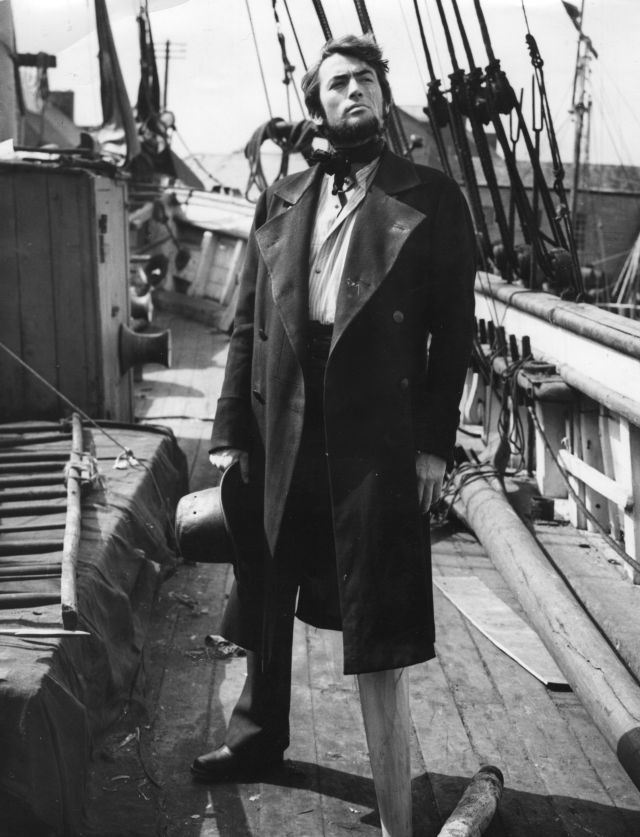
    Gregory Peck (1916 – 2003), as Captain Ahab during the shooting of ‘Moby Dick’, on location at Youghal, County Cork, Ireland. (Photo by Hulton Archive/Getty Images)

    Indo col 47:

    Given his status as one of the great Hollywood directors, John Huston wasn’t great at giving direction. When he got a perfectly cast actor like Bogart, Huston was a master. With other actors he was less so, as Gregory Peck discovered during the filming of Moby Dick.

    A method actor, Peck made his own notes on the script about Ahab’s monomaniacal pursuit of the white whale, but even an actor of his standing would sometimes require a little inspiration. The most Huston could muster was lines like ‘Make it bigger, kid’ or the mercurial ‘More brimstone’.

    The film was not a great success – financially or otherwise. For a start, Peck looked too much like a peg-legged Abraham Lincoln, his performance was too rigid, and Ray Bradbury’s script just couldn’t contain the vast sprawl of Herman Melville’s masterpiece. The signs were there from early on – principal shooting in the east Cork port of Youghal ran into difficulties when the ship was only able to sit at dock for high tide, roughly one hour each day.

    Youghal was chosen for its old world feel, as the town featured in the novel, New Bedford, has simply changed too much. However, Youghal’s shopfronts were made from stone, while those of New Bedford were clapboard, so the shops had to covered in wood, adding to the already high costs. After four weeks of shooting, the filming moved on to Fishguard, where their problems deepened; a prop whale that became untethered from the ship and floated into the fog with Gregory Peck hanging on for dear life, thinking he was about die strapped to a rubber whale in the middle of the Irish Sea. The struggles in making the film, and its relative economic failure upon release, echo the problems faced by the little port town they left behind.

    In the 1950s and Sixties, Youghal was where Cork people went for their holidays. You got the train down, and went for a dip in one of the three beaches, ate fish and chips and went to a dance in Redbarn. Youghal was our Brighton, with beachfront amusements, donkey rides and ice cream. But times change. The rail line shut, the tourists started holidaying abroad, the town’s factories closed, and the malaise set in. Youghal became the little town that could, but somehow never did. While towns in west Cork such as Clonakilty have thrived, building a booming tourism trade, Youghal has long since lost its title as the premiere destination in Costa Del Cork. Walking along its meandering main street, it is hard to understand why. It may be seen as the seaside town they forgot to close down, but its faded seaside glamour is still there, waiting for someone to come and blow the dust off it. The place is full of tourism potential.

    Youghal’s problem is that people need to believe in it. In recent years the town has become a byword for economic decline. While industry may have struggled there, it is the town’s tourism offering that is its strongest hand. Apart from his historic clock tower on the main street, it is also home to Myrtle Grove, the 16th century abode of former mayor Walter Raleigh, along with Cromwell’s Arch, Tynte’s Castle, and St Mary’s Collegiate Church, home to a 17th century memorial to Richard Boyle, 1st Earl of Cork, which is in itself worth a trip to the town, as it includes a statue of the earl, lounging on his side, smiling aimlessly at nothing, as though he is just staring up at the clouds, quite content to be long dead.

    Youghal is also a walled town, and last week it was awarded 150,000 in Government grants to help maintain them; while those walls were built to once keep people out, now Youghal is praying they will bring them in.

    Of course, my plea for Youghal to be saved comes from a deeply selfish place. Every small town in Ireland needs its local rival; just as Ahab had his whale, every hamlet needs another, almost identical hamlet just over the road to be their mortal enemy. Youghal is the nearest town to my home of Midleton, but the sport in bickering with them has just lost its lustre. It’s depressing trying to engage Youghal folk in gentle ribbing, as I just end up shouting ‘dormitory town’ at them until they start crying. You can’t kick a town when its down, not even one that has a beauty contest that features a crab catching competition. Potshots at co-workers from Youghal are less like the playful batting of a pinata and more like using a stick to poke at something you found washed up on a beach; there’s just no sport in the rivalry anymore.

    But there is hope – the old railway line is being transformed into a greenway, one which will hopefully bring the tourists back to the town that the Celtic Tiger forgot. Finally, this could be their rebirth: As Huston said to Peck during one of his rare moments of direction, “Kid, if you ever deliver the goods, this has got to be the time”.

  • Flooding, Kindred Spirits, kindness, hurling

    Indo col 46:

    There is a road in my home town of Midleton that floods at the slightest opportunity. Running alongside the town estuary, all it takes for the Bailick Road to disappear under water is a moderately high tide and a few hours of rain. There were attempts over the years to alleviate the problem, such as when the council reclaimed some land and built a small park on it. The park soon became a hotspot for teenage drinking, as it was away from prying eyes, in a less than scenic area alongside the fragrant wetlands of the estuary and adjacent to the town bypass. All this changed, however, with the erection of the Kindred Spirits sculpture in the middle of the park.

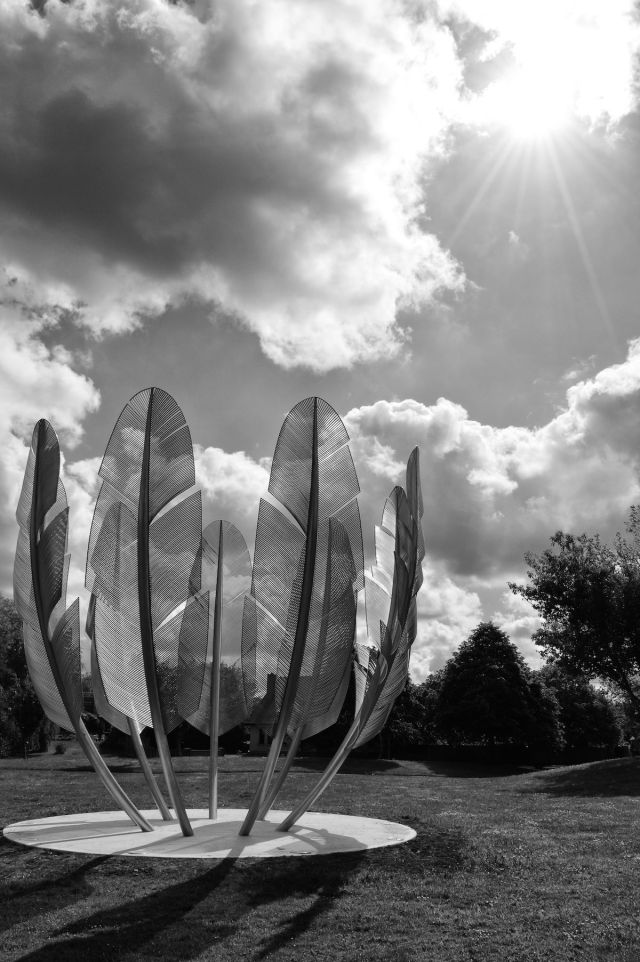
    Five years ago the local council began a programme of erecting statues and monuments around the town. Costing upwards of half a million euro in total, there was the 1798 Pikeman outside the courthouse (whose scroll was stolen from his hand shortly after he appeared), a monument to ‘Angel of the Cassiar’ Nellie Cashman (who some claim was actually from Cobh), and a statue of a small boy being eaten alive by some rabid geese, supposedly to celebrate the town’s famous market, The Goose’s Acre, but which actually looks like it was a scene from The Wicker Man. There were other statues, but the most famous of them all is the steel feather sculpture by Alex Pentek, created to commemorate the kindness shown by the Choctaw people, who sent money to Ireland during the Famine.

    Pentek’s Kindred Spirits isn’t just one of the most beautiful of all the works produced under the programme, but it also shines a light on a little known story of human kindness – that a people on the other wise of the world who suffered so much could rally together to help others who they had never met. Almost two centuries later, it is still an inspiring story, one that deserved to be revived and celebrated. However, as someone who regularly has to give directions to tourists looking for the sculpture, it’s hard to understand the decision to locate it outside the town centre. Perhaps the council never expected this statue to become the most celebrated, or perhaps they were simply running out of places to put them, what with the statues of feral geese and a scroll-less Pikeman in the centre of town, but it still is a crying shame they didn’t just put the feathers in the large park next to the Jameson Heritage Centre, one of the region’s largest tourist draws. The current location of Kindred Spirits  is difficult to find, and not especially scenic. Also, if you happen to visit at high tide or after heavy rain, you may need a canoe to get to it.

    Beyond their locations, the series of monuments caused much debate locally – why spend all this public money on art? Why not spend it on something practical, like flood defences? Surely we could take that money for public art and just spend it all on potholes, meaning our public spaces would be paved like an airport runway but without a trace of personality, creativity or imagination – three things the Irish people pride themselves on?

    Those who decried the spend on the statues in Midleton – and I include myself among that pantheon of gits – can now eat humble pie, as the Kindred Spirits work and the awareness it created has led the Taoiseach to create a scholarship for Choctaw students to attend university in Ireland from 2019 onwards. I can only hope that should any of them wish to visit the Kindred Spirits sculpture, that they do it during outside of the wet season, which here in east Cork is the months of July through to April, inclusive.

    Should they get trapped here by floods in the longer term, they could easily adapt to life in east Cork, as their sport of stickball is largely similar to hurling – as anthropologist Kendall Blanchard noted of the game in the 18th Century: “While players could tackle, block, or use any reasonable method to interfere with the other team’s movement of the ball, there were implicit limits to acceptable violence.” If the term ‘acceptable violence’ doesn’t sum up Cork schools hurling, then I don’t know what does.

    The most important message of the Choctaw donation to Ireland was that there were people who cared about what was happening to us – there were those who heard about the horrors of the Famine and knew it was wrong, and did what they could to help. Populist politicians here who offer soundbites about how we should ‘look after our own’ before we help refugees and migrants, need to think about the Choctaw people, who faced genocide at the hands of European invaders, and still believed in humanity enough to send money to Europe to help us. Charity may begin at home, but it certainly doesn’t end there.

  • Bentham, surveillance, treats, kindness

    Indo col 45

    The English philosopher Jeremy Bentham was a man of vision. In the late 1700s, his ideas were seen as completely radical, as he opposed slavery, called for the separation of Church and state, advocated for women’s rights, the decriminalisation of homosexuality, legalisation of divorce, animal rights, and the abolition of the death penalty and criminalisation of abuse of children.

    Among his most memorable contributions, however, was the panopticon – a type of prison where order and control is exerted through observation and surveillance. The prison was a curved space, with open fronted  cells. In the centre sat an observation booth where the wardens would watch the prisoners from behind a screen, so that they were unseen.

    Bentham felt that the inmates would act as though they were being watched – and therefore not commit any illegal acts – even if the guards were not actively watching them. Bentham believed that we behave in a more civil fashion when we believe we are being watched, despite a thousand years of human history in which we believed various all-powerful deities were watching us and we still went ahead and did whatever we wanted.

    But in the modern world, the all-seeing eye of the gods has been replaced by the all-seeing iPhone, or whatever cheaper, better equivalent you can afford. The fact is now that if something remarkable happens in a public place, it will end up on a phone and very shortly thereafter, on the internet. All this makes it even more amazing that someone had the bright idea of stealing a JCB and using it to break into a shop on a day when half the country was out on the street chucking snowballs at each other and filming themselves falling over.

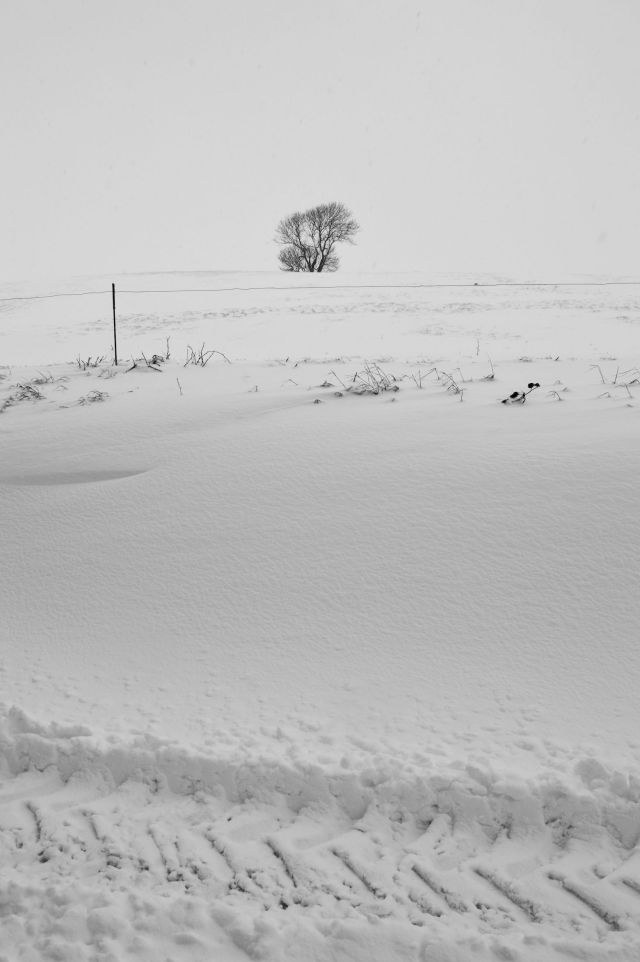
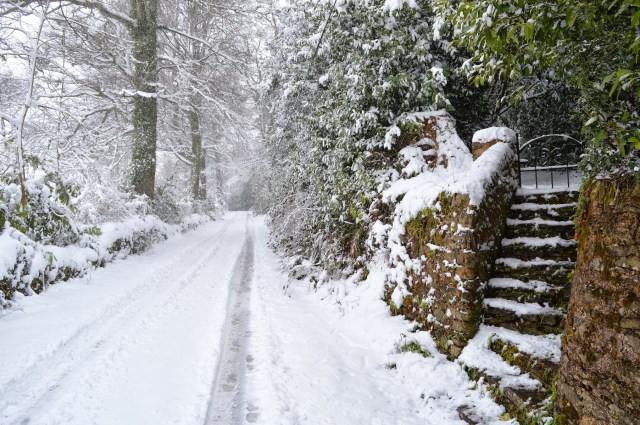
    There are obviously many positives to social media, especially when you have been snowed into your house. The big snow of 1982 may be the stuff of legend, but it is a distant memory for most of us. The images that flooded the internet in the last week of six-foot deep snow drifts and 12 foot tall snowpersons helped us all feel a little more connected to each other while we sat around a superser in our icy prisons. It was a bizarre few days. Brief forays into the outdoors reminded us that snow is actually quite cold, a fact we had forgotten as really our only other experience of it is in the video for Last Christmas by Wham, in which they all had lovely bouffant hair to keep them warm, like a squirrel uses its bushy tail to wrap around itself.

    It was amazing to see real, proper snow, but it was also unnerving. Going for a walk and taking photos of it felt like the people who walked out towards the disappearing ocean during the tsunami in 2004, not realising that what they were seeing was not normal and that they should really be running in the opposite direction as fast as they could. The snowstorms of the last week, coming so soon after the wreckage of Ophelia, felt more than a little ominous. As our planet slowly smothers, it would appear that we are going to prepare for more frequent weather events like this one, by stocking up on big dirty bags of coal, six packs of gas canisters for the superser, and a big diesel-guzzling four wheel drive to transport all our toxic fuels back to our poorly insulated houses.

    Despite never being prepared for any event in my life – from the Leaving Cert, to marriage, to last year’s tax deadlines – somehow we managed to be ready for the snow. Having a large family means you are always ready for the feeding of the five thousand, with stacks of unlabelled containers containing non-descript meals languishing in the freezer. Dinner became ‘chicken with red sauce’ or ‘chicken with brown sauce and possibly onions’ as we worked our way through meals of indeterminate age, but it was in the provision of treats that we fell down.

    In our post-apocalyptic household, treats are the main currency – used to barter, bribe, or lure children in from a force ten blizzard. Towards the end of the four day test of endurance, I was tearing the house apart looking for even a discarded Freddo, left over from the good times before civilisation fell. In the end I found a few chunks of birthday cake at the bottom of the freezer; whose birthday, I don’t know, and what vintage was unknown, but it was chocolate cake and that was all that mattered. I briefly wondered to myself if this was what it was like for Crean and Shackleton, as I made myself another Nespresso to wash down the cake.

    Thanks to the internet and our propensity to record every moment of our lives, we have all become little surveillance cameras; a truck jackknifed in Cork last month and four people were fined for trying to capture images and video of the crash on their phones, even though there were gardaí and emergency services at the scene. Our desire to create content as offerings to the great gods of the internet has led us to lose a sense of agency – many of us have become watchers, as opposed to doers. But however bleak the scenes of a Lidl being torn apart like something from Mad Max were, the snow also brought home how innately good we are, and how fast we act to help others when called upon, whether or not we think we are being watched or filmed.

    As for Bentham, he would probably be glad to know that he was mostly right about people, even if his prison design wasn’t his greatest idea. As for the man himself, after his death his skeleton was dressed in his clothes and mounted in a glass case with a wax version of his own head, and place in the halls of University College London. His cadaver even contains a webcam, and you can log on and see the world as he does, for better or for worse.

  • Donner party, the beast, cannibalism, drama

    Indo col 44:

    In May 1846, a wagon train of pioneers set out for from Missouri for California, looking for a new life and the dream of fulfilling their manifest destiny. The group, led by George Donner and Armagh man James F Reed, became trapped by snow high in a pass known as Hastings Cutoff in the Sierra Nevada. They spent four months there, and with food running out, they ate their horses and oxen as they died, and then ate the bodies of their fellow travellers after they had succumbed to the brutal winter. The Donner Party, as they became known, became synonymous with the real-world cruelties of life in the American west, and a symbol of what humans can and will do to survive.

    The Beast From The East is a pretty snappy name for a storm. It tells you which direction it is coming from and also that it isn’t exactly going to be a grand soft few days. In a country that loves to talk about the weather, we are starved of extreme events. Granted, there is the odd Ophelia that blows in and levels half the forests in the country, but most of the time it’s just the usual meteorological ennui of rain, grey skies and fairly mild temperatures.

    The Beast From The East is different – this is some sort of hellstorm, one that means we need to cancel every journey except those from your bed to the jacks, as the whole country is going to shut down. No employer would expect you to risk the ten-minute walk from your flat to the office, because what if you slipped on the ice and someone saw? That would be embarrassing. All over the country shelves are being emptied of bread and milk, which seems a little hasty as they are among the most perishable items in the supermarket. It won’t be much of a storm if you can survive it on tea and sandwiches; this isn’t the Stations or a roadside picnic on the way to an All-Ireland  – this is the end of the world, so maybe we should be buying tinned goods rather than a sliced pan that will be moldy before you get it home.

    Of course, there is always the chance of everyone’s worst nightmare – that you get snowed into work. If this is a possibility then you need to start facing the grim reality that you are probably going to have to eat at least one co-worker to survive. The guy with the sandwich trolley probably won’t be in, as someone already ate him while he was waiting at the Luas stop, so you are going to need to start looking around and eyeing up your colleagues as the poorly dressed snack boxes that they are. Start thinking about flavours – this is really going to be like an episode of Ready Steady Cook, where you just have to make-do with a rubbish selection of bruised vegetables from the bargain bin. What about the guy who is always vaping – do you really need a weird menthol aftertaste after your finished eating him, sher that will be even more unpleasant than the guilt. How about Smokey Joe, he will be first to fall, as he will still have to go outside for his ten Major a day and will probably get crushed by a wooly mammoth, which will conveniently tenderise him into a mesquite burger.

    Nobody is being forced to turn to cannibalism during Snowmageddon ‘018, but where is the fun in riding it out sitting on a radiator in the break area, eating vending machine snacks with a shelf life of a thousand years? That’s what you do every day for lunch. This is your one opportunity to taste human flesh, or The Chicken Of The M50, as it is known. Check up on neighbours – are any of them potential meal deals you could be tucking into? What about loved ones – who hasn’t read Jonathan Swift’s gluten-free cookbook, A Modest Proposal, and thought ‘Cronos really had the right idea’? Obviously, none of this is genuine. I’m not advocating you eat your young, although speaking for myself, my youngest child is one of those perennially chubby toddlers who is hard to look at without seeing him as a roast chicken.

    The Beast From The East is a reminder of how much we love high drama. Deep down there is the hope that nature takes a massive snowy dump on us, and we don’t have to go anywhere for a day or two, as when you reach a certain age in life, cancelling plans is one of the best feelings in the world. If this storm doesn’t hammer us into oblivion, it will be really disappointing, especially for anyone who has already prepared themselves for a Donner Party dinner party. As for James F Reed, he eventually rescued his family from the mountains, and went on to become a real estate tycoon. They denied ever eating any human flesh to survive – and were also one of only two families in the Donner Party who survived intact.

  • Asimov, robots, humans, gods

    Indo col 43:

    Isaac Asimov loved the future. As a professor of biochemistry and prolific science fiction writer, he wrote or edited more than 500 books, along with a vast archive of correspondence. He is considered, along with Robert A Heinlein and Arthur C Clarke, one of the greatest names in sci-fi. Asimov’s embrace of the future and all its endless possibilities is still heartening two decades after his death – he once wrote ‘I do not fear computers. I fear the lack of them’. It’s a sentiment we can all relate to, given how we freak out if we leave our phone at home by mistake and have to spend a working day without Candy Crush or Facebook, or if our WiFi isn’t allowing us to download every film nominated for an Oscar this year in less than five minutes.

    One of Asimov’s most notable contributions to sci-fi are his laws of robotics, conceived as part of his idea of positronic robots – benevolent machines that would ultimately help us make a better world. The laws are: 1. A robot may not injure a human being or, through inaction, allow a human being to come to harm. 2. A robot must obey the orders given it by human beings except where such orders would conflict with the First Law. 3. A robot must protect its own existence as long as such protection does not conflict with the First or Second Laws.

    Watching the latest video from robotics experts Boston Dynamics, you can only hope that they have those laws written in huge letters on the wall of their lab. The US company are known for releasing videos showing their latest developments in mechanical evolution – first they made an ungainly tetrapod that could run, albeit in an awkward fashion. Then they showed it going up and down stairs, which as any Whovian would tell you was the only way to avoid history’s most terrifying robots, the Daleks.

    But last week’s video from the firm was their most unsettling yet. It showed one of their robots politely opening a door and letting another robot through it. This proved all our worst fears – the robots have developed manners. This is how they will get us, through simple acts of kindness. One by one your co-workers will be replaced by biomechanoid drones, and you won’t even complain as one of them made you a cup of coffee, fixed the printer for you, or bought you a pint on a work night out. ‘01001001001? Sher he’s grand, he covered for me the day I went home early with a hangover, sound lad, apart from his dead soulless eyes’.

    Next thing you know the robots are showing up at county board meetings talking about how the grassroots club-bots are the binary code of the GAA, or at community litter picks where they win everyone over by virtue of having hoovers for arms. Then they will be running for a council job, promising to fix the roads by offering us all flying autonomous cars that will gets us home safe and sound after enjoying a skinful of their new alcoholic beverage Soylent Green, which tastes slightly familiar, mainly because it was made from members of your family.

    I say we reject these polite robots and the terrible future they offer – let’s stick to malfunctioning printers and fax machines, or the most reassuringly awful technology in existence, self service checkouts; yes there is a bag in the checkout area you bleeping moron, I just told you it’s there, dear god where is a human when you need one?

    The humans, it would appear, are still very much here. The comfort in the Boston Dynamics videos is that these robots are not completely autonomous – there is still a human within the operations somewhere.

    It is in Artificial Intelligence that our quasi-luddite fears become genuine concerns. It’s not that robots will start wiping us out, a la Terminator – although some might argue that drone strikes already do that for us – but that a robot could do our job for us. The advice from the experts would appear to be – find a job that needs you to be human. Great advice for any heavy hitting earners: accountants – algorithms made flesh, medics – Dr Google, anyone?, and solicitors – settle everything with a drone strike!

    In fact, it’s hard to think of a job that couldn’t be taken by a decent, polite robot. Who hasn’t sat in the back of a taxi wishing it was a Johnny Cab from Total Recall with a mute button to shut off the banter? Or dreamed of a robot stylist as your barber chats about the footie when all you wanted was to stare at your own reflection, contemplating your decaying cells as he trims your ear hair? Who hasn’t read this column and wondered if I wasn’t really written by a malfunctioning Furby, randomly rolling around on the keyboard? The robots are coming, not for us, but our jobs.

    I look forward to a day when human resources departments are exactly that – a screening process to stop these chrome interlopers from taking our jobs. A trip to HR would be a lot more fun if they were all tooled-up Blade Runners, ditching their psychometric testing in favour of a Voight-Kampff machine, ready to weed out any ‘bots who got past their interviews and blast them in the head. First up they should test Barry from accounts, I’m fairly sure he is a robot as there’s something off about him, not least in the fact that he is always humming.

    Asimov’s understanding of technology wasn’t what made him such a great writer, but in his understanding, like all great sci-fi writers, of what makes us human. God created us in his image, and our biggest fear is that we might do the same with robots – that they could be imperfect, damaged creations like us. If we adhered to his laws of robotics, the world might even be a better place. As Asimov said, the saddest aspect of life right now is that science gathers knowledge faster than society gathers wisdom.


  • Bill Linnane – misogynist, love and other drugs, war, shifting

    Indo col week 42, a Valentine’s special which has somehow made me History’s Greatest Monster.

    I am not especially romantic. My wife would say that I don’t have a romantic fibre in my being (as opposed to not having a ‘romantic bone in my body’, which sounds odd), but I see myself as being romantic in a practical way. The kids wake at 5am, I’m the one who gets up with them, when she comes home from work I have her dinner ready, and I am a regular Sisyphus when it comes to dragging bins up and down driveways. I do, however, have my inspired moments, and one of those was the first time I kissed her when we were teenagers. I spotted her across the dancefloor during the slow set in the local nightclub, walked over to her and, without saying anything, kissed her. Amazingly, she didn’t punch me in the mouth or call security, although she probably regrets that decision from time to time, such as on Valentine’s Day 2011 when I gave her a thermos flask as a gift (with no card). I tried to talk my way out of it by saying it was a symbol of our nourishing, warming love, but apparently it was a symbol of what a terrible husband I am, and was thus dispatched to the charity shop, unopened, where it nourished the coffers of the National Council For The Blind.

    I like the story of our first kiss, and imagine that some day, I will tell it to my grandkids. One detail that I would probably omit was the fact that I was on ecstacy at the time of that first kiss, because nobody wants to think that they might not be here if it were not for grandad’s substance abuse problem.

    We dated briefly, then she dumped me as she came to realise that I wasn’t dark and interesting, I was just mental and was treating my body as some sort of chemical recycling centre. We went our separate ways, but a couple of years later, we dated again, with the same result, although she does console me by telling me that it wasn’t just that I was mental then too, it was also my shiny Ben Sherman shirts and Jean Paul Gaultier cologne.

    Obviously I made some adjustments – working on my mental health, releasing drugs are a cancer of your soul, and also buying some new clothes – and not long after 9/11 the new me sauntered back into her life, using the destabilising of the geopolitical climate as an opening line: ‘Wow this situation in America is so intense, would you like to go for a drink to help us both relax?’ And so it was that we fell in love at roughly the same time that America fell into its various military quagmires across the Middle East. Seventeen years on, our love – like the USA’s madcap crusades – is still going strong.  

    Love isn’t always about finding your heart’s counterpoint in another, or a soulmate preordained to be your special someone. Sometimes it’s just finding someone who is the right kind of crazy for you. As our ancestors would put it, for every auld sock there’s an auld shoe. Even the most black-hearted nihilists would have to admit that if Fred and Rosemary West were able to find each other, then there is hope for us all. Although obviously, real love doesn’t involve quite so much murder.

    Astute readers will probably assume the reason I’m writing this is as some sort of cheapskate Valentine’s gift when I should be paying a skywriter to take to the air and spell all this out in chemtrails. Sadly, my wife doesn’t read this column, informing me that it’s bad enough having to listen to me droning on at home without having to endure me in print as well. I can’t say I blame her, as even to me my voice sounds like a hoover with a clogged filter. The fact she doesn’t read this also gives me an upper hand in arguments ‘You never support me, you don’t even read my column!’ So that’s checkmate on the thermos flask.

    My wife and I fell for each other because we saw the same sadness in each other that we felt inside. We were less like the two halves of some gilt-edged heart-shaped locket and really more like the two halves of a troubling Rorschach print. I can’t look back on our life together and cherry pick the good things from the bad; sometimes our poor choices led to great things, and it’s impossible to separate my teenage self-destruction from our first kiss and the great adventure that it started. To quote Shaw, we all have skeletons in our closet, it’s just that sometimes you have to take them out and make them dance, even if it’s for a slow set like this one.