Shift work is inhuman. There is something utterly unnatural about being awake all night. There are some who thrive on shift work, but they are a minority – most of us do it for the money, or because it suits our homelife, but very few do it because they like it. I only did nine months shift work in my life and I nearly lost my mind. Part of it was my age – I was in my forties and had four small kids, so the combination of little sleep by day and a shift pattern that was all over the place, meant I had to get out. I can still remember the odd feeling of being at my desk in the wee hours. You’d look at the clock – it’s 3.15am. You’d look at it an hour later – it’s 3.25am. Time becomes a pliable entity as your exhausted mind starts to play games with you – it becomes a loop – it becomes a loop – it becomes a loop. Half the time I wasn’t even sure if I was still awake, and would forget entire conversations, or imagine they were dreams. But at least I wasn’t alone in there – in an emergency department, you are never alone.
I like the idea of distilleries that can practically run themselves. Many of the modern ones do – as one distiller pointed out to me, machines make the best whiskey, and humans are really surplus to requirements for modern operations like Dalmunach. But there are older distilleries that spearheaded this drive to remove the human element from distilling. Sat on the slopes of the Ben Rinnes range, the wonderfully named Allt-A-Bhainne was built by Seagrams in 1975 to create malt for blends, primarily for Chivas Regal, but it does appear in indie bottlings from time to time.
I was in a mini-bus with a group of German whisky retailers as we tooled past the strangely modernist building. They, being massive whisky nerds, asked the driver to turn around so we could go back and have a look around. And so we did.
The distillery is quite modern in comparison to some of the chocolate-box scenes at places like Strathisla. Allt-A-Bhainne has no warehouses, and it rattles out 4.5 million litres of spirit per year. Water comes from the Ben Rinnes, and the distillery’s name translates from Gaelic as Burn Of Milk. While bhainne has the same meaning in both Irish and Scots, the way we would pronounce the name of this distillery is different – ollt-err-vane seems to be the common way over there, while we would go with alt-a-vonya.
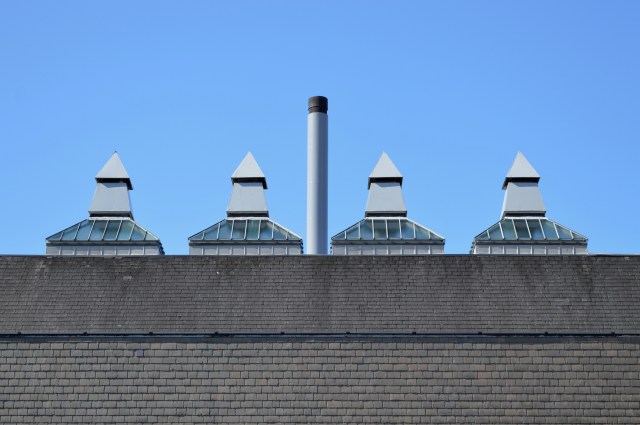
The similarities between the languages were the sole reason I bought this bottling of Allt-A-Bhainne a year or two ago, but I felt more inclined to open it after being to the distillery. It was a curious place – nobody was around, and those vents are like something from an old sci-fi B-movie, when set and prop designers thought that angular aluminium would be all we would ever need in the future.
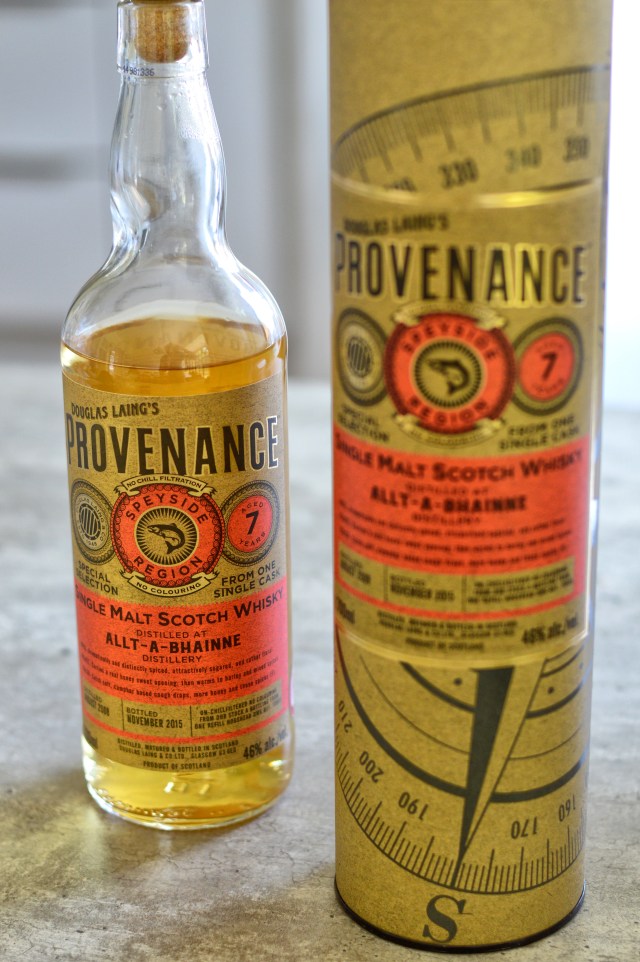
So Allt-A-Bhainne has an ancient name, retro-futuristic design and one poor operator stuck on shift in that one big room where everything happens. My bottle came from Douglas Laing’s excellent Provenance range. Distilled in 2008 and aged in refill hogshead, this was bottled in 2015 at 46% and is non-chill filtered. No pressure in reviewing this one, as it was cheap as chips – 40 euro from Master Of Malt.
Nose: Sulphur. Sulphur to the point that I actually thought it might be the glass (it wasn’t). It has all those ester notes – nail polish remover, must, bananas, white pepper, an astringent blue cheese note that isn’t entirely unpleasant. Like Sex Panther, it stings the nostrils – although not in a good way.
Palate: After the general brimstone of the nose I was ready for something unpleasant, but this is pretty uneventful. I can see how this would provide balance in a blend, but something tells me I would prefer to be drinking its counterpoint rather than this. There’s a little caramel, a little bit of the aspartame sweetness of a Creme Egg, and a lot of fuck-all.
Finish: Mercifully brief.
I seem to live my dramming life in a state of almost constant disappointment. So many whiskeys I have tried recently have just let me down – but at least this one was a cheap punt and worth a shot. It’s hard to know why this bottling isn’t as impressive as I had hoped – maybe I should just spend another ten or twenty euro and get something with more weight.
I loved A’Bunadh – now completely out of my price range – and the Laphroaig Quarter Cask, so perhaps I do just need something bolder than this also-ran. I was keen to try it due to its odd name, interesting design and the fact that the distillery has no bottlings of its own, only under indie labels. Now I can see why. I’m not angry, just disappointed, which is why I am washing away the taste with a drop of the sourced seven-year-old single malt bottled by the recently completed Boann distillery. Bourbon aged, sherry finished, this is nothing new, or shocking, or weird, but is just a nice whiskey. I also love the sourced seven from Glendalough. I assume both seven year olds come from the same source (Bushmills?), as they both have a similar citrus note, although it’s worth remembering that this is coming from someone who had operations on his sinuses as a kid and thus has the olfactory capacity of Selma Bouvier.
The Whistler Blue Note – for that is what Boann are calling this – is rich and creamy, lots of coffee, toffee, hints of aniseed, that citrus, a little Oxo cube on the nose, and a lot of smooth warmth, as opposed to the ugly heat from the Allt-A-Bhainne. It’s a reminder that while we don’t have the variety of distilleries here, and all our older stock comes from three places, at least those three places generally made – and make – great whiskey. That said, I do look forward to a dystopian day down the road when we have our own version of Allt-A-Bhainne – an odd, lonely distillery that produces odd spirit that exists purely to make other elements in a blend look better.
The new Jameson Bow Street 18-Year-Old sits atop Krass Clement’s Dublin.
I loved Dublin. It’s the city of my birth, where my wife and I fell in love, and where we became parents. I spent four great years there from 1999-2003 and it broke my heart to leave. But I had to face the fact that I am a culchie. Like the salmon swimming back upstream to spawn, once we had a child, we wanted to get home. If I had stayed I could have had a better stab at a career, given that 90% of the national media is based there, but we took our chances and headed south.
In the first few years after the move we went back to Dublin five or six times a year. Now we rarely go back, and when we do we see more and more decay, more addiction, more poverty, more problems. You can say it’s because life in the country has made me soft, that I’m just a nervous bogger, or you can look at the bodies in doorways, the child beggars, the aggressive junkies, the alleys you walk past and see, out of the corner of your eye, a heroin addict with his trousers down, injecting into his inner thigh. Watching the Dublin edition of The Layover last week reminded me of all that I loved about Dublin, but what I see when I go back is a world away from Bourdain’s frenetic, joyous journey through the city and more like Johnny’s nocturnal odyssey through London in Mike Leigh’s Naked. This ailing city was never somewhere I could call home.
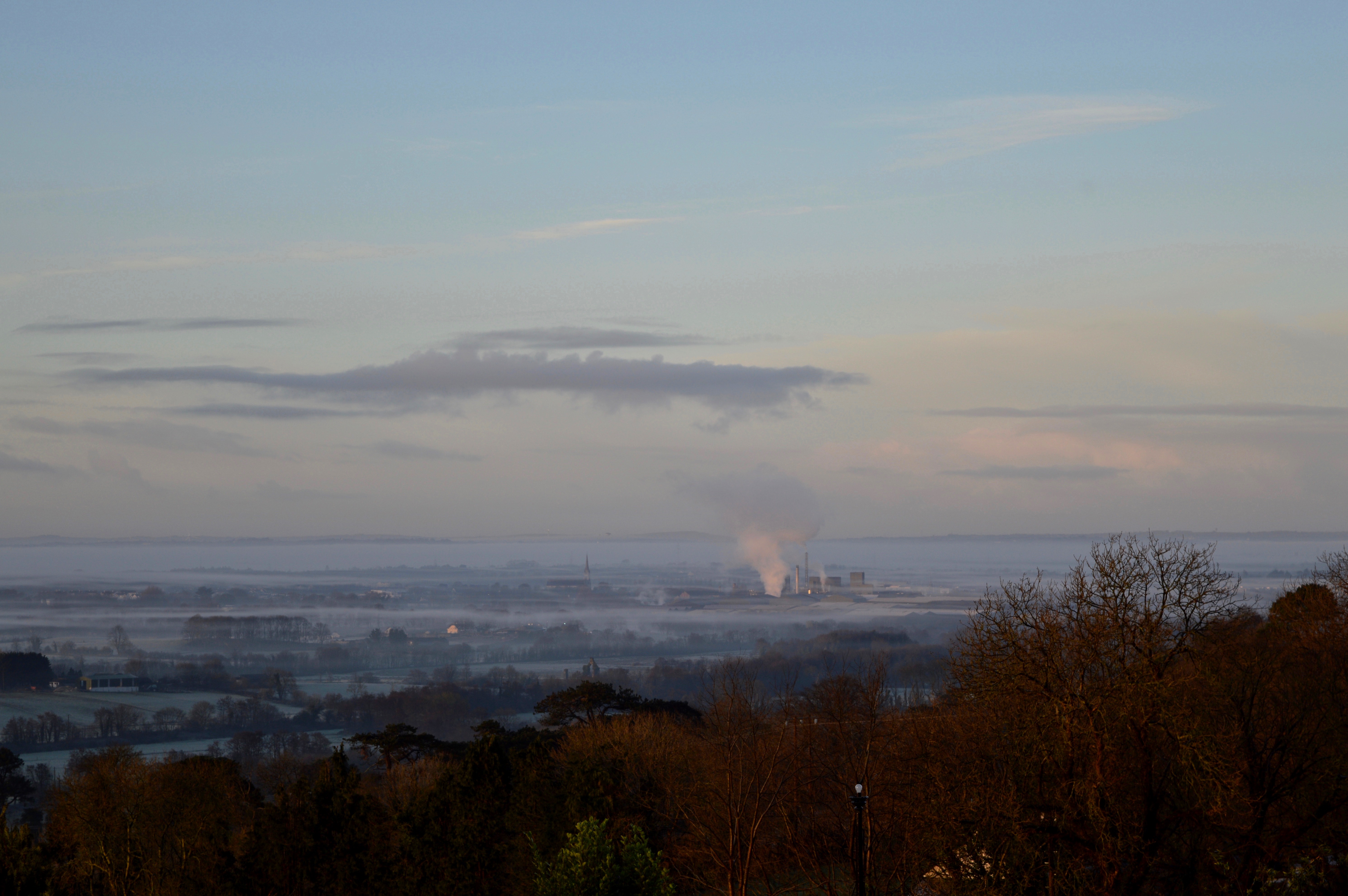
My house now overlooks Midleton distillery. It’s the first thing I see when I get up in the morning, and the vapours from the chimney are a good indication of how the weather is outside. There are warehouses around the distillery itself, and more warehousing out past my house in the woods of Dungourney, not far from where the whiskey river rises. At least once a day, either on the way to or from work, I will meet a grain truck, a lorry loaded with casks, or a spirit tanker on the roads, because Midleton distillery is a whiskey super producer. Just as well, as the demand for what they make is rocketing. I’ve no doubt that Midleton, Bushmills, Cooley, West Cork and Dingle could probably sell every single drop in their warehouses right now, but that isn’t going to happen as this is a long game. Besides, it’s Jameson that the world is screaming for, and Midleton is the Klondike of this liquid gold rush. John Teeling’s recent warnings of a whiskey shortage made for a great headline, but when someone who is making and selling whiskey to third parties is telling you that there is a looming shortage – thus encouraging greater demand and prices – you need to engage the critical faculties a little bit more. I’ve been hearing various reports about dwindling mature stocks for years, but it would appear that if you have a good working relationship with one of the big three, then you are good. I digress.
It irks me that Jameson labels still bear the address of Bow Street, a location that may be home to their biggest tourist attraction, and is a very central to the history of the brand and Irish whiskey itself. But as I pointed out previously, Bow Street is a phantom limb – it has no real bearing on the production of Jameson today. Or, at least, that’s how it was.
The massive refurb of Bow Street by the team behind the Guinness Storehouse cost 11m and saw Bow Street take tours to the next level. However, one of the most interesting additions to the venue was an actual functioning warehouse space – the first in Dublin in decades. And so it was that IDL relaunched their 18-year-old premium blend as Jameson Bow Street 18-year-old – the first Jameson in decades that had the right to put Bow Street on the labels. And if this wasn’t enough, they have lodged plans for new labels for standard Jameson that remove Bow Street from the address.
As a proud Midletonian, this is great news. The question now is – will this matter to America? That is, after all, where it is all happening for Irish whiskey, with those insane growth figures being largely centred on the US and largely centred on Jameson sales therein. So how discerning those drinkers are remains to be seen – Jameson has triumphed as the easy-drinking, beer-and-a-short everyman. Could a slight change to labels get people wondering that is going on? Or is it likely that the loss of the Bow Street address on the labels will make little difference, especially given that they will have Midleton distillery’s address on there? But the change on the standard Jameson labels certainly amplifies the Bow Street address on the 18 year old – it highlights that this is the first whiskey in decades to spend any time in Dublin at all (Teelings et al age their whiskey elsewhere).
Midleton distillery, as seen from my gaf.
So the Bow Street address is back, not just as a nod to history but as a live maturation site. As for the whiskey itself, here is a breakdown:
Jameson Irish whiskey, which is produced by Irish Distillers in Midleton Distillery, has today announced the launch of Jameson Bow Street 18 Years Cask Strength; the first cask strength Jameson to be available globally, which finishes its maturation in Dublin’s only live Maturation House in the Jameson Distillery Bow Street. A reinterpretation of the revered Jameson 18 Years, the new expression celebrates Jameson’s Dublin heritage by returning part of the production process to the brand’s original home in Smithfield for the first time since 1975.
Distilled and matured at the Midleton Distillery, Co. Cork, Jameson Bow Street 18 Years Cask Strength is the new head of the Jameson family. After spending 18 years in a collection of bourbon and sherry casks, the blend of pot still and grain Irish whiskeys has been married together and re-casked in first-fill ex-bourbon American oak barrels for a final six to 12 months in the Maturation House at the Jameson Distillery Bow Street.
‘Marrying’ is a traditional method of re-casking batches of vatted whiskey and re-warehousing it to ensure infusion before bottling. The first batch is presented at 55.3% ABV without the use of chill filtration and will be available in 20 markets from July 2018 at the RRP of €240.
Billy Leighton, Master Blender at Midleton Distillery, commented: “I’ve long had the unique luxury of being able to taste Jameson straight from the barrel at cask strength. With this first ever global launch of a cask strength Jameson, I’m thrilled that Irish whiskey fans around the world can now experience the full intensity of our whiskey or add a few drops of water to enjoy it at their own preferred strength.
“As a tribute to John Jameson’s distilling legacy in Smithfield, we’ve introduced some methods that would have been employed in days past. The final maturation period in Bow Street is our nod to the traditional “marrying” method. We’ve put our own Jameson stamp on it by using first-fill bourbon barrels, whereas the traditional approach would be to use casks multiple times. I like to think of the whiskey getting engaged in Midleton and then “married” in Dublin!”
Clearly, no one is going to think that the period spent in Dublin has anything to do with how it tastes. I have a shit Dub accent, but that’s because I spent four years living there and wanted desperately to fit in, before realising I preferred agricultural shows to teenage riots, wide open spaces to packed Luases, and the rolling hills of Midleton to the Liffey at low tide. Besides, it is unlikely that anyone would want to detect notes of Dublin city centre – packed DART on a rainy day, methdone on the top deck of the 29A, spicebags at dawn, sticky paving on Grafton Street in summer, and an urban sprawl that needs to appoint Ra’s Al Gul as Lord Mayor. When I die, Dublin will be written on my heart, but every time I go back I am more and more convinced that I did the right thing by leaving. My time spent there, much like the time the Bow Street 18 spent in the city, was an enjoyable interlude, but we are both from Cork, and better for it.
The big news item in the press release was not that this was the first cask-strength Jameson, nor was it the Bow Street maturation period, but rather the price. Jameson 18 used to be about €130, although when they cleared it out in Tesco a year or two ago before the relaunch, it went for €85. Salutations to anyone who got it then.
Obviously, this being cask strength makes it worth more – let’s say €180. The remaining €60 is presumably for those who like the Dublin finish, and also the premium packaging. The presentation is a lot more like its updated cousin, Midleton Very Rare, as these blurry photos show – basically, there is a lot more wood and copper than the old 18:
But wait – there’s more:
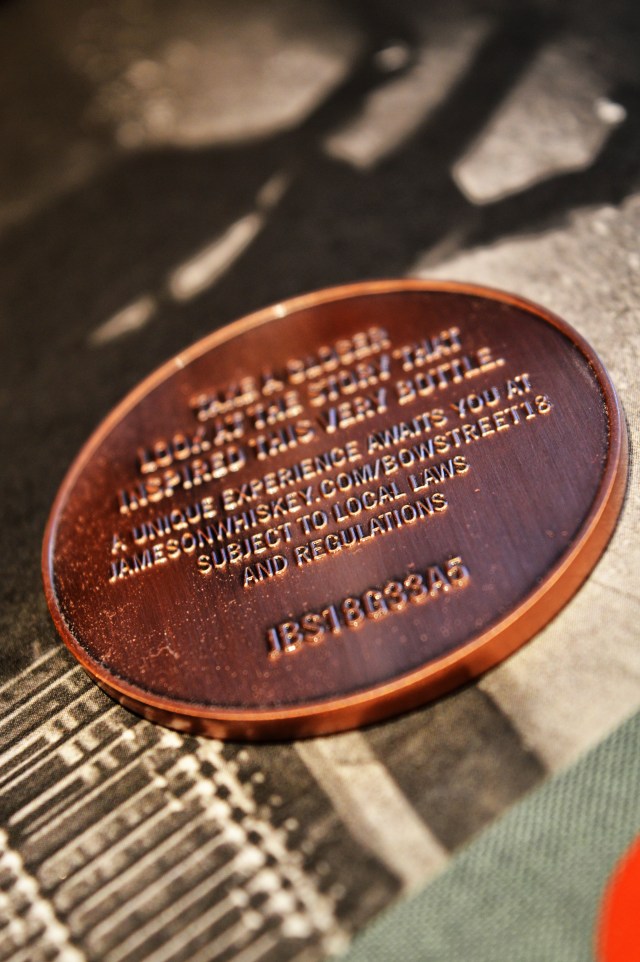
Jameson Bow Street 18 Years Cask Strength is presented in a premium bottle design that truly reflects the quality and rarity of the liquid within. The bottle features 18 facets, one for each year of maturation, and the wooden presentation box celebrates the traditional pot stills used during the production process. In addition, a unique copper coin located underneath Jameson Bow Street 18 Years Cask Strength bottles provides Jameson fans with access to an exclusive online portal where they can delve deeper into the story of the whiskey which bears the Bow Street name.
This, I presume, is aimed at the travel retail and tourist market. Nobody else really gives a fuck about portals, unless they lead to another realm populated with Lovecraftian abominations and free booze. It reminds me of Irish Distillers’ tourism project, The Cork Whiskey Way. It is/was a series of classic Cork pubs – and (ugh) SoHo – with four premium Midleton whiskeys in each of them, and the pubs were linked by QR codes. I can’t even remember how it was meant to work (here is an explanation), and doubt very much that it did, but this was four years ago when whiskey didn’t just sell itself and elaborate gimmicks were sometimes required. As an aside, if you want to do a trip around Cork that is whiskey based, Eric Ryan – a distiller, whiskey collector and history buff – does a brilliant whiskey walk around the important sites of Cork distilling. I did it last year and it is a great way to spend an afternoon, with great whiskeys, good food, interesting chat and a lot of craic.
Back to the Bow Street 18, and on to some typically incoherent tasting notes.
On the nose – expecting serious blowback from the strength, but this really is rather mellow. A lot of toasted pine nuts, vanilla, maybe a little smokey bacon lurking in there somewhere. I need to work on the nose with this one – nothing jumps out at me here, all very nuanced, very mellow. Not sure I enjoy that, as I’m really more of a sturm und drang kind of guy. Furniture polish, and, oh fuck it, the inside of a grand piano. Please, kill me now.
On the palate – it’s clobberin’ time. So bizarre having any Jameson at cask strength – if only Midleton Very Rare came in a CS edition. But in the meantime, this will do – smooth, with a wallop. Banana, those toffee notes I always look for, loads of vanilla, that slight acetone element carried over from the furniture polish detected on the nose. I like this. The finish is long and lingering, but that is the least you would expect from an 18 year old cask-strength whiskey. I should probably add some water, but life is short so you need to take large bites out of it. I’ll dilute when I’m dead.
It comes down to this – is the Jameson Bow Street cask-strength whiskey worth €240? Yes and no. For whiskey nerds, I would tend towards a no. You could buy a Redbreast 21 and a Redbreast 12 for that money, or three Redbreast CSs, or a load of John’s Lanes, or any number of absolutely beautiful, diverse whiskeys from Midleton, because this isn’t just one distillery, it is really four distilleries that happen to be placed on one site. A Scottish friend was staying at my house some time back and when I pointed out the distillery to him, he said it was a pity it was so unsightly. I felt quite insulted. It’s as simple as this – without Midleton, Irish whiskey would be fucked. They consolidated the old firms and created a glistening machine that creates multiple expressions and helped keep a category alive. I bristled slightly when I heard him tell me that the distillery isn’t pretty enough – it was, for a long time, Irish whiskey’s last hope, a distilling Noah’s Ark, keeping the category going through those cruel years in the Seventies and Eighties when nobody, and I mean nobody, wanted anything to do with Irish whiskey. Midleton distillery may not have the aesthetics of a UNESCO world heritage site, but it is a working distillery, one that has been thumping out the whiskey for four decades and shows no sign of slowing.
The new Bow Street 18 has a little bit of added value in packaging and narrative, and would make an ideal gift for the returning tourist, eager to bring a little piece of Dublin back home with them. But this isn’t one for the hardcore whiskey fan, or the guy who earns sod-all PA. If this is the jumping off point for premiumisation, so be it – the oligarchs are welcome to whatever else Midleton can rattle out. For my money MVR is a better value dram, despite its uninspiring 40% bottling strength, while the Dair Ghaelach, at €260, continues to be vastly superior to both MVR and BS18.
Finally, I hate to be the ignoramus who keeps saying a drink is ‘just a blend’, but that is, in the end, what this is. However, perhaps it is just too subtle for a culchie like me, that if I was a fey flaneur wracked with galloping consumption and urbane ennui I might be able to dig its subtlety, but for me there are many, many other superior, better value whiskeys from Midleton that the world needs to drink before they start throwing down €240 on a history lesson.
On that note, I’d like to thank my neighbours in Irish Distillers Limited for giving me this bottle for free. Awwwwwwwkward.
It’s a curious thing to be adopted. You are a stranger in your own skin, in your own family, like a cuckoo that suddenly appears and everyone tries to pretend that you’re not different. But the difference is there every time you look at a family photo, or in the mirror – where did I get my eyes, where did I get that mouth, whose face is this? To grow up adopted is to live in a constant state of unknowing, of unanswered questions – who am I, and why am I here?
The recent revelations about St Patrick’s Guild and their litany of misregistrations should come as a surprise to no-one. The entire adoption system was inherently cruel. It wasn’t about helping parents who couldn’t afford to keep a child, or whose circumstances were such that they just were not capable of looking after it; it was about shame, abuse, and treating human beings as chattel. It’s difficult for adopted people to talk about the experience without sounding like they are bitter, or that they are angry at their parents, adoptive or biological, but in reality adoption made victims of us all – young parents were shamed into giving their children away (or they were simply taken from them), children grew up feeling abandoned or worthless, adoptive parents raised children who often grew up with emotional problems not of their making. But the church’s adoption system was a product of a colder time. In the cruel Ireland of the 1950s-1980s, if you had money, and were a good Catholic, then that was meant to be enough. Emotional wellbeing was a later invention.
My voyage of self discovery started with St Patrick’s Guild in 1996. I found the guild to be most helpful, a fact perhaps related to the then-recent reports into how the clergy was actually treating the children in their care. They knew their world was changing. The nuns reached out to the only address they had for my biological mother, and we waited. They found her, and she was keen to meet. And so it was that in the late Nineties in the basement of the guild’s premises in Dublin I met the woman who gave birth to me and found out where I came from. It came as quite a surprise to discover that I am from Dublin’s north inner city, Sheriff Street to be precise – home to Luke Kelly, Stephen Gately and Mattie’s sweet shop, eulogised by Peter Sheridan as the best sweet shop in Dublin. Mattie’s was owned by my grandparents, and is there that my mother lived until aged 19 she became pregnant, and was shipped off to a home for unfortunate girls in Meath. She gave birth to me in Holles Street in August 1975, and handed me over to the nuns three days later. For 22 years she thought of me every day. She was able to tell me all about my father, who was from Kildare, how they met, fell in love but when she became pregnant his family were not happy with the notion of them marrying. He came to visit her once when she was pregnant and that was it, she never saw him again. She showed me photos of him – I look a lot like him – and told me how to contact him. But I left it too long, and he had died at a young age by the time I got in touch. All those questions I had for him would never be answered. My biological father’s family also informed me that I might be distantly related to Jedward. So a time of mixed emotions generally.
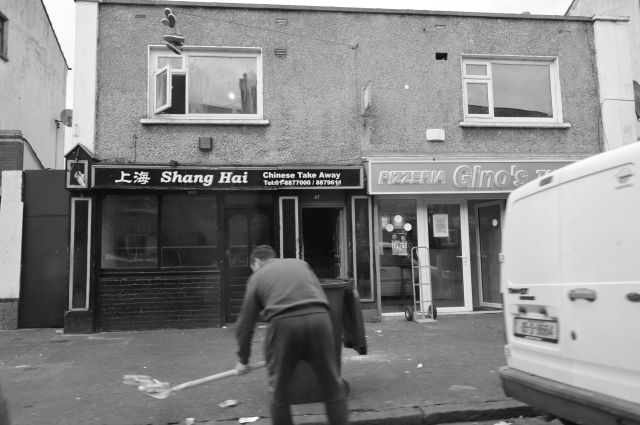
I’ve only been down Sherriff Street once. For my fortieth birthday, my biological mother drove me around. It is not unlike the Baltimore of The Wire. She showed me where Mattie’s was – now a Chinese takeaway – and told me stories about the people she grew up with. While we sat in the car a kid shot a pellet gun at the bonnet and I thought – is that me? Is that my other life? Because there is no part of my story that isn’t affected by privilege. My dad was a bank manager, my mum was CFO of a holiday centre, I went to a private school, they put me through college three times, they supported me no matter how I screwed up my life, and when they left this earth, they left me asset rich. This isn’t just about economics, but about stability, security and opportunity: There is no version of my story where my mother keeps me and we live happily ever after. This wasn’t The Snapper, it was 1970s Ireland, and all the love in the world would not have given me the opportunities that I have had in this life. It seems a curious thing to admit, but for me, adoption worked, despite being a flawed system that came from a flawed ideology. However, I can see all the gifts it gave us: Adoption also gave my parents the ability to raise a family, and my biological mother an opportunity to build a career, find love, marry and have a family. It left us all damaged, but even that brought its own gifts – the anger gave me wit but kept me poor, it made me creative and compassionate, and taught me that there are no easy choices in life.
I have spent the last 20 years coming to terms with who I am and where I come from, what a family is, and where to call home. Home, in the end, is where my dead lie, and not far from where I live lies the family plot, and one day it is there I will go. I love my biological family, but it is that – family with an asterisk, with an explanation, with a confusing story of who and how and why. My mum and dad were the ones who raised me, who suffered with me as my state of unknowing made me self destruct, they were the ones who contacted the guild about finding my birth parents, and they were the ones who ultimately saved me. I wasn’t a very good son, too lost and damaged to see all they did for me, and now it is too late to tell them how much they mean to me. I used to yearn for a family I didn’t know, now I yearn for the one I took for granted. But perhaps this too is just a side effect of being adopted – to live your life rotten with loss.
I can still say that the life I live is the best life possible, that all the sadness was worth it, because I am one of the lucky ones, who knew he was adopted, who found his biological family, and who, in the end, found some peace. Others are not so lucky.
The hunt is on to find someone to blame for the Irish adoption system – the church, the faithful, the politicians, the power vacuum left by the British, the republicans who used religion to forge identity and make their fight for freedom into a holy war: Perhaps we should just rebrand St Patrick’s Day into a national day of mourning.
The current trend is to blame everyone and thus no-one. But while we point fingers, time is running out for those us of who came through the old adoption system. Biological parents are getting older, chances at reconnection are being lost, and so many people on both sides of the story are scared to reach out, scared they will be rejected, scared they will be hurt. I know other adopted people who have had doors shut in their face, rejected a second time by their parents, who ended up alienated from both biological and adoptive family, people who discovered they were the result of rape, or abuse, or those who still exist in that cruel limbo of not knowing anything at all about themselves and where they came from.
There is a quote from Alex Hayley, author or Roots, on the Adoption Rights Alliance website that captures the strange experience of being adopted: “In all of us there is a hunger, marrow-deep, to know our heritage, to know who we are and where we have come from. Without this enriching knowledge, there is a hollow yearning . . . and the most disquieting loneliness.”
The race to assign blame is not going to lessen the hurt of those who long to find who they are and where they came from, or those who lost children and wish to find them. Perhaps we should focus on that, rather than trying to hold the past to account.
This article appeared in the Irish Independent on Saturday last, 2/6/2018, albeit in slightly edited form – the reference to Mattie’s was taken out, at the request of my biological mother. While I’ve written about her in the past and said that we have an excellent relationship, the truth is that it has been deteriorating over the last decade or so. I spent the first ten years after I met her idolising her and denigrating my parents, and the latter decade learning a lot of hard lessons about what it is to be a parent, and what constitutes family. This article is the sum of what I have learned – it is my truth, and it was my story to tell. If it brings comfort to even one adopted person, then I will consider it a story worth telling. If you are adopted and are wondering about whether to go looking for your biological family or not, I would say this – it will be wonderful, it will be traumatic, and it may be a Pandora’s Box that you wish you had never opened. But I know that I could not have lived without finding out where I came from, and that I am a better person for what I found. The joys have always outweighed the sorrows, and I have no regrets. I just wish it could have been the same for all adopted people.
If you had asked me a week ago how my parents would have voted, I would have said they were a definite No. They were oldschool Catholics – for them abortion in any situation was murder. I can still remember my mother’s fury when in 1992 I tried to make the point that the X Case showed that in some circumstances, abortion was not just a medical necessity, but was an act of kindness. It probably didn’t help that we were sitting in the car just after Mass, but I have crystal clear recall of how when my dad came back to the car with some Loop De Loops, she informed him in a disgusted voice that ‘his son thought murder was ok’. I quietly sulked through my icepop on the way home, and I rarely brought up the subject with them again. However, after the referendum vote, and hearing about all the other oldschool Catholics I know from that same generation who voted Yes, I have to wonder if they would have been quite so dogmatic, especially given their love for my daughter.
Katie became the centre of their world as soon as she was plopped into their arms in Holles Street hospital. For the next few years, they went everywhere together, with Katie spending weekends away with them and being generally treated like a princess (which set an unfortunately high expectation in a child cursed with paupers for parents). My parents both passed away, but if they were still here it is probably Katie who would have changed their minds about the Eighth. She was diagnosed with systemic lupus three years ago, an autoimmune disease that sees the body attack itself. It is managed with powerful medications, and the combination of these two elements mean that for Katie, pregnancy could be a life threatening event. If my parents were alive, I would have put it to them that if she got pregnant, they might have to choose between a foetus and the grandchild that they loved so much. It might have helped them to see that every woman who needs an abortion is someone’s beloved granddaughter – these are all hard cases, and it is never a decision that is taken lightly.
It’s hard to know if I could have changed their minds, but I might not have had to work very hard to do it – I can still remember my father telling me Fr Ted was sacreligious, and that it should be banned. Then the reports into clerical abuse came out, and the sin of poking gentle fun at the clergy suddenly diminished, and Fr Ted became one of his favourite shows. I like to think that, like many Catholics in Ireland today, had my parents lived they would have moved away from the old mindset, and accepted that nothing is black and white, and there are no easy choices in life. Of course, not all Catholics feel this way.
In the aftermath of the vote, one of the more extreme Catholic Facebook pages had a post prophesying how Ireland was going to suffer because of what they had done. It would rain non-stop across the land (situation normal) and there would be thunder and lightning everywhere except Knock, which I can say having gone there annually for the first 18 years of my life, is the coldest, most miserable place I have ever been. At least when I was watching people have mass hallucinations and speaking in tongues in Medjugorje, I was able to work on my tan.
I laughed when I saw the page, and but I wasn’t laughing too much when the prophecy was fulfilled, and the worst electrical storm I have ever seen struck east Cork on Saturday night. My wife asked if we should go around unplugging things like my parents used to, I said thanks to modern technology we were perfectly safe. It was only the next morning that I discovered the phone line was hit, and the router, sockets, phone and associated plugs were all torn asunder, scorching the wall and carpet. The fact that these were all located next to my head as I slept made me realise that I shouldn’t be so fast to write off everything my parents believed in, at least from an electrical point of view.
The most jarring aspect of the referendum is that there are many people who clearly see themselves as Catholic, but still voted yes. The dissonance of the No side, with their fire and brimstone, is an older order of the faith. The problem now for the church is how to adapt to their new reality, or face an accelerating decline into irrelevance.
There are many things in the modern world that scare and confuse me – GDPR, bitcoin, and whatever is going on in that Childish Gambino video to name but three. If any of these things come up in conversation, I usually just nod and say ‘indeed’ or possibly ‘but is it a bubble?’ and hope that that I don’t sound like an out of touch fuddy duddy, which is exactly what I am.
One modern invention that I wish was around in my youth is the dating app Tinder. Back in my day the only application we had was alcohol – which we applied liberally – so a forum where you can meet a partner without the expense or gastrointestinal horrors of 15 pints seems like a piece of the dystopian present that I can root for. Of course, it’s sod all use to me, as I have been decommissioned from active service for 17 years now, but I still marvel at how much easier life must be now for the bright young things who simply have to swipe left or right to find a mate, or even multiple mates. However, it would appear that my perception of Tinder as a hookup hotspot isn’t exactly deserved.
The journal Personality And Individual Differences has published a study by researchers at the Norwegian University of Science and Technology that suggests Tinder maybe full of people looking for short term flings, but they aren’t necessarily have any more success than the desperadoes swarming your local watering hole.
The researchers studied the activities of 641 students aged between 19 and 29 and how they behaved specifically in relation to picture based mobile dating apps such as Tinder. Some had used such apps in the past, some still used them, and the conclusions overall were that while those who were seeking brief encounters found it easier to do so on apps, they weren’t having any more sexual encounters than others of the same mindset who were not using the apps. In effect, using the apps didn’t cause any overall shift in the attitudes or behaviours that users had towards sex and relationships. So while Tinder et al may have a bad name as a digital swap shop, or a sexual Done Deal without the haggling, people aren’t changing who they are because of it. All of this will be cold comfort to that most tragic of male stereotypes – the lonely weirdo.
In ye olden times the lonely weirdo was seen as a social pariah, awkward around the opposite sex, making wild claims of a supermodel girlfriend who no-one had ever seen as she lived in Leitrim, an obvious choice for location shoots in the next Pirelli calendar. Now however, lonely weirdos have had a smart rebranding into ‘incels’, or ‘involuntary celibates’ – men who had celibacy thrust upon them by fickle women who can’t see their inner beauty under the outer layer of seething misogynistic rage.
While the internet may have made it easier for the more social animals among us to meet a mate, it would appear that the internet has also allowed misogynistic loners to gather for the sole purpose of intellectualising their isolation and to convince themselves that their lack of sexual activity is entirely someone else’s fault, rather than the fact that they spend all day on the ‘intellectual dark web’ talking to other men about not having sex.
It may seem easy to joke about this bizarre subculture, but there have already been four mass killings in the US and Canada that were committed by self-styled incels. Even the recent school shooting in Santa Fe has shown that a hatred for women is a common thread in many mass shootings.
Within two days of the rampage in New Mexico in which ten people died, the stories were surfacing that the alleged killer, Dimitrios Pagourtzis, was spurred to kill after being rejected for months by a girl he liked. According to the girl’s mother, her daughter was the first to be shot dead.
After this, the usual potential influences lined up – he liked war-based video games, he wore black boots and a Columbine-style black trench coat, he was a loner; all supposed evidence of motive. Meanwhile, the boy’s father said his son was bullied at school, and that this was what drove him to kill. Dimitrios Pagourtzis’s own journals, in which he detailed his plans, even referenced Cthulhu, the demon god of HP Lovecraft’s horror novels. However, it is the rejection by a girl that seems to have taken hold in the media as a tangible motive, as if it has any greater credence than if he said a fictional god told him to do it.
Loneliness is a terrible thing, and while the internet has helped bring many people closer together, lonely white males gathering on forums to support each other’s deranged philosophies is becoming an even more corrosive force. Look at the success of Professor Jordan Peterson, the Canadian intellectual who claims that men rule the world because they are meant to, that gender equality is a menace, and that we should all transport back to the glory days of the patriarchy, a time period that seems to be rooted in the 1950s for Peterson, but could technically be any time from Year Dot to right now.
Peterson isn’t just another weirdo on the internet – he is a clinical psychologist and public speaker who fills arenas with (mostly white male) acolytes who lap up his thoughts on the dangers of the radical left and ‘political correctness gone mad’. An expert on myth, Peterson seems to have locked himself into an extremely lucrative oedipal trajectory, where he is the hero, offering insight to his followers about why they are right about equality being a counter-evolutionary force, or that they are the front line in an escalating gender war, one in which, tragically, real shots are being fired. The question for society now is one as old as time – how to teach disaffected young men that they are wrong, and that being rejected, be it on Tinder or in the classroom, is not a reason to hate.
I can’t remember when I first saw Superman: The Movie. Given that I was three when it first hit cinemas, it seems unlikely it was on the big screen, but it is just one of those films, along with The Neverending Story or A New Hope, that always seemed to be there; on TV on a Saturday afternoon, or on VHS in the living room at a classmate’s birthday party, when I would drift off from the socialising and games just to watch it on my own. I still love everything about it, but as the years have passed it has become less and less about on-screen superhuman strength and more about the real-life struggles of its stars. In May 1995, Christopher Reeve fell from his horse, cracked two vertebrae, and was immediately paralysed from the neck down. Although he never gave up hope that he could find some way to overcome his injuries, he died in 2004.
Margot Kidder, who played Superman’s onscreen soulmate Lois Lane four times, faced a different set of obstacles. After building her career on well regarded horror films and low-budget indie films, she was enjoying the success of the blockbuster Superman franchise when her mental health started to suffer. In the 1990s a car crash that meant she was unable to work for two years, and ended up bankrupt. It was in that time her bipolar disorder became unmanageable. In 1996 she was found hiding under a porch not far from where Superman was filmed. She had been sleeping rough for three days, and her paranoia had forced her to hack off her hair and remove her front teeth to change her appearance. While the incident didn’t end her career – she went on to have roles in TV shows like Smallville – she never grabbed the spotlight like she did in Superman, and became known as much for her mental health advocacy as her on-screen roles. Her death on Monday aged just 69 was another reminder of just how frail our bodies and our minds are, and how there really are no superheroes, no matter how much we wish them into being on the big screen.
Of course, not all heroes wear capes – just look at that recent photo of Waterford councillors lining out in support of the Love Both campaign. The all-male referendum avengers may have looked like they were on a golf trip, or possibly like the class of ‘86 recreating their Confirmation photo, but this was serious business – you can tell by the fact that some of them actually bothered to wear ties, while their 1990s-era ‘smart shoes’ were offset by their 1950s-era beliefs. In the UK they have a collective term for these kind of supermen – gammon. The usage sprang into being after someone created a collage of the angry white middle class middle aged men who kept popping up in the audience of Question Time, demanding to know if and when the UK was going to grow a pair and nuke someone. The anger forced their bulbous faces to grow pink with impotent rage and missile envy, and they became gammon – the face of Brexit Britain, screaming at the TV because of a gay kiss on EastEnders, or because someone wore a headscarf on Channel 4.
Of course, the term isn’t an especially kind one – angry white men just don’t age well – which is perhaps why Toby Perkins MP and some of the more right-leaning members of the press are now claiming that it is racist, an act that many would describe as peak gammon.
But the pink fury of Brexit-focussed episodes of Question Time had nothing on Monday night’s Claire Byrne Live, which showed just how unpleasant the abortion referendum debate has become, and how unnecessary. It was never going to be an easy campaign, but it is becoming increasingly rabid, with accusations of poster theft, lies and obfustication being flung back and forth. And what is it for – were there really this many undecided voters in Ireland, that we needed to engage in such unpleasant combat to win them over? Everyone I know had their mind made up decades ago – all the shouting, clapping and accusations of lying we were subjected to on Monday night were just made me wish that all this was over. I can’t be the only one counting down the days until May 26th so we can try to move past this, just like we will possibly get over the Civil War someday. But then I would say that, as I am Gammonman, an angry, middle class, middle aged male, who occasionally puffs up like a shoulder of pork and shouts at the TV when people whoop and cheer during a debate about life and death.
St Malachy’s Church in Belfast is a survivor. Built in 1841 in what Sir John Betjeman once described as ‘a cheerful gothic’ style, it had its windows blown in by a German bomb during the Second World War, whilst also having the remaining windows sucked out when another bomb hit the nearby gasworks, causing a massive vacuum. Some of the windows were then filled in with concrete, which ultimately damaged the surrounding brickwork, and eventually more than 80,000 handmade bricks had to be replaced. Apart from all those woes, the church also had to deal with some especially pedantic neighbours.
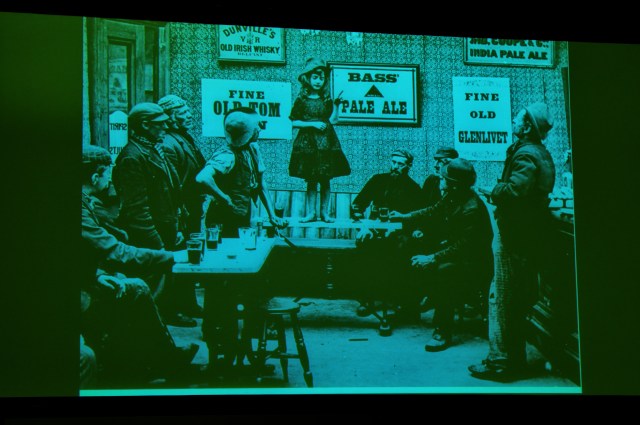
St Malachy’s is home to the largest and possibly loudest bell in Belfast – its din was so great that it started to bother the Dunville family, who owned the nearby Royal Irish Distillery. They claimed that the noise from the bell was disturbing the whiskey they had maturing in their warehouses, and managed to create enough of a headache for church bosses that they actually agreed to cover the bell in felt to help muffle the sound. Perhaps picking a fight with the church wasn’t the best idea for Dunvilles, as they went into voluntary liquidation in 1936, despite the fact that they were still in profit at the time. Many of the old Irish distilleries ended like this – brought down by a combination of bad timing, bad luck and the misfortune of having the canniest rivals they possibly could – the Scots. For almost a century, our Celtic neighbours have ruled the whisky world, and now we are in resurgence we have a lot of old scores to settle.
By now you will have heard that there is a whiskey boom here. All over the country distilleries are popping up, Irish whiskey is the fastest growing spirits category in the world, and we are screaming back into the consciousness of drinkers like a rocket from the crypt. People are starting to talk about whiskey tourism, with industry body the Irish Whiskey Association even going so far as to say that they envision Ireland being a world leader in whiskey tourism by 2030. This is, of course, wonderful; everyone likes good news, especially when it involves the Irish doing well. However, it may take a little longer than 12 years to beat the Scots at whisky tourism, and all we have to do to realise this is to look across the Straits of Moyle to our old distilling rivals.
Scotland has two major whisky festivals – Feis Ile on the island of Islay, the location where Irish monks made the terrible mistake of teaching the Scots how to distill, and the Spirit Of Speyside, held in the true whisky heartland above the Cairngorm mountain range. While Islay has fewer than ten distilleries, Speyside has more than 50, many of them household names – The Glenlivet, The Macallan, Balvenie and Glenfiddich being some of the best known. They are the brands that permeate the consciousness of the average consumer. They have been in existence for up to a century or more, and have made their way into popular culture via cinema, art, and music. During the Speyside festival these titans of whisky and dozens more throw open their doors to their adoring public, and thousands flock from all over the UK, the US and Europe to be there. This, in a nutshell, is whisky tourism – people going to a place purely for the whisky, a sacred pilgrimage to the spiritual home of their favourite drink. It takes generations for a whisky brand to build up this sort of fanbase, because whisky is all about time. It takes three years for spirit to age in a cask before it can legally be called whiskey, but it takes far longer to become an icon. A ten year old single malt is considered to be entry level, and you will need considerably older stock than that to lure in significant numbers of tourists.
So this is where we are lacking – our new distilleries are going to be waiting for a decade or more before their stock starts to really make an impact on the global whiskey scene. Combine this with the fact that, outside of Dublin, we really don’t have any clusters of distilleries like they do in Speyside or Islay, where fans can walk, cycle, or simply stagger from distillery to distillery. If whiskey tourism is to work in Ireland, it will need more than just distillery visits, and that’s where we can learn from the Speyside festival.
I’ve been to the festival twice, in 2015 and this year, and it is an excellent illustration of how whisky tourism should work. Distillery visits and the drink itself may be the bedrock, but the festival is more about Scottish culture than anything. There were nature walks, ceilidhs, formal dances, incredible food, and treks into the mountains on amphibian Argocats. I went to talks on geology, a water tasting session, a distillery tour where we munched on malted barley, and more fine food than I should have eaten. There was breathtaking scenery, beautiful architecture, wonderful people and memories that will last a lifetime. This wasn’t a booze cruise – it was about losing yourself in heritage, history and tradition (whilst drinking some of the world’s greatest single malts, obviously).
We may not have mature distilleries that hark back two centuries, but we have all the other elements ready to go. In fact, Alan Winchester, the legendary master distiller of The Glenlivet – the person who told me about Dunvilles versus the bell of St Malachy’s – was singing the praises of the startling beauty of the Wild Atlantic Way, a route that is now peppered with whiskey tourism attractions. Seeing what the Spirit Of Speyside has to offer is a lesson in how whisky tourism should be done – rather than claiming we are going to beat the Scots, we should be learning from them and working with them. If a tourist is coming from Canada to visit Scottish distilleries, it’s a mere hop, skip and a jump to Ireland, where whisky fans can visit iconic distilleries like Bushmills and relative newcomers like the innovative Echlinville Distillery, who resurrected the old Dunville brands, rebuilding a link to our lost distilling heritage.
Irish whiskey’s return to the world stage will be as much about respect as it is about sales and economics – the great bell of St Malachy’s still rings three times a day, a reminder that when it comes to spirit matters – both liquid and divine – faith, devotion and a decent measure of humility are key to salvation.
The key to successfully failing your driving test is not, as one would imagine, in the preparation or lack thereof, but rather that you tell as many people as possible that you have it coming up. This allows you to develop a network of friends and family who will support you with helpful tips like ‘they will probably let you pass because of your age’, ‘well, you’re hardly a boy racer’, or ‘are you sure you are ready for this?’ Obviously, yes I was sure. I had been on the road a while, had a few extra top-up lessons to highlight my many, many bad habits, and was feeling reasonably confident that I was going to fail. And lo, the prophecy was fulfilled.
The first sign that things were not going my way was in my driving tester. Apart from the fact that she was so young I thought she was an intern, she also had extremely large eyes, all the better to see my speed dial with. I thought that I could use this to my advantage by using peripheral vision to see where her eyes were swivelling towards and reacting accordingly – if she noticed the Lourdes medal on the dash, I could perform an emergency stop at the nearest grotto and beep out a decade of the rosary whilst parallel parking. Sadly, she wore equally large Kim Jong Il-style shades which meant I had no idea what she was gazing towards, although given that I was doing speeds that make Driving Miss Daisy look like an especially charged Top Gear, it is quite possible she nodded off.
There were many high points on our grand tour of Cork suburbs – the ten-point turn, the whiplash I got from twisting my head around like an anxious owl every thirty seconds, or the speed bump I didn’t see in time – but in the end it was deemed that I had failed. I am okay with this, as it is a fitting assessment, and also as I am not alone. With more than 65,000 learner drivers on their third or subsequent permit, there are many out there who wear the scarlet letter of shame upon their car body, and who have either failed the test or are avoiding it like they would have avoided the Leaving Cert, given the chance. People just don’t like being tested or judged. This, clearly, is a problem, as were the statistics showing that some centres had higher pass rates than others – while the national pass/fail average may be roughly 50/50, some centres seem to be particularly harsh, while some seem to be a breeze – Skibbereen, the town in Ireland with the most Lotto wins, also seems to be blessed when it comes to driving test pass rates, with an impressive 60% rate. If only I had booked my test in the land of rainbows down west rather than on the mean streets of Wilton.
One way to tackle the number of learner permits is to start the education sooner. Students in many American states are offered a driver education course as part of their curriculum – this means they are trained in the correct way to drive almost from day one, rather than learning the Irish way by having a parent teach you all their bad habits, which hark back to a time when getting your full license seemed to be as simple as filling out a form. Driving is one of the most important life skills we can develop – for our safety and the safety of others, but also for our day to day lives, work, family, or travel – and it should form some part of the school curriculum. However, given that our school system is still lacking a standardised, state-wide education programme in the most human life skill of all – sex education – I won’t hold my breath.
The American songwriter Nick ‘RAS’ Furlong was in a Galway pub when he dreamed up his biggest hit. Surrounded by the sounds of a sing-song, laughter and clinking glasses, he was inspired to write what he would later describe as a classic Irish drinking song – or, as he also called it, a “pirate-y fight song”. The Nights would go on to be a worldwide hit, and while Furlong provided the vocals, it was the producer Avicii who worked his magic touch on the song and made it the anthem it became.
Tim Bergling’s death at the age of 28 was startling, not just because of his youth but because he was ‘living the dream’ – his music was hugely popular, full of upbeat party tunes like The Nights, and all we ever saw of him was playing at massive festivals to adoring throngs, grinning into the camera. He had it all – youth, talent and money; lots and lots of money, earning up to twenty million dollars a year at his peak. Somehow we think that these are the things that matter in life, to have the big house, the big car, the best of everything. But time and time again we are proved wrong, and are shocked that somehow people have inner worlds that the general public are not privy to, demons that drive them to self destruct. For DJs it must be even harder, as they don’t have the close network of a band to help them out or tell when to stop. For all the adoration, Bergling seemed completely alone.
The video for The Nights featured Rory Kramer, who describes himself as a ‘professional life liver’. It featured him larking about, jumping off things, wakeboarding, and generally enjoying life, which seems to be his stock in trade. Kramer always wanted to be famous – as a youth he emulated his heroes in Jackass, filming himself falling off things as opposed to his more refined work – jumping off things – in his later years. But despite all his efforts he ended up in a dead end job, drinking heavily, smuggling vodka into work in water bottles and lost in a fog of depression. He was living in his parents basement, and his father – who features in the video for The Nights – finally decided enough was enough; he drove Kramer three thousand miles across America to California, told him to follow his dreams, and after that everything changed. Kramer went on to be the official videographer for superstar DJ Martin Garrix, The Chainsmokers and Justin Bieber. Kramer also directed the video for Bieber’s I’ll Show You, which, unsurprisingly, features a lot of footage of the Biebs jumping off things. Kramer even landed his own show on MTV. But as Kramer’s career took off, Avicii was cancelling tours due to ill health caused by his alcoholism.
Late last year, the documentary Avicii: True Stories was released. Unlike many tour videos which feature all the fun and frolics of life on the road, it showed just how grim Bergling’s life had become. There are times when he is trying to cancel shows and his entourage are pressuring him into going ahead with them. He is seen in hospital in Australia after his drinking caused his pancreatitis to flare up, being told he will need to have his gallbladder removed. Footage from the following day shows him in the back of a car, barely coherent, as one of his management team pressures him to do some phone interviews. He looks like a doped-up child coming back from the dentist, his boyish face slack-jawed and eyes half closed as he struggles to understand what is being asked of him. Watching it when it came out, it was hard not to feel a sense of impending doom. He was signed to a management firm at 17 and dead 11 years later. There are people who could have helped him and didn’t, but in the end he just couldn’t save himself.
When Nick Furlong was inspired by that Galway pub to write The Nights, it’s hard to imagine he could ever envision his lines about living a life to remember would have such a tragic meaning for one of dance music’s biggest stars. Towards the end of Avicii’s life it became clear that he just wanted to make music – he didn’t want fame, or fortune, just to create.
Although published in 1950, Ray Bradbury’s short story The Veldt summed up a lot of very modern anxieties about children and technology. It told the story of a family who live in The Happylife Home, an automated house that does everything for them. The children have a virtual reality space called the nursery which creates almost-real worlds from their imaginations. The parents discover that inside the room is a scene from the African plains, with lions in the distance eating a carcass, and the odd scream wafting on the dry winds. Concerned that their children are spending too much time in the nursery, and that it is affecting their behaviour and attitudes towards their parents, a decision is made – the nursery will be switched off. The children protest, and ask for one last turn in the room. You can probably guess what happens next, as this is a fear in the heart of most parents – that technology is alienating our kids from us – and vice versa – with bleak, dystopian results.
Do you know where your kids are? If you don’t, they are probably upstairs in their room playing Fortnite: Battle Royale, the latest threat to your kids and – by extension – the fabric of society. Fortnite is an online shooter, much like the vastly successful Call Of Duty franchise, which pits you against a hundred other people, and you have to use almost anything as a weapon to survive. It sounds grim, but it has one major edge on its competitors – there is no blood or gore. That, combined with beautiful, cartoon-style graphics mean that it is hugely popular with kids from age ten upwards, and thank god for that, as it had been a while since parents had something to fret about. Granted we thought Pokemon Go was going to make all our kids chase non-existent creatures into the middle of the dual carriageway, fidget spinners were going to give them all carpal tunnel syndrome, and smartphones – or phones as they are generally known – were going to invite the childcatcher from Chitty Chitty Bang Bang to come round your house for a playdate, but all those fears just fizzled out after a while.
Dr Jane Rigbye, from GambleAware, says that Fortnite could be turning our children into gamblers, as there are aspects of Fortnite that are similar to gambling and thus could normalise the habit for them. Dr Rigbye’s concerns centre on the fact that Fortnite allows players to buy in-game add-ons which allow them to upgrade their weapons and improve their chances of survival, in much the same way coin-slot arcade games worked three decades ago – the more you spend, the longer you play and the better you do.
The idea of normalised gambling is, of course, terribly worrying, as it could lead to the dread scenario of betting shops on every street, apps that allow you to gamble on your phone, or even the normalisation of horseracing, which without gambling would simply be a few horses running in a circle. But while we are deleting Fortnite from our PS4s, maybe we should clear out a few more games that might have negative effects – Monopoly simply teaches kids how to run a vulture fund, Risk gets them addicted to risk, Buckaroo teaches them animal cruelty, Trivial Pursuit teaches them that being a smartypants allows you to eat all the cake, and Game Of Life teaches them that human existence is boring and goes on far too long.
Gambling is already everywhere because risk is everywhere. Every day we run risks that no machine would, partly because we are oblivious to our own ill fortune, and partly because we like it. Everything from falling in love to buying a house to getting a dog carry various elements of risk and are very human gambles, so it is hard to tell kids they can’t play Fortnite when they see us shouting at the TV during the Grand National, doing scratchcards or idly musing about what we will do once we win the Euromillions.
Perhaps our fear of technology and its effects on our kids really has more to do with the idea that, as with the autonomous house in The Veldt, we too will one soon be obsolete and fed to the lions. As the father of a child who plays Fortnite – who has been caught buying in-game bonuses using my credit card – I can safely say that the amount of time he spends playing it isn’t the problem, but rather the amount of time I don’t spend with him. If he grows up to have a gambling problem, or any other kind of mental health issues, I can always blame the PS4 – or I can admit that I made myself obsolete.






 Triple Distilled Communications