• A toast to 2018

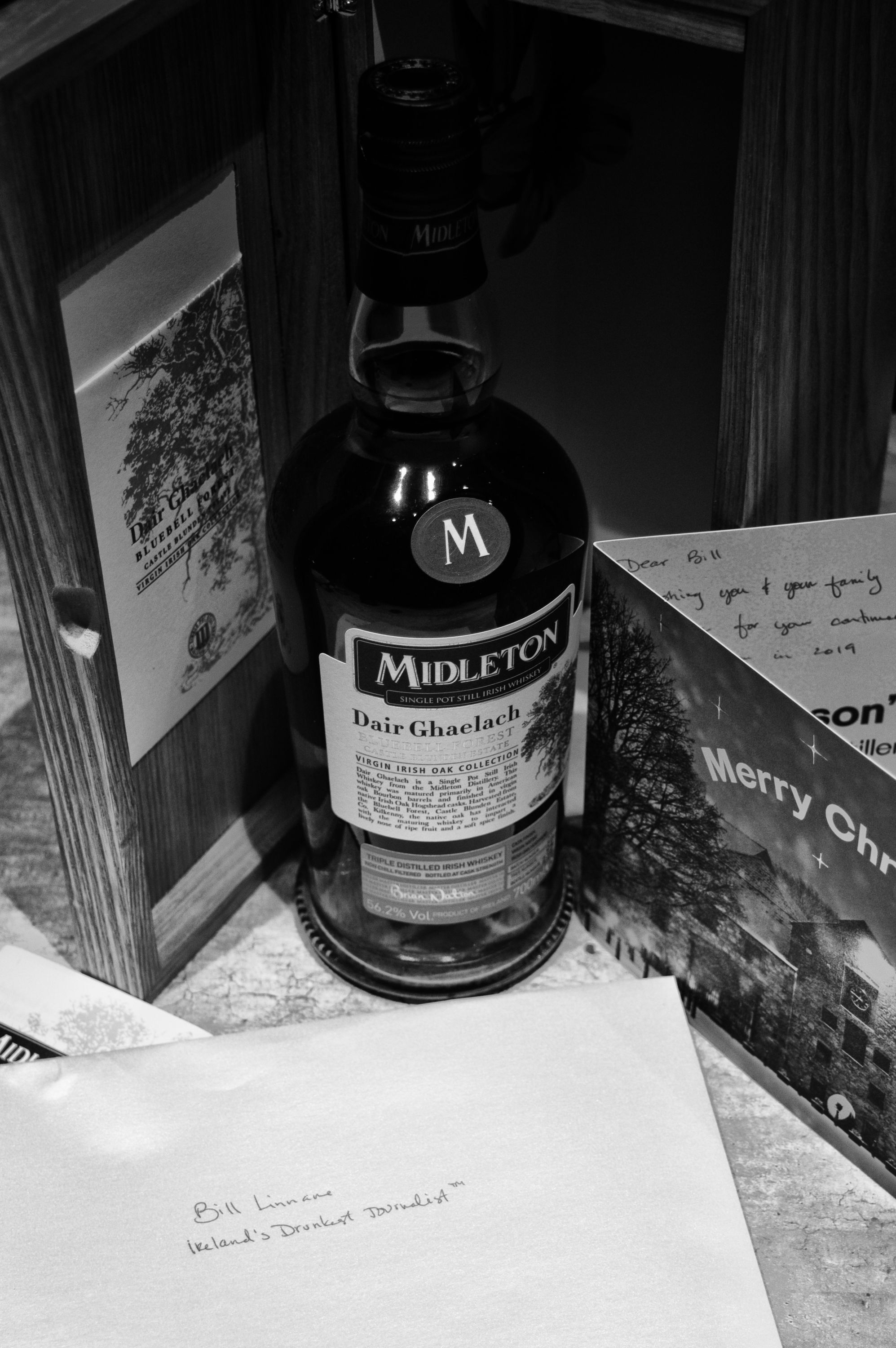
    A festive bribe/gift from IDL. please note the attention to detail on addressing the letter to my personal lifestyle brand.

    It was another boom year for Irish whiskey – Blackwater and Powerscourt both came to life, Nephin are gearing up to build, and Bono and Paddy McKillen bought into a proposed distillery for Monasterevin. It is an exciting time, and a sure sign that Irish whiskey was accelerating was the appearance of our first celebrity whiskey.

    Conor McGregor has great taste in Irish whiskey – he was often seen sipping some excellent whiskeys after big bouts – so when he announced he was bringing a whiskey out, I had great expectations. Would he go for super premium, would he opt for a more approachable ten year old single malt, or even a pot still release? No, he would not. He opted for a blend, with grain from Midleton (update: Not Midleton but GND, apparently) and malt from Bushmills, the latter being a distillery which seemed to mistakenly believe he owned.
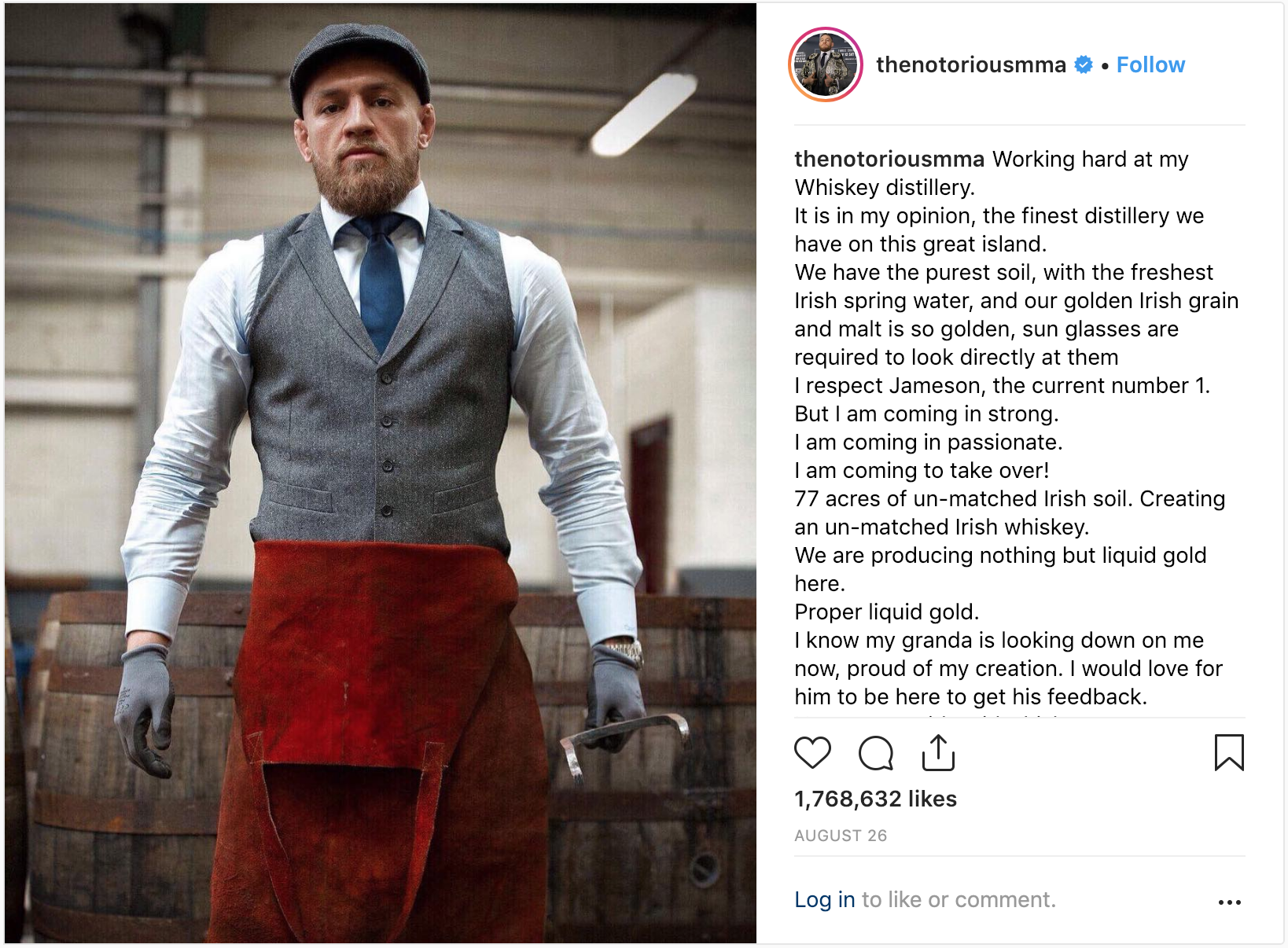
    If using Bushmills stock allows you to claim you own it then half the country owns the place.

    I haven’t tried Proper No. 12 – a name he was forced to settle for after his attempt at trademarking Notorious was shot down – and while there are obviously those who would knock McGregor’s drink for the sake of it, it does appear that his pricing on this release – 35 euro – is a little over the top. Still, I wouldn’t hold that against him – Irish whiskey has long had delusions about pricing, and as a result has a long way to go before it offers the value for money that Scotch does.

    There is one thing that McGregor’s Proper No. 12 will do for Irish whiskey: Increase category awareness. With his tens of millions of fans, he can bring more people into the fold. We all start out on blends, and Proper No. 12 will be a gateway for a small percentage of those who try it and are curious to know more. Obviously a lot of people will drink it because they love him, and never go beyond it, as the liquid doesn’t really matter to them, because this is about his brand. And herein lies my problem with this product.

    Even the slightest scrutiny of McGregor’s rhetoric in recent years should set alarm bells ringing. You can call it banter, or patter, or whatever you want, but the racism, bigotry and Islamophobic dog whistling he has engaged in is an obscenity. I admire his swagger, and his skill, but watching Khabib Nurmagomedov choke him out was incredibly satisfying after all the insults McGregor threw at him about both his faith and his family. This aspect of MMA – the war of words leading up to big bouts – makes it look less like a sport and more like a back alley bar fight. Compare the dignity and grace of Katie Taylor with McGregor’s ‘dance for me boy’ comments to Mayweather and then tell me Ireland should be proud of him. Still, as ambassadors for Irish whiskey go, McGregor is probably less tainted than John McAfee.

    Yes, that John McAfee.

    McGregor’s release was the whiskey headline of the year, and the release of Red Spot was a staid affair in comparison, even if it excited the nerds. Red Spot, along with Green and Yellow, are throwbacks to the old tradition of bonding. I’m not going to digress into a history lesson, because in this case it is largely irrelevant, but here is some musty press release for you to blow the dust off:

    The Mitchell family commenced trading in 1805 at 10 Grafton Street in the heart of Dublin as purveyors of fine wine and confectionery. In 1887, the business expanded into whiskey bonding whereby it sent empty wine and fortified wine casks to the local Jameson Distillery on Bow Street to be filled with new single pot still spirit for maturation in the Mitchell’s cellars.

    The Red Spot name was derived from the Mitchell’s practice of marking their maturing casks of whiskey with a daub of coloured paint to determine the age potential of the whiskey; with a Blue Spot, Green Spot, Yellow Spot or Red Spot indicating 7, 10, 12 or 15 years respectively. Four generations later, the company is still in the wine and spirits business under the stewardship of Jonathan Mitchell and his son Robert.
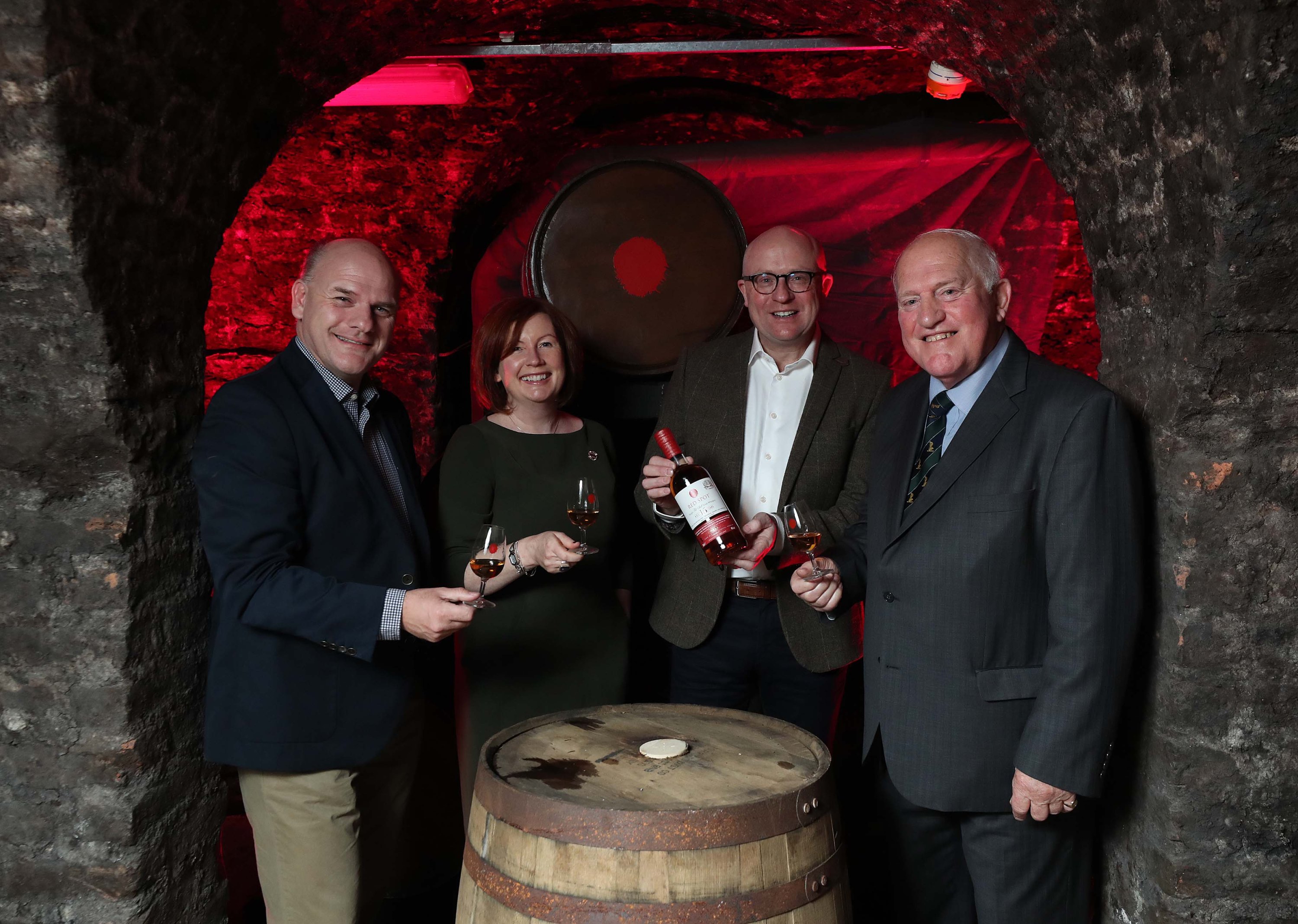
    If I have to explain who these people are then why are you reading this? Also I thought the caption was embedded but it’s not and I’m really lazy.

    Red is a triple-distilled, single pot still Irish whiskey that has been matured for a minimum of 15 years in a combination of casks pre-seasoned with Bourbon, Oloroso Sherry and Marsala fortified wine. I bought a bottle for Christmas and liked it – very sweet, rich and smooth, like meself.

    The problem now for the Spot family is where Blue will sit. It is meant to be a seven-year-old, while Green was meant to be a ten year old. In some super-duper premium releases, Green is a ten, but in its most common iteration it is NAS, and priced at the 50-60 mark. Yellow is a 12 and is 70-80. So where do you place a seven year old? It has to be cheaper than Yellow, so let’s say 60. What then for Green, which as a NAS is presumably aged four to seven years? To me, the easiest way round this is to do Blue as a cask-strength and place it at the 70-80 mark. Obviously I’m no consumer expert, but it will be interesting to see how Blue finds its place. The Spot family needs it though, as it currently looks like three freshers off to a traffic light ball, adorned with yellow, red and green badges, bootcut jeans, Rockports and Ben Sherman shirts. Or maybe Blue Spot will just look like a paramedic showing up at 3am to stop them from choking on their own tongues.

    It was a big year for Irish Distillers Limited – they bought a brewery to secure casks for Caskmates, and also supposedly sorta kinda announced they were building a distillery that would be seperate from their current base in Midleton. Beyond that they continued to release single casks in connection with various whiskey pubs, with a barrage of Powers and Redbreast releases keeping the collectors running around the country like the cast of It’s A Mad Mad Mad Mad World, and keeping a lot of whiskey pubs loyal to the throne.

    Then there is the alleged upcoming IDL release of a gin, and here comes some wild conjecture: I think it could be released under the Method and Madness label. The M&M brand, with its links to the experimentation in the microdistillery, is ideal for a gin (the gin still is also housed within the micro). M&M makes sense for this – they are coming into a crowded market and they need to go small and experimental, ie, the exact opposite of their jaded Cork Dry Gin, AKA ‘the gin your racist aunt drinks’. Gin is a wild scene and if this release from Midleton doesn’t take hold, the M&M brand allows them to quietly shelve it as an experiment that erred on the side of madness. Again, all conjecture on my part.

    Outside of the industry, Ireland has a raft of new whiskey voices. It’s fantastic to see bloggers, YouTubers, Twitter accounts and Facebook profiles popping up and enjoying that general buzz of a scene that is exploding. It’s an exciting time to be a whiskey lover, and I would urge anyone out there with a passion for our native spirit to start blogging, tweeting or just larking about on the internet, as we always need more voices. And besides, there’s always the off chance you might get the odd freebie or ten.

    In May I was invited over to the Spirit of Speyside festival. It is an incredible event and I recommend it to anyone interested in whiskey tourism and how to do it right – the new tasting room in Strathisla was a great education in how you make whiskey tasting fun and interested for those who don’t care all that much about whiskey. It can’t just be a science lesson and a look at some stills – you need to give people an experience they will remember. Let the nerds into the warehouse with the master distiller, but the buses of tourists need more than a wander around a stillhouse and a talk on yeast.

    Obviously, this was my second time being brought over for the Spirit Of Speyside. I was there in 2015 too, and was invited largely because of all the nice things I had written for the Irish Examiner about Midleton Distillery. The festival sponsors in 2015 were Chivas, or, to give them their full title, Chivas Brothers Pernod Ricard. My invite this year also came from Chivas, and I stayed in a Chivas house next to Strathisla. Look, I am basically a giant whiskey whore and we all just need to make our peace with that fact, I have no scruples and I am in the pocket of Big Whiskey, I’m changing my name to Bill Linnane Pernod Ricard, or Jean Luc Ricard, yada yada yada.

    I had assumed that as my French friends were so generous during the year, that I wouldn’t be getting a Christmas bottle. I saw other bloggers and whiskey commentators getting Redbreast 15s and Green Spots, and thought, good for them, as I hummed All The Young Dudes to myself. Then a package arrived, and I gave my wife quite the jolt when I shouted FUCK ME as I opened it and realised what it was. It was, in fact, this:

    Irish Distillers has unveiled the next chapter in its Virgin Irish Oak Collection of Single Pot Still Irish Whiskeys; Midleton Dair Ghaelach Bluebell Forest edition.

    In collaboration with expert forestry consultant, Paddy Purser, the Irish Distillers team of Kevin O’Gorman, Head of Maturation, and Billy Leighton, Head Blender, chose Bluebell Forest on Castle Blunden Estate to provide the oak for the second edition in the Midleton Dair Ghaelach series. Each bottle can be traced back to one of six individual 130-year-old oak trees that were carefully felled in the Bluebell Forest in May of 2013.

    Bluebell Forest is found among the historic stone walls of Castle Blunden Estate in County Kilkenny. Since the 1600s, generations of the Blunden Family have watched over a stand of Irish oak trees with a carpet of luminescent bluebells covering the forest floor.
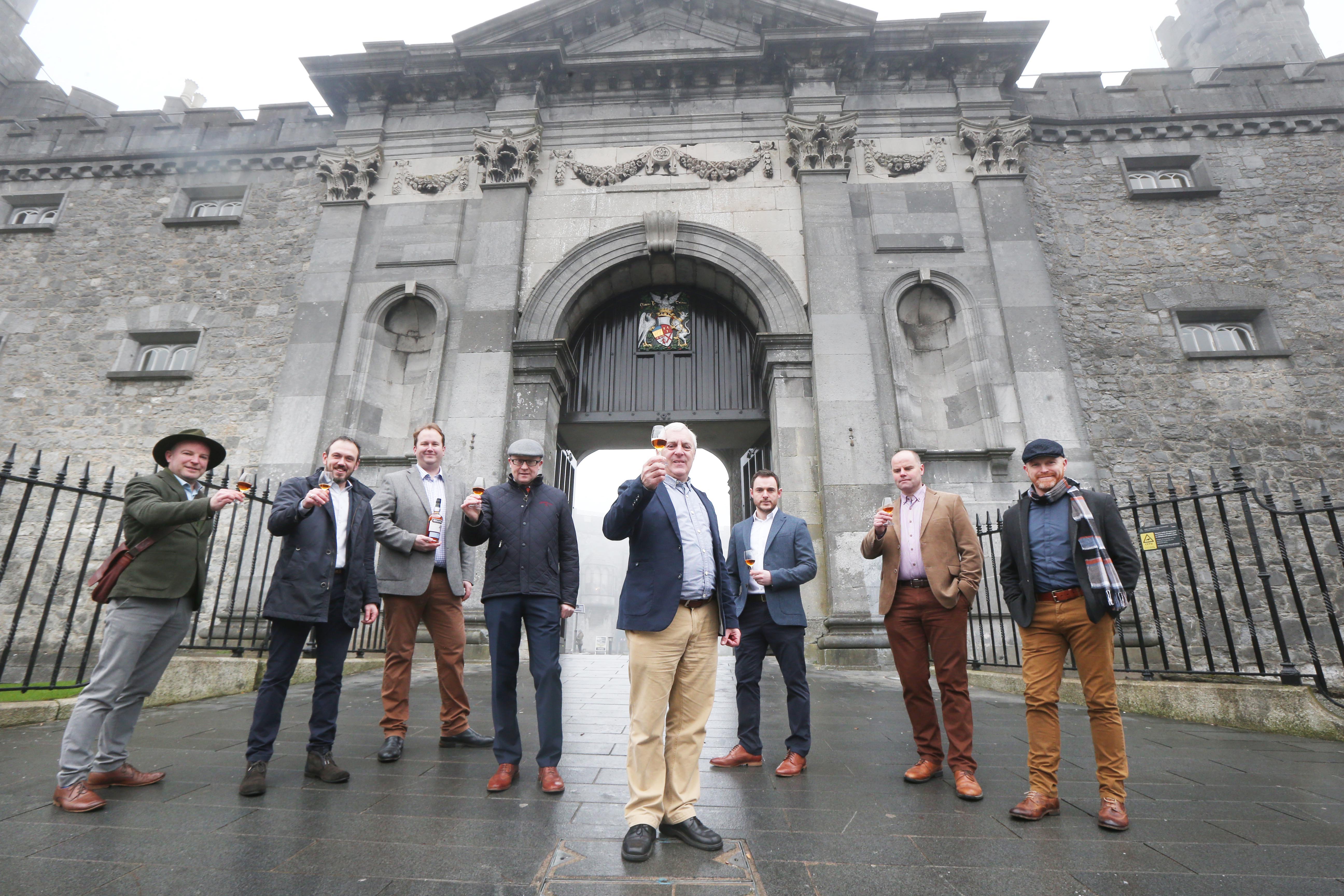
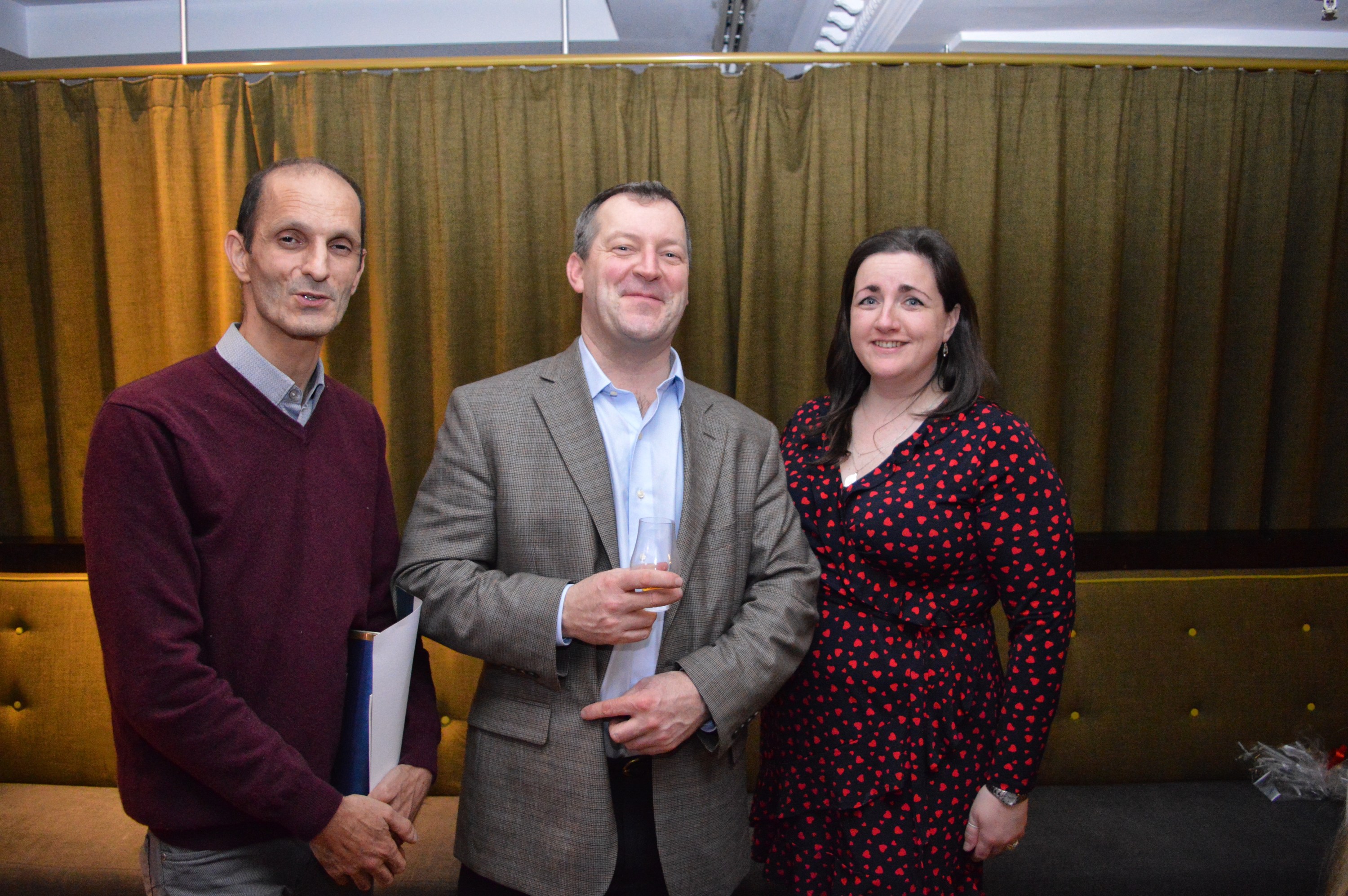
    NO REPRO FEE 12/01/2018 Kilkenny Whiskey Guild. Pictured at a Kilkenny Whiskey Guild (KWG) tasting event are (l to r) Cyril Briscoe, KWG; Eddie Langton, KWG and Langton’s Hotel; Patrick Blunden, Castle Blunden; Kevin O’Gorman, Midleton Master of Maturation; Ger Buckley, Midleton Master Cooper; Dave McCabe, Midleton Blender; Paddy Purser, Forestry Consultant; Jim Rafferty, KWG and The Dylan Whisky Bar, in celebration of Irish Distillers next chapter in its Virgin Irish Oak Collection of Single Pot Still Irish Whiskeys; Midleton Dair Ghaelach Bluebell Forest edition. This exceptional offering has been finished in barrels made from Irish oak grown in the Bluebell Forest of Castle Blunden Estate in County Kilkenny. Photograph: Leon Farrell / Photocall Ireland

    To craft the oak into barrels, fellow artisans at the Maderbar sawmills in Baralla, north-west Spain, used the quarter-sawing process to cut the trees into staves, which were then transferred to the Antonio Páez Lobato cooperage in Jerez. After drying for 15 months, the staves were worked into 29 Irish oak Hogshead casks and given a light toast.

    The whiskey, made up of a selection of Midleton’s classic rich and spicy pot still distillates matured for between 12 and 23 years in American oak barrels, was then filled into the Irish oak Hogshead casks and diligently nosed and tasted each month by Leighton and O’Gorman. After a year and a half, the pair judged that the whiskey had reached the perfect balance between the spicy single pot still Irish whiskey and Irish oak characteristics.

    Bottled at cask strength, between 55.30% to 56.30% ABV, and without the use of chill filtration, Midleton Dair Ghaelach Bluebell Forest is available from November 2017 in markets, including the US, Canada, Ireland, France and the UK at the recommended selling price of $280 per 70cl.

    When this first hit the market I cheerfully remarked that whilst celebrating the great houses (and cashing in on their equally great history) is nice, it’s also worth remembering that they were built on the bones of a million Irish dead. It was a thought that came back to me at Powerscourt as I stood in the estate’s pet cemetery – there are headstones there from 1916, meaning that while the aristocrats were holding funerals for their dogs, Irish people were being lined up and shot because they wanted their freedom. A terrible beauty indeed.

    I made this image which is why it is shit.

    But enough of my inept historical punditry – to some equally inept tasting notes!

    On the nose, sweet red pepper, roasted tomato, the leather/tobacco/spice trifecta in full effect. I’m not sure where this is going – it’s part savoury, part spun sugar, with that curious wood element in the background. Chinese five spice, roasted banana, Black Forest Gateau, shortbread biscuit, melted Twix, and a fair amount of WTFery. It’s not as immediate as the Redbreast 21, but then, what is?

    On the palate, Euthymol toothpaste, fruit pastilles, Skittles, a lot of really bright flavours, and a lot less of those deep, dark ones of RB21. It is smooth, and elegant, but it just lacks that Krakatoa boom you want from something that costs 300. It’s a very well made whiskey, with great balance, but it’s no Dreamcask. However, it’s the element of experimentation with native wood that makes this remarkable – the ability to make a uniquely Irish whiskey that little bit more Irish.

    Of course, I’m not just a corporate mouthpiece for Big Whiskey, I’m also a corporate mouthpiece for medium-sized, grassroots, bootstrap whiskey, in this case embodied by West Cork Distillers. I had eyed them with an air of Cold War paranoia over the last couple of years, seeing them as secretive and touchy. What the hell are they building in there, I growled to myself. Then a chance meeting with John O’Connell changed that, and he threw open the doors in Skibb to me, a trip that became this sprawling piece on FFT.ie. John is one of the most honest, straight shooting people in Irish whiskey, and is quietly doing great things down there. One example of this is his spirit of experimentation, such as their reverse engineering of peated whiskey.
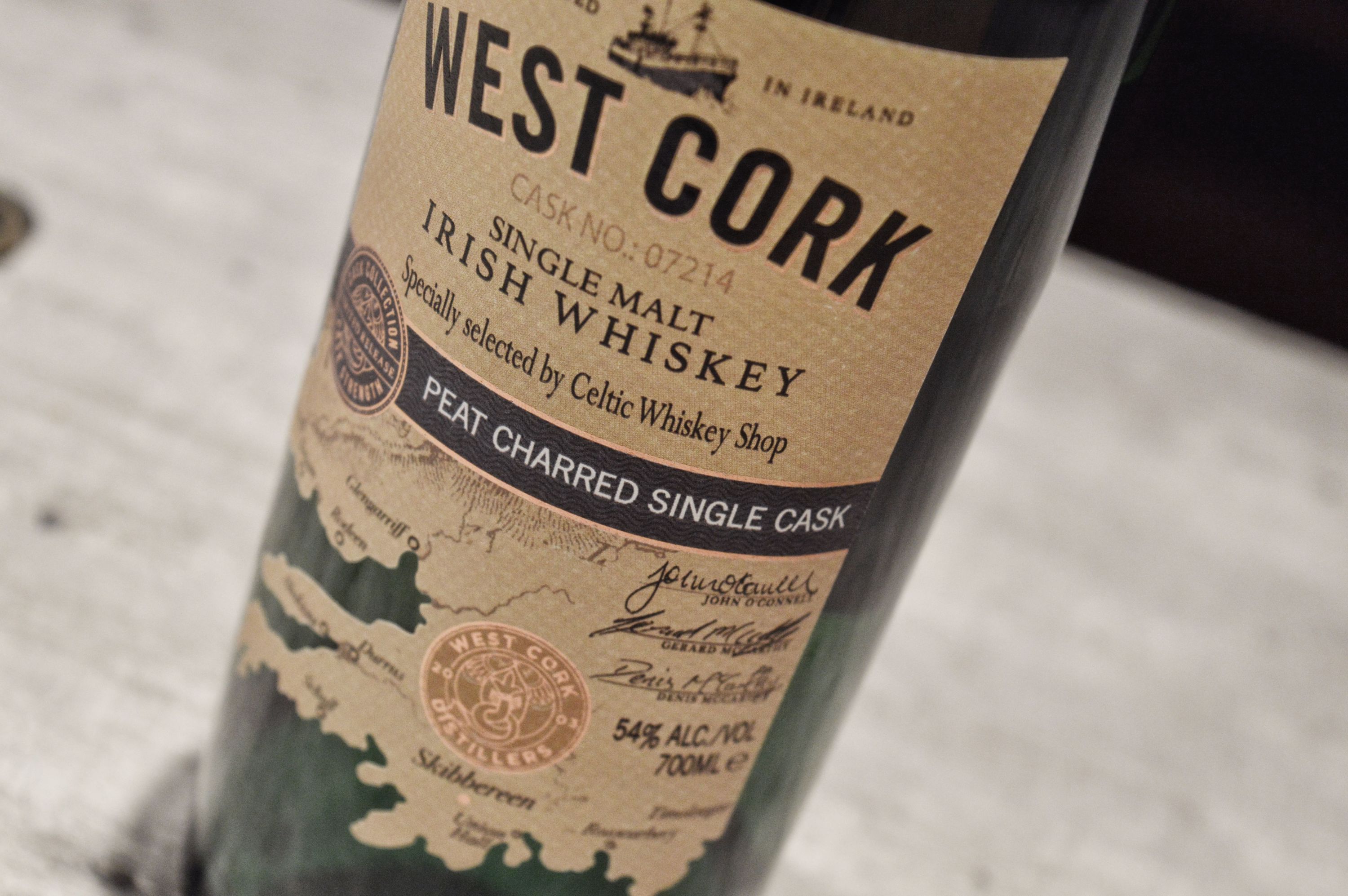
    Peated malt is hard to come by in Ireland – legend has it that one maltster did a peated batch but didn’t clean the pipes properly afterwards, with the end result that a batch of very lightly peat-tainted malted barley went to a very large and notoriously black-hearted brewer. Cue said brewer issuing a notice to all malting houses in Ireland that there was to be no more peating or they would no longer do business with them, thus ending peated Irish malt. Allegedly.  

    Peat is an undiscovered country here – we have a few peated whiskeys, but as far as I know they were all peated in Scotland, using Scottish peat, and – most likely – Scottish grain. As always, I’m open to correction here, so feel free to jump in and school me.
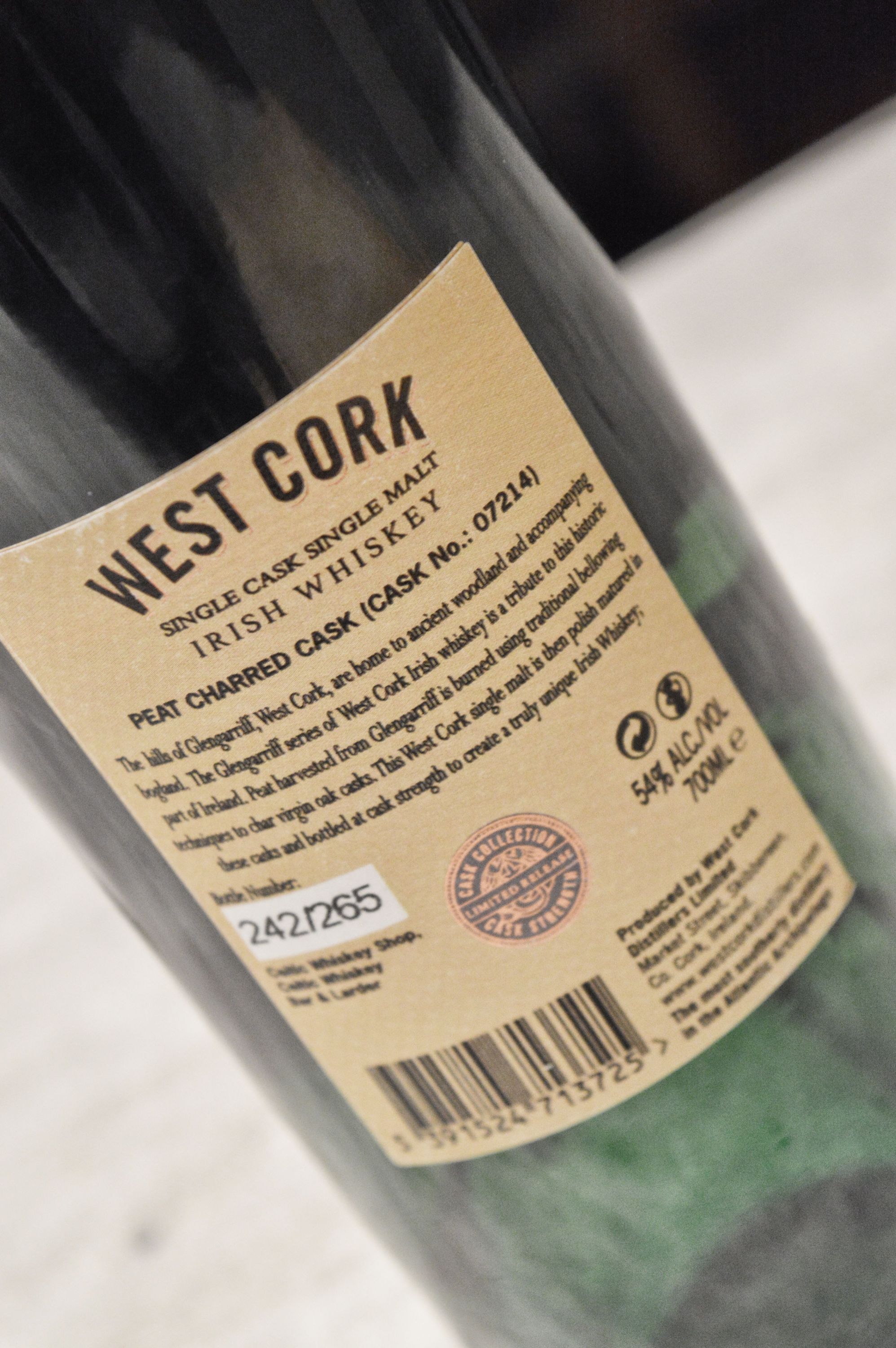
    John O’Connell comes from a background in food science, and experimentation is in his genes, so to create a peated Irish whiskey, he simply infused casks with Irish peat by charring them with a peat fire. Taking single malt aged in sherry butts, he then finished the whiskey in the peat charred cask for another six months, resulting in this release. It’s a single cask, released at cask strength. But what I love about WCD is their sense of fairness – all of their releases are incredibly reasonably priced, which may be part of the reason they don’t often get the respect they deserve.

    Whiskey is a snobbish scene – and I’m as guilty of this as anyone – and a value dram from WCD might get overlooked in favour of a pricier bottle. This peat cask release has a surprisingly clean nose despite the strength – not a huge amount from the peat, but a lot from the sherry – red fruits, black cherry, oatcake, maybe a little red onion jam. Nail polish, but in a good way. On the palate the strength makes itself known immediately. The peat here is minimal – I could see this being used as an intro to peated whiskeys for those who might not be ready to have their face fucked by Laphroaig. This liquid has a lot of sizzle, making way for oily, slightly smokey flavours – hickory smoked bacon, BBQ sauce and caramelised sugar. A short finish, and a fine dram for a good price. I even like the wine-bottle aesthetic they opted for.


    This whiskey is a brave experiment for a small distillery and I think it’s worth a punt. Obviously, there are those who would disagree, but I love that WCD took a risk. The Irish are nothing if not inventive, and I welcome a bit of experimentation – it doesn’t matter if that is with strange casks, biodynamic barley, strange grains, local peat, or even pellets of African mahogany. The Dair Ghaelach and the WCD come from opposite ends of the spectrum – one is a super-premium release from a massive distillery with money to burn; the other is a bargain dram from a distillery that has a still which was made from a hotel boiler. But what unites them is a willingness to experiment and try new things, and for that they are both to be commended.

    And so to 2019. How many more distilleries are going to make it over the line? Maybe it is just my pessimistic nature, but to me it seems like we might be hitting peak distilling. Clon are on stream, Boann are there too, Glendalough are working away at getting their whiskey distilling operation up and running, Tipp are opening in 2019 in Dundrum House. I find myself looking at the IWA distillery map from a couple of years ago and marvelling that so many have actually made it. Granted, some on the map won’t make it, but overall it is a pretty impressive feat that we went from fuck-all distilleries to this many in a short period of time. There will be teething problems, but any concerns I ever had about the integrity of our messaging has nothing on the absolute mess that is Japanese whisky.

    That said, if I was an American with roots in north Cork and I bought a bottle of Kilbrin Irish whiskey, produced by the Kilbrin Distilling Company, I would expect the liquid within to have some link to Kilbrin, especially as they say it is from the parish of Kilbrin.
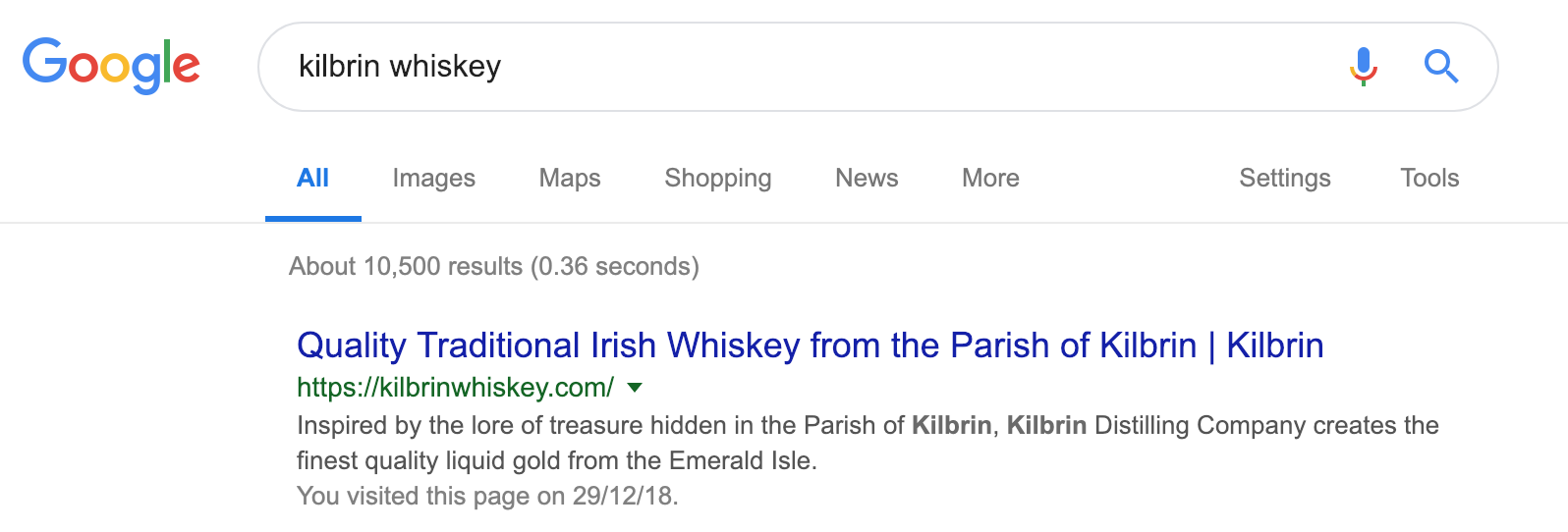
    Spoiler alert: Kilbrin whiskey has nothing to do with Kilbrin, apart from being ‘inspired’ by a mythical treasure buried in Kilbrin. It’s okay though, as this was a rookie error by a small firm with no background in whiskey, actually hang on I’m just checking my notes here and it would appear that the firm behind Kilbrin Whiskey is actually a subsidiary of Scots whisky giant (and owner of Tullamore DEW) Wm Grant & Sons. Well now I don’t know what to think.

    The problem here isn’t really transparency per se – I genuinely don’t care where this whiskey comes from (chances are it is from Bushmills). I do start to care if I feel that the wool is being pulled over the eyes of American consumers, as there is also the contagion effect of mistrust. I don’t buy Japanese whisky anymore as I don’t want to have to turn into Hercule Poirot just to find out if the liquid was actually created in Japan, and if a couple of poorly-thought out brands burn the American consumer then we are doomed.

    Yes, all Irish whiskey is Irish, so we are nowhere near the Japanese situation. But surely if place is being used as a selling point then we should consider that down the road people might want to visit that place to see where the whiskey came from? Why not just speak straight, like the fantastically blunt explanation of Blacks Whiskey and where it originated. Besides, if you are going after the average American consumer, surely people rather than places are both safer and more engaging – how many myths and legends do we have that could be exploited for a brand story? Feckin’ loads of them, all we have is batshit crazy stories about giants and mad yokes fighting huge dogs, stick them on the bottle rather than poor auld Kilbrin, a place I wouldn’t want any American wandering around in the hopes of finding a distillery. I’m not even sure they have a post office.

    The good news is that even if we burn our bridges with America, at least we will have China to plunder, as Bord Bia have commissioned a report on attitudes to Irish whiskey there, and are looking for the findings in ‘a visually appealing, high-definition conference PowerPoint presentation which highlights the core insights and offers recommendations for the industry’. Wow – Powerpoint, I’d better hit pause on my Hootie and the Blowfish mp3 on my Zune, log off my dial up internet and use my landline to call 1996 because if you need to specifically ask people to use Powerpoint, you are setting a low bar. It just reminds me of the laughable LOI rebrand.

    Irish whiskey bonder Louise McGuane, who has vast experience in both the US and Asia with various drinks brands, summed up what the report should say in a single tweet:

    Now if only I could find a way to screenshot that tweet into a Powerpoint slide and maybe get it to spin into frame, then I could be raking in some sweet, sweet tax dollars from Bord Bia.

    It wasn’t all good news for Irish whiskey this year – Brexit still poses massive uncertainty for Northern Ireland’s burgeoning whiskey scene, while I’m personally holding Brexit to account for Master Of Malt no longer shipping to Ireland. Apparently, it was always illegal for whiskey to be shipped unaccompanied into Ireland, but nobody seemed to give a damn when I brought in a few grands’ worth over the last four years. Now, with Brexit looming, there would appear to have been a clampdown. Thus, I have nowhere to go for my cheap deals – even the whiskey from my hometown was often cheaper on MoM than it is right here where it is made. If any whiskey fan out there has a solution to this mess, please HMU in the comments.

    This sprawling disaster of a blog post is only an incredibly brief sliver of rumour and innuendo, and in no way representative of just how alive Irish whiskey is right now. If I could chuck in my job and spend six months doing a Barnard and visiting every distillery in Ireland, I would do it in a heartbeat. But I can’t, so sadly you get this armchair punditry instead, in which I have managed to not mention about 90% of the big events from the year – Teeling pot still, Kilbeggan Rye, Dingle maturing like a fine wine, and the pagan science going on down in Waterford, which is part Wicker Man, part Gattaca. So here’s to 2019, 2020, 2021, and all the great whiskeys to come. As the old song goes, things can only get better.

  • Death and empire

    I hadn’t been in Powerscourt House & Gardens since I was a child. My memories of it are vague – rolling down the grassy hills with my sister, getting lost in the Japanese gardens, and being scared by the statues of gods and monsters. Walking through the house and back out onto that incredible garden, three decades later, was a supremely odd feeling – my family are gone, and I was there alone, wandering around thinking about all those memories I now carry alone, moments to which I am the only living witness, and how no matter the power of the love we feel for each other, in the end it is all for naught as every living thing will one day die. So you have to just grab this motherfucker of a life with both hands and sink your teeth into it. In other words, when you get an invite to the opening of a distillery, even one 300 kilometres away, you go.

    At some point down the road I will write a proper piece on Powerscourt Distillery, but some initial thoughts: What this project has is pedigree. Director Alex Pierce has a background in start-ups, but it is his link to Arran that is most impressive – his family have a track record of setting up and operating a very successful distillery. Master distiller Noel Sweeney is that most rare of creatures – an actual master distiller. There are many who use that title, but to me it has to be earned, rather that just assigned. Mastery should be proved.

    So you have a director who knows what he is about, a distiller who is a master, and a setting that is glorious. The location, on the grounds of Powerscourt estate, and next door to one of the great old houses of Ireland, offers elements that many distilleries here lack – history, heritage, grandeur.

    Powerscourt is also home to an exceptional five-star hotel, one that a commoner like me could nary afford. I had heard it was quite the celeb hangout, but nothing prepared me for who I spotted when I walked in the door, the biggest celebrity in Ireland if not the world – Craig fucking Doyle! Incredible, can’t believe I saw him in real life and not in an in-flight magazine trying to sell me insurance or electricity. 

    Anyway – here is some rich, delicious press release to fill this post out a bit:

    The Powerscourt Distillery Launches Three New Whiskey Expressions

    Introducing Fercullen Premium Irish Whiskeys

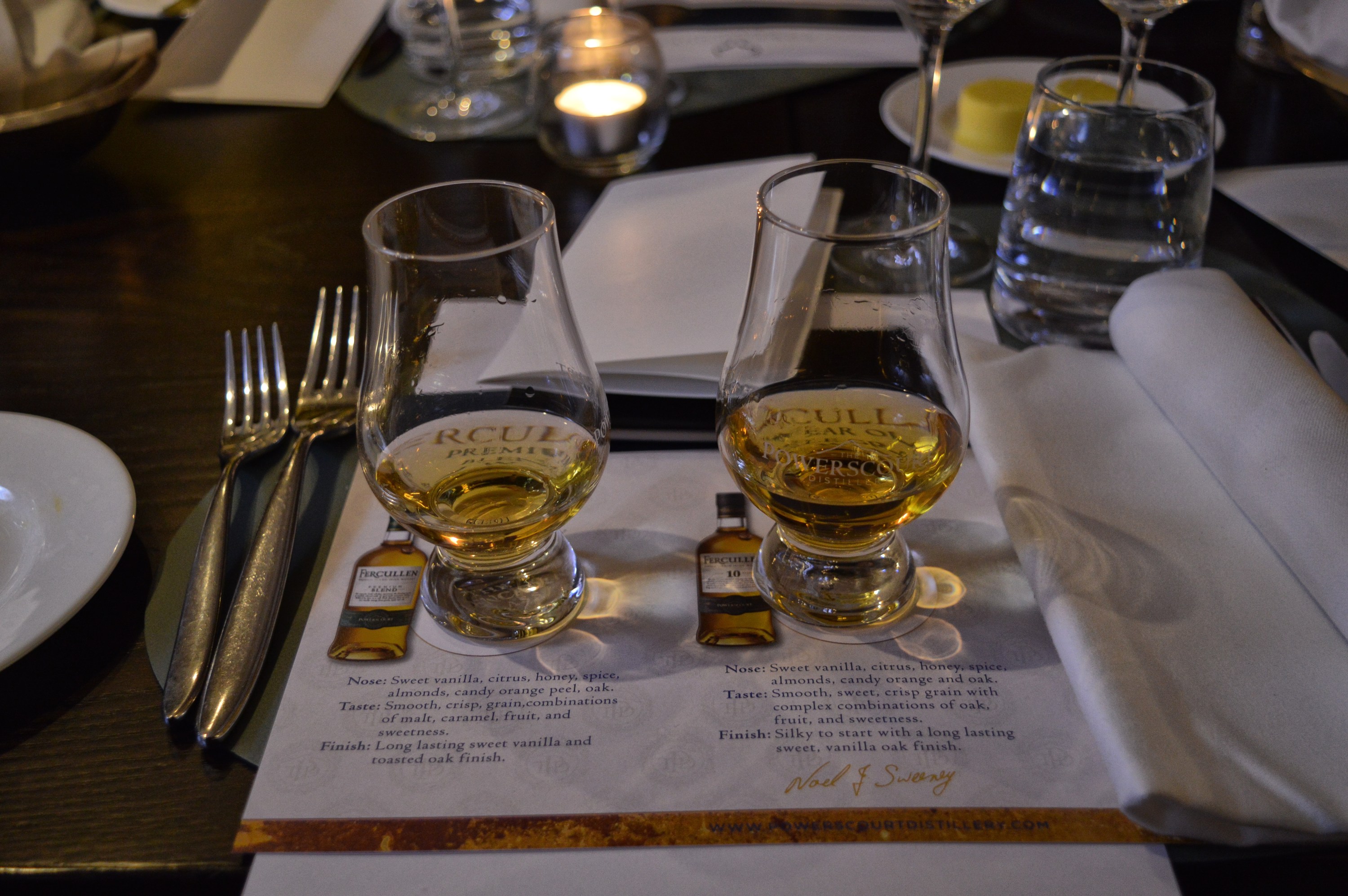
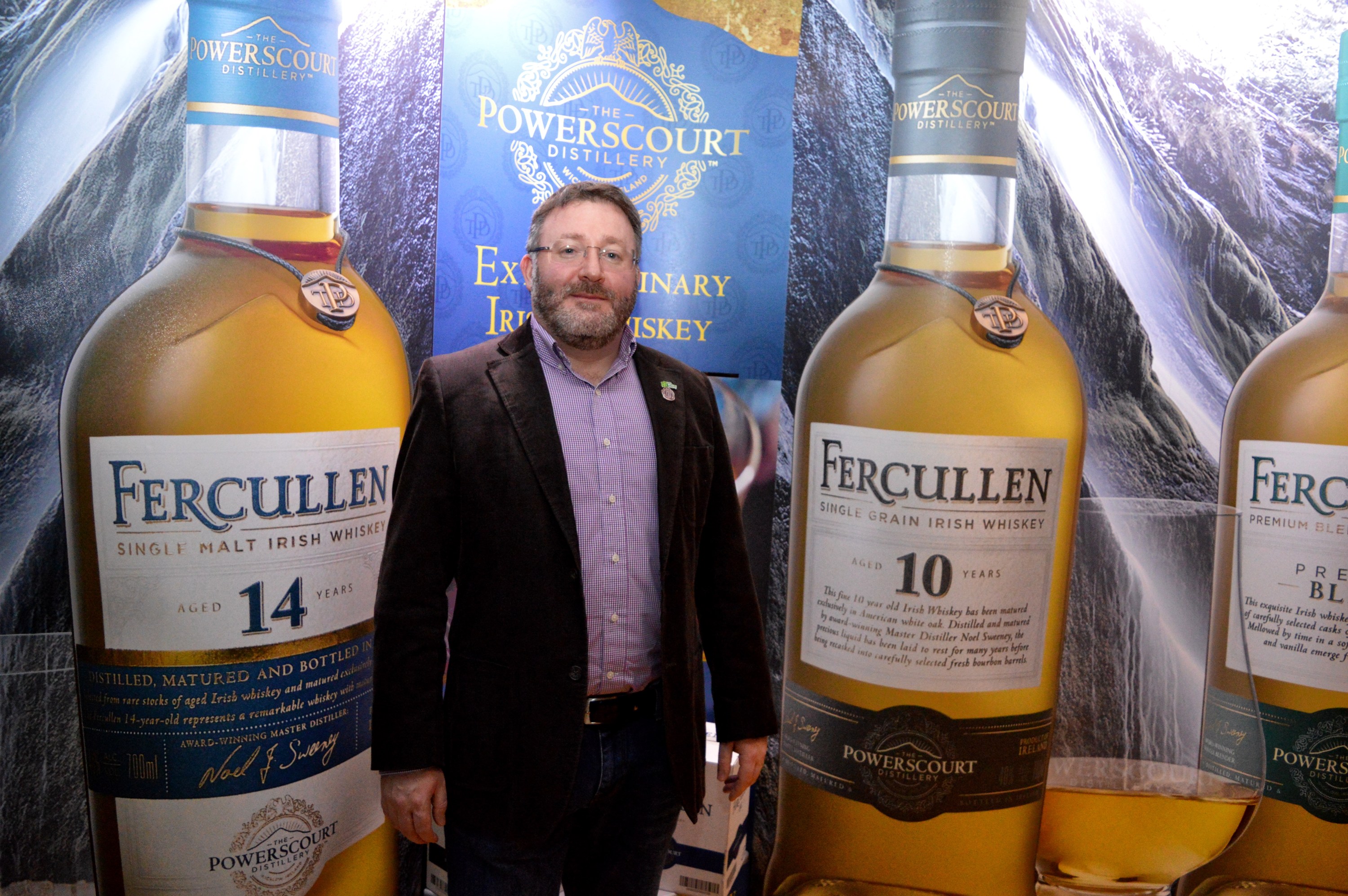
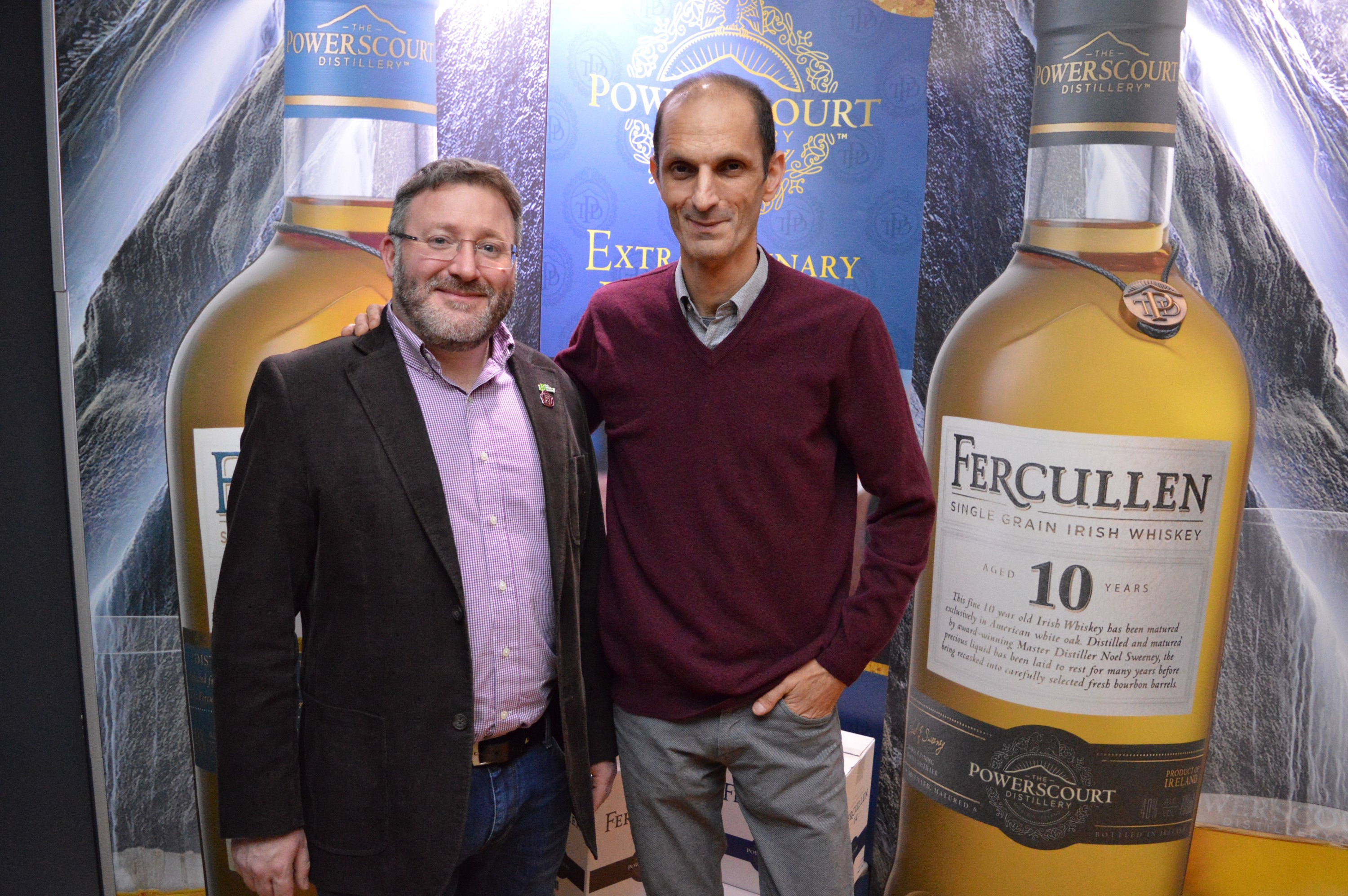
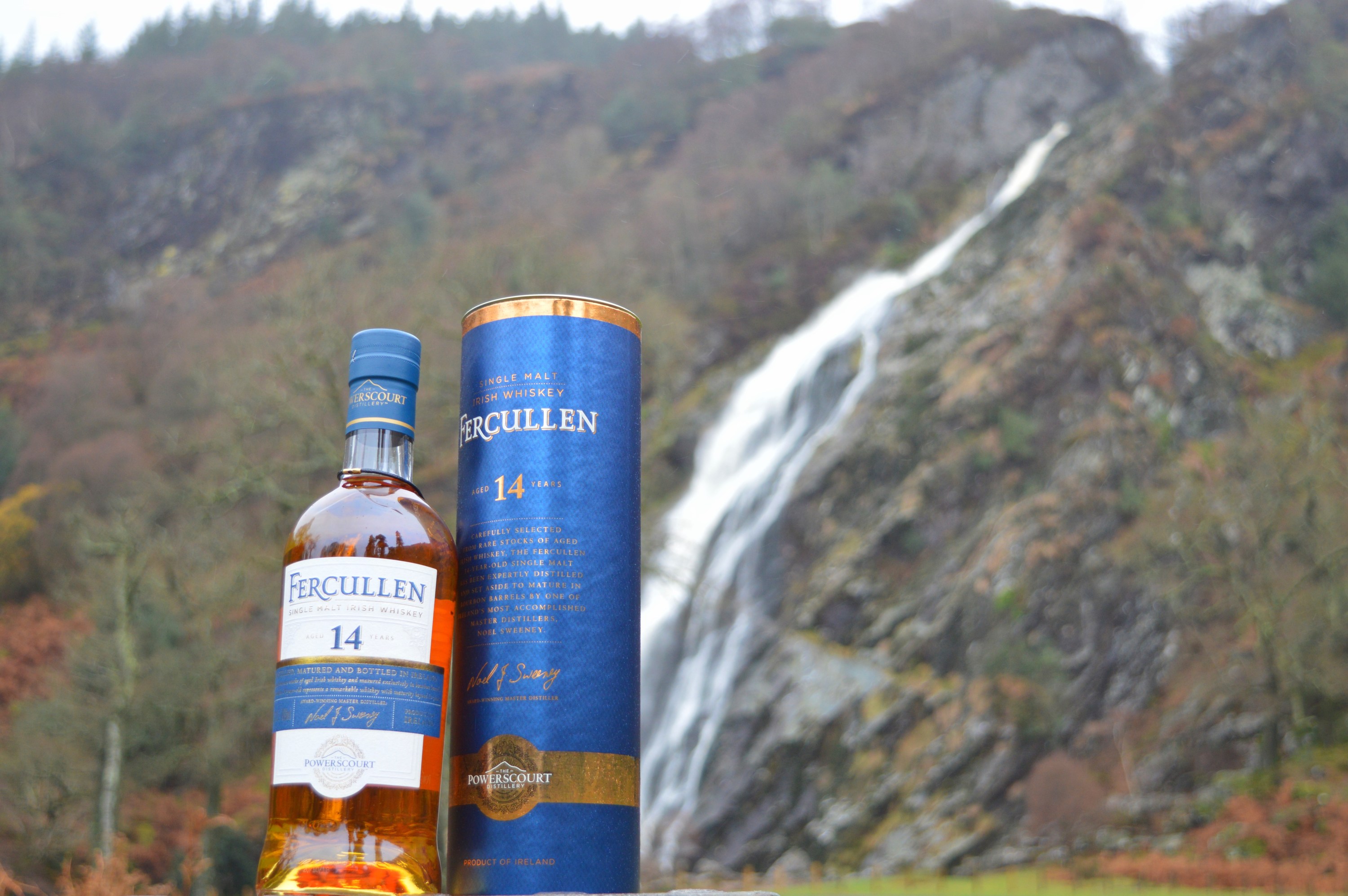
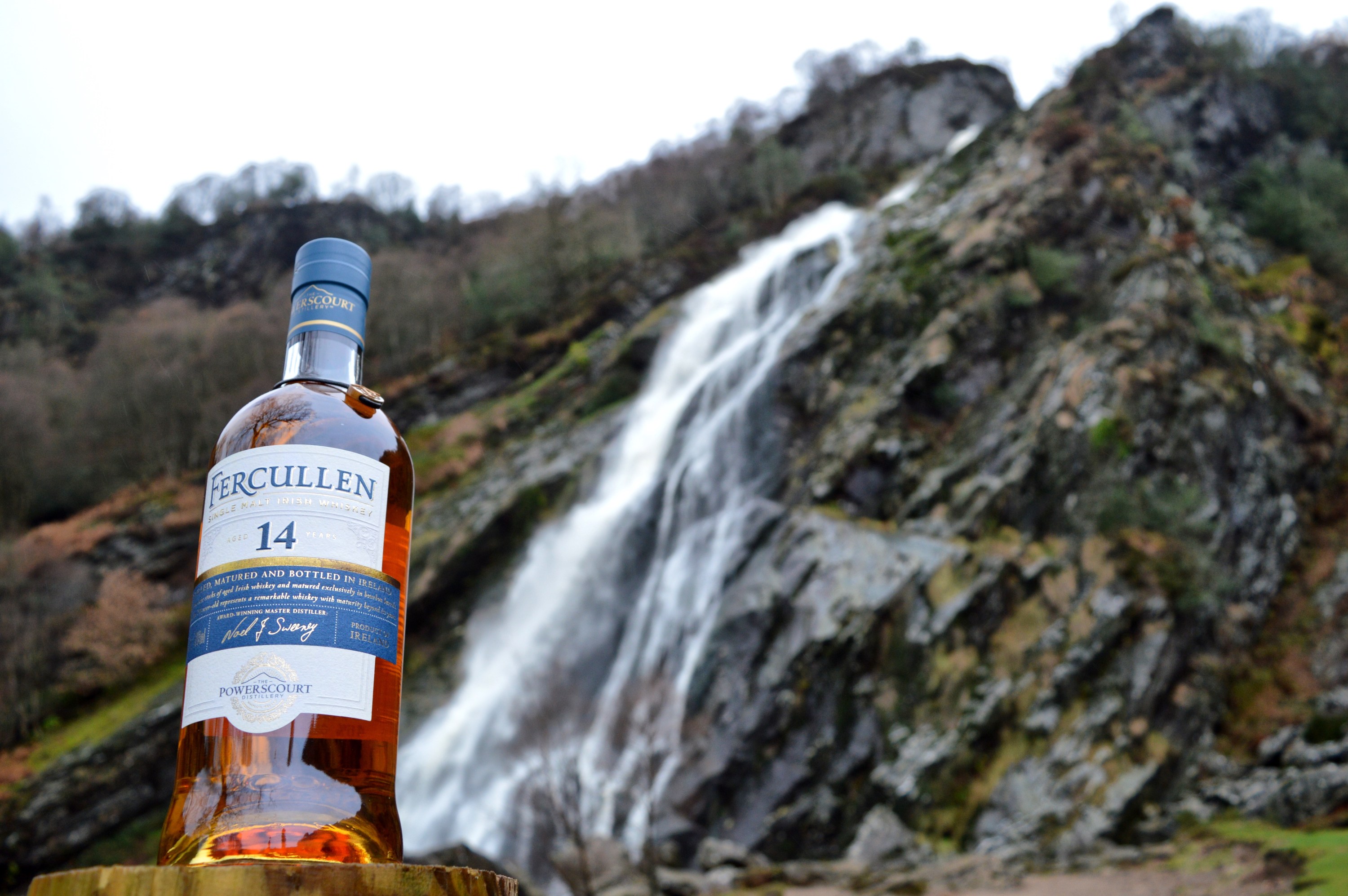
    The Powerscourt Distillery proudly unveils three new Irish whiskeys under the brand name Fercullen; Fercullen 14-Year Old Single Malt Whiskey, Fercullen 10-Year-Old Single Grain Whiskey and Fercullen Premium Blend Irish Whiskey. Released by award winning Master Distiller Noel Sweeney, these opening expressions form part of a planned portfolio of premium Irish whiskeys being launched by the distillery and soon to open Distillery Visitor Centre.

    ‘FeraCulann’ or ‘Fercullen’ is the Gaelic name given to the ancient and strategically important lands that surround and encompass Powerscourt Estate. Literally translated it stands for “Men of Cuala” or “Men of the Wicklow Hills”, the historical context of which has involved several centuries of local discourse, dispute and battle prior to the arrival of peace and calm in the hands of visionary custodians.

    Set against the stunning backdrop of the great Sugarloaf Mountain and enjoying a long heritage of dedication and craftmanship, Powerscourt has become one of Ireland’s most treasured estates – an inspiring location where the extraordinary is possible. With an underground lake of the purest Wicklow water, close proximity to rich farming lands and a temperate coastline climate It sets the perfect stage for distilling and maturing Irish whiskey.

    According to Alex Peirce, Chief Executive of The Powerscourt Distillery.  “Our location is important in that it provides inspiration. The local history, heritage and natural beauty of Powerscourt are all  cohesive elements in providing the perfect platform for Noel’s work. We use pure mineral water that has filtered down into the Estate from the surrounding Wicklow hills and we are located close to some of the best barley growing lands in Ireland. Perseverance and patience have long represented the cornerstones to whiskey production and so it seemed fitting to adopt “Fercullen”, the ancient name for these lands, to introduce to our whiskey story at The Powerscourt Distillery.

    Once the hub of all farming on the Estate, an Old Mill House that dates back to 1730’s has been faithfully restored and extended to form part of the Distillery buildings. It boasts a water mill deep in its foundations, while outside on the north-west wall of the building, a bell that was used to herald the daily lunch break to workers in distant fields presents a nod to former times and local practice. Both are being preserved to form part of the wider visitor experience.

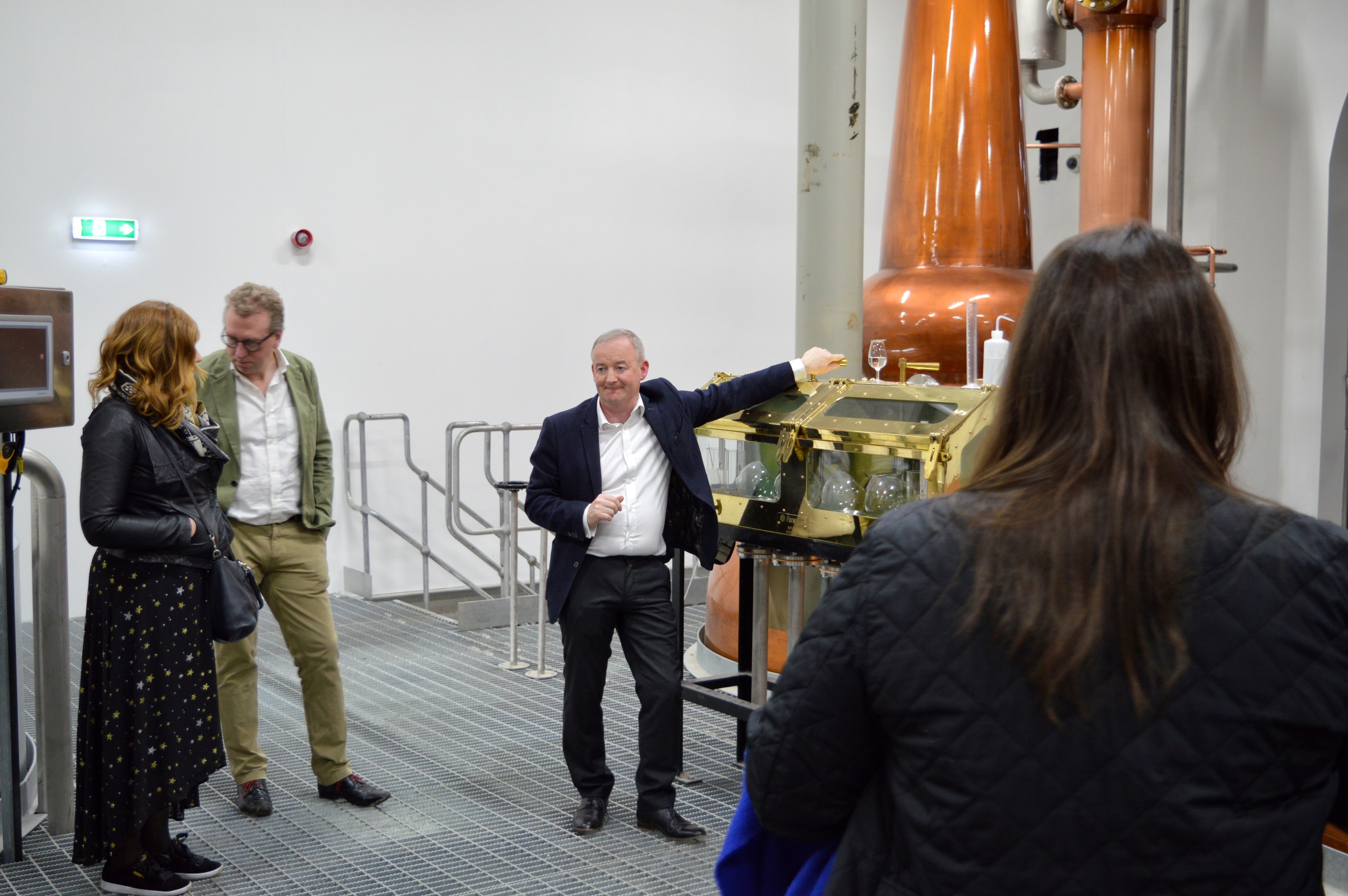
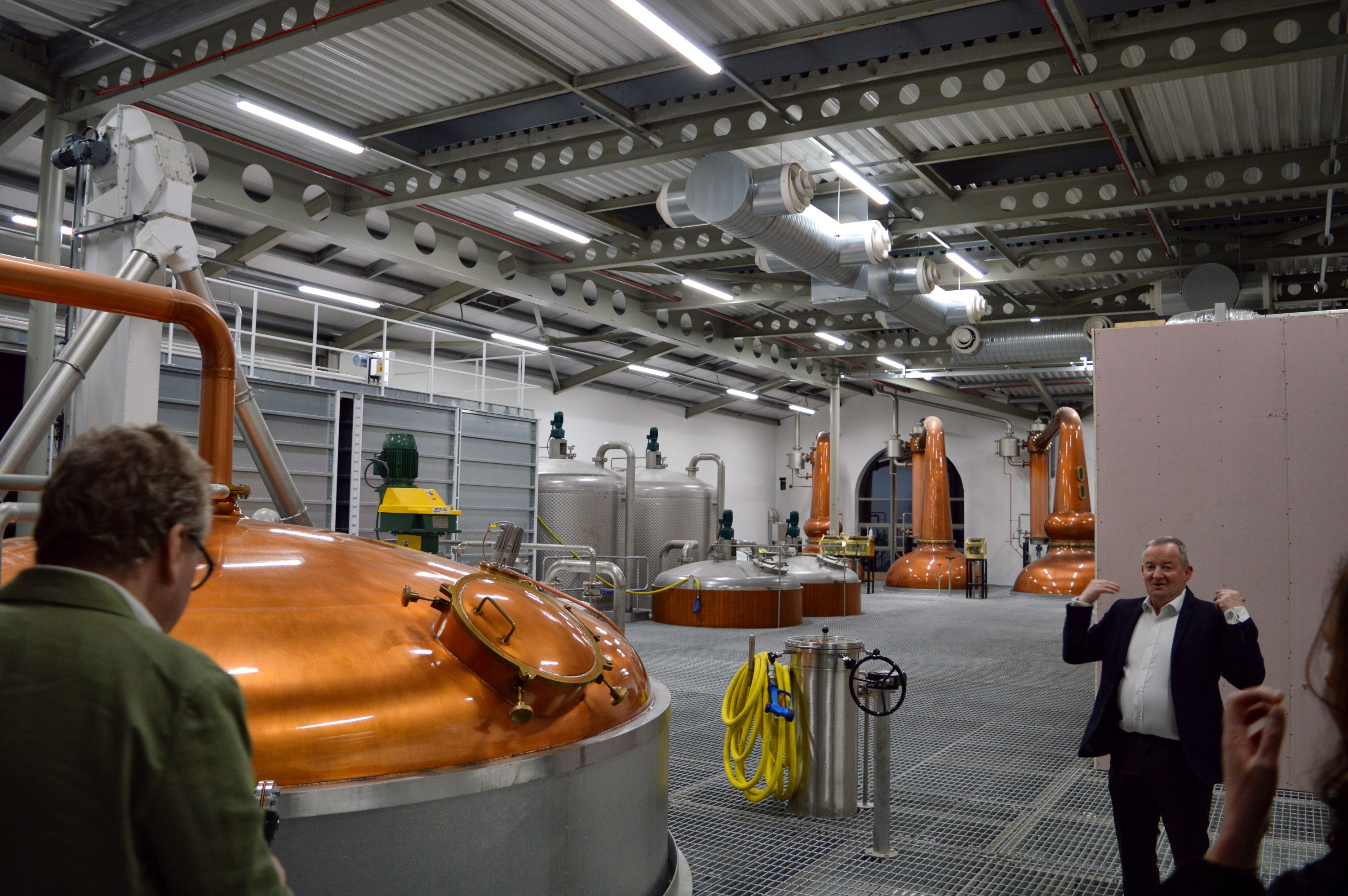
    The carefully appointed distillery, visitor centre and adjoining maturation facilities form the initial phase of the building project. Three traditional, custom-designed copper pot stills from world-renowned Forsyths form the centrepiece at The Powerscourt Distillery.

    The Powerscourt Distillery Master Distiller Noel Sweeney has played a huge part in the design and commissioning of the modern plant. Noel’s experience, spanning over 30 years, has earned him global recognition and sits comfortably in a place renowned for attention to detail, craft and vision.  Having formerly distilled the spirit that will be used by Fercullen, Noel is now also responsible for the new spirit being produced and laid down by the distillery – a unique attribute on today’s Irish whiskey landscape.

    “The decisions that I make impart huge influence over the spirit produced,” says Noel Sweeney, Master Distiller at Powerscourt Distillery.  “So many choices and decisions affect the way that spirit forms and matures into whiskey”

    To mark and celebrate its opening year the Powerscourt Distillery has also designed a limited availability Cask Programme – the first and only such programme that it will undertake. At 397 casks (each one representing a foot of water from the nearby Powerscourt Waterfall), the cask programme offers a premium level of involvement and association with the distillery to private individuals who wish to become part of The Powerscourt Distillery family. Together with ownership of a 200L new fill cask to be housed in the Distillery’s warehouse on the Estate, members will enjoy exclusive access to special events and private whiskey tastings, first access to limited edition whiskeys and an exclusive presentation of the otherwise unavailable Fercullen 16-Year-Old Single Malt.

    Fercullen 10-Year-Old Single Grain Whiskey €58 RRP, Fercullen 14-Year Old Single Malt Whiskey €92 RRP and Fercullen Premium Blend Irish Whiskey €45 RRP is available to purchase at The Powerscourt Distillery & Visitor Centre, The Powerscourt Estate, Enniskerry, Co. Wicklow; The Celtic Whiskey Shop and Mitchell & Sons, or online from www.powerscourtdistillery.com

    The Powerscourt Distillery and Visitor Centre is currently available for a private, group bookings by appointment only.  Contact claire.hickey@powerscourtdistillery.com for information. For information on cask purchases please contact info@powerscourtdistillery.com.

    Master Distiller Noel Sweeney has received several awards for distilling and whiskey excellence.  He was inducted into The Whisky Magazine ‘Hall of Fame’ in 2017 and currently remains as one of just two Irish distillers to have been recognised in this way.  A globally renowned whiskey expert, Noel is passionate about his craft and has released many international award-winning Irish whiskies over the years. He is a member of the Irish Spirits Association, a founding member of the Irish Whiskey Association and a key contributor to the GI technical file for Irish whiskey.  Noel has devoted over 30 years patiently honing his craft and learning from former masters. He held a former position as assistant distiller to Gordon Mitchell, the first distiller at the Isle of Arran Distillery, Scotland.

    The provenance of The Powerscourt Estate can be traced back to the 6th century, to a territory that stretches across fertile plains and through rugged mountainous terrain.  Known in its native Gaelic tongue as “Fera-Culann” or Fercullen, its location in the foothold of the Wicklow mountains, so close to Dublin, made it a highly valued, strategic place.  Ownership was claimed by numerous factions over the centuries, from the native Clans of O’Toole and O’Byrne, to the Norman house of LePoer, who built a castle there and from whom the estate takes its name.  In the early 17th century, Powerscourt was gifted by Queen Elizabeth I to a favoured army general, Sir Richard Wingfield, an ancestral relative of the Slazenger family who currently hold the Estate.

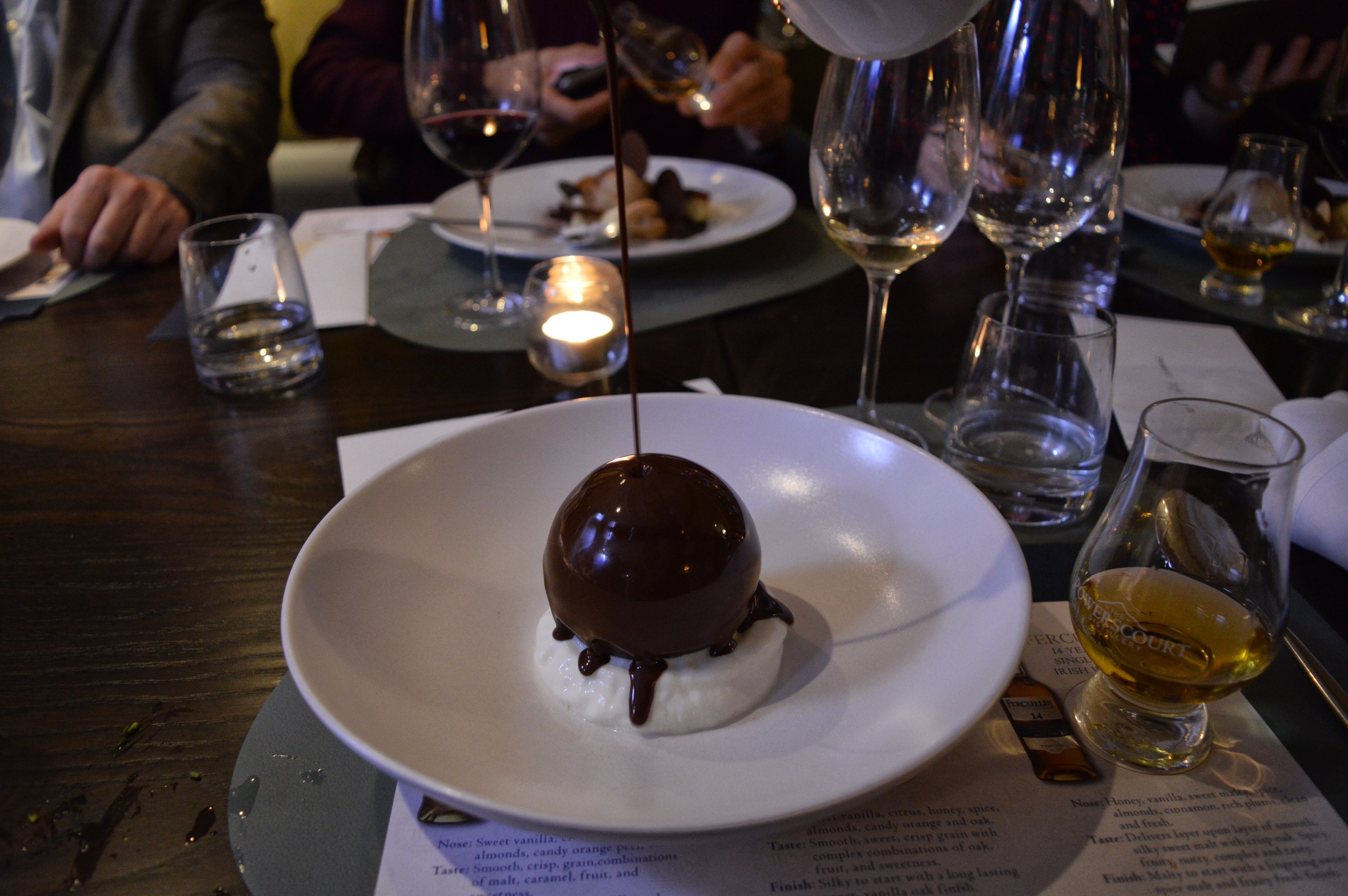
    One of the best parts of the evening, apart from the incredible meal, great wines, cracking whiskeys, and being seated next to Noel Sweeney and hearing all his insane stories from the business, was seeing so many people who care passionately for Irish whiskey – John ‘Whiskey Cat’ Egan, Serghios from Irish Whiskey Magazine, the Burkes from Cask Magazine, John Wilson from the Irish Times, Suzi and Liam from TheTaste, Susan ‘Not The X-Factor One’ Boyle – a writer, performer, PhDer, and general Renaissance person – and Leslie Williams from the Irish Examiner, the first journalist to start raising the transparency issue in Irish whiskey. It was like seeing The Avengers in real life. 

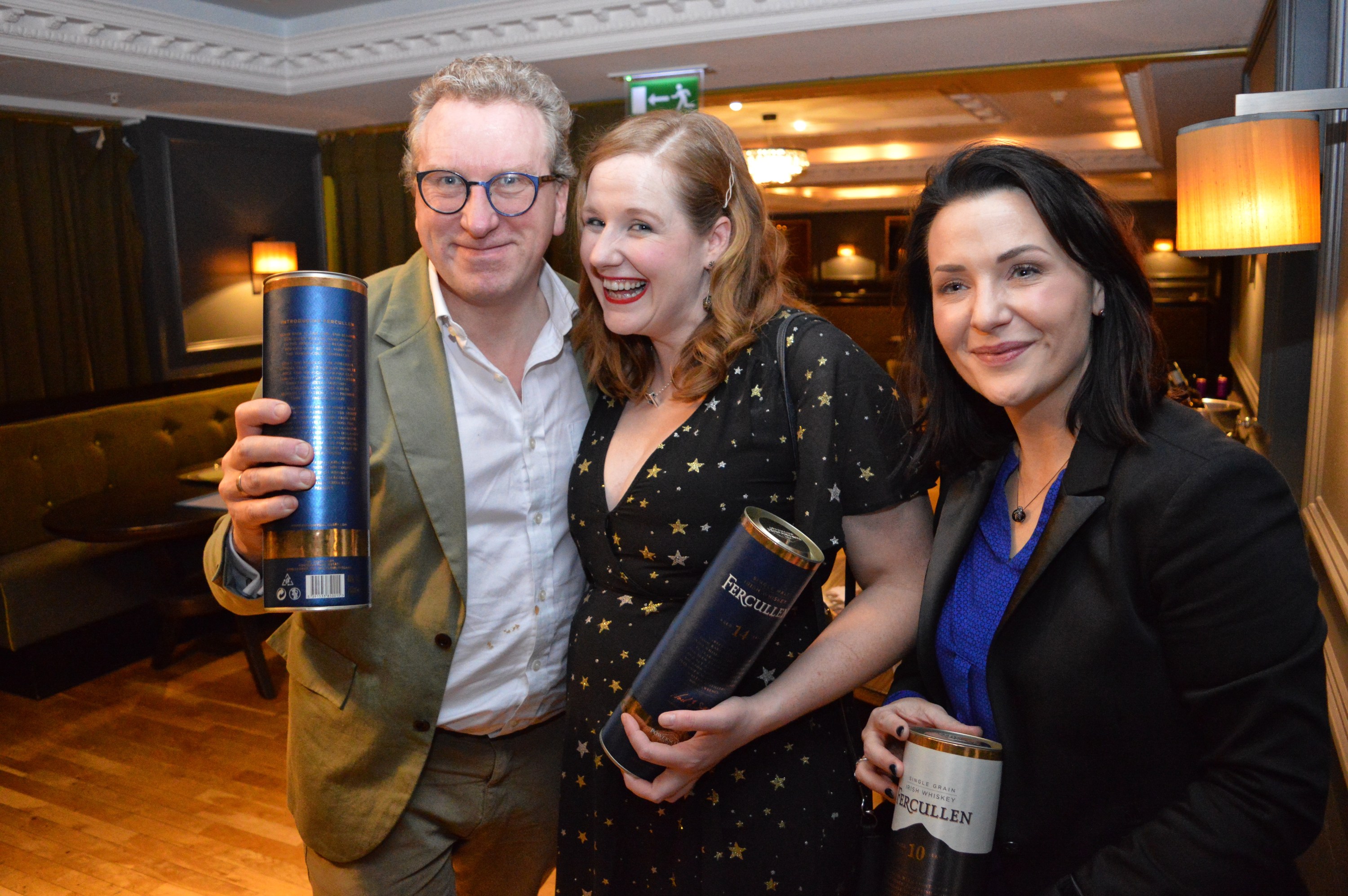
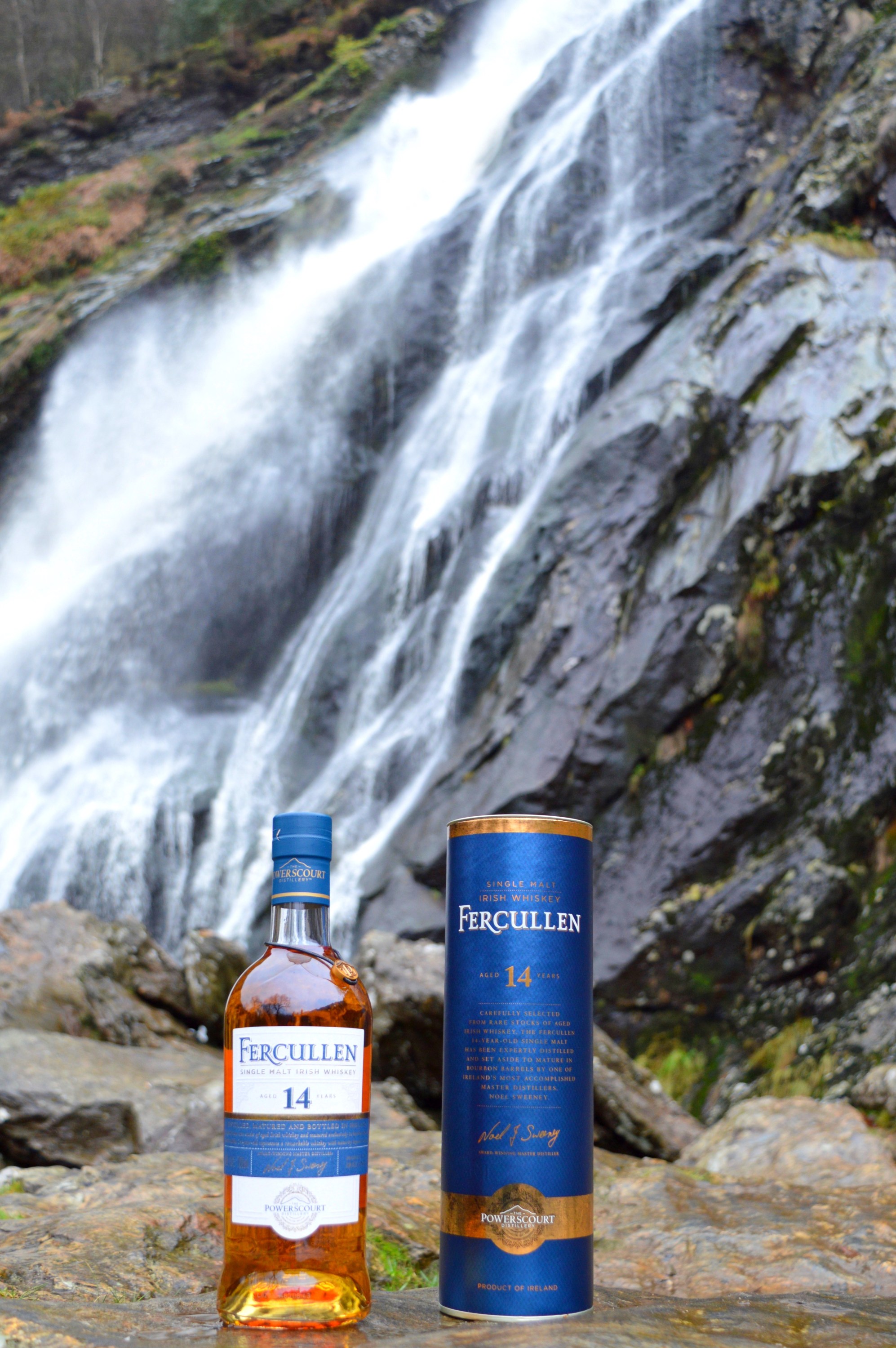
    My many thanks also to Rebecca and Sarah from Burrell PR for inviting me, and to everyone for putting up with me giving out about my kids, who I missed terribly and raced home to see the next day. Well, raced home once I went to the waterfall and took these photos, like a sadcase.

  • Start to Finnish

    A curious thing about the passage of time is how it is slower in our minds than it is in reality. Looking forward to anything feels like forever, while looking back it all seems like yesterday. In 2014 I was stumbling into an obsession with whiskey when I came across an Irish name in a feature on a distillery in Helsinki. I got in touch with the person – Seamus Holohan – and interviewed him for the Evening Echo, because if it has even the vaguest connection to Cork, it has got to go in the Echo. He was at the start of his business journey with two old friends, talking about bringing rye whisky to the Finnish market. Thinking to myself, well, four years is a long-ass time to stay in touch for updates, I put the Helsinki Distillery from my mind and completely forgot about Seamus and his dreams until earlier this year when I saw a tweet about new travel retail whisky from Finland – Seamus’s distillery had a whisky. Naturally, being completely shameless, I asked for a sample to review, and Seamus, being a genial chap, sent me an entire bottle, and filled me in on what had been happening for the Helsinki Distillery since we last spoke.

    “The last four years have been spent building the factory, the storage spaces, raising capital, starting sales on several fronts, hiring, launching products to help fund the whiskey production, and realising that making products is only the tip of the iceberg when it comes to the spirits business – it’s all about the brand.

    “I can thorough recommend starting a distillery to anybody who wishes to call themselves a true entrepreneur and work the proverbial 24 hours-a-day, seven days-a-week. At the same time we opened the visitor centre (another huge project), won many international awards with our Spirits, and by accident have created a new Premium Long Drink category.”

    Long drinks like the Tom Collins are well known around the world, but in Finland the long drink is a distinct category all on its own. Dating back to the summer Olympics in 1952, the Finns wanted to be the perfect hosts and so they came up with the Finnish Long Drink, a beverage usually concocted from a mix of gin and grapefruit soda. It was a hit, and is still so popular to this day that you can often get it on draught.

    Finland has remarkably progressive taxation policies, low crime rates and high employment. But starting a business in a utopia is just as hard as starting one anywhere else, as Seamus discovered.

    “This has been the most difficult start-up I have been involved with but also the most interesting. Now the company is moving to the next stage and I¹m spending more time with Excel and the joys of budgeting, sales plans and the like. Nobody has asked me for over two years if the company will still be in existence in five years and we have 14 people employed between the distillery and visitor centre. Is survival the new success?”

    As for the rye, it has a beautiful look, one that was very consciously Nordic: “The idea was to have a Nordic whiskey without copying a Scottish or Irish whiskey, for example. Also we have the ambition to not only distill the Nordic ingredients (hence the local crop here of rye) but also to try to use the Nordic simplicity in the design of the label and speak something of the culture and traditions of the Nordics. The bottle should convey premium, include only the amount of information required but all that whiskey enthusiasts want, give the feel of small batch, and made with care. The label is designed by Aleksi Ahjopalo (https://www.ahjopalo.com/) and the box comes from Starcke (http://www.starcke.fi/en/home/).”

    While rye may have bought them locavore cool, it is also a thriving category – American rye whiskey production increased by 778% between 2009 and 2016, equaling a 900% rise in revenue, according to the Distilled Spirits Council. So the Helsinki Distillery is straddling two key trends – interesting grains, and whisky from non-traditional countries. But success will all hinge on the liquid.

    And what of this liquid – there have been four releases from the distillery, two 100% rye malt and two mixed mash whiskeys. I was gifted release number two, the official details of which are as follows:

    Helsinki Whiskey 100% Rye Malt Release #2 is blended from two casks. Master Distiller Mikko Mykkänen has chosen the casks. They are small, 28 litre casks made from new French oak. The oak used in making these casks comes from the regions of Allier and Limousin in France. They give the whiskey a beautiful golden colour and add balanced notes of vanilla, honey and herbal spiciness. The whiskey has been matured for a minimum of three years.

    Nose: Vanilla and caramel from the oak cask, malted rye and freshly baked rye loaf from the distillate. Honey and dark chocolate.

    Flavor: Rich and deep mouthfeel. Aroma has notes of vanilla, dried apricots, toffee, licorice, herbs, even a hint of dark roasted coffee. A drop of water will bring out the tannins of the cask and reduce the sweetness.

    Aftertaste: Long, it lingers on the insides of the cheeks. Spiciness of rye whiskey, especially white pepper, abundantly evident. Alcohol content is 47,5 %, which brings out the whiskey’s aromas. Few drops of water can be added to the whiskey if so desired.

    As always, my policy here is that water is for plants – give it to me as strong as possible and don’t spare the burn. Anyway:

    On the nose – that dusty, musty scent you get when you walk into a barn filled with grain. I’m not used to rye so this is quite the departure – there is none of that coffee toffee  I get from whiskey. Digestive biscuit, warm milk and Weetabix, and a real agrarian vibe – reminds me of the waft of brewing you sometimes get from Midleton distillery. On the palate this is feisty, a lot of eye-watering white heat. Maybe that drop of water is required after all. Nah, fuck it. The heat makes way for a strong-yet-soft perfume note – it reminds me of brandy, soft fruit making way for festive spices. It’s hard to know with releases like this whether they are meant to be a taste of some potentially wonderful future, or just an economic necessity – whiskey is such a long game that few can afford to sit and wait a decade for their entry-level ten year old. I love the financial madness of setting up a whiskey distillery – all that risk for one crazy dream. It feels dickish to then insult the initial outputs from any new distiller – I have kids, and I know you don’t expect much from a three year old. They have big personalities, and a lot of rough edges, but give them another seven years and they are a different species. So this is bold, and a little loud, but the potential is there, and six years from now doesn’t seem that far away anymore.

  • The Accidental Careerist

    The view from my office.

    I was in a taxi on my way to the TV3 studios. It was 5am on a cold November morning in 2014, and I was about to appear on the channel’s breakfast TV show, Ireland AM. The driver and I were laughing about the fact that I was about to go on live television to discuss getting a vasectomy, and how completely ridiculous it was. As we neared the industrial estate in Walkinstown where TV3 have their studios, he offered his final thought on vasectomies; a friend of his got one a few years before, and when word got out, all the women in the office were after him. That said, he added, his friend worked in the public sector, and sher ‘they’re all at it in there’. “Must be the boredom,” he concluded.

    It’s a fairly common trope – that there is some sort of dolce vita to be had in the public sector, where they laze about all day enjoying bacchanalian orgies to kill some time until their enormous pensions kick in. I never really thought about the taxi driver’s comments until 12 months later, when I found myself working in the public sector, specifically in a very large, very busy hospital. My work in both the emergency department and the outpatients department was a pedal to the metal, full throttle affair. After three years working in the Irish health service, I can say this with absolute certainty – if there is an easy job to be found anywhere in the public sector, it definitely isn’t in the HSE.

    I would advocate anyone to consider a career in the public sector – you work hard, and if you come in at the bottom level of the lowest grade, your pay is a not-too-impressive 21.5kPA. But it goes up in annual increments, as it does across all grades, and you have a stability and security that you will rarely find in any job. In my previous work with the newspaper, I was lacking much of what I found in the HSE – security, meaning, and an opportunity to progress. And lo, progress is exactly what I did this year, and I am now a B2B communications professional. Outta my goddam way, world.

    Of course, whiskey was central to all this – it was writing about whiskey that landed me all the freelance work I currently do, which in turn enabled me to go into an interview and tell them I write a weekly column for one of the biggest papers in the country. So my career is starting to look a little bit more like a career, thanks to booze. I’m also pleased to announce that despite repeatedly telling the world that I know absolutely nothing about whiskey, I have done some brand consultancy work for the distilling industry, and have even enjoyed the piquant irony of signing a non-disclosure agreement, which I believe legally allows me to falsely claim that I own a distillery.

    Aside from all this humblebragging, I also did some market research for an unnamed drinks firm, and for my troubles, I got a bottle of Redbreast 21. So good luck guessing what drinks firm it was.

    Redbreast 21 features regularly on this blog as being one of the greats of Irish whiskey. Yes it’s expensive, but now that I have a big fancy office with my name on the door and some obvious delusions of grandeur, I believe that I am worth it. So to mark one month in the job, I cracked open the Redbreast 21 and toasted my good fortune. It was great to go back to this whiskey after not having it over the last few lean years, and to remind myself how good it is. On the nose there are lots of raisins, madeira cake, that creamy bite of rich tomato soup, molasses, cappuccino. Some real savoury notes – Oxo cubes, caramelized onions, passata, hoisin sauce. Lots to work through in this russet-gold liquid. I would absolutely kill this in a cask-strength version.

    It has that smooth, oiled glide across the palate, opening up to reveal bergamot, dark chocolate, winter fruits – my usual suspects, pear drops, Tia Maria, glögi, white Russians, those are all alcoholic beverages so it seems like cheating to compare this to them but you get the idea – creamy alcohol and lots of flavour. Leather and tobacco, salted caramel, pineapple chunks, buttery apple crumble, and once again I am going to say creme brulee as I appear to taste that in every drink ever. It’s the snap, crackle and pop of pot still style that this has – it’s oily, mouth-coating properties dissolve in the face of a wave of tingling dryness.

    As for the finish: It’s like those old videos of the Trinity nuclear test – one massive mushroom cloud, then waves of oomph. I love Redbreast 21, and spend a lot of time on this blog eulogising it, with good cause. It rolls – with dried fruit, peanut butter, figs, plums, honey, and some of that bergamot from the nose. Beautiful.

    It seems odd to me that such a great whiskey has only been on the shelves for five years now. Flashback:

    Billy Leighton, master blender at Midleton Distillery, said the process of launching Redbreast 21 Year Old took three years, as finding the right aged casks for blending was challenging.

    “We’ve done a lot of work on Redbreast 21 Year Old. We decided in 2010 we wanted to extend the Redbreast family and it just had to be an age to continue the Redbreast style – we’ve always been an age statement brand. Luckily my predecessors had the foresight to squirrel away a few casks but it wasn’t what I thought we could call Redbreast. But as more stock became available over the past year to use in a 21-year-old blend, we managed to put the expression together”.

    “Once my team and I tasted the 21 Year Old whiskey, there was never any question about whether we should release a younger expression – the older whiskey showed such stunning levels of depth, flavour and taste, we just had to bring it out for the growing army of Redbreast and single pot still Irish whiskey fans around the world.”

    I know a lot of folks who say the 15 is better value – and, to be fair, they are probably right, given that is it under a hundred euro – but the 21 is opulence itself, that silken Redbreast profile taken to the nth degree, smooth, delectable whiskey that, in a category that is pushing up prices, is actually worth the price. That said, do bear in mind that I didn’t pay for the bottle I reviewed here, and am basically now an official organ of the industry since I have done paid work for them. So I’m even less trustworthy than your average bribe unit. But you’re just going to have to trust me when I say that, to me, this is one of the greats – in fact, release this in a cask-strength version and you would easily have the match of the Dream Cask.

    Redbreast Family

    So what now for Redbreast? It is the ideal next step for anyone looking to explore the wide, wide world of Irish whiskey. It is a straightforward proposition – a core range that work like a ladder, 12, 12CS, 15, 21. The Spot whiskeys are too few, the Powers too many, Method & Madness too esoteric. If I was looking to show someone what Irish whiskey can be, it would be Redbreast. I still think a world-beating single malt would be a great boon, but until then it helps to have a uniquely Irish whiskey style that also happens to simply be a great whiskey. Of course, all this is just the idle speculation of someone who really doesn’t know anything about whiskey – a position that I sometimes think is a boon; no obsessing about history, or legacy,  just the cold eye of an average consumer. I revel in my own ignorance. A few years back, I would have killed for a job in the whiskey business, until I realised in more recent times that whiskey is my Narnia. If I took a job there, the joy would go out of it pretty fast. What I have found is balance – a day job that is challenging and rewarding, a second job where I get paid to write whatever I want, and a hobby that brings me joy and the odd bottle of free booze. It doesn’t get better than that really.

  • The Science Of Faith

    “Nobody knows anything about us,” John O’Connell says of West Cork Distillers, the firm he co-founded and has poured 17 years of his life into.

    It seems incongruous – at a time when Irish whiskey is booming, one of the most grassroots, ground-up operations in the country is also one of its least well-known. This is partly because they have no marketing department, no PR wing, and any money they have is put into making more whiskey, rather than advertising. As a result, they developed something of an air of mystery in the Irish whiskey scene – rumours circulate that they are the source of much of the third-party stock on the market (they are not), that they were behind Conor McGregor’s whiskey (that honour is held by Bushmills) or that they are some sort of secret state, a North Korea of Irish whiskey (this, they most definitely are not). West Cork Distillers, much like their founder, are simply quiet.  

    John O’Connell has no official title, a jarring fact given that he has his pick of several – master distiller, co-founder, CEO, CFO, visionary. But he doesn’t want a title, as he likes to run WCD with no hierarchical structure. Even the title of the company he created reflects this ethos – it is West Cork Distillers, not West Cork Distillery; this is about people, not things. When I asked if I could meet him in the Skibbereen distillery, he had one condition – that I meet as many of the staff as possible, as they were as central to the story of WCD as anything. And what a story it is.

    From the little fishing village of Union Hall, O’Connell was one of nine children. After school he did a Phd in colloidal chemistry and food science only to discover upon graduation that there were few jobs for colloidal chemists in Ireland. Despite his claims that he ended up in this line and in the sciences generally ‘through confusion’ and that there is no masterplan to his career, his family have a tradition of science – his mother was a science teacher, while his sister is a doctor. His mother’s father was from Reenascreena between Glandore and Leap, and he was also a science teacher and keen botanist – he was also key to the excavation of Drombeg stone circle.

    Despite the lack of jobs, O’Connell didn’t want to leave Ireland to find work, but he ended up working with Unilever doing food science research in Ireland, the UK, the Netherlands, and Japan. Unilever was based on a campus that had so many staff it had its own bank, while staff members could often be seen playing croquet at lunch – this was a vast organisation.  

    O’Connell realised that he could affect little change at Unilever, so he moved on to Kerry Group, a job which he loved. As head of research, he was in control of a significant budget and travelled all over Europe to food science plants conducting research. He says joining Kerry Group was the second best decision he ever made, and leaving it was the very best – because that was the genesis of West Cork Distillers.

    Not far from O’Connell’s family home in Union Hall lived his two first cousins, Denis McCarthy and Gerard McCarthy. All three came from large families, and O’Connell says he can’t remember a time in his life when Ger (one of eight children) and Den (one of seven) weren’t in it. The McCarthy cousins became deep sea fishermen, a brutal job which in its modern form is akin to a kind of indentured servitude, as you are tied to an ever-deepening debt for your boat and gear.

    So the three cousins decided to come up with something else to do. First they were going to process seaweed, but the capital expenditure on that was too high. So they set up West Cork Distillers in a room at the back of Den’s house, with two small stills they bought from a schnapps producer in Switzerland. It may seem like an odd choice of venture – this was back in 2003, when Irish whiskey was only starting to wake from its century-long slumber, and it made almost no economic sense to start what a media savvy marketing team would brand as a craft micro-distillery.

    It made no sense to open a distillery – but there was a tradition of distilling in the family.  O’Connell came from a long line of distillers – albeit the illegal variety. O’Connell’s father came from Coppeen in the Coolea Mountains, the poitin heartland of west Cork, where many families ran their own stills. His father’s brother even took the family’s distilling heritage overseas – working in the 1960s as a porter in a UK hospital he set up what he claimed was a dark room for developing photos, but was in fact an illicit still – run right under the noses of the nuns. So while there was a tradition of science in the family, there was a less well-known tradition of distilling there also. Embracing this ancient art, and using his vast expertise in food science, O’Connell and his cousins set to making alcoholic spirits in a back room, hoping for the best.

    The first product from West Cork Distillers was Drombeg, which was not distilled, but was fermented, meaning it benefited from the advantage of a lower revenue rate. However, the State didn’t see it that way, and so it was that the three friends took on the Irish Revenue Service in Dublin Castle, represented themselves, and won. They got the better tax rate. This was going to be one of several skirmishes with the various arms of the state for the west Cork men.

    In the meantime, they got to work on their distilling operation, building equipment as they needed to expand. O’Connell says that if you find yourself a fisherman, or a farmer, then you have a person of many skills – chemist, welder, builder, meteorologist, fabricator. As they expanded, they built everything they needed from scratch, and still do – the majority of equipment in West Cork Distillers sizeable operation outside Skibbereen has been built on site. To see how much they have built is inspirational – elements such as The Rocket, ‘the fastest still in the world’ according to drinks consultants Joel Harrison and Neil Ridley. But it’s name isn’t just from the speed it distills at, but the fact that it looks like a ballistic missile, although keen observers will note that the top of it looks very much like a large domestic boiler, because that is, in fact, what it is.

    After their Drombeg release came the Kennedy range, which brought more controversy as whiskey fans felt it was an insult to their category; it was a brown spirit at a lower ABV that was aimed at the Asian market, a field that O’Connell knew from his travels. He says himself that with their earliest products they were ‘clutching at straws’ to get the firm off the ground. Undaunted by drinks snobbery, they ploughed on with their firm, despite the fact that at times it must have felt like the whole world was against them.

    O’Connell’s family were shocked that he had left a dream job as head of R&D with Kerry Group to make booze in a back yard, so he had to make it work. WCD didn’t have time to pander to whiskey snobs, so they released Kennedy as a savoury brown spirit. However, they were making straight up whiskey as well. They started laying down new make in 2008 and increased the volumes they were laying down in 2012, with higher volumes again in 2014. O’Connell went on a fact-finding mission to MGP, Indiana’s super-producing distillery, saw how they worked, both as a producer and as a commercial entity, and replicated it with WCD.

    After five years in Den’s yard, they moved to Skibbereen’s Market Street in 2014, and with the expansion they now had rates to pay, staff to pay, and all the pressures of a growing business. Fortunate then that they landed what was a massive new-make contract, which helped them turn a corner. This was also a turning point for the Irish whiskey category – sales were accelerating, but rather than cash in, WCD have kept a level head – as O’Connell says, if they are selling their whiskeys for more than Redbreast, they are losing. They need to keep that competitive edge against the big guns.


    O’Connell has a fantastically down to earth attitude about WCD. He is polite, and good company, but he isn’t one for schmoozing. He recently pulled WCD from the Irish Whiskey Association, as he felt it was an unnecessary expense for his firm. WCD just keep their head down and work, quietly growing all the time. They don’t do tours of their distillery, but they never turn anyone away.

    The site they bought in 2016 – a former fish processing plant – is a 12.5 acre area where they do everything – fermentation, distilling, warehousing, bottling – and almost all the equipment was built by hand right there in west Cork.

    “Desperation is great motivation,” O’Connell humbly says, but they have clients all over the world – more than 65 countries, from Japan to Belize, the latter being a country that O’Connell had to try and find on a map after the deal was closed.

    Underneath all of this work, all this blood sweat and tears, is O’Connell’s vision to just make Irish whiskey accessible – it’s an ethos reflected in both their pricing and their range. Their sourced range – the ten and 12 year old malts finished in sherry and rum casks – retail for about 42 euro a bottle. Most of the sourced ten year old malt on the shelf in Ireland is around 60 and upwards, even though they quite possibly come from the exact same distillery (either Bushmills or Cooley, most likely the former).

    O’Connell is one of the most disarmingly open and honest people you will meet in Irish whiskey – he will tell you anything if you simply ask. At talks or tastings he shares spreadsheets of their production output, and talks openly about buying equipment to analyse their own and their competitors products to get a better sense of what works and what doesn’t. He is an extraordinary man, a man of great faith, in science, in religion and in people, who has never backed down and never given up on WCD. He says that, if he could go back, he wouldn’t do it all again, that the price has been too high, all the heartbreak and battles too their toll. But it is hard to imagine him anywhere else.

    Asked if he would sell if the money was right, his response is a straight no: “I wouldn’t know what to do. I work six days a week, on Sunday I go to Mass and have dinner with my mother and father, but then I’m back in here in the afternoon. I love working here with my friends and I love that our business has a positive effect on the economy locally.”

    With 54 staff – many having come from the fishing industry – and an ever expanding operation, WCD is a significant employer in a region where jobs can be harder to find than they are closer to the urban centre of Cork city. WCD have sourced whiskey, produce for third-party sales, release their own stock under their own labels as well as celebrity brands such as Pogues Irish Whiskey, and are not afraid to experiment, releasing a whiskey finished in a cask that has been infused with peat smoke, an inversion of the famous scotches made with peated barley. They even make small amounts of rye and rum, and also buy in rum from eight different islands in the Caribbean. They also have about 20,000LPAs of mature pot still whiskey. Half of their new make is sold to other people – bourbon, scotch and Japanese whisky producers –  but they still have plenty for themselves, and have built an excellent relationship with the McLoughlins of Kelvin Cooperage, a relationship that saw WCD getting their hands on ex-Michter’s rye casks that were toasted, rather than charred, a relative rarity. Everything with WCD is kosher – literally, as they were the first Irish distiller to receive kosher certification. WCD is growing, quietly, and with little fuss. There are no headline-grabbing PR stunts, just heads-down whiskey business. At the heart of it all is O’Connell’s wish to make Irish whiskey accessible, no frills, no bells and whistles, no spin – a whiskey for the people, produced in a distillery for the people.

    This interview ran on FFT.ie during the week. 

  • Future perfect

    And in the hills, the cities: The Dungourney maturation site. 


    And on the seventh day, the Irish whiskey category did not rest: It’s time for a Sunday morning press release: 

    Irish Distillers announces €150 million investment in sites in Cork and Dublin

    More than €150 million is to be invested into Irish Distillers’ Midleton Distillery, maturation site in Dungourney, Co. Cork, and bottling plant Fox and Geese, Dublin over the next two years

    Sunday, 14th of October 2018: Irish Distillers, the makers of the world’s most enjoyed whiskeys and one of Ireland’s leading suppliers of spirits and wines, has announced the investment of over €150 million in its sites in Cork and Dublin to meet demand for its products as the Irish whiskey renaissance continues apace. This is accelerated by the continued growth of Jameson which is now in double or triple-digit growth in more than 80 markets across the world. Nearly €130 million is to be spent expanding and upgrading the distillery in Midleton, and maturation site in Dungourney, Co. Cork, with over €20 million being invested in development of its bottling plant in Fox and Geese, Co. Dublin.

    The investment will see the construction of eight new maturation warehouses, each holding 16,800 casks, with further land to be purchased to support the next phase of development, in Dungourney, Co. Cork.

    The Garden Stillhouse. 

    The company has also added an additional mechanical vapour recompression evaporator, made by GEA Wiegand in Germany, to its Midleton Distillery in East Cork. The addition allows the distillery to further expand its capacity. A third mash filter and new fermenters are also to be installed in the distillery to meet the increasing demand for its portfolio of whiskeys. The distillery will also complete construction of a new office building in July 2019.

    Investment in Irish Distillers’ bottling site in Fox and Geese will see extensions to the main operating bottling hall, storage warehouses, laboratory, and office spaces and additional upgrades to bottling and packing equipment.

    Commenting on the investment, Conor McQuaid, Chairman and CEO said: “This €150 million investment in Midleton, Dungourney and Fox and Geese reflects the growing international success of Irish Distillers’ whiskey portfolio. With a tradition dating back to 1780, we have been distilling in the Midleton Distillery since 1975 and we are delighted to confirm our commitment to this tradition, and at the same time continue to embrace progress, delivering new and innovative expressions of Irish whiskey. We look forward to building upon our success story by continuing to bring innovative Irish whiskeys to the market.

    “Irish whiskey is the fastest growing premium spirit in the world, with sales now accounting for more than one third of all Irish beverage exports. This investment will help to allow this growth to continue for years to come. The company is proud to play its role in the Irish drinks industry, which is a hugely important part of the Irish economy.”

    Press release ends. No mention of another distillery…..yet.  While you’re here, please enjoy this piece of wild speculation á la Bill – Arise

  • A challenger approaches

    WritersTearsNY_RGB_Computer_150dpi_02.jpg

    Writer’s Tears – great name, great look, great whiskey. And now, in a sure sign that Irish whiskey’s stock is rising, this excellent whiskey is now a sponsor of WhiskyCast. Here’s some press release:

    The premium Irish whiskey, Writers’ Tears – Copper Pot, has agreed a brand partnership deal with the renowned WhiskyCast podcast produced by legendary whiskey aficionado, Mark Gillespie. Under the deal Writers’ Tears – Copper Pot will feature on the WhiskyCast.com web-site and in every WhiskyCast podcast for the next year. The podcast has an audience of over 41,000 whisky enthusiasts globally who combine to listen to the show over 1 million times in a year.

    Writers’ Tears – Copper Pot, a very rare blend of Single Pot Still and Single Malt triple-distilled Irish whiskeys, has created a range of adverts exclusively for WhiskyCast featuring six different stings. The stings include two themes: “What’s Rare is Wonderful” and “Do You Dare to be Creative?” Both themes highlight the unique nature of the Writers’ Tears – Copper Pot blend which features two styles of premium whiskey and no grain whiskey.

    The partnership with WhiskyCast will support the continued growth of Writers’ Tears – Copper Pot which is now available in 20 countries and more than doubling its distribution in the United States to over 40 States in 2018. 

    Bernard Walsh, Founder & Managing Director of Walsh Whiskey, producers of Writers’ Tears, said: “WhiskyCast is a wonderful platform for us to increase awareness of Writers’ Tears – Copper Pot to a highly knowledgeable and influential audience. WhiskyCast is not only a great podcast, it has a significant listenership of real whiskey enthusiasts who are very active in both their interest in and pursuit of premium whiskeys.” 

    Christina Philburn, Managing Director of CaskStrength Media, producers of WhiskyCast said: “Our listeners are thrilled to have Writer’s Tears – Copper Pot on board with WhiskyCast. Irish whiskey continues to grow in global popularity, and Walsh Whiskey offers consumers well-crafted and thoughtfully cultivated Irish whiskeys. Writer’s Tears – Copper Pot allows us to bring an additional educational element to the podcast in the ‘Behind the Label’ segment.”

    Produced by Walsh Whiskey, Writers’ Tears – Copper Pot is a unique blend of premium Irish whiskeys – Aged Single Pot Still and Single Malt whiskey. Distilled entirely from Pot Still and Malt, without Grain, Writers’ Tears – Copper Pot is triple distilled, non-peated and matured and aged in American Oak bourbon casks. The blending of the two whiskey styles became very popular in the 1800s, including amongst the large Irish literary community. Bernard Walsh of Walsh Whiskey resurrected this rare style in 2009 and Writers’ Tears – Copper Pot is now distributed to over 20 countries worldwide.

    Press release ends. I don’t have much to add to this, so here are a load of photos of a Writer’s Tears launch that I meant to post ages ago:

    And hey, while I’m clearing out the old press shots file, here are some lovely product images of what is a very lovely product:

    While you’re here, why not donate to my Patreon so I can keep being a dick on the internet. Nah I’m kidding, I don’t need your charity – but I do need your clicks, so here’s some more rich Walsh Whiskey content:

    A million photos from a whiskey society trip to the distillery.

    A review of Writer’s Tears Red Head.

    Pics and a blurb from their Italian job five years ago.

    A longer write-up on Walsh Whiskey and their remarkable journey.

    Bonus points: A typically excellent piece on Walsh Whiskey by David Havelin of LiquidIrish.com.

  • Heroin, death, belongings, longing

    giphy-1.gif

    Indo col 72:

    There is an old story told about Topper Headon, the drummer with the legendary British punk band The Clash, from the height of his heroin addiction. Having been booted from the band for his habit, and thus losing his income, one day he strolled into his local pawn shop to flog an armful of platinum records. The pawn shop owner asked if he was sure he wanted to sell such special items. Headon assured him that yes, he wanted to sell the discs, and anyway, they were only the ones they got for the American sales, and he would never sell the British discs. A week later he was back to sell the British ones.

    In the two years since my father died I have found myself going through repeat audits of the things he left behind. In the first 12 months I refused to let anything go, hoarding storage boxes loaded with a century of knick knacks, ephemera and various objects that straddle the divide between heirloom and junk. I had some vague plans to put all these items back in their rightful place – ie, cluttering up every room in the house – but once they were in boxes stacked in the attic, they started to lose their meaning. As the house slowly moved from being my parents’ house to being mine, they became more like remnants of a lost civilisation; no matter how much of an aged hipster I would like to be, I see no real-world use for a quill sharpener, six pairs of opera glasses, or a foot pedal sewing machine.

    Items that go back a hundred years in my family stopped being prized possessions and started being surplus to requirements – even the stories about why they were so special have become vague memories. My wife will ask why we are keeping the brass candlesticks – I can only reply that they ‘go back to Famine times’ and that they were ‘used for someone’s funeral’. I’m like a child doing a report on a book they haven’t bothered reading, trying to guess what happens by the front cover photo.

    My father’s illness only lasted four months, and while I had intentions of sitting down a recording all the stories of his life that he could tell me, somehow it felt ghoulish to do that, as it would mean accepting that he was dying. So now all of his belongings have been untethered from their past, and the auction house is being summoned.

    As with Topper Headon’s UK platinum records, what was once a prized family heirloom is now a commodity. Just as a marooned cartoon character looks at a fellow shipwreck survivor and hallucinates a roast chicken, I look at all these artefacts and see euro signs. Respecting the past is important, but so is money. Of course, a lifetime of my dad telling me how valuable everything is naught in the face of the auctioneer’s grim assessments; ‘we have loads of those, nobody wants those as they are too big, this might be worth 50 euro, that needs to be fixed first, that will not sell, I’m not even going to open that box’, and so on. After a while you start to realise that value is relative: To me they are worth something because they mean something, to anyone else, the price is all that matters. If these items leave me, their history is eradicated and they start life anew with someone else, for a bargain basement price.

    This cleansing process, which I assume is a sign of moving on, makes me realise just how little I will leave behind. One box of vinyl, six boxes of CDs, and a lot of books – mine, my father’s, my grandfather’s, and even my great grandfather’s books on policing, still out on loan from Bantry RIC Barracks, now overdue by 140 years. My father always said that he grew up in a time when you threw nothing away, and things were built to last. I’ve grown up in an age when everything is either disposable or digital. It feels odd to let go of so much, like a betrayal, but I try to tell myself it is only ‘stuff’. Some day my kids will have to go through the same process as I have, albeit digitally, deactivating my Twitter account, deleting my blog, and wiping the internet clean of my presence. There will be nothing left to sell, and my kids will probably see me as the Topper Headon of the Linnane family line, flogging the family silver to buy Ikea furniture that won’t last a generation.

  • Soft play, silence, school, fight club

    giphy.gif

    Indo col 71:

    As we head into the winter, it is time to familiarise ourselves once more with soft play areas.  These pits of despair, if you are fortunate enough to not be familiar with them, are part building site (scaffoldings, netting, long tubes for waste/sliding) and a Victorian asylum (tattered padding, filthy conditions, shrieking). Back in my day the closest we got to these places was running along church pews before Mass, or possibly skipping around the nearest slurry pit. But soft play areas are different – augmentin-addled kids today don’t have sturdy immune systems like we did, and there is a dread knowing in my heart that when humanity is wiped from this earth by a super plague, it will originate in the sticky recesses of a soft play area.

    But you turn a blind eye to the grot because at least they are out of the house and with other children, and this is why soft play zones are so bittersweet. Any time I bring my kids to one I end up sitting there like a budget Piaget, watching and analysing their play with others and trying to divine their future by how they react when some other kid pushes them out of the way on the slide. Except, of course, two of my sons are usually the ones doing the pushing, leading to the parents of the pushee looking around the seating area for the parents of the monstrous pusher. At this point I usually look around too, concerned at who might have brought these sociopathic children into such a fine establishment, even though most of the time the soft play zone operates as a Fisher Price fight club.

    My middle son, however, isn’t like the other two. He is gentle and quiet, and when we go to play zones, he often goes off on his own and plays alone. At first we thought he was an extraordinarily good child, with each of us claiming that he got his sweet temperament from our side of the family. But as he grew it became clear that his shyness and silence wasn’t just about his sweet nature, but about language development. His preschool pointed out that his inability to communicate with his peers meant he often played on his own. We couldn’t really pretend anymore that he was just a little behind – he was struggling to be understood, and it was isolating him from his friends. He was referred to a multidisciplinary team comprised of speech therapists and psychologists, and they diagnosed that he had a severe language disorder.

    At this stage I started to worry that there was more to it than just language – that his kindness, his gentleness, his not-me-ness was a sign of something deeper. After a couple of months of speech and language sessions we had a meeting with the team and they ascertained that while his speech was going to need a lot of work, he was as bright as any other child. At this point I welled up and choked back a sob, which is really the last thing you want to do in a room full of psychologists; feeling their unblinking, inhumanly neutral faces on me, as they presumably scribbled ‘father unstable, possibly to blame for everything?’ in their notebooks.

    But I had been so worried about him, and his future – what if he did have an intellectual disability, what would his life be like, who would care for him when we were gone? Even for a person with full health and faculties, life can be pretty hard from time to time. My other children have a different set of obstacles ahead of them – being like me – and all of their problems will be explained to them with a solemn reading of Philip Larkin’s This Be The Verse when they turn 21. For my middle child’s speech, there was no cause. It just manifested out of the blue, and as someone who works in communications, it felt so strange to have this little being that was so affectionate but who couldn’t tell you what he wanted for dinner.

    He started in big school this week, having been fortunate enough to get into a facility that is tailored to his needs. I took the day off work, which was greeted with a quiet fury by my two older children. Why did I never take the day off when they started school? Why indeed. One reason is that the school is in the wealthy enclave of Glounthaune, and I wanted to see how many Range Rovers one could fit in a set-down zone. The other was just to be there for him, because I’ve grown accustomed to being his translator.

    His first day went fine, as did his second, and across the weekend he was talking in his quirky Nadsat way about seeing his new friends again this week. After two years of worrying about him, it finally feels like he will be fine, and if anything, his ability to keep quiet once in a while may work in his favour, because the first rule of soft play fight club is that you don’t talk about soft play fight club.

  • Snap, snappin’, Snapchat, Satan

    social-lg.jpg

    Indo col 70:

    It’s hard to pinpoint the exact moment that I realised I was old, but if I had to choose one, it would be when my teenage daughter tried to explain Snapchat to me. I kept asking stupid questions and trying to find a comparable site/app from Ye Olde Internette of the 2000s, but she kept telling me that no, it was nothing like those, whilst also finding time to raise her eyes to heaven. When I finally asked if it was like Facebook, she informed me that it was nothing like that, as Facebook was only for old people. It turns out she was right.

    A new report from eMarketer shows that the number of Snapchat users in the UK will reach 16.2 million this year, of which 5.0 million (or nearly 31%) will be between 18 and 24. By comparison, the number of UK Facebook users ages 18 to 24 will total 4.5 million, down 1.8% over 2017. In other words, Facebook isn’t going to burn out, it will just fade away as our generation are replaced by what eMarketer calls ‘Facebook-nevers’ – kids who have never and will never be on Facebook. Lucky them. But Facebook’s stature as the old folks home of the internet isn’t just down to Snapchat’s fun stickers and filters, it is rather that the kids need to find somewhere that they aren’t being watched. In my day teens gathered under the local bridge to avoid prying adult eyes, now they just disappear into Snapchat. They live their lives there, taking the performative aspects of teenage life to the nth degree. Everything is done for the clicks, but the downside of this is that when things go wrong, someone is always watching.

    My wife was in work when a concerned parent appeared before her. Parents are always concerned, but this one was especially so – our daughter had engaged in an unseemly tit-for-tat exchange across Snapchat with her daughter, who was so distressed that she screenshotted all of it and showed it to her mother. The mother was shocked, and felt duty bound to alert us to our daughter’s outburst (and poor spelling of common swearwords). My wife didn’t know what to say, apart from pointing out that it was her place of work and she didn’t really want to discuss it there. The interaction drew to a close, but the message was simple – our kid = bad, her kid = good. I’d love to be one of those parents who thinks their child is the living reincarnation of some beautiful martyr from the 16th century, standing still while being stoned to death, but life is more like a film noir than a religious biopic – the bad guys aren’t all bad, and the good guys aren’t all good, and everyone gets stoned once in a while.

    When we asked our beloved firstborn what the meaning of all this was, she refused to talk to us. Lucky then that no matter how tech savvy she is, she still doesn’t realise that her phone is synched to my iCloud. So, as a last resort, we committed that lousiest of parental transgressions and rummaged through her online life. It was all the usual stuff, the odd bottle of booze, snapshots of the messages she sent and received from her frienemy, and messages from the boy (there is always a boy) at the centre of the whole thing, playing one off the other. I could see what the concerned parent meant about the spelling, and told my daughter that if she was going to swear at people, at least do it eloquently, suggesting she watch a few episodes of In The Thick Of It to get an idea of creative abuse. It’s hard to sit in judgement on her – she is generally doing much better at life than I was at the same age, and while I didn’t have the internet, I found my own way to dabble in poorly-spelled, demonic messaging.

    The fad for ouija boards hit my school in third year, when I was the same age as my daughter is now. If you don’t know how the boards work, you write out numbers, letters, yes, no, and goodbye on a surface, then a group of two or more people place their fingers on a piece of glass. You then ask the spirits a series of questions, and the glass moves around the board – of its own accord! – to spell out answers. It is basically a form of prank calling the dead, or at least the well-known dead, as the first sign that ouija boards are bunkum is in the fact that everyone ends up chatting to Hitler. The final evidence of how completely pointless they are comes via scientists from Aarhus University, in Denmark, the University of Southern Denmark, and Bielefeld University in Germany, who have identified precisely what happens when the glass moves. Spoiler alert – Hitler’s ghost is not involved.

    Using eye tracking technology on participants at a ouija board conference in the US, the team worked out how users were able to produce coherent answers, without believing that they were working in tandem. Their individual eye movements did not indicate where the glass would move, but when studied as a pair, the researchers were able to predict where the glass would go, especially after the first few random letters. So while the participants believed they had no control over what was happening, in reality they were subconsciously working together to communicate via the board. Lead-author on the new study, Marc Andersen from the Interactive Minds Centre at Aarhus University said; “You could say that the “spirit” is actually a representation of the collective ‘we’.”

    Rummaging through my daughter’s Snapchat images made me realise that while I don’t understand the platform, she is doing ok. She has good friends (albeit minus one), a normal social life, isn’t summoning the undead, and isn’t afraid to shoot straight when someone upsets her. I can wring my hands about the hidden world of Snapchat – her use of which is just the manifestation of a teenage desire for privacy – or I can accept that her inability to bite her tongue probably comes from me moreso than the internet. The poor spelling, however, is all the internet’s fault.